Terrazzo's 2025 Revival: Skyrocket Your Home Resale Value
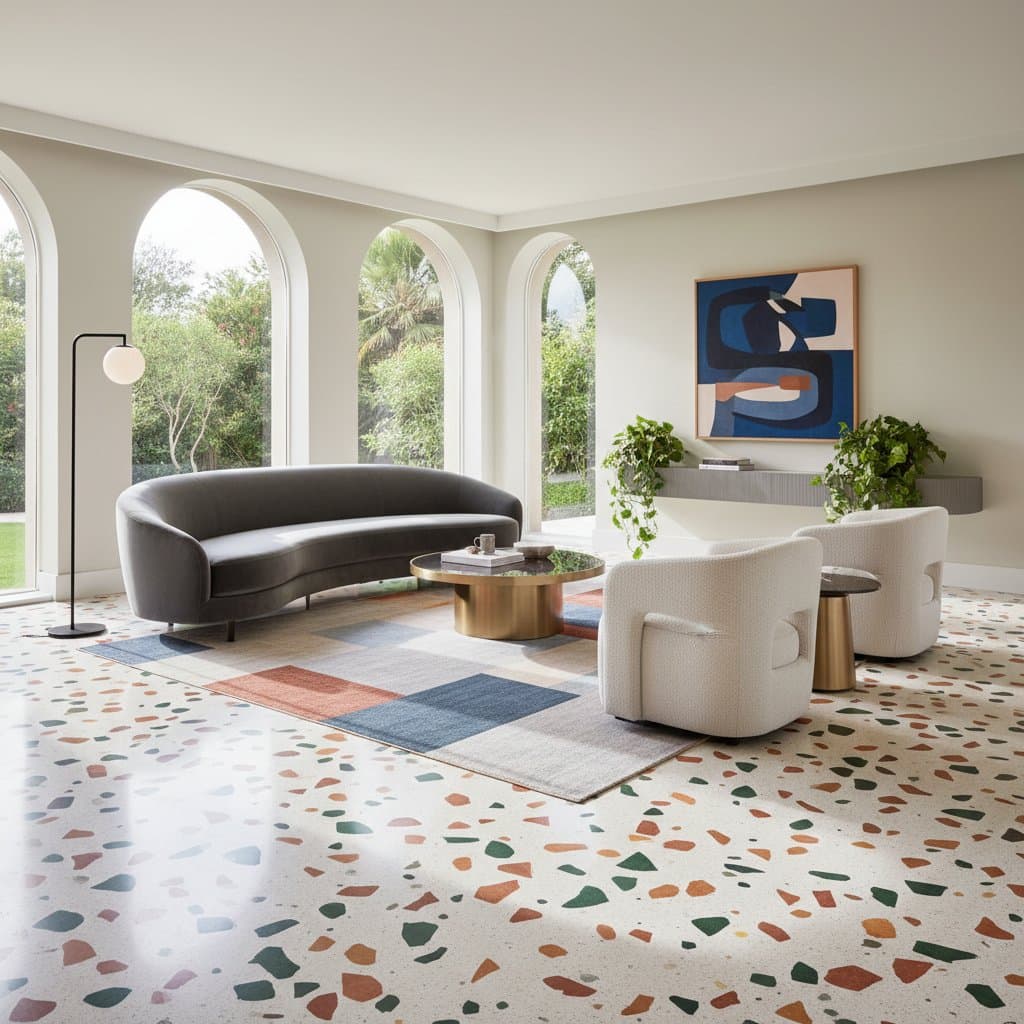
Terrazzo flooring experiences renewed popularity among homeowners and designers. This material combines exceptional durability, minimal upkeep requirements, and a distinctive retro aesthetic. It integrates seamlessly into both contemporary and traditional home designs. For those considering a remodel or preparing to sell, terrazzo distinguishes a property in competitive markets.
This guide details the essentials of terrazzo, including installation costs, advantages and drawbacks, and strategies for maximizing return on investment. Readers gain insights into the installation process, maintenance practices, and long-term benefits to inform renovation decisions.
Cost Snapshot
Installed terrazzo flooring ranges from $25 to $80 per square foot. Standard installations of epoxy or cement varieties typically fall between $35 and $60 per square foot. Basic poured systems begin at approximately $20 per square foot, whereas intricate custom patterns may exceed $100 per square foot.
Several factors influence the final price:
- The dimensions and configuration of the installation area
- The choice of binder, whether cement or epoxy
- The dimensions and varieties of aggregate chips incorporated
- Necessary surface preparation or removal of existing flooring
- Regional labor costs and material transportation expenses
Homeowners benefit from obtaining multiple quotes to compare these elements and align with budget constraints.
Options and Types
Terrazzo appears in diverse forms, each tailored to specific applications and financial considerations.
Cement Terrazzo
This traditional approach employs cement as the binding agent. It performs optimally on ground-level concrete slabs. The result yields a classic appearance with inherent earthy tones. Installation requires control joints to manage expansion, along with periodic applications of sealant for protection.
Epoxy Terrazzo
Epoxy terrazzo utilizes a resin-based binder in place of cement. The system proves lighter in weight, thinner in profile, and more adaptable to structural movements. It suits modern residences or installations on upper levels. Designers appreciate the expanded palette of colors and the feasibility of thinner pours without compromising integrity.
Precast Terrazzo
Manufactured in controlled factory settings, precast terrazzo forms tiles or panels for swift assembly. This method ensures uniformity and reduces on-site disruption. It proves advantageous for modest renovations or targeted updates where time efficiency matters.
Rustic or Washed Terrazzo
Featuring a textured finish that exposes aggregates, this variant enhances slip resistance. It adapts well to exterior applications. Suitable locations include patios, entryways, and pool surrounds, where durability against weather and foot traffic remains essential.
Terrazzo Look Tiles
Porcelain or luxury vinyl products replicate terrazzo patterns through printing techniques. These options cost less and install with greater ease. However, they offer reduced longevity and authenticity compared to genuine terrazzo systems.
Selecting the appropriate type involves evaluating the project's scale, location, and desired aesthetic outcome.
Step-By-Step Basics
Professional installation follows a precise sequence to achieve a flawless result. Homeowners observe these stages to understand the process and set realistic timelines.
- Inspect the subfloor thoroughly. Ensure it remains clean, dry, and structurally sound to support the new layer.
- Apply a moisture barrier. This step blocks potential water vapor from migrating upward and causing issues.
- Position divider strips strategically. These elements outline patterns and accommodate natural expansion joints.
- Prepare the terrazzo mixture. Blend the binder, whether resin or cement, with selected aggregate chips for consistency.
- Pour and trowel the material. Distribute the mix evenly to maintain uniform thickness across the surface.
- Allow curing, then grind the surface. This process levels imperfections and reveals the aggregate pattern.
- Address pinholes with grout. Fill minor voids to create a seamless appearance.
- Polish and apply sealant. Buff the surface to desired luster and protect it against wear.
- Conduct final cleanup. Eliminate dust, protective tapes, and debris to reveal the completed installation.
Image: Terrazzo installation process showing pour and polish stages.
Experienced contractors complete these steps efficiently, often within one to two weeks for standard projects.
Alternatives
While terrazzo excels in longevity, comparable options exist for varying budgets and timelines.
Polished Concrete
This surface treatment costs $5 to $15 per square foot. It delivers an industrial aesthetic similar to terrazzo. Limitations include restricted color selections and simpler design possibilities.
Natural Stone Tile
Materials such as marble or granite range from $10 to $40 per square foot. Individual tiles facilitate easier repairs. Drawbacks involve greater maintenance to prevent etching or staining.
Luxury Vinyl Terrazzo Look
Priced at $3 to $7 per square foot, this synthetic option installs rapidly and withstands moderate traffic. Its lifespan falls short of authentic terrazzo, requiring replacement sooner.
Epoxy Coating with Chips
Applied at $8 to $15 per square foot, this method simulates terrazzo through embedded aggregates. It suits utilitarian spaces like garages. The finish lacks the depth and enduring quality of poured terrazzo.
Each alternative balances cost against performance, allowing customization to specific needs.
ROI and Resale
Terrazzo enhances property value by introducing a high-end, enduring flooring solution. Prospective buyers recognize its association with superior craftsmanship and eco-conscious choices. Real estate professionals note accelerated sales in listings highlighting terrazzo in high-traffic areas such as kitchens, bathrooms, and foyers.
Renovations incorporating terrazzo recoup 60 to 75 percent of expenses upon resale, influenced by local market dynamics and execution quality. In regions favoring mid-century modern or minimalist styles, returns often surpass these figures due to heightened demand.
Property investors favor terrazzo in condominiums, lofts, and upscale rentals. The material minimizes ongoing maintenance expenditures relative to hardwood or ceramic alternatives. Reduced need for repairs and simplified cleaning justify the initial outlay over time.
Strategic placement in visible zones amplifies perceived luxury and broadens buyer appeal.
Why Terrazzo Is Rising Again
Contemporary designers embrace terrazzo for its fusion of artistic expression and functional reliability. The material aligns with growing emphasis on sustainable practices, frequently incorporating recycled glass and stone aggregates. Its extended lifespan curtails the frequency of replacements, conserving resources and reducing environmental impact.
Advancements in epoxy formulations broaden possibilities for vibrant colors and diverse chip selections. Terrazzo extends beyond floors to countertops and wall applications, offering versatility. It complements diverse elements, including wood accents, metal fixtures, and concrete features.
Current trends toward retro influences position terrazzo as a timeless choice. The mottled pattern effectively conceals dirt and minor scuffs, enhancing everyday usability.
Homeowners discover renewed interest through design publications and showrooms, prompting exploration of this versatile surface.
Pro Tips for Success
Achieve optimal results by attending to these practical recommendations during planning and execution.
- Sketch the divider strip arrangement in advance. This visualization ensures the pattern aligns with room dimensions and flow.
- Select aggregates of consistent size. Uniformity promotes balanced coloration and visual harmony.
- Implement moisture controls rigorously. Vapor barriers mitigate risks of efflorescence and discoloration.
- Progress through polishing grits methodically. Transition from coarse to fine for a refined, mirror-like surface.
- Choose sealants judiciously. Opt for breathable formulas that preserve gloss while allowing vapor escape.
When engaging professionals, examine portfolios of prior terrazzo installations. Request client references and verify proficiency in cement and epoxy techniques. Variations in workmanship underscore the importance of thorough evaluation.
Making It Happen
Terrazzo delivers an exceptional combination of aesthetic appeal, structural resilience, and enduring worth. Although the upfront expense exceeds many alternatives, benefits accrue through superior performance and market desirability. This flooring choice anchors interiors with sophistication that endures.
Initiate the process by soliciting estimates from certified installers specializing in terrazzo. Evaluate cement versus epoxy suitability based on site conditions and subfloor capabilities. Verify compliance with local building codes regarding slip resistance and structural loads.
Post-installation, adhere to a straightforward maintenance routine, including prompt spill cleanup and periodic resealing. These practices sustain the surface's beauty and functionality for generations.
Thoughtful preparation transforms terrazzo into a cornerstone of home enhancement, yielding both immediate enjoyment and substantial future returns.
FAQ
Is terrazzo suitable for homes with pets?
Yes. The surface withstands scratches and pet-related stains effectively. Cleaning removes pet hair and accidents with minimal effort.
Can terrazzo install over existing tile?
Generally, removal of old tile proves necessary. This ensures secure adhesion and even leveling for the new application.
How slippery does terrazzo become?
Polished terrazzo may prove hazardous when wet without treatment. Select matte or textured variants for moisture-prone areas like bathrooms or entrances.
Does terrazzo crack readily?
Cement-based systems risk cracking from subfloor movement. Epoxy alternatives offer greater flexibility to absorb shifts without damage.
Is terrazzo environmentally friendly?
Yes. Incorporation of recycled components and exceptional durability minimize waste. The material supports long-term sustainability in building practices.