Why Terrazzo Floors Enhance Home Values in 2025
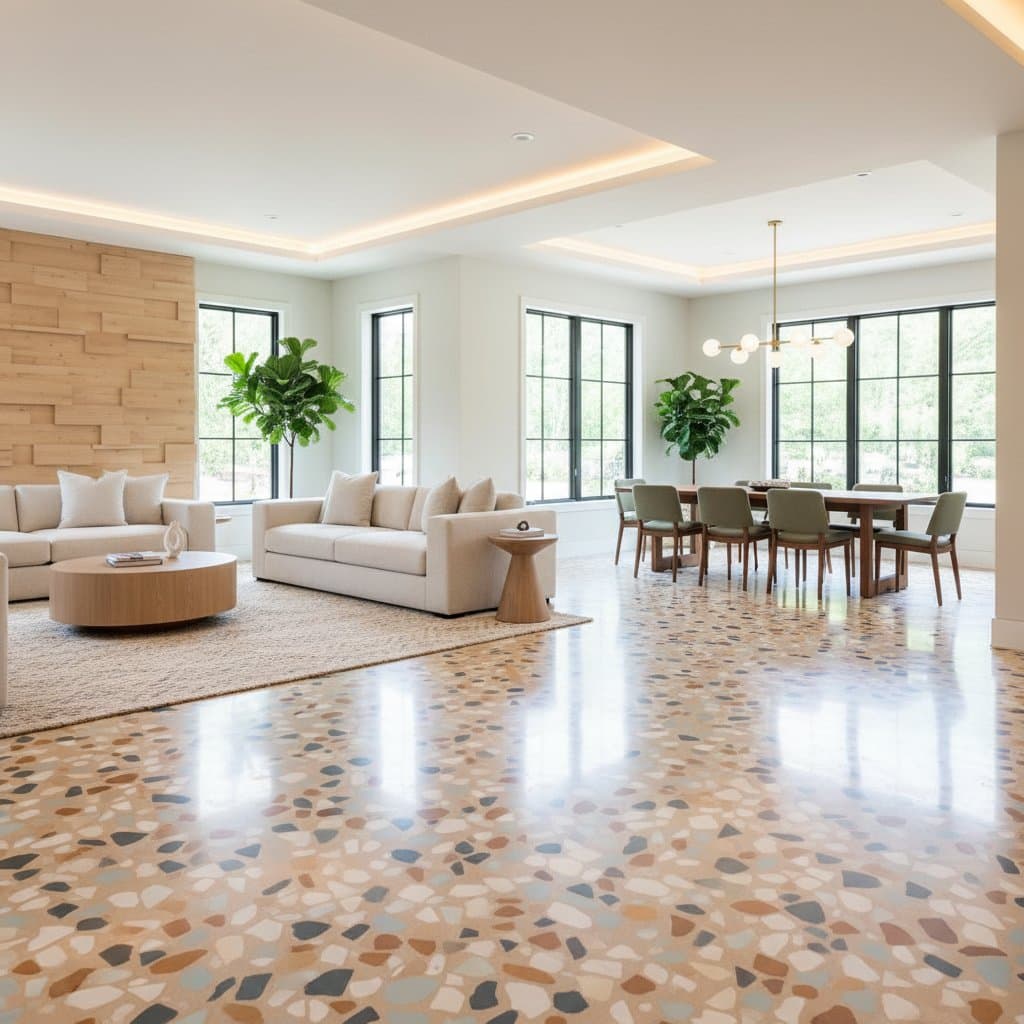
Terrazzo floors experience renewed popularity among homeowners and real estate professionals. Prospective buyers offer premium prices for properties featuring this material, while interior designers highlight its role as a sophisticated flooring option. The appeal stems from terrazzo's exceptional durability, customization potential, and commitment to sustainability.
Key Attributes of Terrazzo Flooring
Terrazzo consists of aggregate chips such as marble, quartz, granite, or recycled glass embedded in a binder of cement or epoxy. This composition yields a surface that mimics natural stone at a fraction of the upkeep expense, with a lifespan extending far beyond typical alternatives. Contemporary installations involve either on-site pouring for seamless results or precast tiles for quicker application, both producing a refined, continuous finish that bridges modern and classic styles.
Homebuyers appreciate the upscale appearance and straightforward cleaning routine of terrazzo. Real estate experts value its contribution to expedited sales and elevated listing prices. The material's reflective sheen, distinctive patterns, and resistance to daily wear create an impression of enduring quality.
Mechanisms Behind Terrazzo's Value Addition
A flooring solution with a potential lifespan of 50 years or more serves as a compelling feature in property listings. Terrazzo represents a singular upfront expenditure that minimizes future replacements, reducing long-term costs and environmental impact through decreased material discard. It also conveys superior artisanal execution, which influences buyer perceptions toward premium valuations.
Consider these specific benefits that contribute to increased property worth:
- Extended Durability: Outperforms hardwood, vinyl, and ceramic tile in longevity.
- Bespoke Design Options: Allows for unique patterns tailored to individual preferences.
- Minimal Upkeep Requirements: Eliminates grout maintenance and periodic refinishing.
- Sustainability Credentials: Incorporates recycled aggregates and aligns with green building standards.
- Premium Aesthetic: Commonly specified in luxury venues like upscale hotels and art spaces.
The presence of terrazzo instills a sense of stability in viewers, often resulting in bidding premiums of 3 to 5 percent over similar homes equipped with less resilient options like vinyl or laminate.
Installation Cost Analysis
| Task | Average Cost per Square Foot | Influencing Factors |
|---|---|---|
| New Terrazzo Installation | $25 to $80 | Aggregate selection, color complexity, regional labor rates |
| Polishing Existing Surface | $4 to $8 | Surface condition, extent of staining, required repairs |
| Repairing Imperfections | $6 to $15 | Damage severity, aggregate matching, finish integration |
Costs fluctuate based on geographic location, with urban centers commanding higher labor fees. Cement-based systems generally prove more economical than epoxy variants, though the latter support vibrant hues and slimmer profiles suitable for certain applications.
Installation Timeline Expectations
Poured terrazzo projects typically span one to two weeks, encompassing preparation through final polishing. Tile-based installations conclude more swiftly, often in three to five days. Curing periods extend timelines in moisture-rich environments, and subfloor demolition for replacements adds several additional days.
Detailed Installation Process
- Subfloor Preparation: Ensure the base remains level, free of debris, and thoroughly dry to support adhesion.
- Divider Strip Placement: Position metal or plastic strips to define sections, facilitate pattern transitions, and control expansion.
- Material Mixing and Pouring: Combine aggregates with the chosen binder, then apply the mixture uniformly across the prepared area.
- Curing Phase: Allow the pour to set completely, typically 24 to 72 hours, under controlled conditions to avoid defects.
- Grinding and Polishing: Employ progressive abrasives to level and refine the surface, achieving a high-luster outcome.
- Sealing Application: Coat with a durable penetrant to shield against moisture and contaminants.
Adherence to each phase determines the installation's overall performance. Inadequate curing or sealing compromises the material's resilience.
Evaluating DIY Versus Professional Approaches
Suitable for DIY When:
- The installer possesses prior experience in concrete handling or tile laying.
- The scope limits to compact areas, such as a kitchen backsplash or foyer.
- Prefabricated terrazzo tiles form the basis of the project.
Best Handled by Professionals When:
- Custom poured designs or intricate motifs are desired.
- The space exceeds 200 square feet or features irregular geometries.
- Certification, warranties, or adherence to building regulations is essential.
Experienced contractors utilize specialized equipment like industrial grinders and precision polishers for superior results. They also manage environmental variables during curing to mitigate risks of warping or fissures.
Essential Tools and Materials
- Mixing container or mechanical blender for aggregates and binder.
- Spreading trowel or screed for even distribution.
- Diamond-tipped grinder with varying grit polishing pads.
- Divider strips in aluminum or vinyl.
- Industrial vacuum and neutral-pH cleaning solution.
- High-performance penetrating sealer.
Rental options exist for heavy machinery, though safe operation demands training to prevent injury or subpar finishes.
Ongoing Maintenance Strategies
Sealed terrazzo requires minimal intervention. Regular sweeping or vacuuming prevents abrasive particle buildup. Weekly mopping with a pH-neutral solution suffices for most households. Steer clear of harsh chemicals or scrubbers that could etch the surface. Reapplication of sealer every three to five years maintains protection, adjusted for foot traffic intensity. Buffing restores gloss on high-wear paths without full resurfacing.
Minor damages, such as chips, yield to targeted repairs using color-matched epoxy fills, preserving the floor's integrity.
Considerations for Regional and Climatic Variations
Epoxy formulations excel in high-humidity zones by repelling water penetration. Cement options suit arid or temperate settings, often at reduced installation expenses. Consult local regulations prior to subfloor modifications, as permits may apply to extensive renovations. In seismic or storm-vulnerable regions, verify that the underlying structure includes adequate reinforcement and flexible joints to accommodate shifts without failure.
Terrazzo Versus Alternative Flooring Options
| Flooring Option | Expected Lifespan | Maintenance Level | Aesthetic Impact | Installation Cost per Square Foot |
|---|---|---|---|---|
| Terrazzo | 40 to 75 years | Low | High | $25 to $80 |
| Hardwood | 20 to 40 years | Medium | High | $10 to $25 |
| Ceramic Tile | 15 to 25 years | Medium | Moderate | $8 to $20 |
| Vinyl | 10 to 20 years | Low | Low | $3 to $8 |
While terrazzo demands a greater initial outlay, its extended service life translates to lower annualized expenses, making it a prudent choice for value-conscious renovations.
Indicators for Professional Intervention
Engage specialists for issues like extensive cracking, persistent discoloration, or irregular sheen. Overzealous grinding risks exposing underlying elements or weakening the matrix. Experts excel at color replication for seamless restorations. Ahead of a home sale, a targeted professional buffing enhances visual appeal and supports stronger negotiations.
Essential Safety Protocols
Equip with goggles, respirators, and gloves during mixing or abrasion tasks to counter dust hazards from cement or resins. Maintain ventilation to disperse fumes. Employ knee protection and secure footing amid wet processes. Isolate work zones from family members or animals, and secure tools when not in use to avoid accidents.
Expert Recommendations for Optimal Results
- Sample aggregate combinations under intended lighting to predict polished appearances accurately.
- Maintain expansion joints with elastomeric fillers to absorb structural movements.
- Position entryway rugs to trap external debris and prolong surface clarity.
- Time sealer applications for stable ambient conditions to promote uniform absorption.
- Opt for subdued palettes in resale-focused projects to broaden buyer interest.
Preparing for Your Terrazzo Project
Assess your space's demands and budget to determine if terrazzo aligns with your goals. Consult certified installers for site-specific quotes and design consultations. With proper planning, this flooring investment not only elevates daily living but also secures substantial returns upon resale.