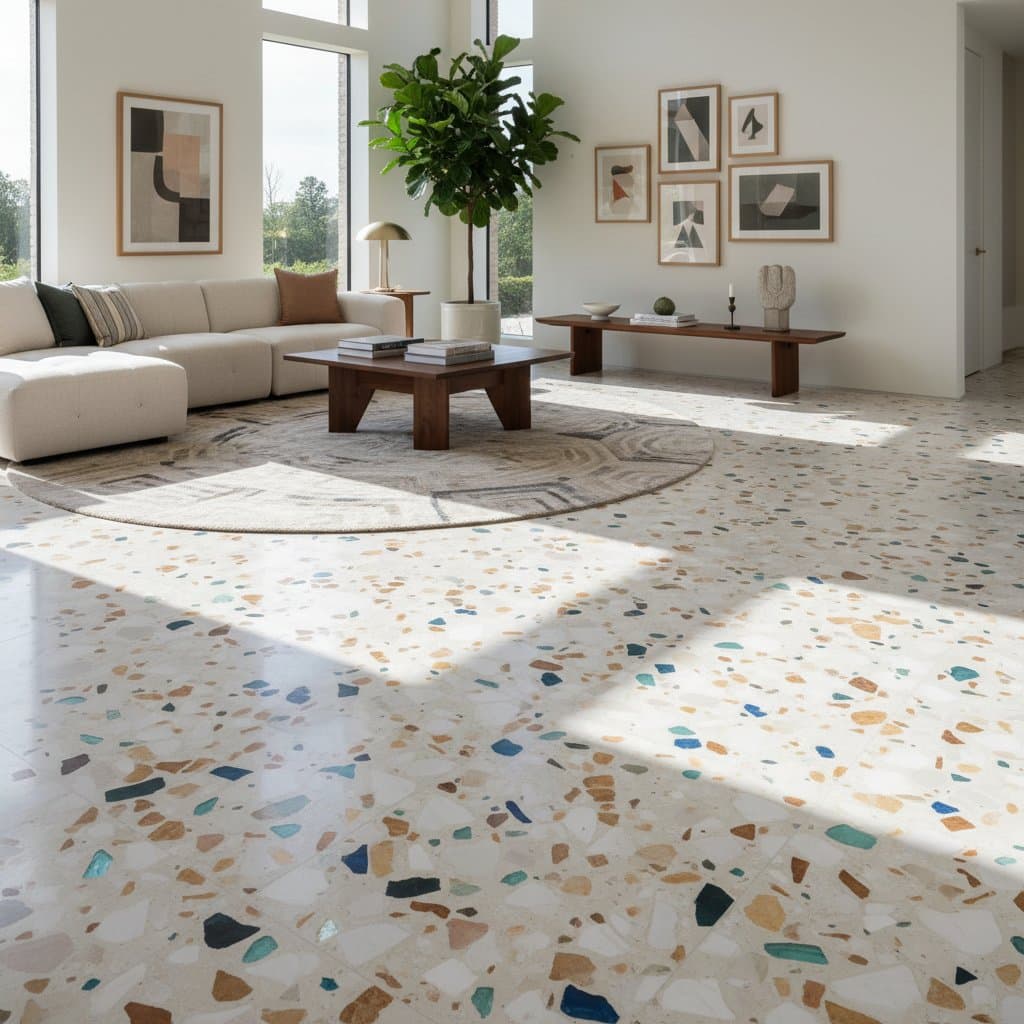
Terrazzo Flooring: The 2025 Trend Elevating Home Values
Terrazzo flooring emerges as a prominent design choice in 2025, offering a compelling blend of aesthetic appeal, exceptional durability, and enhanced resale potential. This material, composed of aggregate chips such as marble, glass, or quartz embedded in a binder, transforms spaces into enduring features that appeal to discerning buyers. Homeowners who incorporate terrazzo report increased property appraisals, attributed to its timeless elegance and low-maintenance qualities.
The resurgence of terrazzo stems from its versatility in contemporary interiors. Previously associated with commercial settings like airports and hotels, it now graces residential kitchens, living areas, and outdoor patios. Its ability to withstand heavy foot traffic while maintaining a polished appearance makes it ideal for modern lifestyles focused on sustainability and longevity.
Installation Process for Terrazzo Flooring
Installing terrazzo requires precision to achieve a flawless result. Begin by evaluating the subfloor to ensure it meets essential criteria.
- Evaluate the subfloor. Confirm that the surface remains flat, dry, and structurally sound. Concrete subfloors provide the optimal foundation, as they offer stability and prevent future settling.
- Select the binder material. Traditional cement-based binders deliver a classic, earthy finish, while epoxy binders enable vibrant colors and quicker curing times, often reducing project duration.
- Choose aggregate chips. Opt for recycled glass for an eco-friendly touch, marble for luxury, or shell fragments for subtle texture. These elements define the floor's visual character.
- Install divider strips. Position these metal or plastic strips to manage thermal expansion and create defined patterns or sections, enhancing both functionality and design.
- Pour and spread the mixture. Apply the binder-aggregate blend evenly across the prepared surface using trowels to achieve uniform thickness, typically around one-half inch.
- Grind and polish the surface. Perform multiple grinding passes with progressively finer abrasives, followed by polishing to reveal the embedded chips and create a reflective sheen.
- Apply sealant. Use a high-quality clear sealer to protect against stains, preserve colors, and simplify ongoing care.
This methodical approach ensures the flooring integrates seamlessly with the home's architecture.
Project Timeline
The active installation phase for a medium-sized room typically spans three to five days. However, account for curing periods and polishing stages, which extend the overall timeline to approximately two weeks. Intricate patterns or custom color combinations may prolong the process further. Epoxy-based systems, with their rapid curing properties, can halve this duration, making them suitable for time-sensitive renovations.
Factors influencing the timeline include room size, subfloor preparation needs, and environmental conditions like humidity, which affect drying rates. Professional teams often coordinate these elements to minimize disruptions.
DIY Installation Versus Professional Services
Consider your skill level and project scope when deciding between DIY and professional installation.
Pursue DIY installation if:
- You possess experience in concrete finishing or similar trades.
- The project involves a small area without intricate patterns.
- Access to necessary tools, such as a floor grinder, proves feasible through ownership or rental.
Engage a professional if:
- Designs feature complex patterns, multiple colors, or custom elements.
- Warranty coverage, building code adherence, or structural integrity concerns arise.
- The installation exceeds 200 square feet, demanding specialized equipment and expertise.
Professionals guarantee a level surface and uniform finish, avoiding common pitfalls like uneven grinding that leads to visible imperfections or structural weaknesses over time.
Ongoing Maintenance Strategies
Terrazzo demands minimal upkeep when properly maintained, preserving its beauty for generations. Implement a routine that includes daily dust mopping to remove debris and weekly damp mopping with a pH-neutral cleaner to address spills without damaging the sealant.
Steer clear of abrasive chemicals, acids, or bleach, as these erode the surface. Reapply sealant every three to five years, or more frequently in high-use areas like kitchens and entryways, to maintain water resistance and vibrancy.
For minor damage, such as chips or dull areas, in-place repolishing restores the original luster. A full professional refinishing, costing between three and six dollars per square foot, rejuvenates older installations, often extending their lifespan by decades.
Design Choices That Enhance Market Appeal
Terrazzo offers boundless customization to suit diverse tastes and boost property desirability.
- Neutral palettes: Combinations of white, gray, and beige chips complement minimalist or Scandinavian-inspired interiors, providing a serene backdrop.
- Dramatic contrasts: A black binder with white or metallic aggregates creates striking focal points, ideal for contemporary or industrial aesthetics.
- Personalized inlays: Incorporate logos, intricate medallions, or decorative borders in high-traffic zones like foyers to add unique character.
- Expansive pours: Seamless large-format installations in open-concept layouts amplify spatial flow and perceived grandeur.
Strategic lighting amplifies terrazzo's inherent sparkle; integrate recessed fixtures or maximize natural light from nearby windows to highlight the material's depth and texture.
Situations Requiring Professional Expertise
Certain challenges necessitate hiring specialists to avoid costly errors.
- Presence of subfloor cracks or persistent moisture, which could compromise adhesion and lead to failures.
- Layouts involving multiple colors, detailed motifs, or artistic elements that demand precise execution.
- Restoration projects, including refinishing or regrinding aged terrazzo to match existing aesthetics.
- Integration with advanced features like radiant heating, where compatibility testing ensures optimal performance.
Experts employ tools for moisture detection, precise color matching, and application of robust sealants, safeguarding the investment.
Implementing Your Terrazzo Project
Start by sketching your desired design and consulting with installers experienced in terrazzo work. Request physical sample boards to verify chip sizes, colors, and overall finish under your home's lighting.
Allocate budget for initial sealing and potential post-installation adjustments. Extend the material's use to complementary surfaces like countertops or stair risers for cohesive design harmony.
Investing in terrazzo yields a luxurious, resilient foundation that endures. This flooring not only elevates daily living but also appreciates your home's market position with each passing year.
Frequently Asked Questions
What is the typical cost of terrazzo flooring? Installed prices range from twenty to thirty-five dollars per square foot, varying with design complexity and binder selection.
How durable is terrazzo? When sealed correctly, it withstands fifty years or longer of regular use without significant wear.
Is installation possible over wood subfloors? Generally, no; terrazzo requires a rigid concrete base or cement backer board for proper support.