Boost Home Value 15 Percent with Basement Gyms in 2025
A finished basement gym increases home value by up to fifteen percent. Homebuyers seek properties equipped with ready-to-use fitness areas, and basements provide an ideal location for such installations. This addition delivers enhanced functionality, stronger resale potential, and everyday convenience without requiring expansion of the home's exterior footprint.
Reasons a Basement Gym Enhances Property Value
Converting a basement into a gym transforms underutilized space into a practical living area. This change creates the impression of a more expansive and contemporary residence. Dedicated fitness rooms rank highly in buyer preferences, second only to home offices. The primary advantage lies in the ability to incorporate this feature without altering the home's overall size.
Basement gyms attract fitness-oriented individuals as well as family households. Such spaces eliminate barriers to regular exercise, eliminate the need for external gym subscriptions, and conceal equipment from main living areas. The increase in property value stems from both practical benefits and positive perceptions. A well-maintained, completed basement indicates thoughtful property care.
Guide to Converting a Basement into a Gym
Follow these structured steps to create an effective basement gym. Each phase builds upon the previous one to ensure durability and safety.
-
Conduct a thorough inspection for moisture and structural concerns. Address any leaks and apply sealants to walls prior to installing framing or flooring materials. A moisture-free environment forms the essential base for a secure fitness area.
-
Design and implement lighting and electrical enhancements. Install high-lumen LED lights and dedicated electrical outlets. For equipment like treadmills or weight machines, verify that circuits support the required power loads, typically 20 amps or more.
-
Incorporate insulation and noise reduction measures. Apply rigid foam boards or spray foam insulation to maintain consistent temperatures. Install acoustic panels on walls and ceilings to minimize sound transmission to upper levels, preserving household tranquility.
-
Select durable, impact-resistant flooring. Opt for interlocking rubber mats or luxury vinyl planks designed for high-traffic use. These materials resist moisture and wear effectively. Steer clear of carpeting, which absorbs odors and perspiration.
-
Construct and complete wall surfaces. Employ moisture-resistant drywall sheets for framing. Apply satin or semi-gloss paint finishes, which facilitate simple cleaning and resist stains from sweat or equipment marks.
-
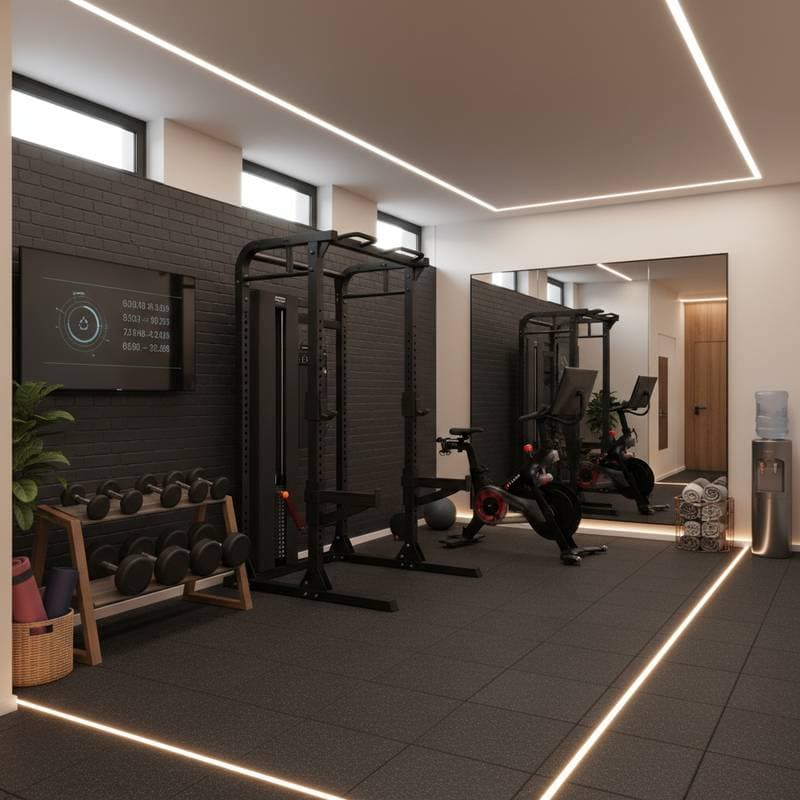
Mount mirrors and organize storage solutions. Full-length mirrors improve exercise form and expand the perceived room size through reflection. Integrate wall-mounted racks, pegboards, and cabinets to store weights, mats, and accessories neatly.
-
Establish proper ventilation and climate management. Install a ductless mini-split air conditioning unit or a high-capacity dehumidifier to regulate humidity levels below 50 percent and ensure fresh air circulation.
-
Incorporate welcoming personal elements. Position a wall-mounted television, integrate a wireless sound system, or add shelving for plants. These features integrate the gym seamlessly into the home's aesthetic, elevating it beyond a utilitarian space.
Detailed Cost Analysis
Homeowners typically allocate funds across several key categories when developing a basement gym. The following table outlines average expenditures based on standard projects.
| Task | Typical Cost Range | Factors Influencing Cost |
|---|---|---|
| Waterproofing and sealing | $1,500 - $5,000 | Basement age, extent of existing damage |
| Electrical and lighting | $500 - $2,000 | Quantity of outlets, quality of fixtures |
| Insulation and drywall | $1,000 - $4,000 | Surface area, type of insulation material |
| Flooring installation | $800 - $3,000 | Flooring selection, required preparation |
| HVAC or dehumidifier | $500 - $2,500 | Local climate, chosen system capacity |
| Mirrors, storage, decor | $300 - $1,500 | Dimensions, material finishes |
| Total Estimated Cost | $4,500 - $18,000 | Regional labor rates, project scope |
A straightforward do-it-yourself configuration remains under $5,000 when the basement already features dry conditions and basic finishes. Comprehensive professional renovations with luxury elements may exceed $20,000, including custom cabinetry and advanced climate controls.
Project Timeline Considerations
Individuals undertaking a do-it-yourself conversion complete the work over two to four weekends, contingent on the extent of preparatory tasks. Professional teams accomplish the transformation in one to two weeks. Potential setbacks arise from requirements for permits or inspections related to electrical upgrades or waterproofing efforts.
Comparing Do-It-Yourself and Professional Approaches
Pursue a do-it-yourself project when:
- The basement exists in a finished, dry state.
- Experience includes basic carpentry or flooring installation.
- The design emphasizes simplicity, such as exercise mats and free weights.
Engage professional services when:
- Modifications involve new electrical wiring, plumbing adjustments, or heating, ventilation, and air conditioning systems.
- Custom elements like built-in cabinetry, expansive mirrors, or specialized lighting are desired.
- The goal includes preparing the property for imminent sale, demanding premium-quality execution.
Professionals guarantee adherence to building codes and provide warranties on workmanship. Local regulations often mandate permits for electrical or structural alterations. Verify these requirements prior to commencement.
Essential Tools and Materials List
A modest collection of items suffices for initial setup. This curated list corresponds to specific project phases.
- Moisture-resistant sealant and application brush
- Utility knife and spirit level
- Power drill with assorted screws
- Interlocking rubber or vinyl flooring tiles
- High-quality paint and extension roller
- Secure mirror mounting clips or heavy-duty adhesive
- Recessed or track lighting fixtures
- Compact dehumidifier or oscillating fan
The power drill proves versatile for securing frames and installing fixtures. The spirit level maintains alignment for mirrors and flooring edges, preventing uneven installations.
Critical Safety Guidelines
Basements often conceal potential risks. Equip yourself with protective gloves and safety goggles during cutting or sealing activities. Avoid obstructing ventilation ducts or electrical panels. Position heavy weights away from aged wooden subfloors prone to sagging. Immediately halt operations and consult a licensed specialist upon detecting gas odors, accumulating water, or visible mold growth.
Adaptations for Regional Conditions
In colder regions, install subfloor insulation to combat condensation buildup. Humid, warm areas benefit from robust dehumidification and materials resistant to mold proliferation. Coastal or flood-vulnerable zones necessitate elevated electrical outlets and fully waterproof flooring options. Certain municipalities enforce permitting for permanent installations or electrical modifications.
Indicators Requiring Professional Intervention
Summon an expert upon observing these conditions:
- Concrete wall fissures exceeding one-eighth inch in width.
- Ongoing dampness or persistent musty smells.
- Electrical systems lacking proper grounding.
- Ceilings below seven feet necessitating structural adjustments.
- Intentions to accommodate gym equipment weighing over 300 pounds per unit.
Specialists evaluate structural integrity, reinforce flooring as needed, and confirm that ventilation aligns with regulatory standards. These measures safeguard both property value and occupant well-being.
Strategies to Optimize Investment Returns
To achieve the full fifteen percent uplift in home value, emphasize thoughtful design and long-lasting materials. Homebuyers favor illuminated, pristine, and versatile environments. Neutral wall colors paired with uncomplicated flooring appeal to diverse tastes. Exceed immediate requirements by installing extra outlets and lighting, enhancing the space's adaptability for future owners.
For properties nearing sale, maintain detailed records of the renovation. Preserve invoices and contractor information. Appraisers assign higher valuations to documented improvements in finished square footage.
Ongoing Maintenance Practices
Preserve dryness in the gym area by operating a dehumidifier during rainy seasons. Refresh paint applications every three to five years to conceal scuffs and wear. Swap out mats that diminish in traction over time. Perform yearly inspections of wiring and lighting components. Consistent maintenance sustains the area's appeal, safety, and contribution to overall home value.
Expert Recommendations for Optimal Results
Select pale paint shades to enhance spatial openness. Designate distinct zones for cardiovascular and strength training activities. Integrate a wireless Bluetooth speaker for audio without extensive wiring. Prioritize collapsible benches or wall-hung equipment to maximize floor space. Position a full-length mirror directly across from the entrance to amplify the room's visual expanse.
Practical Actions to Get Started
Assess your basement for dryness and stability before proceeding. Initiate with a compact fitness zone to test usage patterns. Monitor engagement levels over several months. Upon establishing consistent routines, invest in superior flooring and illumination to elevate the setup fully.
Frequently Asked Questions
How much value does a basement gym truly add? Experts estimate up to fifteen percent based on local market data for 2025, particularly in urban areas where fitness amenities influence buyer decisions.
What is the quickest way to start? Begin with portable equipment on existing flooring if the space is dry, then gradually add permanent features.
Are permits always necessary? They apply to electrical, plumbing, or structural changes; consult local building authorities for specifics.
Can this appeal to non-fitness buyers? Yes, the finished space serves as additional recreational or multipurpose area, broadening market appeal.