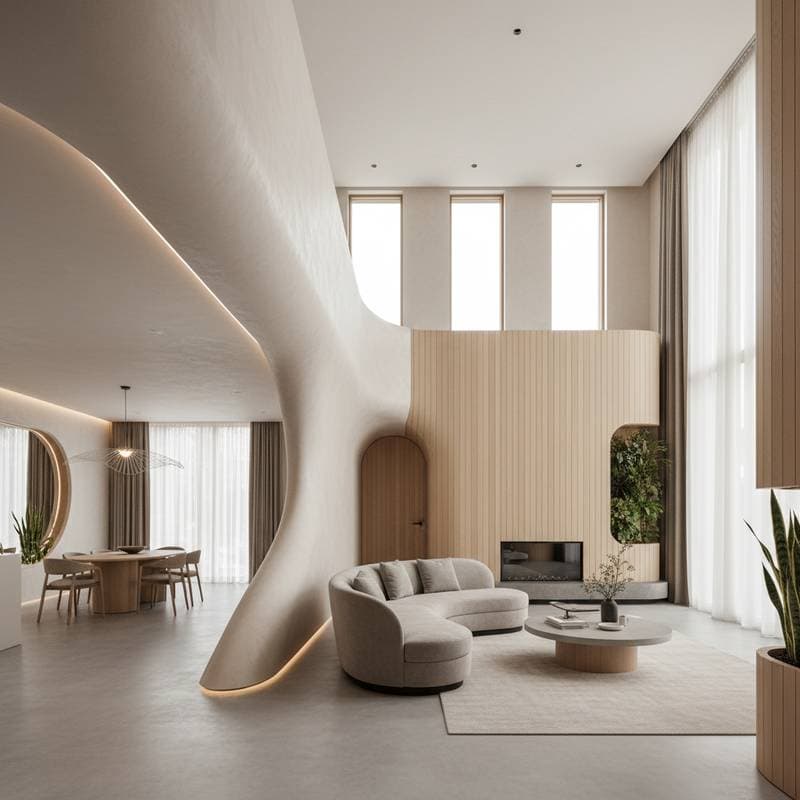
Curved Walls Add Value at $65 to $120 Per Square Foot
Curved walls represent a transformative element in home design for 2026. These features combine aesthetic appeal with functional benefits, enhancing spatial flow and increasing property value. Homeowners who incorporate curved walls often report a sense of openness and modernity that straight lines cannot achieve.
The investment in curved walls typically ranges from $65 to $120 per square foot. This cost varies based on materials, complexity, and location. For instance, simple drywall curves in interior spaces fall toward the lower end, while exterior concrete applications push costs higher due to structural demands.
Benefits of Curved Walls
Curved walls soften the geometry of a room, creating a more inviting atmosphere. They guide natural light around corners and reduce the starkness of traditional rectangular layouts. In resale scenarios, these elements can differentiate a property in competitive markets, potentially adding 5 to 10 percent to the overall value.
From a practical standpoint, curves improve acoustics by diffusing sound waves evenly. They also facilitate better furniture placement, as rounded edges eliminate sharp protrusions. Architects note that curved walls align with biophilic design principles, fostering a connection to organic forms found in nature.
Cost Breakdown and Timelines
Expect to pay $65 per square foot for basic interior curves using flexible drywall and standard framing. Premium options, such as custom plaster or integrated cabinetry, reach $120 per square foot. Additional expenses include permits at $200 to $500 and engineering consultations at $1,000 or more for load-bearing modifications.
Timelines depend on project scope. A single-room curve might take two to four weeks, including design, framing, and finishing. Larger renovations involving multiple walls extend to six to eight weeks, factoring in curing times for plaster or concrete.
Material choices influence both cost and durability. Drywall offers affordability and ease of installation, while plaster provides a seamless, high-end finish. Concrete suits exterior or structural curves but requires specialized formwork.
Planning Your Curved Wall Project
Begin with a clear vision of the space. Sketch initial ideas to visualize how curves interact with existing architecture. Consult local building codes early, as curves may require additional bracing or seismic reinforcements in certain regions.
Engage an architect or designer to draft precise blueprints. They ensure the curve radius aligns with room proportions, avoiding disproportionate appearances. Budget for 15 percent contingency to cover unforeseen issues like utility relocations.
Construction Challenges and Skill Requirements
Building curved walls demands precision to maintain structural integrity and visual appeal. Key challenges include:
- Any load-bearing or exterior wall curve, which requires engineering approval to prevent settling.
- Plaster or stucco finishes needing even texture across irregular surfaces.
- Concrete formwork or rebar layout, essential for outdoor durability.
- Electrical or HVAC rerouting inside curved walls to accommodate wiring and ducts without compromising the design.
Skill and Tool Needs:
- Circular saw with fine-tooth blade for accurate cuts on flexible materials.
- Flexible drywall track or pre-formed studs to follow the curve without buckling.
- Level, chalk line, and framing square to ensure alignment at every stage.
- Patience with compound curves and joint finishing, as minor errors amplify over the surface.
If the project involves utilities, structural elements, or plaster application, hire professionals. The labor investment prevents issues such as cracks, uneven joints, or inspection failures.
Maintenance and Warranties
Curved walls endure as long as straight counterparts when constructed properly, yet they require vigilant maintenance to preserve appearance and function.
Maintenance Checklist:
- Inspect joints yearly for hairline cracks that may indicate settling.
- Keep humidity under control to prevent plaster expansion or warping.
- Use mild soap and water for cleaning; avoid abrasive pads that could scratch surfaces.
- Repaint every 5 to 7 years to maintain surface integrity and color vibrancy.
Warranties:
- Framing materials typically carry 10 to 25 years of coverage.
- Plaster finishes offer 1 to 5 years on workmanship quality.
- Concrete provides limited lifetime for structural components, with no warranty on finish color changes.
A small crack near seams often results from thermal movement rather than structural failure. Address it promptly with filler to block moisture intrusion and extend the wall's lifespan.
Common Mistakes to Avoid
Many projects falter due to overlooked details. Skipping structure checks risks sagging ceilings if a load-bearing wall undergoes modification without reinforcement. Forcing tight radii under 24 inches leads to cracks or uneven finishes unless using plaster or concrete.
Overusing curves disrupts visual balance; restrict to one or two per major space. Ignoring lighting creates unwanted shadows, so integrate recessed or wall-wash fixtures from the outset. Opting for cheap flexible drywall results in ripples post-painting, diminishing the professional look.
Plan the radius early and create mock-ups with plywood or cardboard. This step reveals flow adjustments before permanent installation.
Steps to Implement Curved Walls
Initiate the process with a taped outline on the floor. Step back to evaluate how the curve alters movement and sight lines. Refine the shape until it enhances the room's functionality.
Next Steps:
- Assess structure: Confirm load-bearing status or consult an engineer for safety.
- Set budget: Account for permits, disposal fees, and a 15 percent contingency.
- Select finish: Choose based on room usage and lighting to optimize aesthetics.
- Hire pros early: Skilled plasterers and framers schedule months in advance.
- Stage tools and materials: Prepare flexible track, drywall, and screws prior to demolition.
- Inspect frequently: Verify curve alignment before enclosing walls.
Realizing Lasting Value
Curved walls extend beyond surface-level enhancement. They influence how inhabitants experience space and contribute to long-term appreciation. With meticulous planning and execution, these features establish a signature architectural identity that endures for decades.