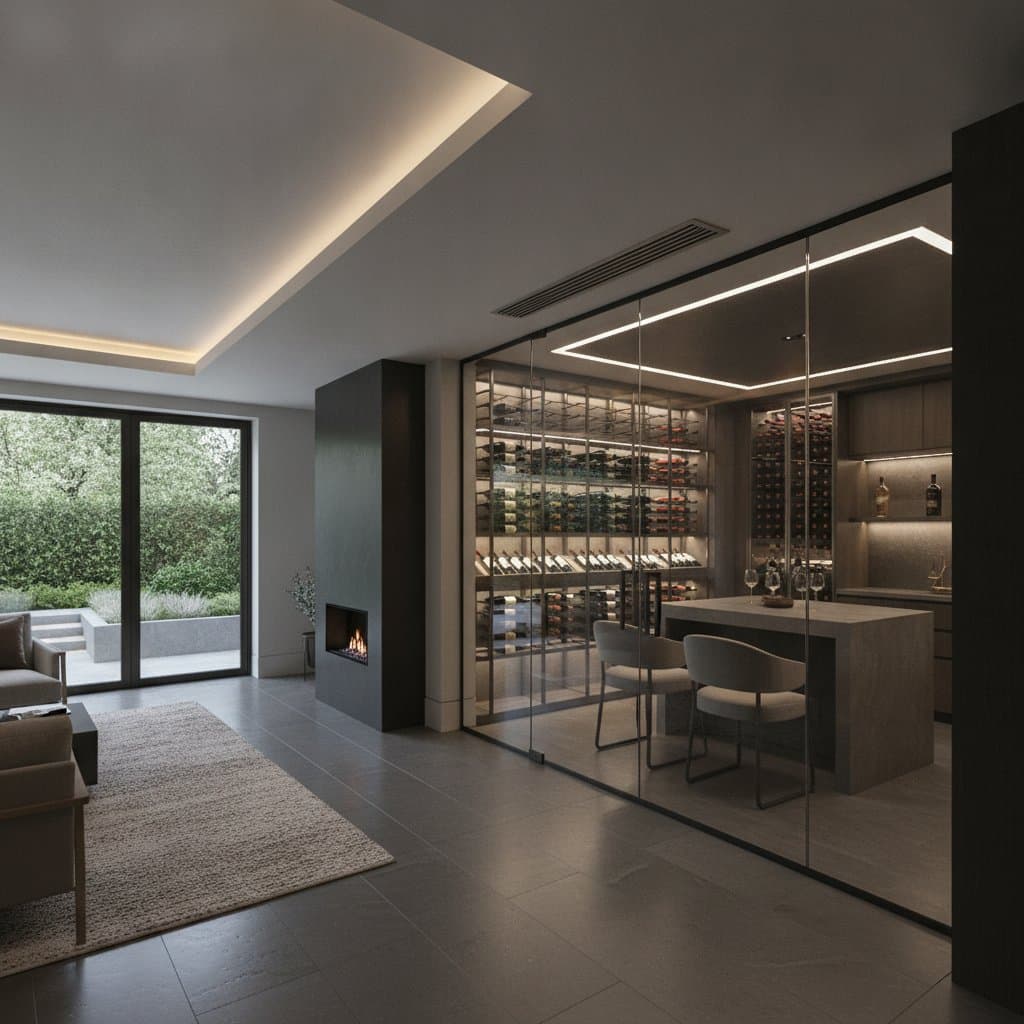
Wine Cellars Deliver Strong Returns on Home Investment
A custom wine cellar combines elegance with practical storage. Homeowners who add one often realize returns near 15 percent upon resale. The feature blends daily enjoyment with lasting equity gains.
Reasons Wine Cellars Rank High Among Upgrades
Buyers seek more than standard kitchen or bath renovations. They look for dedicated spaces that support leisure activities. A wine cellar converts underutilized basement areas into controlled environments that protect collections from heat, light, and vibration. The addition signals attention to detail and raises perceived home quality.
Steps to Plan and Build a Wine Cellar
Follow these actions in order to achieve stable conditions and strong visual impact.
- Select a location with stable temperatures, such as a basement or insulated interior room.
- Target 55 degrees Fahrenheit and 60 percent relative humidity to maintain cork integrity.
- Install vapor barriers and closed-cell insulation to block moisture transfer.
- Choose a cooling system sized for the room volume and noise requirements.
- Specify racks that accommodate bottle dimensions and allow clear label visibility.
- Add LED fixtures and durable finishes like stone or wood for both function and appearance.
- Operate the cooling unit for several days before stocking bottles to confirm steady performance.
Cost Ranges by Project Scale
| Project Type | Typical Cost Range | Key Price Factors |
|---|---|---|
| Basic closet conversion | $6,000 to $12,000 | Limited space and standard cooling |
| Mid-size basement cellar | $18,000 to $35,000 | Custom racks, insulation, and doors |
| Full luxury installation | $40,000 to $100,000+ | Stonework, advanced climate controls, and display elements |
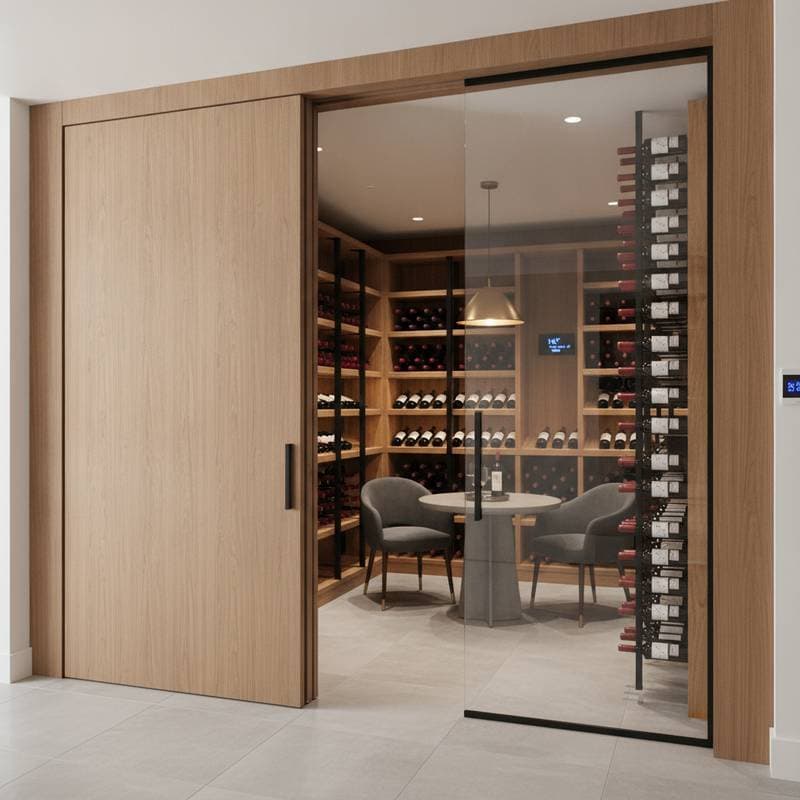
Regional labor rates and material selections influence final figures. Simple wood racks and standard units reduce expense, while glass walls or reclaimed finishes increase it.
Construction Timeline
Most projects require two to six weeks. Smaller conversions finish sooner. Larger designs that incorporate stone or custom electrical work extend the schedule.
When to Use Professional Services
Homeowners with carpentry experience may handle small closet projects that use plug-in cooling units. Larger rooms demand precise humidity control, code-compliant wiring, and integrated finishes best managed by specialists. Professional installation reduces risks of condensation or temperature failure that can damage both wine and surrounding materials.
Essential Tools and Materials
- Tape measure and level
- Stud finder
- Vapor barrier and insulation
- Cooling unit matched to room size
- Wine racks or shelving
- LED lighting
- Optional dehumidifier for humid climates
Design Elements That Support Value
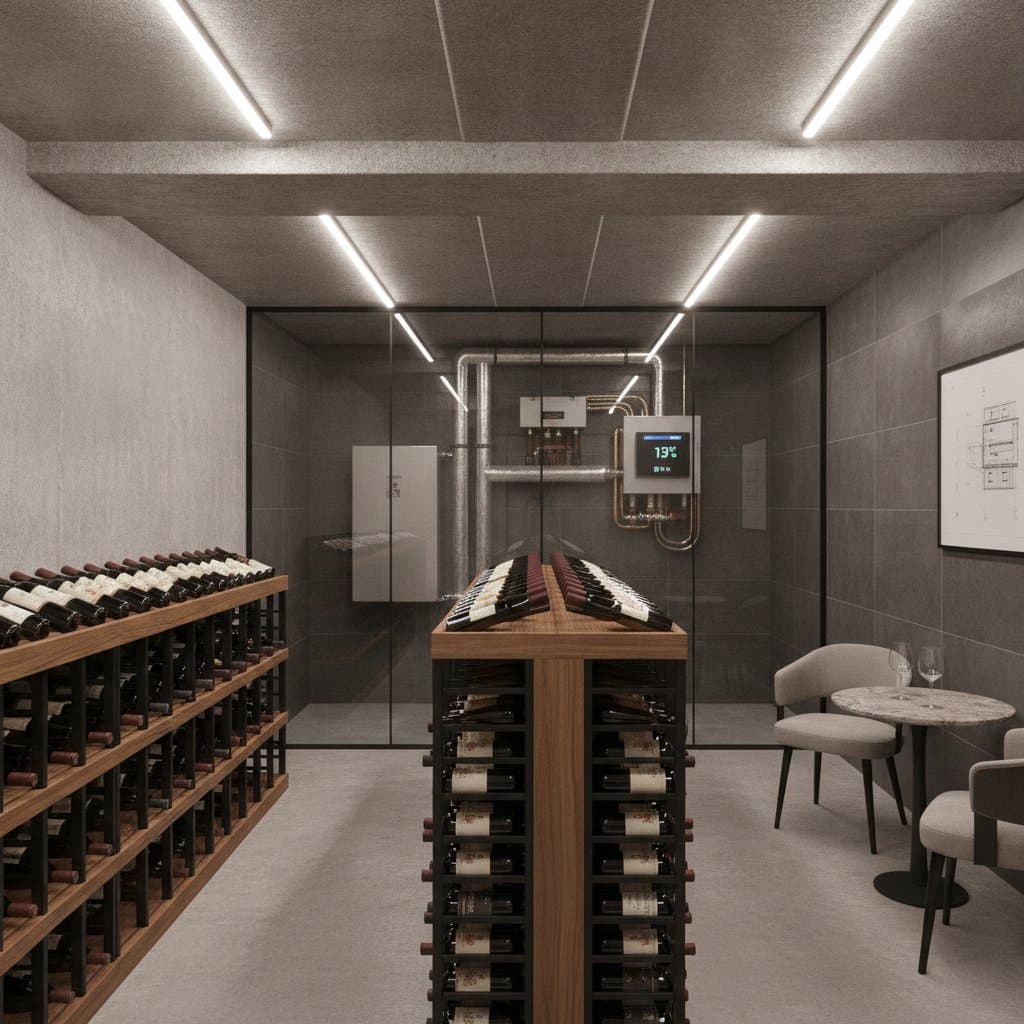
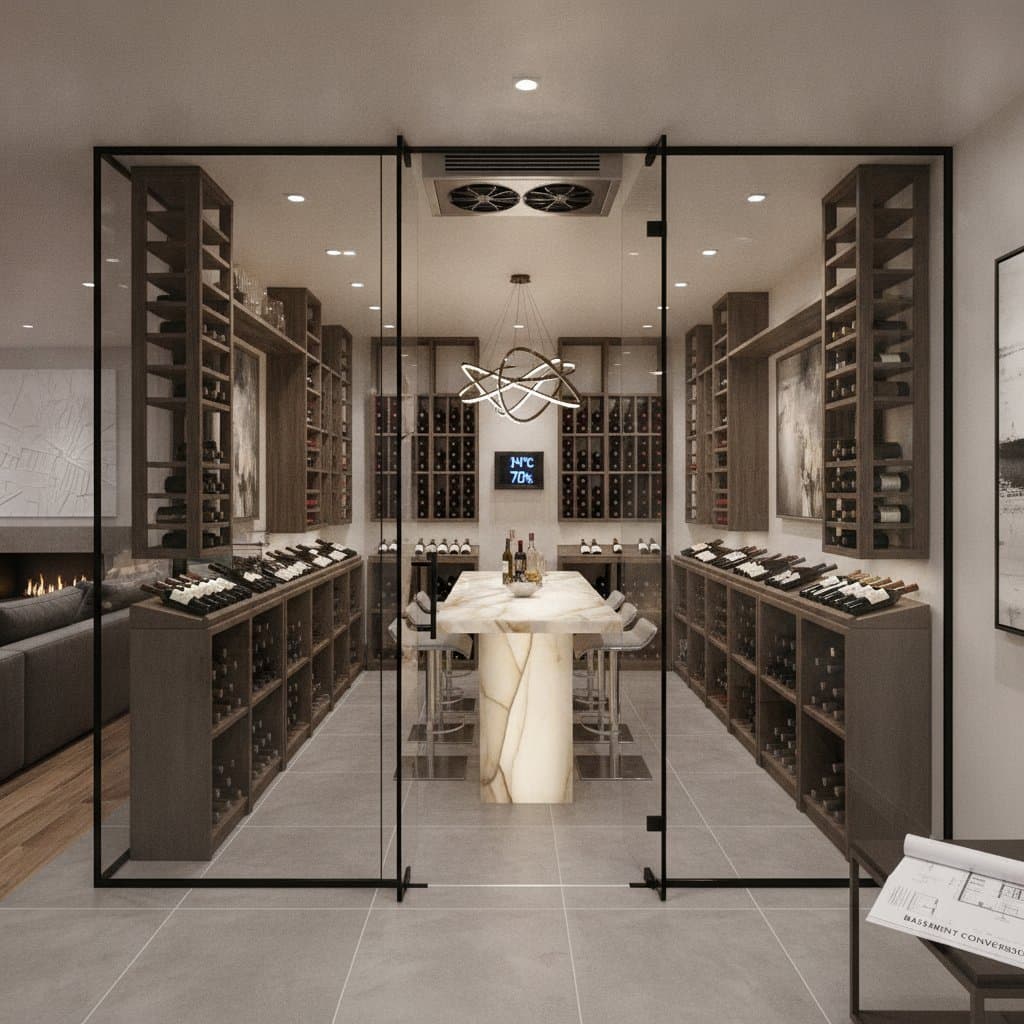
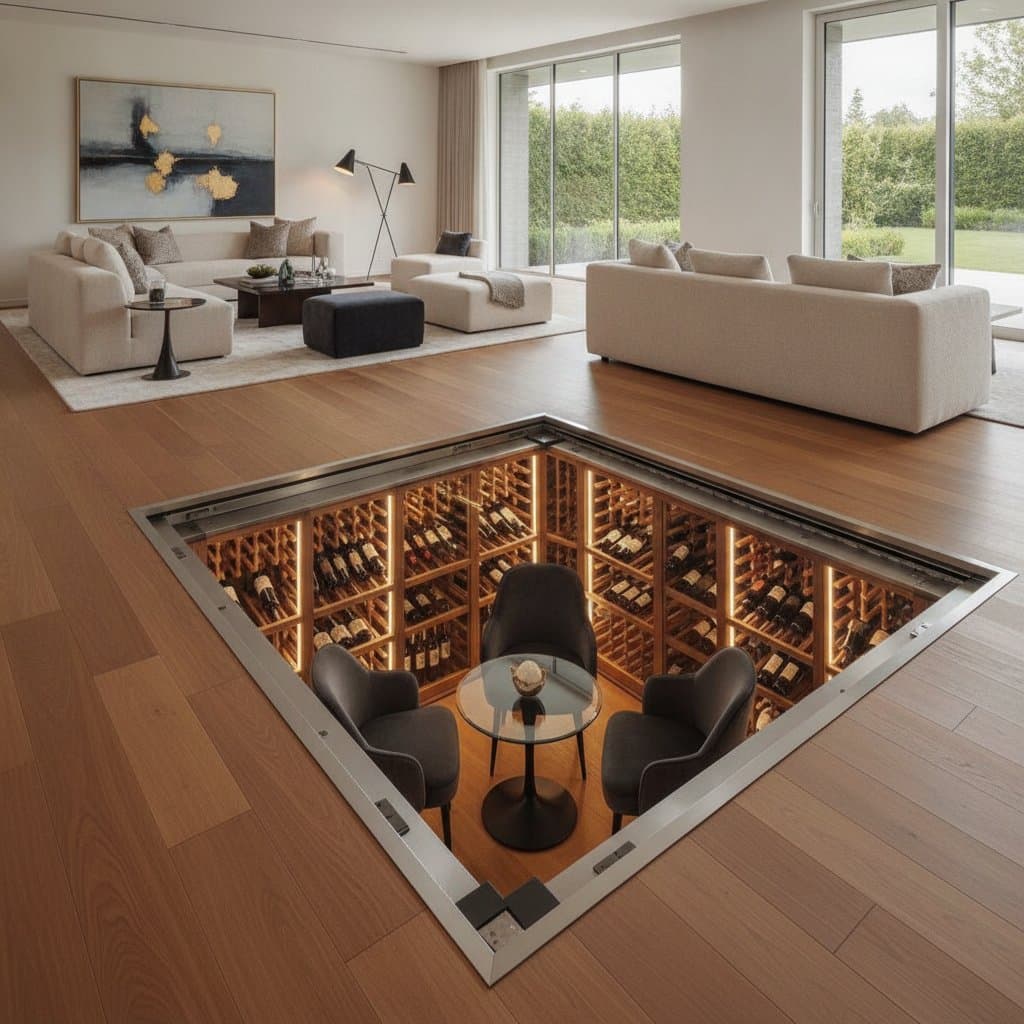
Glass walls connect the cellar visually to adjacent living spaces. Backlit racks improve label readability. Natural stone and reclaimed wood introduce texture. Dedicated tasting areas convert storage into an experience that buyers notice during showings.
Climate Control Options
Through-wall units suit small rooms and vent heat into neighboring spaces. Split systems operate quietly for medium rooms. Ducted systems hide equipment entirely and serve larger installations. Annual filter cleaning and refrigerant checks maintain efficiency.
Indicators That Require Professional Attention
Visible condensation, temperature swings beyond five degrees, or continuous unit operation signal the need for service. A professional appraisal at sale time documents the cellar as a luxury amenity that contributes to the overall valuation.
Factors That Influence Return on Investment
Custom designs aligned with the home architecture, quality finishes, stable temperature performance, and integrated tasting zones increase buyer interest. Poor insulation, wasted rack space, or unreliable cooling reduce returns. A well-executed cellar serves as a focal point that supports both emotional appeal and measurable equity.
Practical Habits for Long-Term Performance
Position labels outward for quick identification. Reserve space for future growth. Shield the interior from direct sunlight. Organize racks by region or varietal. Monitor conditions with a hygrometer and thermometer. In homes with children or pets, install lockable doors. Areas prone to moisture benefit from a sump pump before construction begins.
Ongoing Maintenance Practices
Inspect humidity and cooling performance twice each year. Replace filters on schedule. Maintain a backup power source in outage-prone regions. Add sound insulation when the cellar shares walls with mechanical equipment to limit vibration.
First Actions for Interested Homeowners
Begin with a modest under-stair installation to understand requirements. Once comfortable with the process, expand to a full room. Obtain written proposals from at least two builders that detail equipment brands, warranties, and timelines. Focus first on insulation integrity and cooling reliability, then refine finishes. The result is a space that protects wine and enhances property appeal.