Luxury Laundry Rooms Deliver Strong Returns in 2026
Typical costs range from 12000 dollars to 25000 dollars, with resale value increases reaching 10 percent in updated homes. Upgrading a laundry space once meant adding basic shelves and fresh paint. Today these rooms function as quiet profit drivers in midrange and higher priced properties by blending practical performance with refined design.
Project Snapshot
| Item | Details |
|---|---|
| Cost Range | 8000 dollars to 30000 dollars |
| Timeline | 3 to 6 weeks |
| Lifespan | 15 to 20 years with proper care |
| Best Season | Spring or fall for easier scheduling |
| DIY Friendly | Partially, depending on plumbing and cabinetry |
Cost Factors
Materials such as high end tile, quartz counters, and custom cabinetry account for the largest share of spending. Budget 100 dollars to 300 dollars per square foot based on selected finishes. Plumbing and electrical updates add 2000 dollars to 5000 dollars. Built in cabinetry and stone work extend both expense and delivery time.
Compact rooms under 70 square feet cost less to refresh. Larger layouts that include folding stations or dual washers often exceed 25000 dollars. Reconfiguring water or vent lines adds 1000 dollars to 3000 dollars. Retaining the existing layout reduces expense and prevents permit delays. Optional features such as mudroom lockers, drying cabinets, or pet washing stations cost 1500 dollars to 4000 dollars each. Select one element that matches daily routines and long term resale goals.
Upgrade Tiers
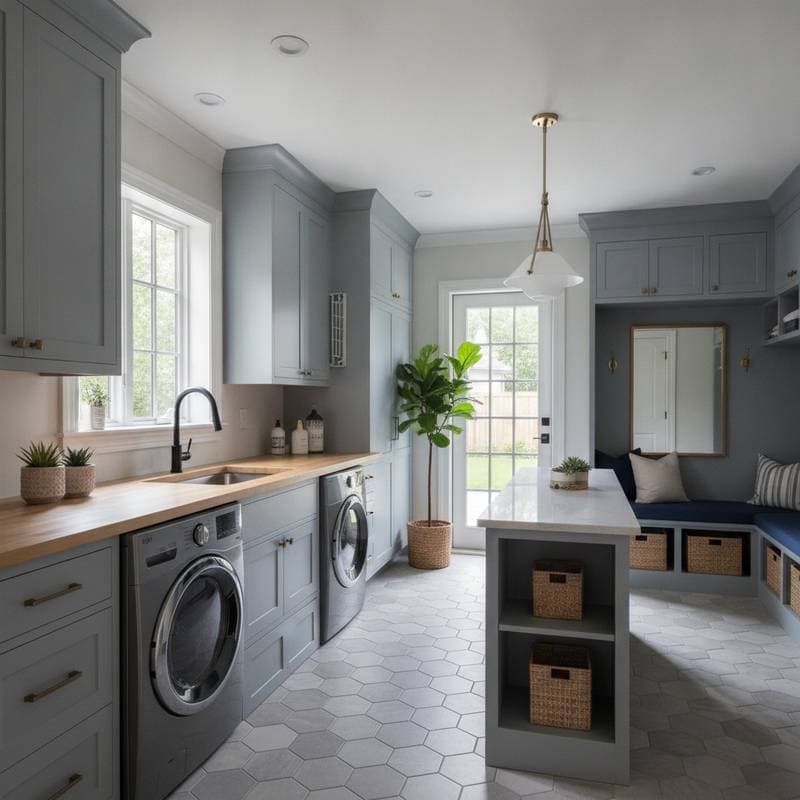
A basic refresh between 8000 dollars and 12000 dollars includes durable porcelain tile flooring, moisture resistant cabinets, a quartz or solid surface counter, and updated lighting with fresh paint. A midrange project from 12000 dollars to 20000 dollars adds a deep utility sink with pull down rack, energy efficient washers and dryers, and a compact folding island or bench. Premium work from 20000 dollars to 30000 dollars incorporates custom cabinetry with built in hampers, heated floors, sound insulation, hidden drying closets, and smart appliance controls.
DIY Versus Professional Work
Painting, shelving installation, and minor flooring tasks suit capable homeowners. Wall racks and rolling storage units also fall within DIY scope. Hire licensed trades for plumbing or electrical relocation, stone counter or tile floor cutting, and built in or heated floor additions. Water leaks, inadequate venting, and electrical overloads create serious damage. Shut off power and water before starting any work and verify local permit rules for sink or outlet changes.
Scheduling and Budget Control
Allow 3 to 6 weeks because cabinetry and appliance orders require lead time. Purchase tile and fixtures early to prevent delays. Book plumbing and electrical crews ahead since these specialists fill calendars weeks in advance. Reuse existing hookups, maintain the current appliance footprint, and choose midrange counters rather than full custom stone to reduce spending. Older homes may need wall or floor repairs once surfaces are opened, so reserve an additional 10 to 15 percent of the budget.
Care and Coverage
Wipe counters weekly to avoid detergent stains. Clean vents and filters every few months. Inspect grout and caulk once a year for moisture intrusion. Major appliances typically carry 5 to 10 year warranties. Register products promptly to activate coverage.
Assessing Your Laundry Area
Walk through the current space and note tasks that slow daily routines. Adding improved lighting and counter space often yields the highest daily benefit. Homeowners focused on resale value gain most by merging laundry and mudroom functions into one polished utility zone. Buyers respond to utility areas finished to the same standard as kitchens. Choose durable surfaces, plan the layout carefully, and this often overlooked room can provide a notable return.