Coastal Grandmother Style Costs $5K to $18K Per Room
Expect to spend between 5000 and 18000 dollars for a full room update that captures the calm, linen soft appearance of coastal grandmother style.
Project Snapshot
| Category | Typical Range | Notes |
|---|---|---|
| Cost Range | 5000 to 18000 dollars per room | Depends on materials and furniture scale |
| Timeline | 3 to 8 weeks | Longer if sourcing vintage or custom upholstery |
| Lifespan | 7 to 15 years | With routine care and slipcover washing |
| Best Season | Spring or early fall | Easier to paint and air out fabrics |
| DIY Friendly | Partial | Safe for paint, textiles, and styling. Hire professionals for flooring or wiring |
Cost Factors
Materials drive much of the expense. Real linen, oak, and rattan cost more than synthetics yet last longer. Plan on 25 to 45 dollars per yard for upholstery grade linen.
Labor adds another layer. Painting, refinishing, or light electrical work runs 40 to 100 dollars per hour. Custom drapery or built ins extend lead times.
Room size affects totals directly. A small living room may require 120 square feet of paint and 60 square feet of rug area. Larger spaces increase costs by 1.5 to 2 times.
Permits are rarely required unless walls move or wiring changes. Check local code whenever lighting or outlets are added.
Add ons such as slipcovered seating, woven rugs, and coastal art each contribute 300 to 1200 dollars per piece. Reserve an extra 10 to 15 percent of the budget for finishing decor.
Basic Refresh Under 6000 Dollars
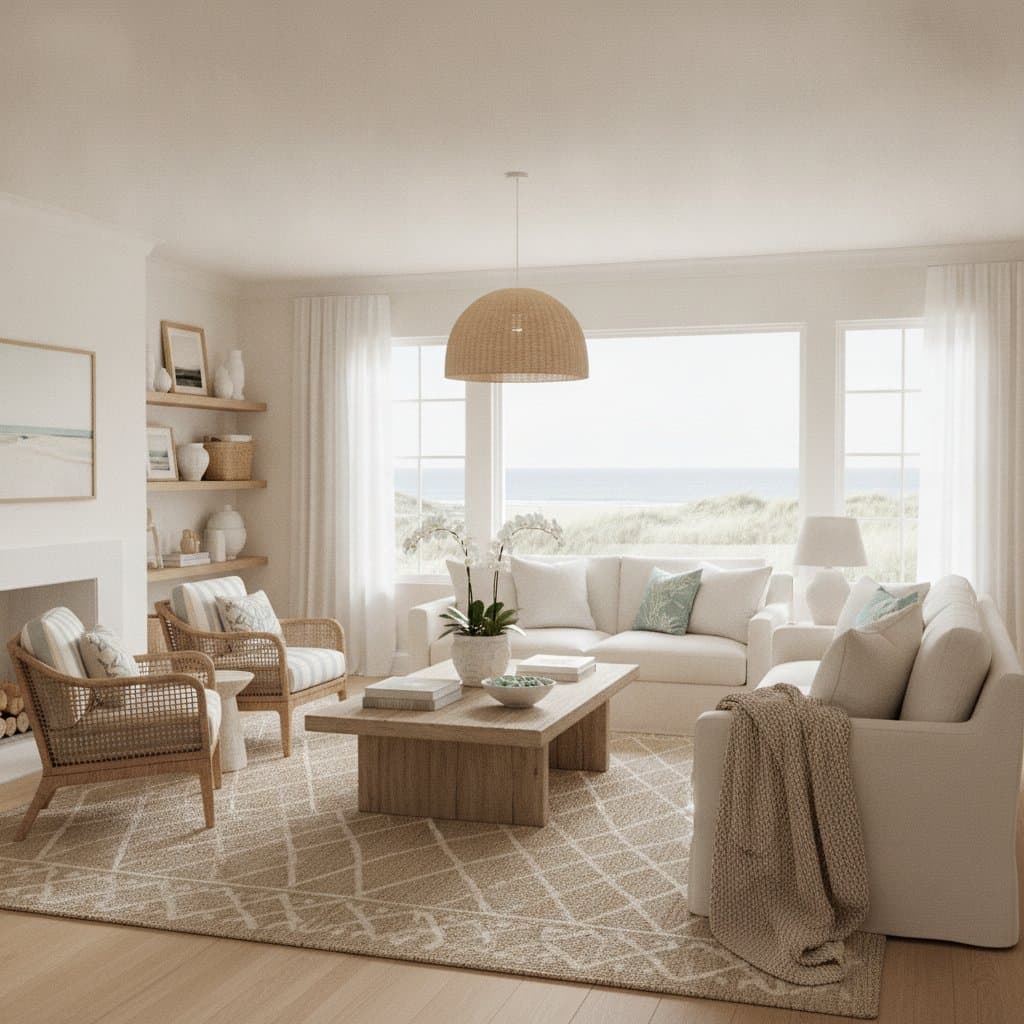
- Repaint walls in soft white or pale sand.
- Swap heavy drapes for sheer cotton panels.
- Add thrifted wicker baskets for texture.
- Replace overhead lighting with a neutral linen shade.
Midrange Update From 8000 to 12000 Dollars
- Refinish wood floors or add natural jute rugs.
- Replace one major furniture piece such as a slipcovered sofa.
- Incorporate vintage wood tables and rattan chairs.
- Layer neutral throws and cotton pillows for depth.
Premium Makeover From 15000 to 18000 Dollars
- Use custom cabinetry in bleached oak or whitewashed pine.
- Upgrade to solid brass or nickel hardware.
- Add large scale art in coastal tones and muted blues.
- Replace windows for better light and energy performance.
DIY Versus Professional Help
Handle the work yourself when repainting, hanging curtains, or styling textiles. Basic tools and a stable workspace are sufficient. Confirm that furniture can be moved safely.
Call a professional for electrical outlets, lighting rewiring, floor sanding, or built in millwork. A cohesive design plan with scaled drawings is another reason to hire experts.
DIY approaches reduce total cost by 25 to 40 percent yet extend the schedule. Professionals shorten timelines and deliver even finishes.
Timing and Savings Opportunities
Allow 3 to 8 weeks because fabric and furniture lead times vary. Many linen and rattan suppliers carry limited seasonal stock. Shop late winter or early summer for better availability.
Prioritize the sofa if only one upgrade fits the budget. It defines the room and prevents future spending on mismatched seating.
Look for rebates on efficient lighting and window replacements. Natural light remains central to the aesthetic, and energy rated windows reduce cooling costs.
Maintenance and Warranties
Wash slipcovers twice a year to prevent fading. Apply furniture oil to wood once a year to avoid dryness. Rotate rugs every six months for even wear. Matte paint finishes show fingerprints. Clean them with mild soap and water.
Most furniture warranties cover 5 to 10 years. Natural materials age well with consistent care. Avoid harsh cleaners that strip finishes.
Selecting Your First Updates
Set a firm budget ceiling and begin with a single space rather than the entire house. Order fabric swatches early because colors shift under coastal light. Book painters and upholsterers promptly since schedules fill quickly.
Sketch layout changes to keep walkways open and sightlines clear. Add personal pieces such as vintage books, family dishes, or soft throws so the result feels lived in rather than staged.
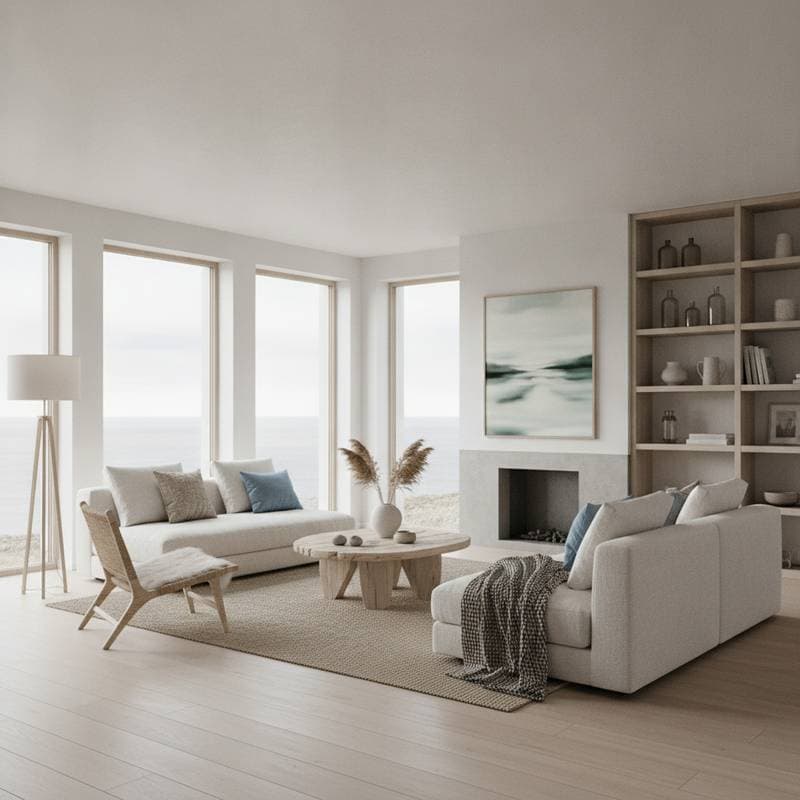
The coastal grandmother aesthetic favors comfort over display. Choose materials that breathe, finishes that feel used, and tones that reflect sunlight. Steady planning and clear priorities deliver breezy, timeless ease without overspending.