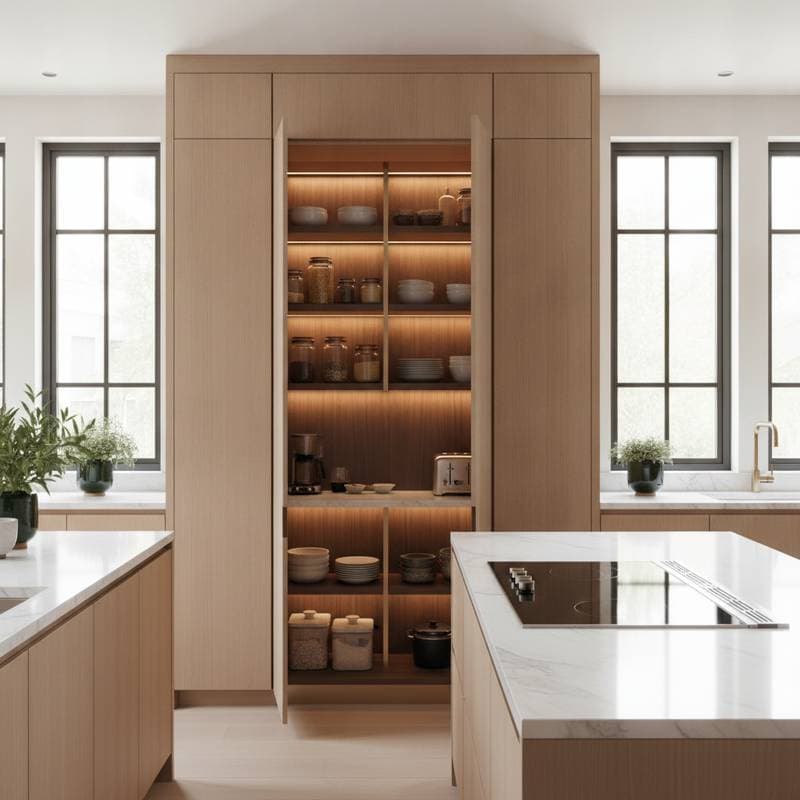
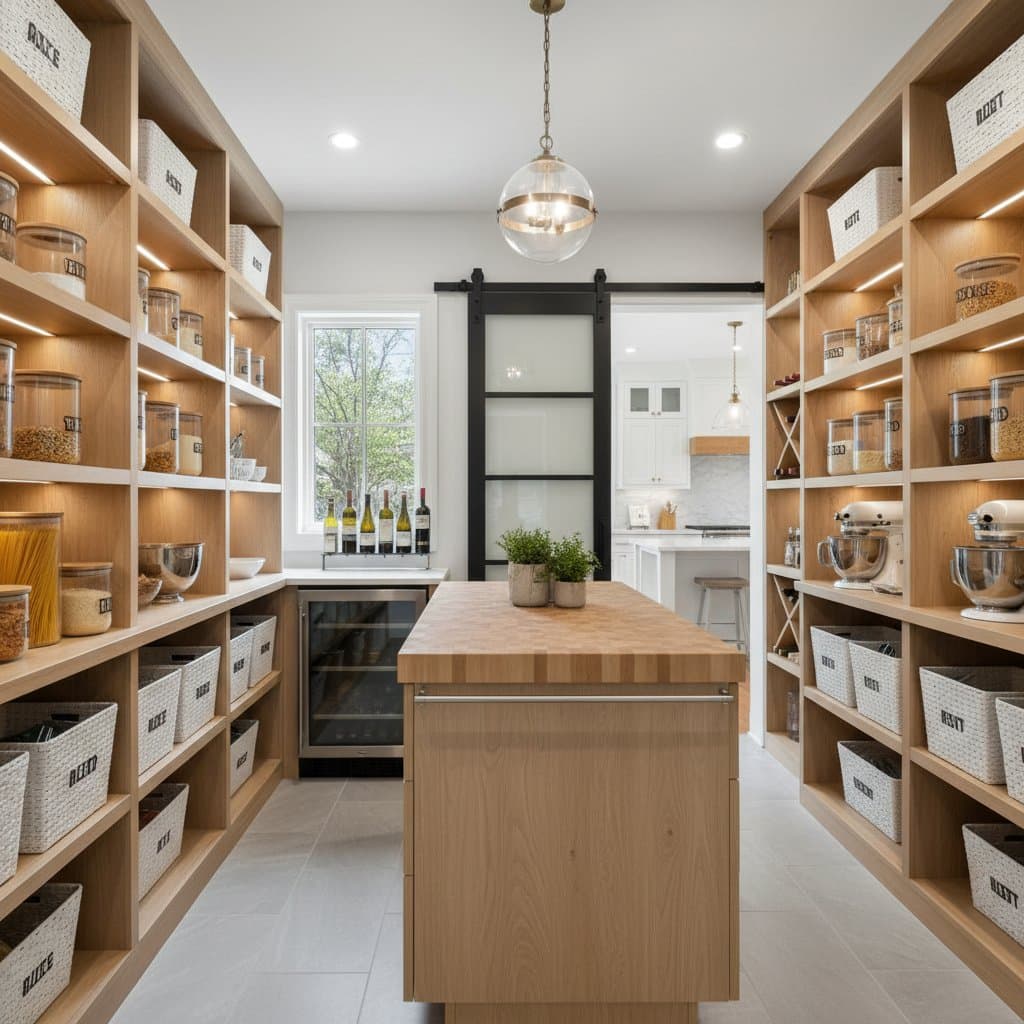
Walk-In Pantries Enhance Home Value and Kitchen Efficiency
A thoughtfully designed walk-in pantry elevates resale value by approximately 10 percent. This addition also streamlines daily kitchen operations. Homeowners gain organized storage that appeals to potential buyers seeking functional spaces.
Key Cost Considerations
Costs vary based on several factors. Understanding these elements helps in budgeting effectively.
-
Size and Layout
A compact pantry measuring 4 by 6 feet typically ranges from $4,000 to $6,000. Larger versions, such as 6 by 8 feet, incur additional expenses of $1,500 to $3,000. These increases account for expanded framing, materials, and finishing details. -
Materials Selection
- Wire shelving offers the most economical option at around $10 per linear foot.
- Wood or medium-density fiberboard built-ins cost between $30 and $80 per linear foot, influenced by the chosen finish.
- Premium choices like cabinet-grade plywood or custom millwork exceed $100 per linear foot, ideal for upscale kitchen designs.
-
Labor Expenses
Carpenters charge $45 to $85 per hour for installation. Electricians, needed for lighting or outlets, bill $60 to $120 per hour. These rates reflect local market conditions and project complexity. -
Access Modifications and Floor Plan Adjustments
Repurposing an existing closet proves more affordable than reallocating kitchen space. Relocating plumbing or HVAC systems can escalate expenses significantly, often doubling the total budget. -
Permits and Regulatory Compliance
Basic conversions seldom require permits. However, projects involving new wiring, plumbing, or structural alterations demand inspections and associated fees. -
Additional Features and Waste Management
Demolition, debris disposal, and repainting contribute $300 to $800 to the overall cost. Allocate an extra 10 to 15 percent of the budget for unforeseen issues, particularly in older properties.
DIY Approaches Versus Professional Installation
Certain tasks suit DIY efforts, allowing cost savings and hands-on involvement.
Suitable DIY Activities:
- Accurate measuring, painting, and assembling basic shelving units.
- Fitting wire or modular shelf systems into prepared spaces.
- Incorporating plug-in LED puck lights for illumination.
Scenarios Requiring Professional Expertise:
- Structural modifications, including wall removal or reinforcement.
- Running electrical wiring through walls or ceilings.
- Implementing ventilation systems or humidity controls for food storage.
Potential Risks:
Inadequate framing leads to sagging walls over time. Excessive shelf loading may detach units from wall studs. Electrical mistakes pose fire risks. Individuals without tools like a stud finder, circular saw, or level should engage professionals for framing and finishing.
Required Skill Level:
Intermediate carpentry and finishing abilities ensure a seamless built-in appearance. Novices can manage painting, trim installation, and modular shelving with safety in mind.
Upkeep and Warranty Guidance
Regular maintenance preserves the pantry's longevity and appearance.
Cleaning Practices:
Wipe shelves monthly using a mild cleaner. Steer clear of ammonia on wood surfaces to avoid damage. Employ dry cloths for metal racks to inhibit rust formation.
Environmental Management:
Maintain steady airflow within the space. Proximity to cooking zones necessitates a small vent fan or louvered door to mitigate moisture accumulation.
Durability Expectations:
Wire shelving systems endure 10 to 15 years under normal use. Solid wood and plywood constructions last 20 years or longer with periodic resealing. Most drawer slides and hinges include 5-year warranties; register products promptly to activate coverage.
Avoiding Common Issues:
Limit upper shelf loads to 40 pounds per linear foot. Secure installations with load-rated wall anchors. Position heavier items on lower shelves to minimize bracket stress.
2025 Real Estate Trends
Prospective buyers prioritize accessible, orderly storage solutions. Real estate professionals note that properties featuring walk-in pantries sell more quickly and command prices 8 to 12 percent above similar homes lacking this feature. Compact residences gain substantial appeal through intentional storage designs.
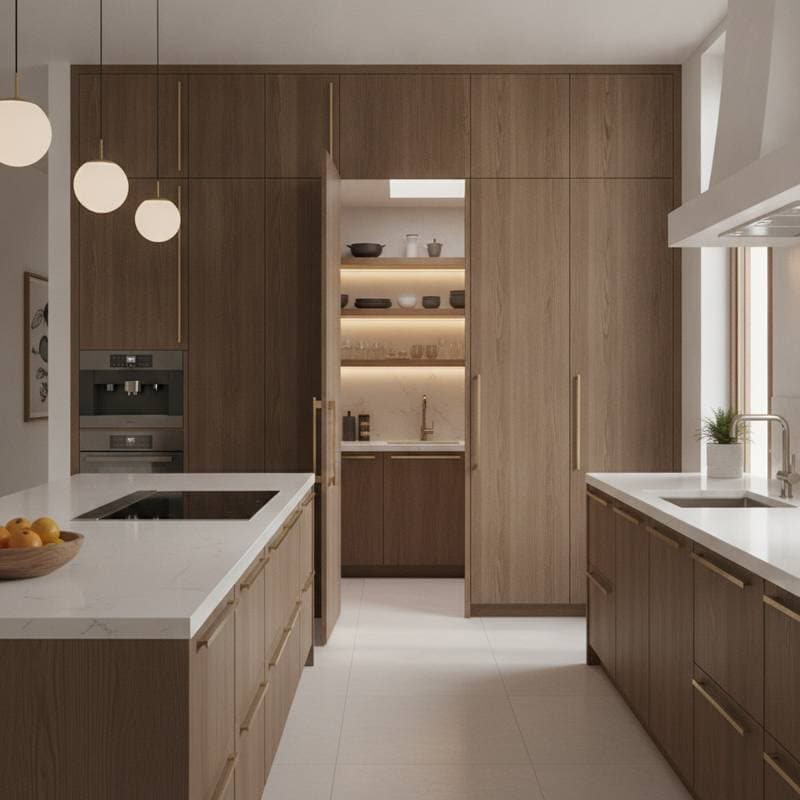
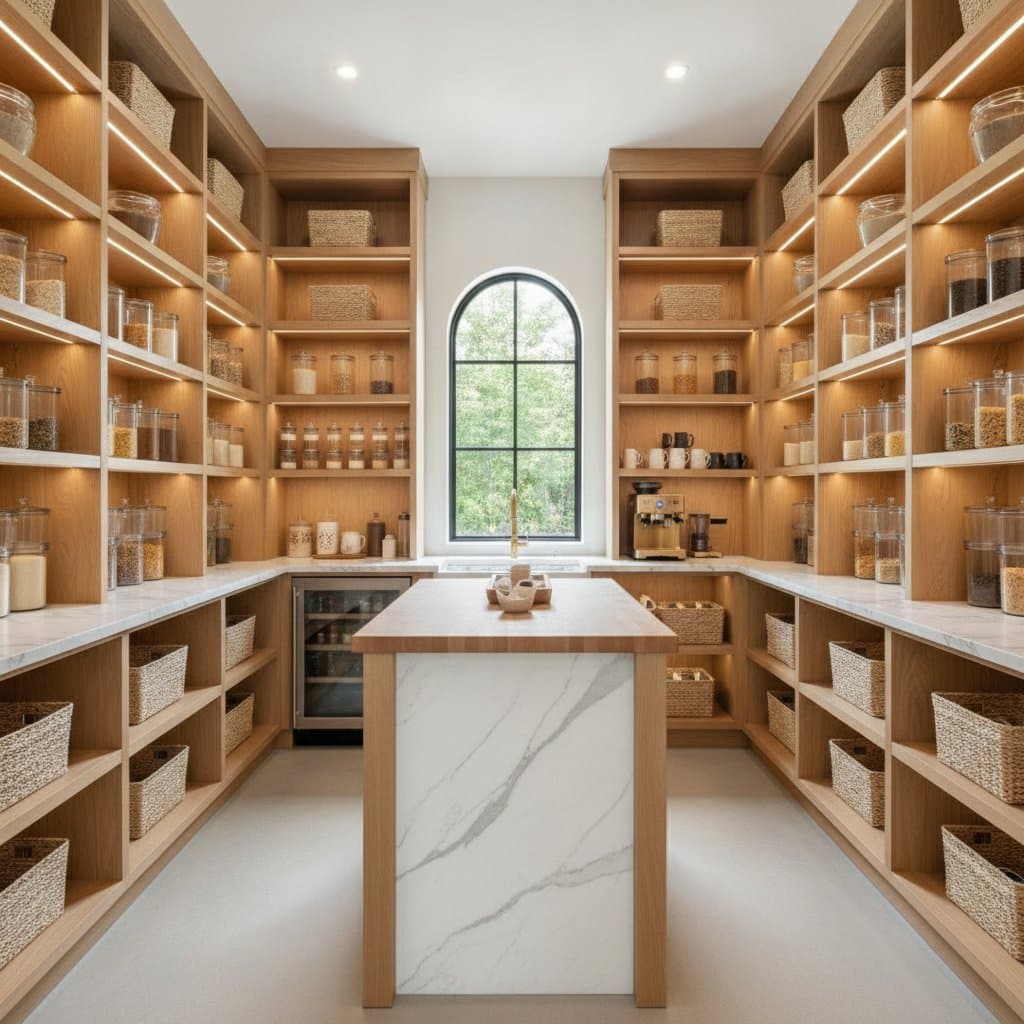
Even modest pantries with tall shelving, storage bins, and strategic lighting create an illusion of expanded kitchen space. Such elements convey efficient home functionality to viewers. Homeowners with available square footage near the kitchen entrance or laundry area find value in quick conversions prior to listing.
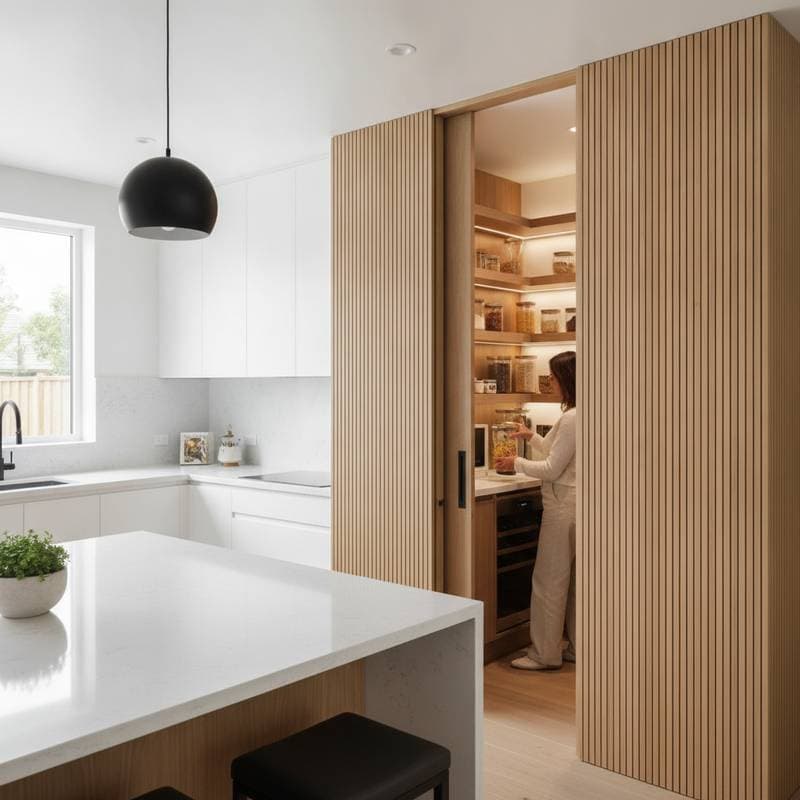
To maximize impact, integrate pantry designs that align with overall kitchen aesthetics. Consider pull-out drawers for spices and adjustable shelves for bulk items. These details not only enhance usability but also highlight the home's modern appeal during showings.
Essential Safety Measures and Regulations
Safety remains paramount in any renovation project. Proper precautions prevent accidents and ensure compliance.
Prior to altering walls, use a stud sensor to identify electrical lines. Disconnect power at the breaker panel before handling outlets or fixtures. Don protective gear, including gloves, goggles, and a dust mask, during drywall demolition.
For additions like lighting or outlets, consult a licensed electrician. Local codes often mandate inspections for new electrical circuits. Store no flammable items near power sources. Position outlets at least 18 inches above the floor and distant from cleaning products.
Compliance with building standards avoids costly rework. Verify regional requirements early to streamline the process. Professional oversight in electrical and structural work provides peace of mind.
Practical Implementation Steps
Follow these steps to execute your pantry project efficiently.
- Determine the Space Allocation. Assess current walls and nearby areas for reconfiguration potential.
- Establish a Budget Framework. Target $4,000 to $7,000 for a standard installation that delivers strong resale benefits.
- Solicit Multiple Quotes. Obtain at least two proposals covering carpentry and electrical needs to prevent scheduling issues.
- Select Appropriate Materials. Opt for shelving that complements kitchen decor and aligns with your maintenance preferences.
- Initiate Scheduling Promptly. Procure materials ahead of busy remodeling seasons to stabilize expenses.
A walk-in pantry merges essential storage with aesthetic and functional advantages. Thoughtful planning and prudent budgeting transform this investment into a swift enhancement of home usability and market desirability, often completed within weeks.