Terrazzo Revival: A Projected 6 Percent Home Value Increase by 2026
Expected return: Upgrading to terrazzo flooring may enhance resale value by approximately 6 percent, with installation expenses between $25 and $80 per square foot.
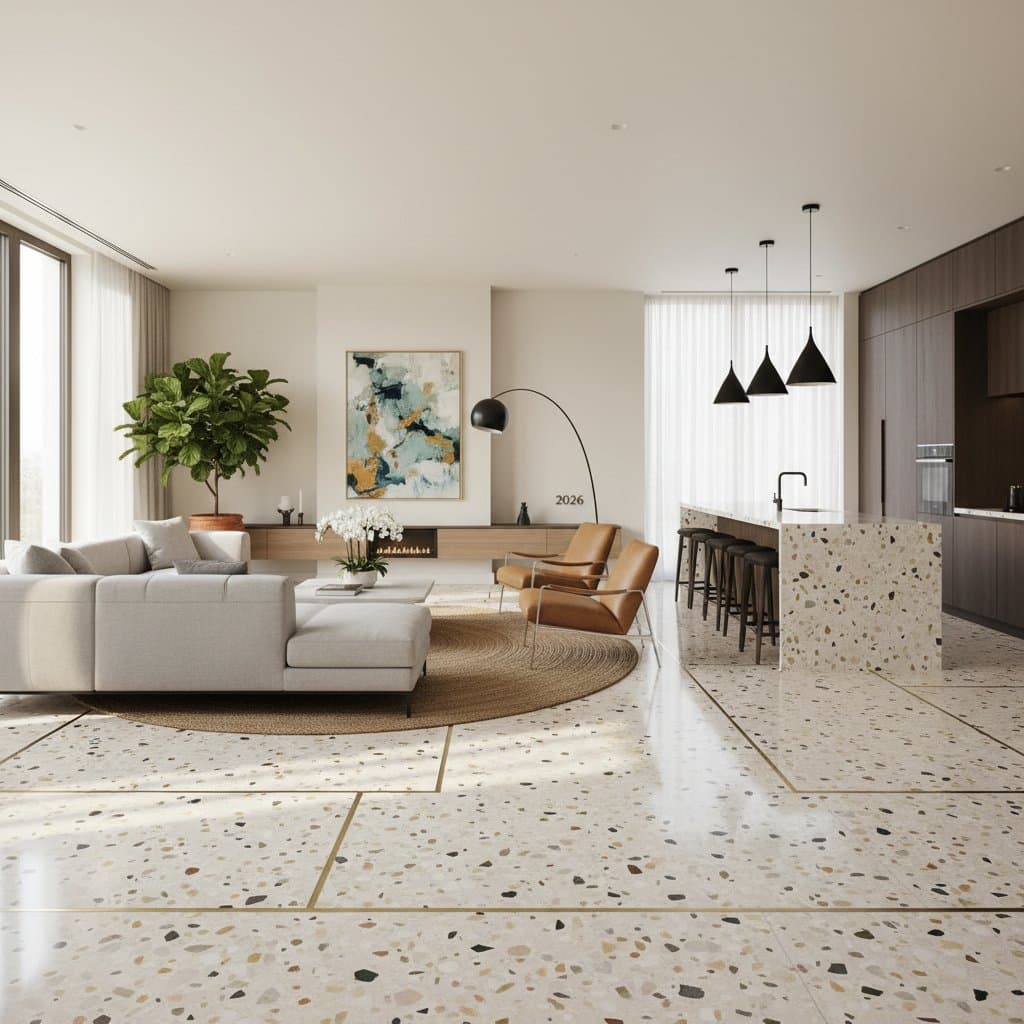
Homeowners seeking a flooring solution that endures for decades while offering a bespoke appearance will find terrazzo returning in popularity. Buyers increasingly pay premiums for properties featuring this material, and experts anticipate this advantage will grow. The combination of crushed stone aggregates and binding resin adapts seamlessly to contemporary and mid-century modern aesthetics, rendering it a versatile long-term investment.
Factors Influencing Costs
Terrazzo appears straightforward after polishing, yet expenses vary considerably depending on materials and preparation requirements. Grasping these elements enables accurate budgeting and avoids unexpected charges.
1. Materials
- Cement-based terrazzo typically costs $25 to $50 per square foot. This variant works well in interior spaces with consistent moisture levels.
- Epoxy-based terrazzo ranges from $40 to $80 per square foot, providing vibrant color choices and thinner application layers.
- Aggregates such as marble chips, glass, or recycled materials influence both expense and the intricacy of the final pattern.
2. Labor
The installation process demands significant labor. Experienced professionals charge $12 to $25 per square foot for tasks including mixing, pouring, grinding, and sealing. Regional labor shortages may prolong timelines or elevate fees.
3. Project Size and Accessibility
Projects smaller than 200 square feet incur higher per-unit costs due to mobilization efforts. Multi-room installations require expansion joints and additional polishing stages. Restricted access points lead to supplementary hauling charges.
4. Subfloor Preparation
Existing concrete slabs frequently necessitate crack repairs or moisture mitigation. Allocate $3 to $6 per square foot for these preparations. Neglecting them risks future delamination issues.
5. Additional Features
- Custom inlays or logos: Add $5 to $15 per square foot.
- Edge trims or thresholds: Add $2 to $4 per linear foot.
- Integration with radiant heating: Add $3 to $5 per square foot for necessary insulation and spacing adjustments.
Reserve an additional 10 to 15 percent of the budget to account for unforeseen issues in older structures or irregular subfloors.
DIY Options Versus Professional Installation
Terrazzo installation benefits from expertise and meticulous attention. The majority of homeowners opt for professional services to achieve optimal results.
Suitable DIY Tasks
- Applying small patches using pre-mixed repair kits.
- Resealing existing terrazzo surfaces every few years.
- Routine cleaning with pH-neutral solutions.
Tasks Requiring Professionals
- Complete pours, grinding, and polishing procedures.
- Designing large-scale color transitions or divider strip configurations.
- Installing moisture barriers.
Potential risks: Inadequate mixing or improper curing leads to permanent cracks. Essential tools include planetary grinders, diamond-impregnated pads, and industrial vacuums, which prove costly to rent and challenging to operate. Precision in pacing and surface leveling remains crucial.
Engage a licensed terrazzo specialist for evaluations involving pitting, extensive cracks, or irregular wear. Such experts determine the subfloor's suitability for a new installation.
Maintenance Strategies and Warranty Details
Terrazzo enhances property value through its exceptional durability. Proper upkeep ensures it outlasts many alternative flooring materials.
Daily and weekly maintenance:
- Sweep or mop weekly using a neutral cleaner diluted in water.
- Steer clear of acidic substances or abrasive chemicals.
- Apply a fresh sealant every 2 to 3 years to preserve shine and resist stains.
Warranty information: Most installers provide 1 to 5 years coverage for labor and materials, with sealants often carrying independent guarantees. Maintain detailed records of upkeep to uphold warranty terms.
Areas prone to wear:
- Entryway thresholds accumulate abrasive particles that diminish polish over time.
- Dragging heavy furniture risks micro-fractures; employ protective felt pads.
- Unprotected edges adjacent to moisture sources may stain; reinforce these zones with targeted sealant applications.
Consider scheduling a professional resealing as a key upgrade. This measure safeguards against water intrusion and revitalizes the appearance at a modest expense.
Market Trends and Value Appreciation
Industry observers note that terrazzo exemplifies superior craftsmanship in real estate. Prospective buyers appreciate its sustainability and resilience. The material's incorporation of recycled elements and minimal upkeep requirements resonate with environmentally conscious design preferences.
This evolving perception underpins the forecasted 6 percent home value uplift. Properties boasting authentic or meticulously restored terrazzo surfaces capture superior photographic appeal and demand less ongoing maintenance compared to hardwood or ceramic alternatives. Appraisers frequently highlight the material's longevity as a value-adding attribute.
Geographic differences apply. In humid coastal regions, terrazzo outperforms wood thanks to inherent moisture tolerance. In arid interior markets, epoxy formulations gain traction for their color versatility and lower susceptibility to fractures.
Steps to Proceed with Your Terrazzo Project
- Obtain estimates from at least two or three certified terrazzo specialists. Inquire about both epoxy and cement-based systems.
- Examine the subfloor condition. Address any moisture problems prior to commencing installation.
- Examine aggregate samples. Assess them in your home's lighting to verify color harmony.
- Establish a project schedule. Allow two to four weeks and ensure the space remains unobstructed.
- Incorporate ongoing care into your budget. Plan for periodic resealing expenses.
Terrazzo provides a flooring choice that transcends fleeting trends while delivering tangible financial benefits. Initiate the process in a single prominent area to evaluate the outcome before broader implementation.