Urban areas typically mandate permits for modifications involving load-bearing elements, power upgrades, or space repurposing. Basements often require emergency exit provisions under egress standards.
Cost Variations by Location:
Contractor fees in urban coastal zones or affluent markets may reach twice those in countryside settings, ranging from $60 to $140 hourly for qualified specialists.
Sourcing Materials:
Specialty items like imported interlocking gym mats or bespoke paneling can face extended delivery periods. Initiate orders well in advance to prevent timeline disruptions.
Case in Point:
Los Angeles projects converting garages must adhere to Title 24 energy efficiency standards. Midwestern basement installations prioritize defenses against dampness and incorporate fire-resistant materials to satisfy codes.
Prioritizing Safety Measures
Electrical Precautions:
Install outlets with grounding features and ground-fault circuit interrupter safeguards adjacent to water elements. Distribute high-power devices across separate circuits to avoid overloads.
Load-Bearing Integrity:
Verify the supportive capacity of floors prior to positioning substantial storage units or weight stacks. Consult engineers to bolster beams or concrete bases if necessary.
Air Quality Management:
Equip the area with exhaust fans or connected duct systems to eliminate moisture accumulation. Ensure no obstructions impede air circulation in enclosed environments.
Compliance with Fire and Structural Standards:
Repurposed garages and basements generally require ionization smoke alarms, flame-retardant wallboard, and operable escape windows.
Apparatus Safeguards:
Anchor collapsible shelving and glass panels directly to wall studs for stability. Route cables away from high-traffic zones. Adhere strictly to equipment specifications regarding maximum loads.
Frequently Asked Questions
What Minimum Dimensions Suit a Hidden Home Gym?
A streamlined configuration requires no less than 8 feet by 10 feet. Accommodating several apparatus calls for 12 feet by 15 feet or greater. Allocate at least 3 feet of unobstructed space surrounding each item to facilitate safe motion.
Is Construction Feasible in Rented Properties?
Proceed only with fully reversible modifications. Opt for movable floor coverings and collapsible gear. Refrain from permanent electrical or framing alterations without documented landlord consent.
Which Surfaces Perform Optimally?
Interlocking rubber tiles or resilient cork underlays excel in absorbing shocks and resisting dampness. Durable vinyl sheet flooring offers versatility for hybrid-use rooms, blending seamlessly when the fitness setup retracts.
Does This Upgrade Impact Property Assessments?
Completed enhancements may incrementally increase the taxable valuation, particularly if they expand usable area. Consult your regional tax authority prior to commencing work.
How to Conceal the Setup for Visitors?
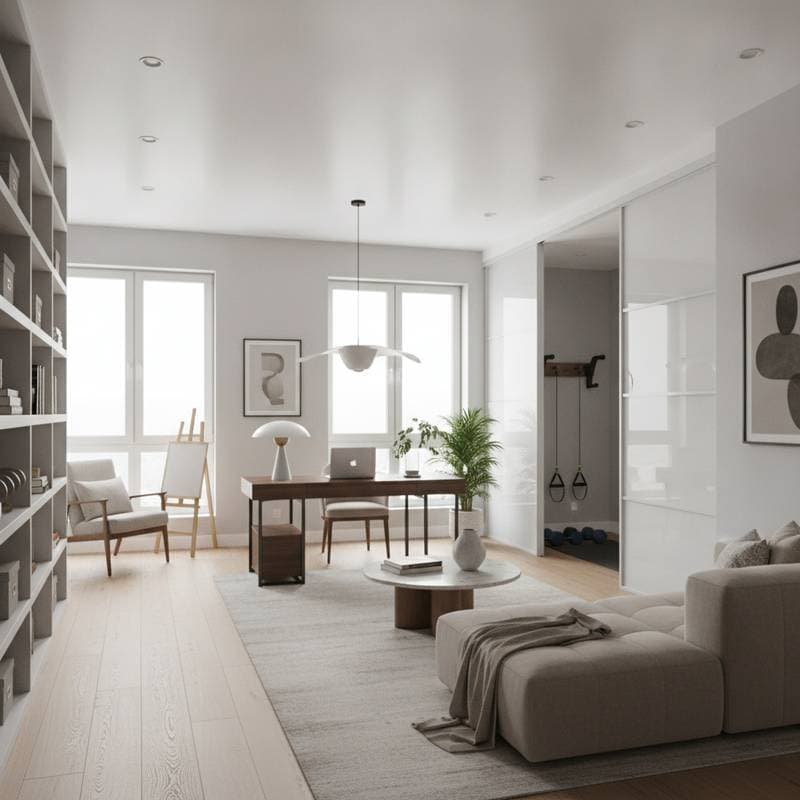
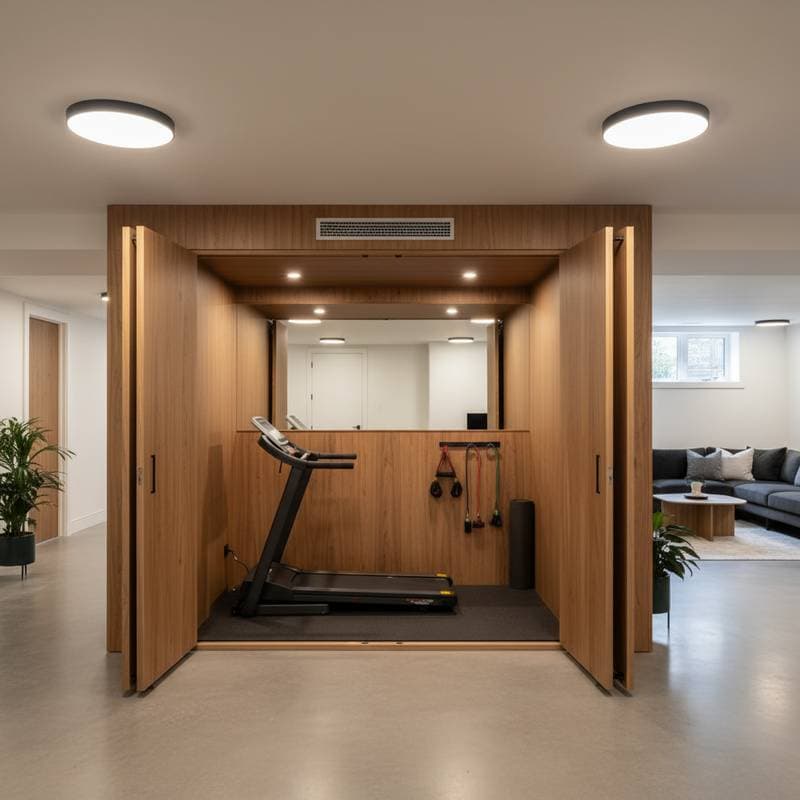
Employ gliding partitions, built-in wardrobe fronts, or recessed cabinetry that aligns flatly with surrounding walls. Position mirrored surfaces on the reverse side of panels to preserve natural light in the concealed state.
Steps to Implement Your Vision
Concealed home gyms yield substantial lifestyle improvements and asset appreciation. Success hinges on precise aesthetics, robust airflow solutions, and compliant electrical integrations. Begin by drafting a detailed blueprint aligned with your available area and exercise objectives.
Solicit estimates from vetted contractors specializing in electrical and surfacing tasks. Request portfolios of comparable installations and verify adherence to regional ordinances before proceeding.
Upon completion, this addition grants effortless access, shielded seclusion, and quantifiable worth. It remains unobtrusive during idle periods while standing prepared for routine sessions. For numerous residents, this fusion of utility and subtlety positions it among the shrewdest home enhancements.