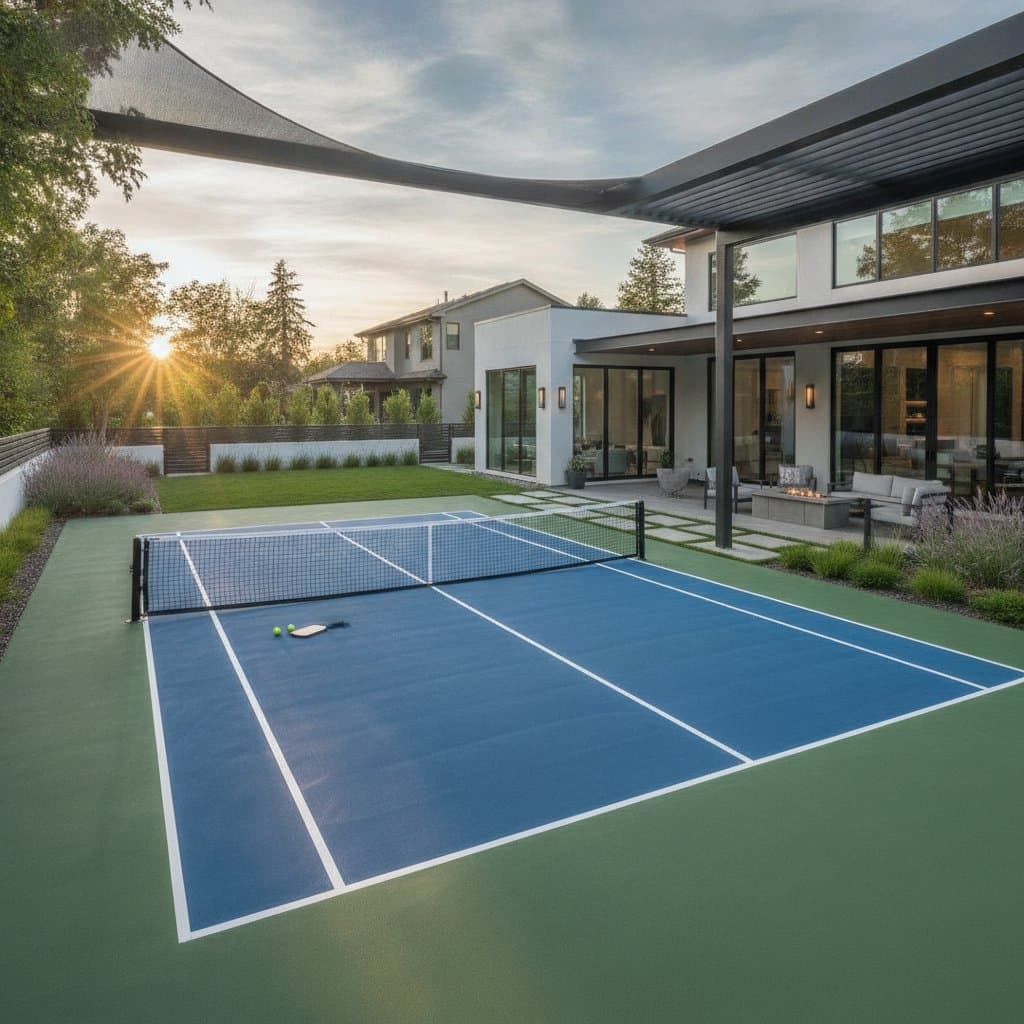
Pickleball Courts and Home Value: Understanding the 92% ROI Claim
A backyard pickleball court typically costs between $20,000 and $60,000. Many homeowners recover approximately 92% of that investment through increased property value. However, actual returns depend on location, buyer preferences, permit requirements, drainage quality, and overall design.
Project Overview
| Factor | Typical Range |
|---|---|
| Installed cost | $35,000 |
| Cost range | $20,000 to $60,000 |
| Planning and construction time | 4 to 12 weeks |
| Surface lifespan | 5 to 12 years |
| Optimal construction season | Dry, mild weather |
| DIY suitability | Low for full construction, moderate for striping |
The 92% figure serves as a budgeting guide rather than a guaranteed outcome. A $35,000 court that adds $32,200 to market value achieves the 92% return before selling costs. Courts that cost $60,000 may not deliver the same percentage return, particularly in smaller yards or neighborhoods with limited demand for outdoor recreation.
Homeowners must first decide between a dedicated court, a multisport surface, or a flexible recreation area. Dedicated courts provide the clearest use case. Shared surfaces accommodate basketball, badminton, workouts, and family activities, which may attract a broader range of buyers.
Pre-Construction Safety and Planning
Several critical checks must occur before ordering materials or hiring contractors.
- Verify property lines, easements, drainage routes, and underground utilities.
- Contact the local planning office regarding permits, setbacks, fencing requirements, lighting restrictions, and noise ordinances.
- Review homeowners association rules that may limit sports structures or exterior lighting.
- Design safe access routes around the court with adequate space beyond painted lines.
- Use proper eye protection, hearing protection, gloves, and dust control during cutting or demolition activities.
- Contact utility locating services before digging posts, footings, drains, or electrical trenches.
- Hire licensed electricians for new circuits, lighting, controls, and buried electrical work.
- Direct water away from the playing surface to prevent coating damage and slipping hazards.
A regulation pickleball court measures 20 feet by 44 feet. The finished project requires additional space for fencing, player movement, drainage, and access. Plan for at least 30 feet by 60 feet for a comfortable single-court layout. Narrow lots may require compromises that reduce both enjoyment and resale appeal.
Cost Components
Surface and Base Preparation
Existing ground conditions significantly impact project costs. Level concrete slabs may require only cleaning, repairs, and coating. Soil, grass, or damaged patios typically need excavation, grading, compacted stone, drainage systems, and new concrete.
Site preparation costs range from $3,000 to $15,000. Concrete slab installation adds $8,000 to $25,000. Acrylic sport coatings cost between $3,000 and $8,000. Crack repair and resurfacing range from $2,000 to $10,000.
The base fails first when water moves beneath it or soil settles unevenly. Skipping compaction or drainage to reduce costs leads to repeated repairs. A smooth coating cannot correct foundation movement.
Fencing and Gates
Ball-stop fencing improves safety and reduces time spent retrieving balls. Expect to pay $4,000 to $12,000 for fencing, gates, posts, and installation. Taller fencing increases costs and may face stricter neighborhood regulations.
Gates must accommodate maintenance equipment. Include latches that children can operate safely without creating easy escape routes toward streets or pools.
Lighting and Electrical Systems
Lighting adds $4,000 to $15,000 depending on pole height, fixture quantity, controls, trenching requirements, and electrical service capacity. Glare affects neighbors and players, so fixtures should direct light downward. Shielded fixtures cost more but reduce neighbor complaints.
Timers or programmed controls prevent wasted energy and neighborhood conflicts from unmanaged lighting.
Drainage, Landscaping, and Access
Drainage improvements typically cost $2,000 to $10,000. Landscaping, retaining walls, walkways, seating, and storage add another $3,000 to $20,000.
These features influence perceived quality. Courts surrounded by mud, exposed wiring, or poor access diminish the value of the entire project.
Permits and Site Preparation
Permit fees range from $200 to $2,000 depending on location. Demolition, soil removal, concrete disposal, and hauling add $1,000 to $6,000.
Budget an additional 10 to 15 percent for unexpected issues in older homes, tight-access yards, and projects that reveal drainage problems.
Court Quality Tiers
| Tier | Cost Range | Key Features |
|---|---|---|
| Good | $20,000 to $30,000 | Basic slab, coating, modest fence, limited extras |
| Better | $30,000 to $45,000 | Strong drainage, quality coating, full fence, gate, seating |
| Best | $45,000 to $60,000+ | Premium base, lighting, landscaping, storage, multisport design |
The Good tier works when a suitable slab and level site already exist. This option offers less flexibility and may require earlier repairs.
The Better tier provides the strongest balance between enjoyment and resale value. Proper drainage and base preparation prevent repeat repairs and represent the most valuable single upgrade.
The Best tier suits large properties with strong outdoor recreation demand. Extra features do not always produce equal resale value. Buyers may appreciate lighting while neighbors view it as a nuisance. Premium courts can over-improve properties for their specific market.
DIY Considerations
Appropriate DIY Tasks
Homeowners with proper tools and patience can handle smaller tasks.
- Remove light landscaping and prepare the work area.
- Assemble simple storage or seating.
- Apply approved line paint to sound, cured surfaces.
- Install low-voltage accessories that do not require new wiring.
- Maintain coatings, clean debris, and inspect cracks.
Required tools include straightedges, measuring devices, rollers, surface cleaners, personal protective equipment, and accurate layout marks. Minor striping mistakes create an unfinished appearance, so careful measurement prevents costly corrections.
Professional Installation Requirements
Qualified contractors should handle excavation, grading, soil compaction, concrete placement, major slab repairs, retaining walls, drainage systems, structural fencing, footings, electrical service, lighting, permit drawings, and code-sensitive work.
Professional installation becomes necessary when standing water, large cracks, soil movement, utility conflicts, or slopes requiring retaining work are present. These issues involve structural and safety risks. Low bids that exclude drainage, permits, or disposal do not provide complete comparisons.
Each contractor should provide written scope documents listing base thickness, reinforcement specifications, slope requirements, coating layers, fencing height, lighting controls, cleanup procedures, warranty terms, and exclusions.
Maximizing Return on Investment
The 92% ROI claim depends on buyer perception. Design choices should prioritize usefulness, cleanliness, and ease of maintenance.
Neutral color schemes that complement the home avoid permanent features that crowd the yard. Clear paths from the house, safe storage for paddles and balls, and seating areas that do not block play enhance functionality.
Multisport layouts may improve buyer appeal when extra markings remain orderly. Excessive lines can make spaces appear commercial or confusing.
Maintain records for permits, concrete specifications, coating products, repairs, and electrical work. Future buyers often inquire about construction quality and maintenance history.
Construction Timeline and Budget Planning
Construction requires 4 to 12 weeks, excluding permit delays. Weather can halt excavation, concrete work, and coating applications. Fencing, lighting components, and specialty coatings may require several weeks for ordering.
Request quotes before peak outdoor construction seasons for better scheduling flexibility. Avoid rushing concrete or coating work during damp conditions, as trapped moisture causes peeling and blistering.
Compare complete installed prices rather than surface costs alone. Confirm that quotes include permit handling, utility locating, excavation, soil removal, drainage, concrete testing, reinforcement, fence footings, electrical trenching, final cleanup, and warranty service.
Rebates for private recreation courts are uncommon. Energy incentives may apply to efficient lighting in some locations, but eligibility should be confirmed before relying on potential savings.
Ongoing Maintenance Requirements
Regular cleaning and inspection after heavy rain, freezing conditions, or ground movement protect the investment. Remove leaves and grit before they abrade coatings. Keep trees trimmed to prevent root damage and falling debris.
Maintenance tasks include surface cleaning, crack inspection, drainage system checks, fence repairs, lighting maintenance, and coating touch-ups. Document all maintenance activities to support future resale value.
Final Planning Considerations
Successful pickleball court projects balance enjoyment with practical resale considerations. Location-specific factors, proper construction techniques, and ongoing maintenance determine whether the 92% ROI target becomes reality. Careful planning and professional installation when needed protect both the investment and long-term property value.