Terrazzo Revival: The 2025 Flooring Trend Reducing Costs by 40 Percent
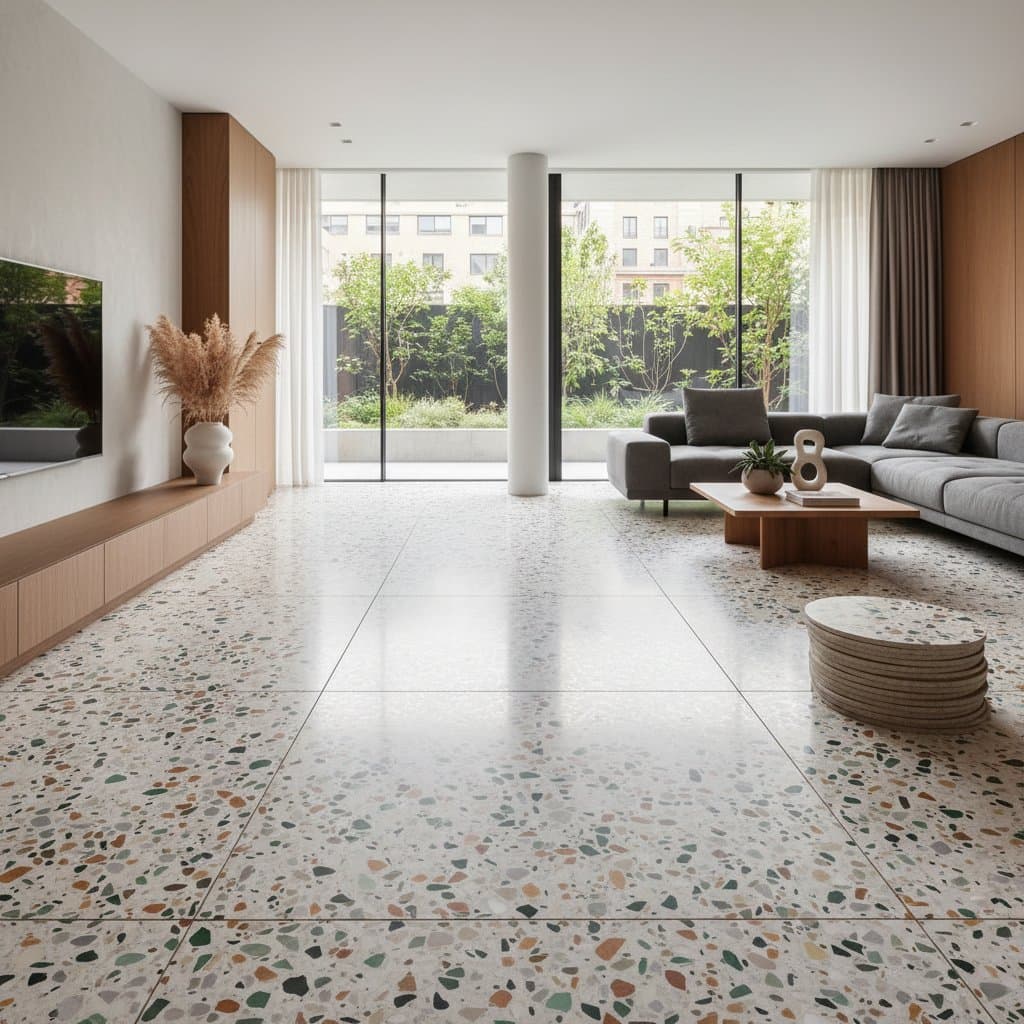
Typical installation costs range from $10 to $18 per square foot, varying by material composition and surface finish. The resurgence of terrazzo gains momentum through advancements in prefabricated panels and recycled chip formulations, which lower expenses by approximately 40 percent. This development positions the material within reach of standard flooring budgets, transforming it from an exclusive choice to a practical one.
Key Cost Influences
1. Material Selection
- Prefabricated Terrazzo Tiles: Priced at $8 to $14 per square foot, these options facilitate quicker installation with reduced disruption, making them suitable for renovation projects.
- Poured Terrazzo: Ranging from $16 to $22 per square foot, this method offers a continuous appearance, customizable hues, and demands specialized expertise.
2. Aggregate Selection
Choices such as marble, glass, quartz, or recycled concrete chips influence both visual appeal and pricing. Glass or recycled variants prove more economical and support eco-conscious modifications. Opting for high-end marble aggregates can elevate costs by as much as 25 percent.
3. Binder and Surface Treatment
Epoxy binders accelerate curing and minimize grinding efforts. Cement binders provide an authentic aesthetic yet extend labor duration. Polished surfaces incur an additional $2 to $3 per square foot compared to matte finishes.
4. Labor and Site Accessibility
Labor charges span $4 to $10 per square foot, influenced by geographic location and contractor proficiency. Navigating confined spaces like staircases or multi-level areas increases preparation time and associated fees.
5. Subfloor Preparation and Waste Management
Removing existing tiles or adhesives costs $1 to $3 per square foot. Ensuring concrete flatness or installing vapor barriers may add $2 to $5 per square foot.
6. Regulatory Compliance
Interior terrazzo installations typically bypass permitting requirements unless alterations affect structural integrity. Verify local regulations for commercial or multi-unit properties.
DIY Approaches Versus Professional Installation
Suitable DIY Applications
- Prefabricated terrazzo tiles designed for interlocking or adhesive application over prepared surfaces.
- Routine sealing and cleaning procedures.
- Essential equipment includes a wet saw, notched trowel, grout float, safety eyewear, gloves, and knee protection.
Scenarios Requiring Professional Expertise
- Projects surpassing 150 square feet in scope.
- Designs featuring curves, edging, or multicolored patterns.
- Subfloors exhibiting irregularities or damage.
- On-site poured terrazzo installations.
Potential Pitfalls of DIY Attempts
Omitting vapor barriers risks surface separation. Inadequate mixing results in fragile seams and lackluster areas. Excessive grinding or inconsistent sealing compromises the overall appearance. Allocate an additional 10 to 15 percent of the budget for corrections in established homes.
Scheduling and Cost-Saving Strategies
Delivery Timelines
Prefabricated terrazzo tiles become available in 2 to 3 weeks. Custom poured installations require 4 to 6 weeks for sourcing materials and achieving precise color coordination.
Installation Durations
Anticipate 2 to 5 days for tile placement. Poured systems demand 7 to 14 days, accounting for curing periods.
Seasonal Considerations
Arrange work during temperate conditions, as high humidity or low temperatures hinder curing processes. Secure materials ahead to circumvent delays during high-demand renovation cycles.
Methods to Minimize Expenses
- Select recycled aggregates over marble alternatives.
- Restrict variations in color and divider elements.
- Inquire about surplus or remnant tiles for compact areas.
- Integrate terrazzo selectively with complementary flooring in less prominent zones.
- Pursue incentives for materials containing recycled components.
Upkeep and Protection Coverage
Daily Maintenance Practices
Sweep and damp-mop weekly using a pH-neutral solution. Steer clear of acidic or harsh cleaners. Apply resealer every 2 to 3 years for epoxy-based systems or every 5 years for cement varieties. Restore luster to polished surfaces through buffing.
Common Areas of Wear
Sealer degradation occurs under intense foot traffic. Grout fractures appear in tiled configurations. Fading results from direct sunlight exposure adjacent to windows without filtration.
Guidance on Warranties
Contractors typically guarantee labor for 1 to 5 years. Suppliers extend material coverage to 10 to 15 years for epoxy terrazzo. Retain documentation of purchases and upkeep records to support any claims.
Terrazzo Versus Alternative Flooring Options
| Flooring Type | Installed Cost | Lifespan | Maintenance | Look and Feel |
|---|---|---|---|---|
| Luxury Vinyl | $4 to $8 per sq. ft. | 15 to 25 years | Low | Smooth texture, synthetic composition |
| Ceramic Tile | $8 to $15 per sq. ft. | 30 to 50 years | Moderate | Firm surface, evident grout seams |
| Engineered Wood | $10 to $18 per sq. ft. | 20 to 40 years | Moderate | Warm sensation, sensitive to moisture |
| Terrazzo (Tile) | $8 to $14 per sq. ft. | 40 to 75 years | Low | Fluid design, personalized colors |
| Terrazzo (Poured) | $16 to $22 per sq. ft. | 50 to 75 years | Low | Premium seamless finish |
Contemporary terrazzo solutions offer superior longevity and reduced care compared to peers in similar price ranges. The primary consideration involves the intricacies of the installation process.
Emerging Market and Aesthetic Directions
Professionals extend terrazzo applications to countertops, stair treads, and exterior patios, amplifying its versatility. The incorporation of recycled chips aligns with sustainability objectives while introducing understated motifs that enhance spatial harmony.
Popular configurations feature neutral foundations accented by a single hue. Binders in warm grays or muted beiges paired with glass aggregates suit transitional and traditional settings alike. Oversized terrazzo tiles supplant finer mosaics in expansive layouts.
Price equilibrium persists as prefabricated options proliferate and efficiency improves. Specialists adopt advanced grinding tools and low-emission sealants, shortening labor and complying with eco-certifications.
Steps to Implement Your Terrazzo Project
- Establish a budget baseline of $10 to $18 per square foot for typical residential applications.
- Evaluate subfloor conditions, as unevenness or dampness incurs extra expenses.
- Select between tiled and poured formats, prioritizing prefabricated tiles for efficiency and economy or poured for uninterrupted opulence.
- Obtain estimates from a minimum of three specialists, inquiring about eco-friendly material availability.
- Time the project to evade busy seasons and accommodate potential supply interruptions.
- Safeguard the installation through entryway rugs, timely resealing, and appropriate cleaning agents.
Advancing Your Flooring Upgrade
Consult local experts to tailor terrazzo to your space, ensuring alignment with durability goals and design visions. This investment yields decades of resilient, stylish performance that elevates daily living.