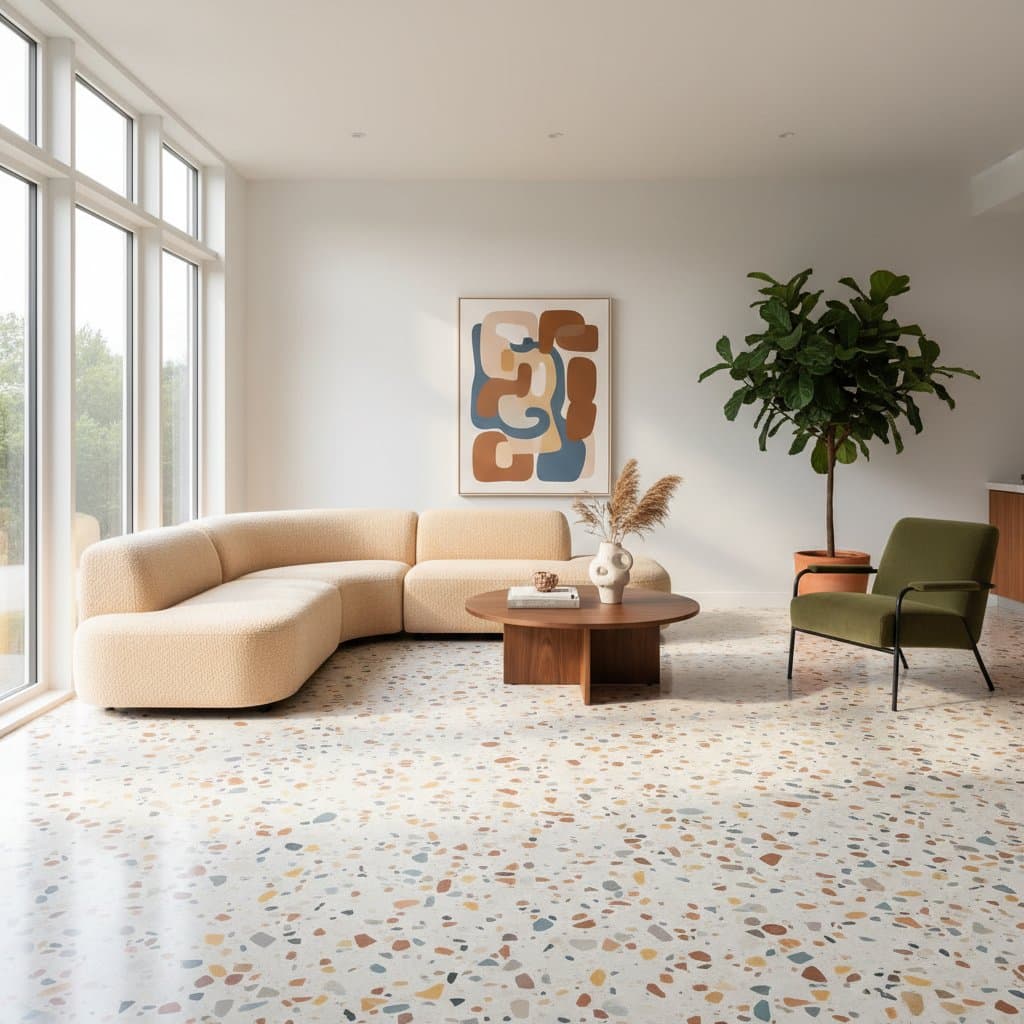
Terrazzo Revival: Increase Home Resale Value by 11 Percent
Expected resale increase: approximately 11 percent when terrazzo replaces worn tile or laminate.
Homeowners seeking a flooring upgrade that delivers vibrant colors, distinctive textures, and enhanced resale appeal should consider terrazzo. This material offers exceptional durability, ease of repair, and eye-catching visuals. Options include refinishing existing terrazzo or installing fresh poured or tile versions, both of which attract buyers who prioritize superior craftsmanship and unique character.
Key Cost Considerations
Materials
- Aggregate selection: Choices such as glass, marble, or recycled chips influence expenses. Glass aggregates command higher prices yet provide richer hues and a shimmering effect.
- Binder options: Epoxy binders create a sleek, lightweight surface, whereas cement binders produce a subtle, matte appearance.
- Finish quality: Opting for a high-polish finish adds roughly $2 per square foot, enhancing resistance to stains and wear.
Labor
- Poured terrazzo: This method demands expert trowel work, precise divider strip placement, and thorough grinding. Labor often accounts for 60 percent of the overall project cost.
- Tile terrazzo: Installation reduces labor demands by half, though proper surface preparation remains essential for even results.
Project Scale and Design
- Smaller areas under 200 square feet incur higher per-square-foot costs due to fixed setup times comparable to larger installations.
- Intricate borders or multicolored designs increase expenses by 10 to 15 percent.
Site Preparation and Access
- Removing old adhesives and repairing subfloors can add $3 to $6 per square foot.
- Features like stairs, tight hallways, or multi-level layouts prolong labor requirements.
Regulatory and Waste Management
- Terrazzo projects rarely require permits unless they involve structural modifications.
- Disposal of removed tile typically costs $1.50 to $3 per square foot, covering debris removal and haul-away.
DIY Installation Versus Professional Services
Suitable Scenarios for DIY
Consider managing terrazzo tile installation personally if the following conditions apply:
- Prior experience with tile setting exists.
- Access to tools such as a wet saw and a level is available.
- Confidence in mixing and applying epoxy grout is present.
Potential drawbacks: Issues like uneven subfloors or inadequate sealing may lead to cracks and faded areas. For compact spaces like bathrooms or laundry rooms, a DIY approach can yield savings of about $3,000.
Reasons to Engage Professionals
Select a certified terrazzo specialist for projects that include:
- Poured flooring or elaborate patterns.
- Refinishing of damaged existing terrazzo.
- Uncertain moisture conditions in the subfloor.
Benefits: Professionals employ specialized diamond grinders, robust sealers, and moisture testing equipment. Such expertise prevents common errors that could compromise longevity or aesthetics. Professional installations provide reliable outcomes along with warranties extending up to 10 years.
Upkeep Strategies and Warranty Details
Daily Maintenance
- Sweep surfaces regularly and follow with a damp mop.
- Employ pH-neutral cleaning solutions; steer clear of acids or bleach.
- Refresh the sealer every 2 to 4 years, adjusted for foot traffic levels.
Repair Techniques
- Minor chips respond well to patching with color-matched epoxy.
- Substantial cracks require grinding followed by repolishing.
- Retain excess aggregate from the initial installation to facilitate matching repairs.
Extending Service Life
- Position mats at entrances to minimize abrasive grit.
- Attach felt pads to furniture legs.
- Refrain from dragging heavy objects to prevent scratches.
Warranty Information
- Epoxy terrazzo systems commonly include 5- to 10-year guarantees for surface durability.
- Cement-based terrazzo warranties emphasize structural stability, usually spanning 3 to 5 years.
- Verify that sealers and aggregates originate from the same manufacturer to preserve warranty validity.
Terrazzo in the Current Market Landscape
Buyers regard terrazzo as a high-end flooring choice that denotes meticulous quality. Real estate professionals note that properties featuring restored or newly laid terrazzo receive more competitive bids, particularly in areas where design innovation thrives. The material aligns with contemporary demands through its sustainable composition, minimal upkeep needs, and nostalgic charm.
Contemporary formulations incorporate recycled glass and resins, enabling customization to virtually any color scheme. Terrazzo integrates seamlessly into minimalist environments or mid-century modern settings. This adaptability broadens its resale potential by appealing to diverse aesthetic preferences.
Supply chains for terrazzo have expanded, with more manufacturers offering prefabricated tile options. Pricing remains stable, though custom aggregate mixes may face availability constraints; ordering materials in advance proves advisable.
Practical Steps to Proceed
- Evaluate existing terrazzo: Consult a professional for a quick assessment to determine restoration feasibility before opting for full replacement.
- Establish a budget: Allocate $18 to $38 per square foot for poured installations or $12 to $22 for tile versions.
- Time the project appropriately: Plan for moderate weather conditions to optimize curing and avoid scheduling disruptions.
- Obtain multiple estimates: Review at least two proposals, inquiring specifically about sealing processes and warranty provisions.
- Test on a smaller scale: Begin with a utility space like a laundry room or hallway to sample the material's impact prior to broader applications.
Terrazzo stands as a reliable investment, recouping expenses via elevated resale figures, extended durability, and enhanced everyday usability.