Dark Walls: A 6 Percent Home Value Increase in 2026 Trends
Dark walls have returned with significant impact, and prospective buyers take notice. Properties featuring rich, moody interiors command prices up to 6 percent higher than comparable homes with lighter palettes. This premium stems from the modern, grounded, and deliberate impression these deep colors create.
The current market favors this approach, making it an ideal moment to consider dark wall applications. Bold selections that balance personal expression with refined execution yield substantial returns.
Defining a Dark Wall
A dark wall extends beyond black; it encompasses deep hues with minimal light reflection. Consider options such as charcoal gray, navy blue, forest green, or espresso brown. These shades absorb light to foster cozy, refined environments rather than scattering illumination.
Suitable finishes include matte, eggshell, or satin. Glossy surfaces reflect excessive light and may appear stark. Matte variants conceal minor surface irregularities and suit bedrooms, dining areas, or offices. Satin provides durability for kitchens or hallways, facilitating straightforward maintenance.
Painting Costs for Dark Walls
| Task | Typical Cost | Factors Influencing Price |
|---|---|---|
| DIY Interior Painting | $2 to $4 per square foot | Paint quality, required coats |
| Professional Painting | $4 to $8 per square foot | Surface preparation, ceiling height, wall condition |
| Accent Wall Only | $150 to $300 | Room dimensions, finish type |
| Full Room Repaint | $400 to $1,200 | Labor rates, trim work, ceiling matching |
Costs fluctuate based on location and service provider. Budget additional expenses for textured surfaces, high ceilings, or transitions from dark to light colors that demand multiple primer layers.
Essential Tools and Materials
Standard equipment suffices, though premium selections enhance outcomes.
Tools:
- Roller and frame with 3/8-inch nap for smooth surfaces
- Angled brush for precise edging
- Painter's tape for clean boundaries
- Drop cloths to protect floors and furniture
- Ladder or step stool for reach
- Paint tray for efficient application
Materials:
- Premium interior paint formulated for depth
- Primer, particularly when overlaying lighter colors
- Sandpaper or sanding block for surface smoothing
- Mild detergent solution for pre-painting wall cleaning
Opt for primer tinted to match the intended hue; this minimizes topcoat layers and ensures uniform coverage.
Preparation and Safety Guidelines
While dark paint masks small imperfections, it accentuates larger issues. Repair cracks or holes and sand surfaces prior to application. Remove grease, dust, or residue through thorough cleaning.
Ensure adequate ventilation during the process. Select low-VOC or zero-VOC paints to limit volatile emissions. Don gloves and protective eyewear when managing primers or cleaning agents.
In homes built before 1978, conduct lead paint testing before any sanding. Adhere to regional safety regulations and proper waste disposal protocols.
Considerations for Region and Climate
In temperate or cold areas, deep tones warm interiors and promote intimacy. They complement ambient lighting and textured textiles effectively.
For hot, humid zones, dark paints may retain warmth; apply them to north-facing or interior walls away from direct sun. In stormy or moisture-prone environments, prioritize mildew-resistant formulations. Desert climates benefit from UV-stable paints to resist color degradation.
Verify compliance with local codes mandating low-emission products for renovations or new builds before purchasing supplies.
Ideal Spaces for Dark Walls
Living Rooms
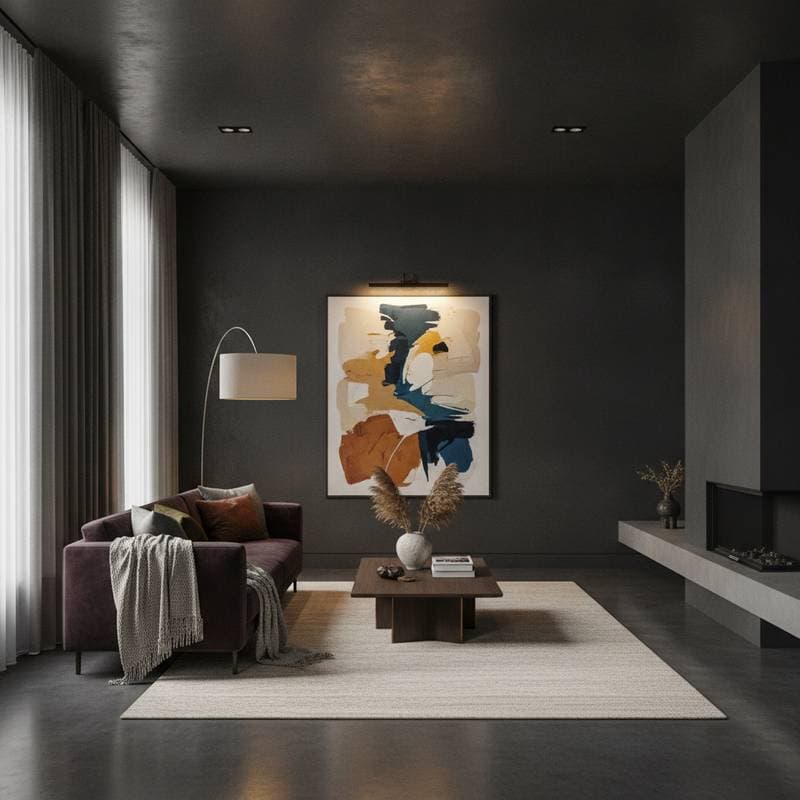
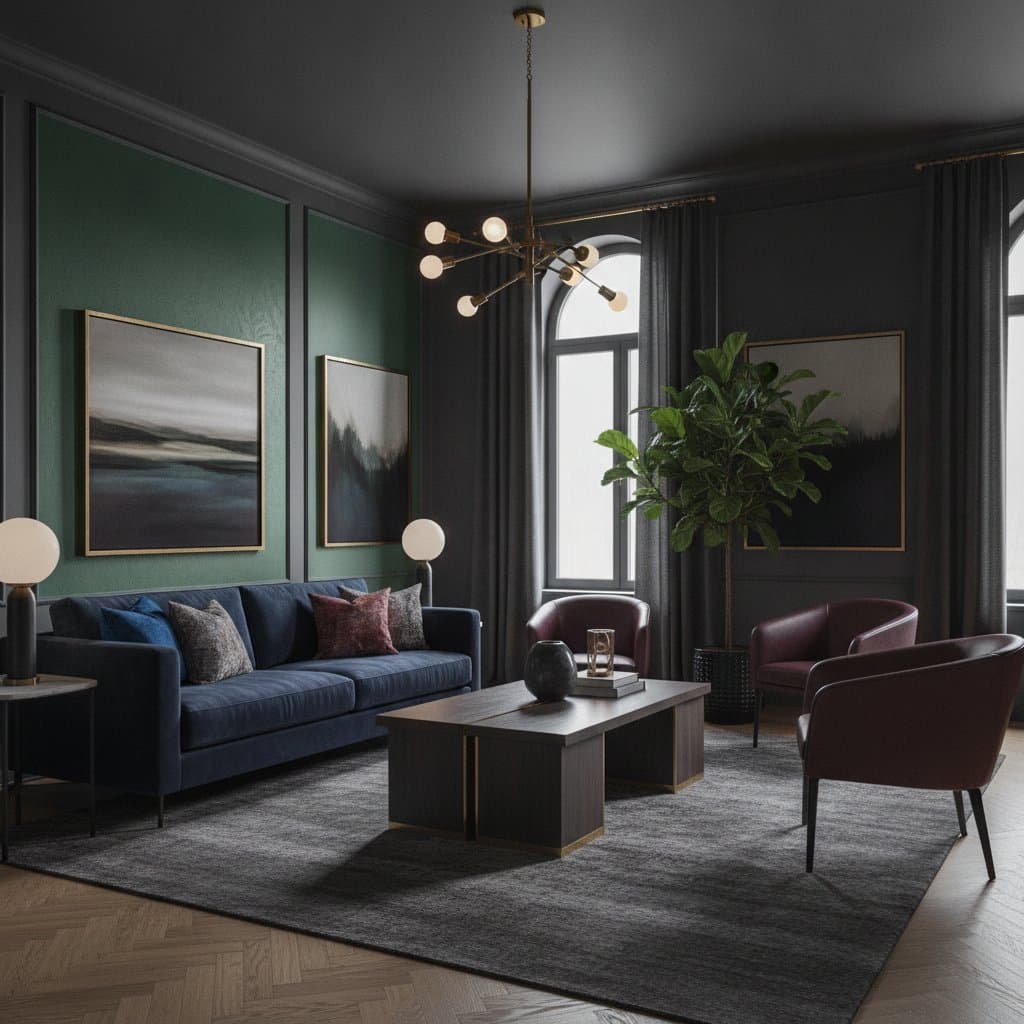
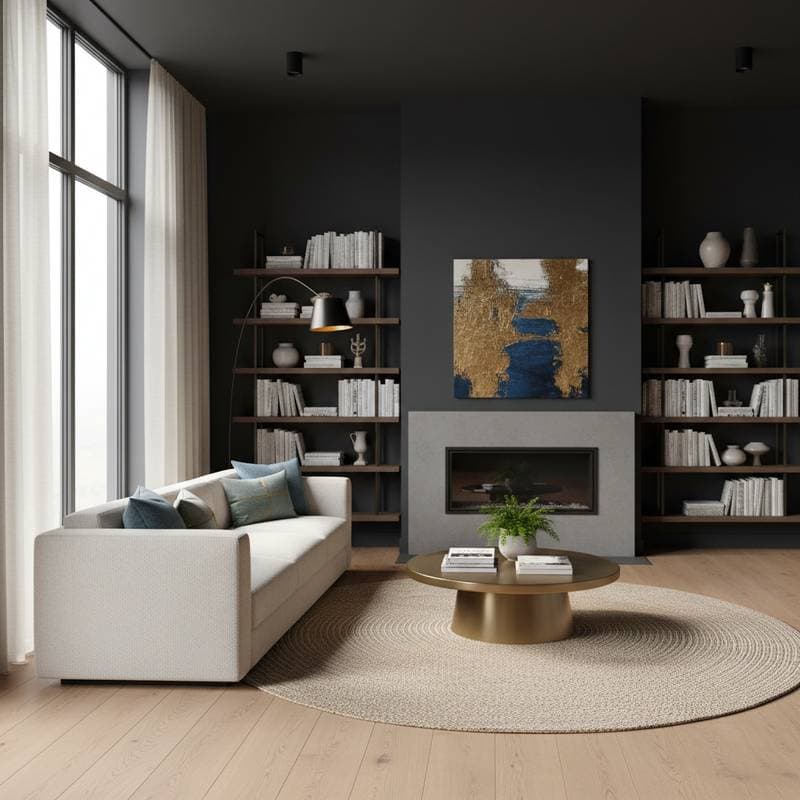
Dark walls elevate living rooms to focal points. They highlight artwork and fixtures dramatically. Incorporate warm-toned bulbs to maintain inviting atmospheres.
Bedrooms
Rich shades encourage relaxation. Navy, charcoal, or olive greens envelop the space like a sanctuary. Balance with fresh linens and diffused illumination.
Bathrooms
In compact bathrooms, dark walls evoke spa-like luxury. Employ satin or semi-gloss sheens for humidity tolerance and ease of upkeep.
Home Offices
These colors reduce screen glare and sharpen concentration. Integrate wooden elements or leather accents for an executive ambiance.
Common Pitfalls to Sidestep
- Applying dark paint to all surfaces; retain light trim or ceilings for balance.
- Omitting primer; underlying colors may bleed through.
- Selecting glossy sheens; they amplify flaws.
- Neglecting illumination; install targeted lamps or wall fixtures to sustain deliberate ambiance over murkiness.
Enduring Advantages
Dark walls demonstrate resilience over time. They withstand marks better than neutrals and require infrequent maintenance. At resale, they signal a contemporary, ready-to-occupy residence.
Should preferences evolve, reversal proves straightforward. Apply primer followed by lighter coats to restore brightness. This adaptability safeguards the initial outlay.
Expert Recommendations
- Apply tinted primer to accelerate coverage and intensify the hue.
- Maintain uniform rolling patterns to avoid lap marks or inconsistencies.
- Edge boundaries before filling centers for integrated results.
- Evaluate color under intended lighting; warm sources mellow blues and grays, while cool ones intensify greens and near-blacks.
- Simplify furnishings to allow wall tones to dominate the scheme.
Implementing Dark Walls Effectively
Begin with a single room to build assurance before expanding. Select shades aligned with natural light, personal aesthetic, and environmental factors.
Professional assistance ensures precision, while self-application offers control. Intentional execution maximizes both visual appeal and market edge.
One strategic project can yield personal fulfillment alongside financial gain. That 6 percent uplift often originates from a single decisive application.
Frequently Asked Questions
Do dark walls diminish room size?
They might, yet strategic lighting and contrasting elements preserve spaciousness without confinement.
Which trim colors complement dark walls?
White, cream, or untreated wood provides sharp definition and visual clarity.
Do dark paints fade more readily?
Primarily under prolonged sun exposure; UV-protective options or shading mitigate this.
Is primer necessary over light paint for dark?
It streamlines the process and refines the outcome, though direct application remains possible with added effort.
Are dark walls more challenging to upkeep?
Quite the opposite; matte surfaces effectively conceal everyday wear.