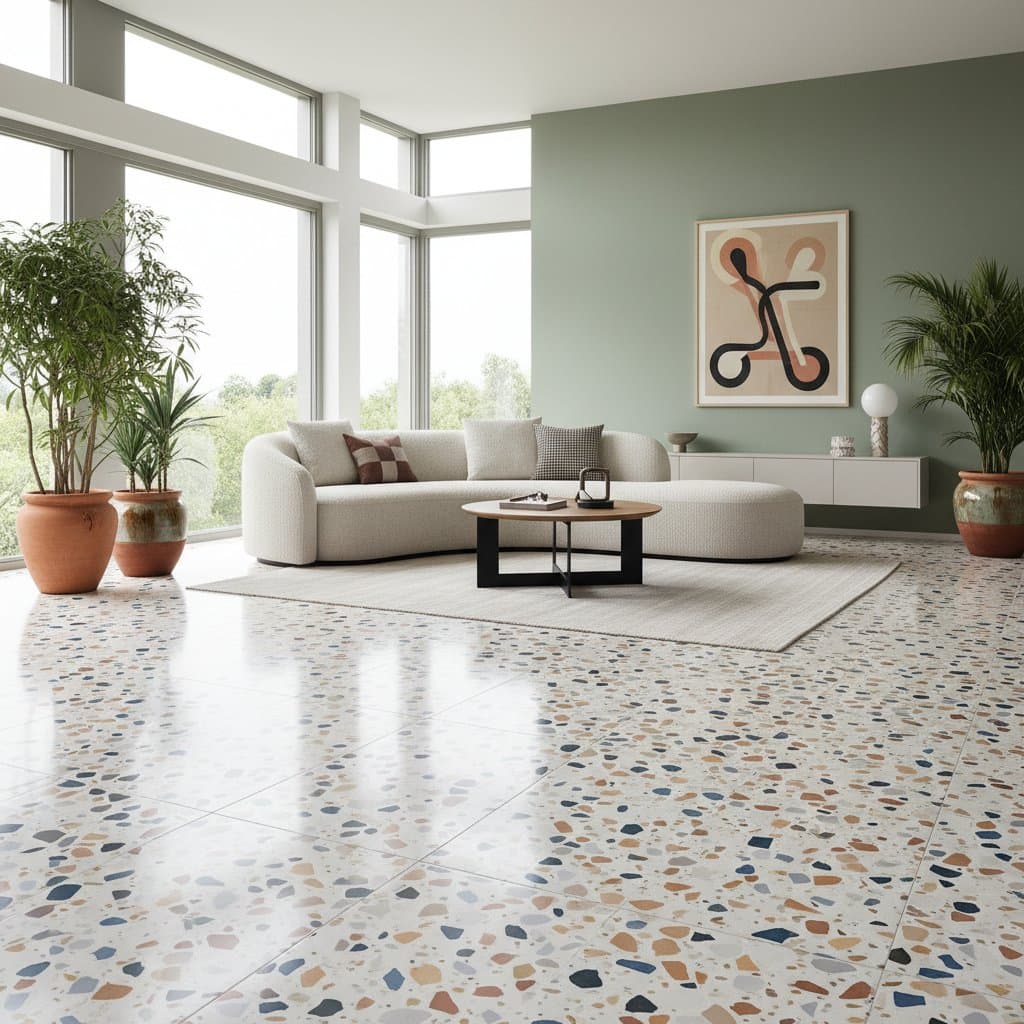
Understanding Terrazzo Flooring
Terrazzo flooring consists of chips of marble, quartz, glass, or other aggregates embedded in a cement or epoxy binder, then polished to a smooth finish. This composite material dates back to ancient times but has evolved into a modern staple for residential and commercial spaces. In 2026, terrazzo gains renewed popularity due to its eco-friendly profiles, customizable designs, and superior performance in high-traffic areas.
Homeowners appreciate terrazzo for its seamless appearance and resistance to wear. Unlike traditional tiles, it creates a continuous surface that resists cracking and fading. With advancements in epoxy formulations, installation becomes faster and more adaptable to various substrates, making it suitable for kitchens, bathrooms, and entryways.
The material supports sustainable practices, as many aggregates come from recycled sources. This alignment with green building trends positions terrazzo as a forward-thinking option for environmentally conscious renovations.
Cost Breakdown for 2026 Installations
Terrazzo flooring costs in 2026 average $18 to $35 per square foot, encompassing materials, labor, and basic preparation. This range reflects variations in aggregate types, binder choices, and project scale. For a standard 200-square-foot room, expect total expenses between $3,600 and $7,000.
Material costs form the foundation, with epoxy-based terrazzo starting at $12 per square foot for basic mixes, while cement varieties reach $20 due to longer curing times. Premium aggregates like imported marble or metallic glass add $5 to $10 per square foot. Labor accounts for 40 to 60 percent of the budget, as skilled artisans pour, grind, and polish the surface over several days.
Additional factors influence pricing. Subfloor preparation, such as leveling or moisture barriers, can increase costs by 10 to 20 percent. Custom designs with intricate patterns or inlays demand higher rates, often exceeding $35 per square foot. Regional differences apply; urban areas like Los Angeles charge more for labor due to demand and access to specialized suppliers.
Long-term savings offset initial investments. Terrazzo endures for 50 to 75 years, far outlasting vinyl or hardwood. Maintenance involves occasional resealing every five to seven years at $2 to $4 per square foot, yielding a cost per year under $1 for most installations.
Factors Affecting Terrazzo Costs
Several elements determine the final price of a terrazzo project. Aggregate selection plays a key role; standard marble chips keep expenses low, while exotic options like mother-of-pearl elevate the budget. Binder type matters too: epoxy cures quickly and suits thin pours, ideal for renovations, whereas cement provides a traditional heft but requires thicker applications.
Installation complexity varies by site conditions. Existing floors may need removal, adding $3 to $5 per square foot. If integrating features like radiant heating, costs rise by 15 to 25 percent for compatible underlayments. Pour thickness influences durability; residential projects use 1/4 to 3/8 inch, while commercial ones opt for 1/2 inch or more.
Design choices impact expenses. Simple monochromatic finishes stay within the lower range, but multicolored patterns or borders require precise division strips, increasing labor by 20 percent. Prefabricated terrazzo tiles offer a budget alternative at $10 to $20 per square foot but lack the seamless quality of poured installations.
Economic trends in 2026, including rising material prices from supply chain recoveries, may nudge costs upward by 5 percent from current levels. Early planning secures better rates, especially during off-peak seasons.
Design Tips for Timeless Appeal
Terrazzo allows boundless creativity while maintaining practicality. Select aggregates that complement your interior palette; neutral tones suit minimalist spaces, while bold mixes energize contemporary designs. Division strips in brass or zinc define patterns and prevent cracks, adding subtle metallic accents.
Consider functionality in high-moisture areas. Epoxy terrazzo resists stains better than cement, making it preferable for bathrooms. For slip resistance, choose matte finishes or incorporate textured aggregates. Integrate terrazzo with cabinetry or walls for cohesive flow, enhancing perceived space.
Sustainability enhances design value. Opt for recycled glass or shell chips to achieve LEED credits, appealing to eco-savvy buyers. Test samples under your lighting conditions to ensure color vibrancy; natural light reveals terrazzo's depth, while LEDs highlight subtle variations.
Pair terrazzo with underfloor heating for luxury. Compatible systems distribute warmth evenly through the conductive surface, ideal for cooler climates. This combination boosts comfort and energy efficiency, potentially qualifying for rebates.
Installation Process and Preparation
Professional installation ensures optimal results. Begin with a site assessment to evaluate subfloor integrity. Moisture levels below 3 percent prevent adhesion issues; use vapor barriers if needed. Structural reinforcements apply for load-bearing areas or second-story applications.
Hire licensed contractors experienced in terrazzo. Verify certifications from organizations like the National Terrazzo and Mosaic Association. Request portfolios showcasing similar projects to gauge quality.
The process spans one to two weeks. Preparation involves cleaning and priming the substrate. Pouring follows, with aggregates mixed into the binder and troweled evenly. Grinding removes excess and exposes chips, followed by polishing for the desired sheen.
Curing times vary: epoxy sets in 24 to 48 hours, cement in seven days. Avoid foot traffic during this phase to prevent damage. Final sealing protects against stains and enhances luster.
Maintenance and Longevity
Terrazzo demands little upkeep for its lifespan. Daily sweeping with a soft broom removes debris. Weekly damp mopping with pH-neutral cleaners preserves the finish; avoid harsh chemicals that etch the surface.
Furniture protection prevents scratches. Place felt pads under legs and use rugs in high-wear zones. Entry mats capture dirt, reducing grit that dulls the polish.
Resealing every five years maintains water resistance. Professionals apply penetrating sealers, restoring depth without altering appearance. Address spills immediately to avoid discoloration.
With proper care, terrazzo withstands heavy use. It resists fading from sunlight and cleans easily from pet accidents or spills. This resilience translates to higher resale values, as buyers seek low-maintenance, premium features.
Making It Happen
Follow these steps to execute your terrazzo project successfully.
-
Inspect your floor. Examine for moisture, cracks, or unevenness. Address issues with repairs or dehumidification before proceeding.
-
Obtain multiple quotes. Solicit bids from at least three specialists. Evaluate installation methods, warranties, aggregate options, and request references along with sample panels.
-
Develop a timeline. Schedule installers well in advance, particularly for custom designs. Allocate extra days for curing and unexpected delays.
-
Select a finish. Opt for polished surfaces for reflective elegance or matte for enhanced grip. Align choices with your home's traffic and aesthetic needs.
-
Safeguard the surface. Install felt protectors on furniture and place mats at entrances. Adhere to resealing schedules to extend durability.
-
Pursue incentives. Document use of recycled materials to claim rebates or tax credits available through local green programs.
If your design incorporates radiant heating or requires subfloor reinforcement, engage a licensed professional from the outset.
Advancing Your Home's Value
Terrazzo flooring delivers lasting sophistication that transcends fleeting styles. Measure your area accurately to refine budget estimates, then consult installers for material samples and detailed proposals. Incorporate a 10 percent buffer for unforeseen preparation or finishing costs.
Time projects for moderate weather to facilitate drying. Verify moisture controls and choose finishes that match daily routines. Once installed, this resilient surface enhances comfort and appeal for generations, providing unmatched return on investment through durability and design versatility.