Understanding the Value Boost from Hidden Pantries
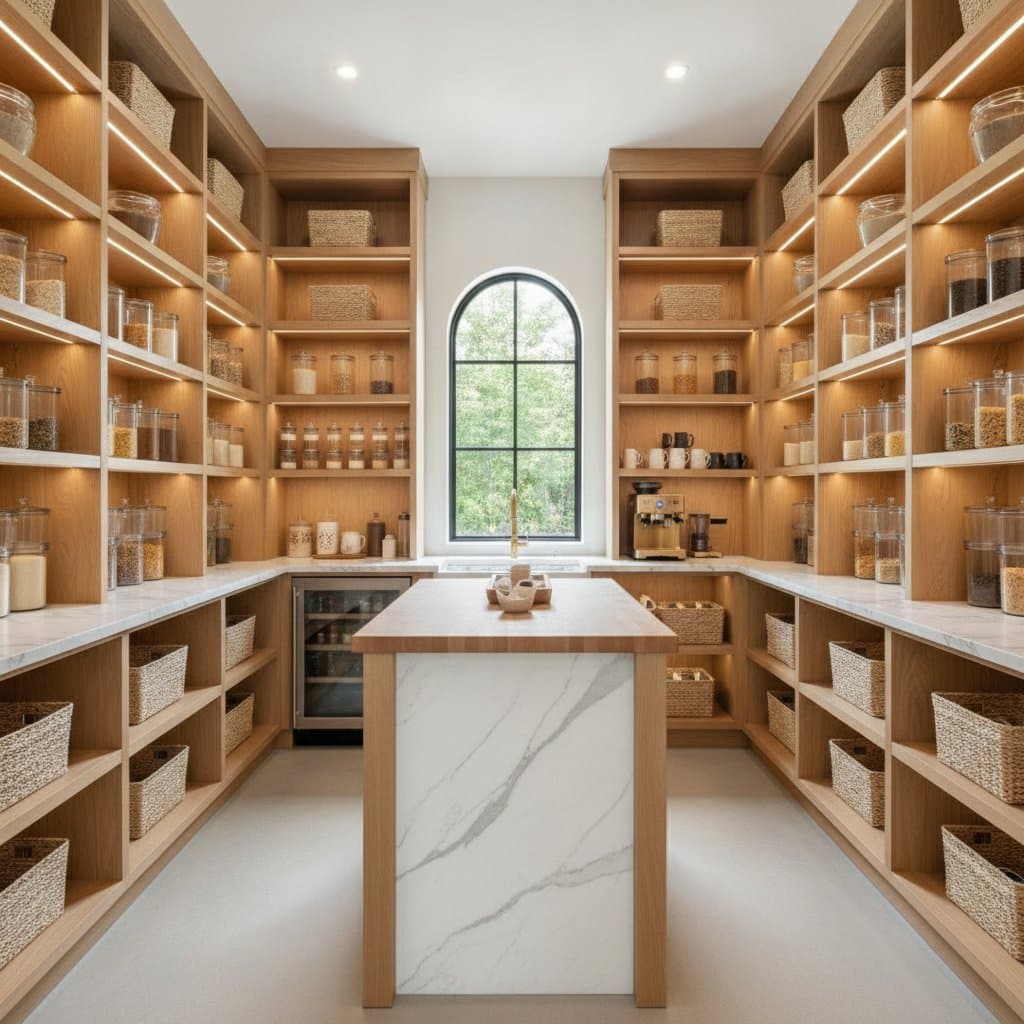
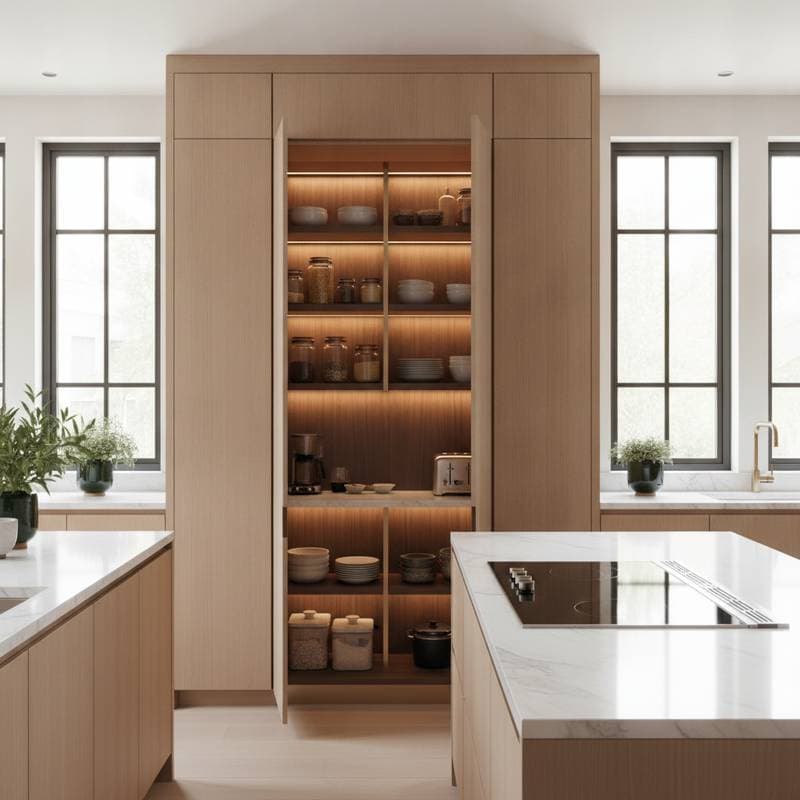
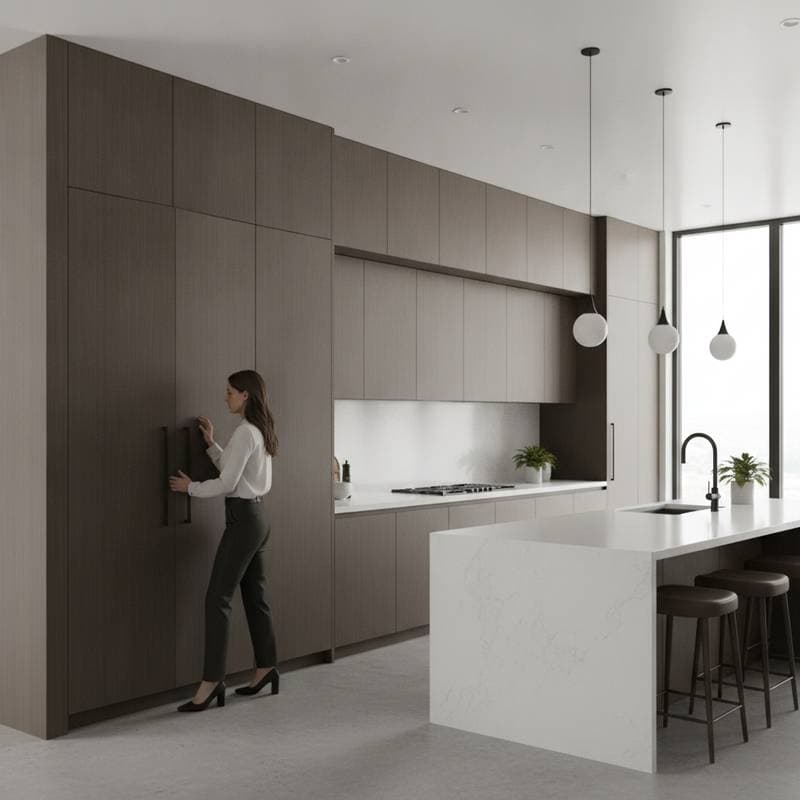
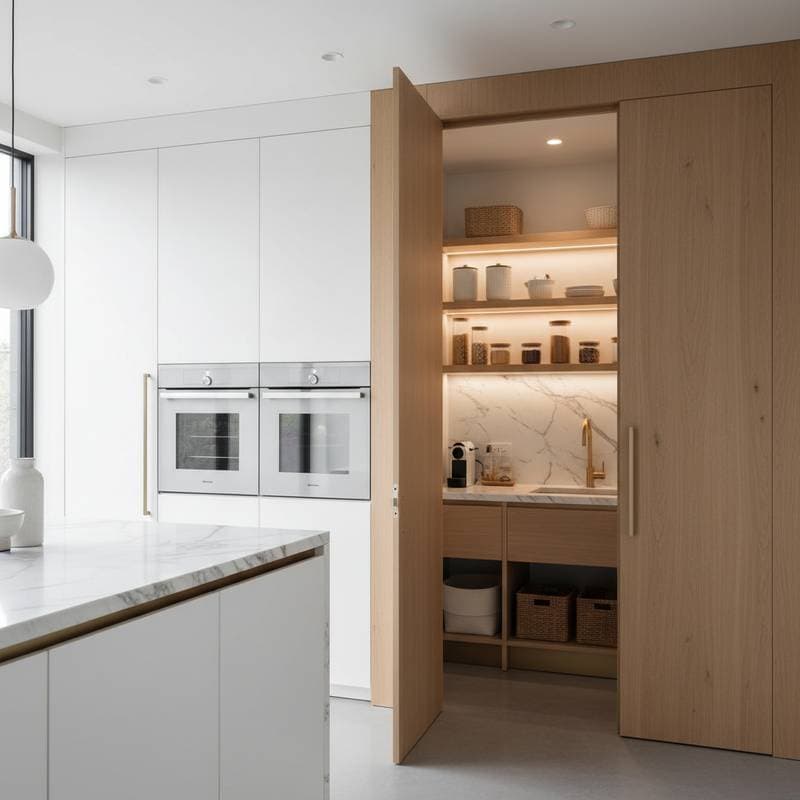
Hidden pantries, sometimes referred to as concealed or walk-in storage spaces, represent a pivotal element in contemporary kitchen architecture. These features integrate additional storage capacity while maintaining a streamlined appearance that conceals everyday clutter. Property owners who incorporate such a pantry frequently observe a tangible increase in their home's market value. Prospective buyers interpret this addition as an indicator of thoughtful planning and superior build quality.
This design choice proves particularly beneficial for individuals undertaking a kitchen renovation or constructing a new residence, especially when the goal involves expanding storage without introducing prominent fixtures. It suits households that engage in frequent cooking, host gatherings, or favor an orderly, streamlined kitchen environment.
Advantages and Disadvantages
Advantages
- Enhances resale potential by creating the illusion of expanded kitchen space and superior organization
- Provides ample room for bulk food items, compact appliances, and household cleaning products
- Maintains clear countertops and exposed shelves to support a minimalist aesthetic
- Minimizes auditory disturbances and visual disarray during food preparation activities
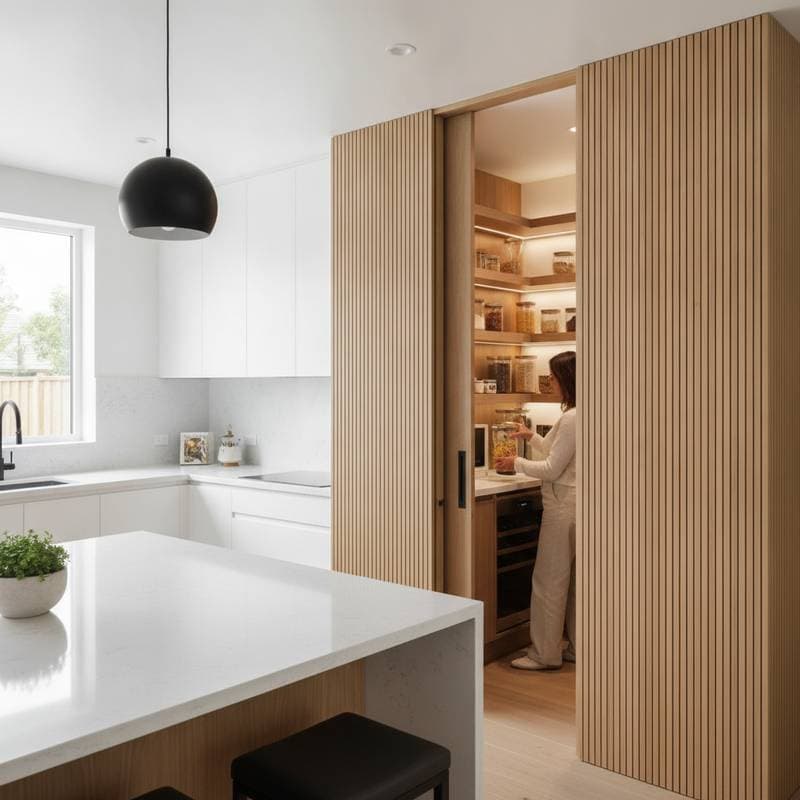
- Offers adaptable configurations, including discreet access mechanisms
Disadvantages
- Demands dedicated floor area, which smaller kitchens may lack
- Involves expenses related to structural framing and bespoke cabinet fabrication
- Requires proper airflow and illumination to ensure usability
- Potentially disrupts positioning of appliances or necessitates plumbing adjustments
- Poses accessibility challenges for individuals with reduced mobility
Installation Options: DIY or Professional
Implementing a hidden pantry ranges from moderately challenging to highly intricate, contingent upon the selected configuration. Basic cabinet-integrated models might qualify as a do-it-yourself endeavor over a weekend, provided one possesses intermediate woodworking expertise. Allocate approximately 10 to 20 hours, utilizing tools like a circular saw, stud finder, and power drill.
Larger walk-in or butler's pantry installations typically necessitate professional involvement. Tasks such as framing walls, applying drywall, installing electrical receptacles, and incorporating lighting demand adherence to building regulations. Engaging a certified contractor mitigates potential hazards and guarantees precise alignment of doors with surrounding cabinetry.
Consider professional assistance in these scenarios:
- Relocating or modifying load-bearing walls
- Integrating new electrical wiring or plumbing conduits
- Coordinating finishes for custom cabinet elements
- Fitting concealed hinges or touch-activated latching systems
Budget for costs: DIY projects average $500 to $1,500 in materials, while professional setups range from $3,000 to $10,000, depending on size and features.
Upkeep and Durability
Maintaining a hidden pantry involves routine, straightforward measures. Clean surfaces with a damp cloth on a monthly basis and inspect hinges or sliding tracks biannually. Swap out light bulbs promptly and secure any loose door fittings as they arise. Well-constructed cabinetry endures 20 to 30 years under typical conditions. Standard warranties from manufacturers span five to ten years, encompassing materials and labor.
Monitor these potential issues:
- Accumulation of humidity or water damage adjacent to sinks or outer walls
- Unsecured shelving brackets under the weight of heavy items
- Misaligned doors or mechanisms that bind during operation
To extend lifespan, select moisture-resistant woods like maple or plywood with sealed edges, and install adjustable shelving for versatile load distribution.
Alternative Storage Solutions
Open Shelving
This option installs quickly and at lower cost, typically under $200, yet it displays items openly, attracting dust and highlighting disorganization.
Freestanding Pantry Cabinet
Easily movable and budget-friendly at $100 to $400, it delivers immediate storage without permanent alterations, though it disrupts the integrated kitchen flow.
Pull-Out Pantry Unit
Ideal for slim areas, these units accommodate dry staples efficiently for $300 to $800, but offer restricted volume compared to fixed installations.
Pantry Wall with Glass Fronts
This design imparts a sense of depth for around $1,000 to $3,000, while partially revealing contents and forgoing complete privacy.
Each alternative serves specific needs, such as temporary solutions or space constraints, but lacks the value-adding concealment of a true hidden pantry.
Regional Considerations
Installation expenses fluctuate based on location. Metropolitan zones with elevated labor charges may inflate totals by 15 to 25 percent. In humid coastal regions, opt for materials like melamine-coated particleboard to resist warping. Colder climates benefit from insulated partitioning if the pantry adjoins an external wall, preventing condensation.
Regulatory requirements vary by municipality. Structural modifications, electrical additions, or plumbing shifts often mandate building permits. Consult local authorities prior to any demolition or construction to avoid fines or rework.
Return on Investment and Market Appeal
Hidden pantries elevate kitchen desirability, potentially increasing property value by approximately 6 percent. Buyers regard them as upscale amenities that harmonize form and utility. Real estate appraisers account for the effective expansion of usable space through decluttered designs. Properties featuring these elements tend to attract offers more rapidly in saturated markets, with some reports indicating 10 to 15 percent shorter listing times.
To maximize ROI, integrate the pantry during broader remodels, aiming for a cost recovery of 70 to 90 percent upon sale. Focus on seamless integration with existing cabinetry to amplify perceived luxury.
Essential Safety Measures
Adhere to electrical standards when incorporating outlets or fixtures; use licensed electricians for wiring. Preserve adequate space around appliances and refrain from obstructing HVAC vents or airflow paths. Store combustible materials away from electrical sources or heating elements. For plumbing integrations, verify all joints seal tightly and apply insulation to pipes. Install ground-fault circuit interrupter outlets in moisture-prone zones to prevent shocks.
Prioritize non-slip flooring within the pantry and ensure adequate lighting to avoid accidents during access.
Frequently Asked Questions
What minimum dimensions are required for a hidden pantry?
A compact cabinet-style unit needs at least 2 feet by 4 feet, whereas a walk-in version demands 4 feet by 6 feet for comfortable navigation.
Is it feasible to install one in an established kitchen?
Yes, retrofitting proves possible, though it may involve wall alterations or cabinet swaps, leading to elevated labor fees of $2,000 or more.
Does a hidden pantry require airflow systems?
Enclosed designs benefit from a small vent or exhaust fan to curb moisture and odors, particularly in humid environments.
What design tips enhance functionality?
Incorporate pull-out drawers for spices, lazy Susan turntables for corners, and LED strip lighting activated by motion sensors.
Steps to Integrate a Hidden Pantry
Begin by measuring your kitchen layout to identify suitable locations, such as beside refrigerators or within island bases. Sketch potential designs, considering door styles like pocket sliders for space savings. Source materials from reputable suppliers, prioritizing durable, low-VOC finishes. Schedule consultations with contractors early to align on timelines and budgets. Upon completion, organize contents strategically to fully realize the storage and aesthetic benefits, transforming your kitchen into a more efficient and valuable asset.