Concealed Pantries: The Key to Faster Home Sales in 2026
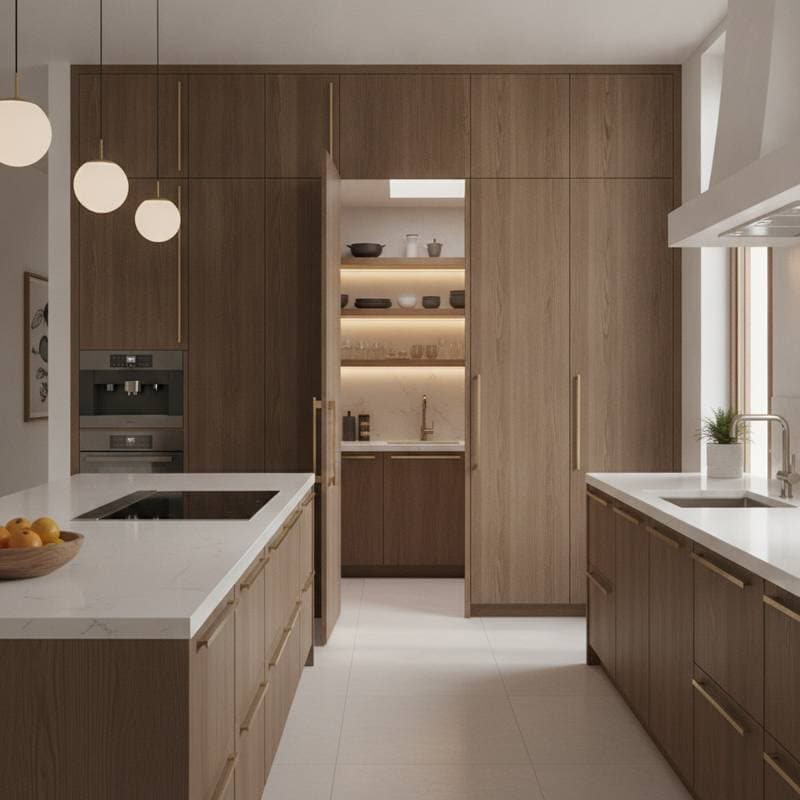
Concealed pantries emerge as a subtle yet powerful design element that accelerates home sales and increases final sale prices. Prospective buyers appreciate the revelation of a storage area hidden within a seamless kitchen wall, which maintains a polished appearance while concealing everyday clutter. This feature not only enhances aesthetic appeal but also contributes significantly to perceived luxury and overall property value.
Understanding the Concealed Pantry
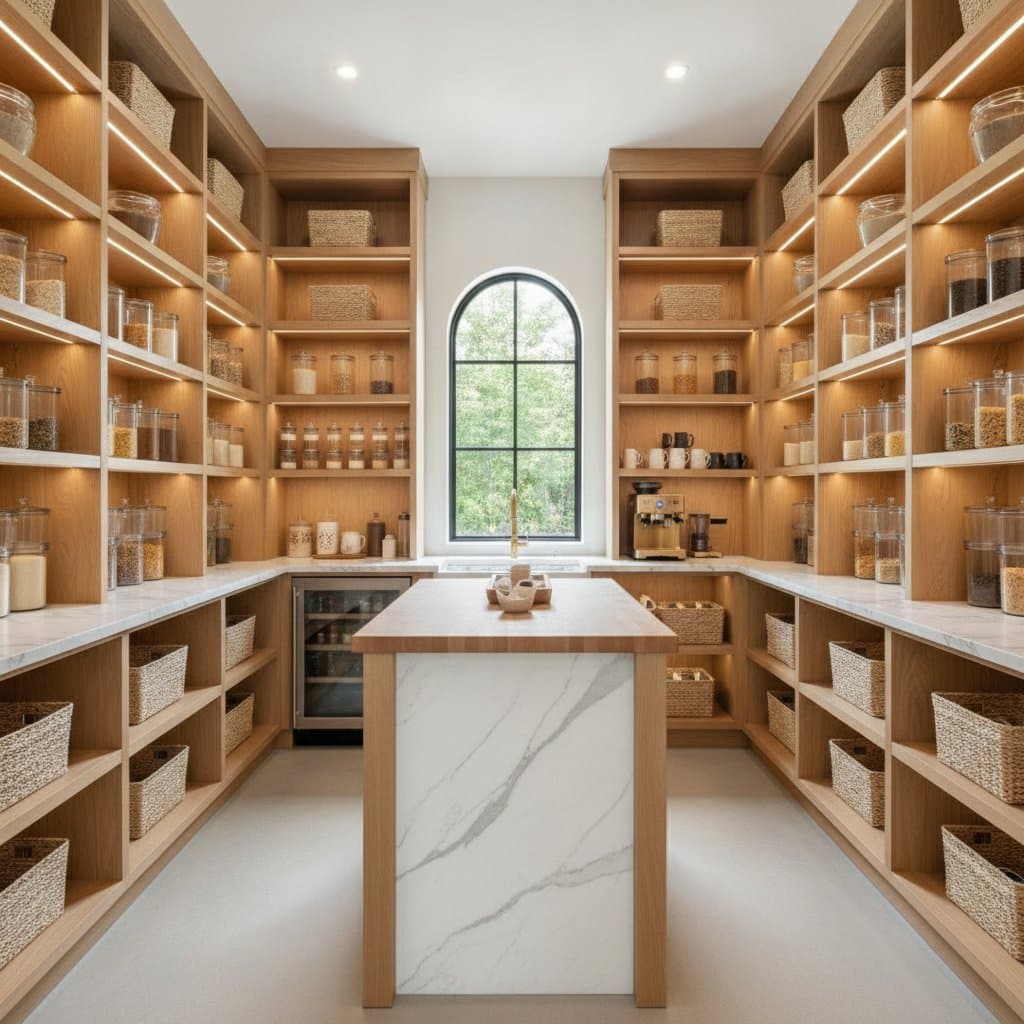
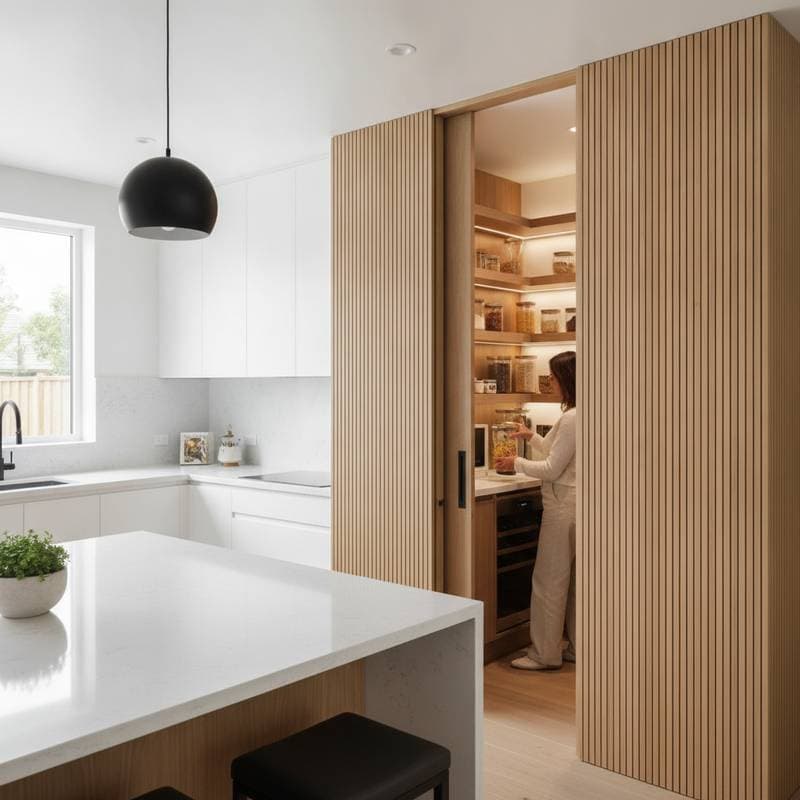
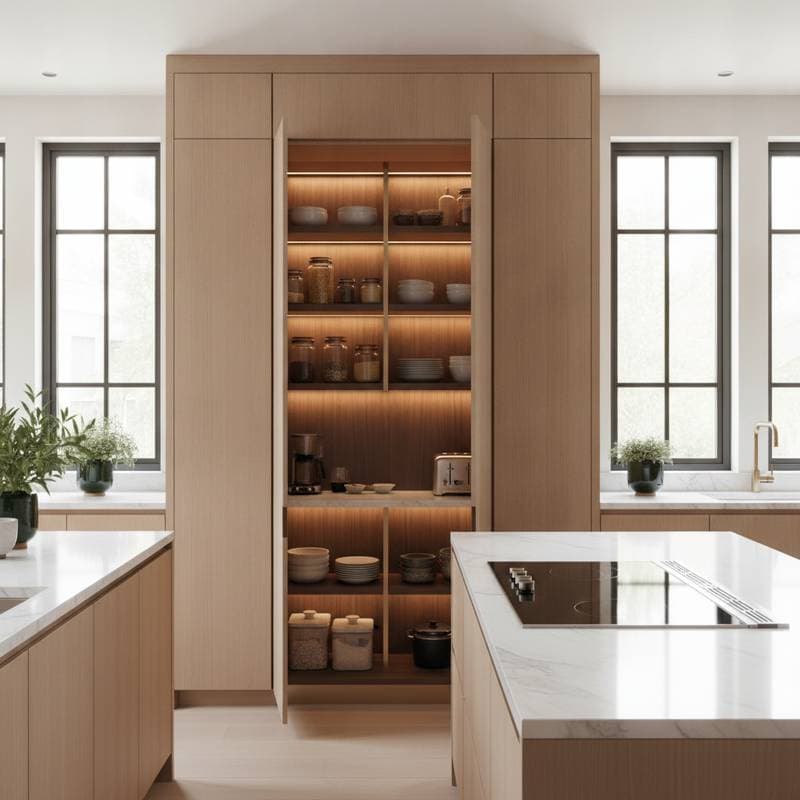
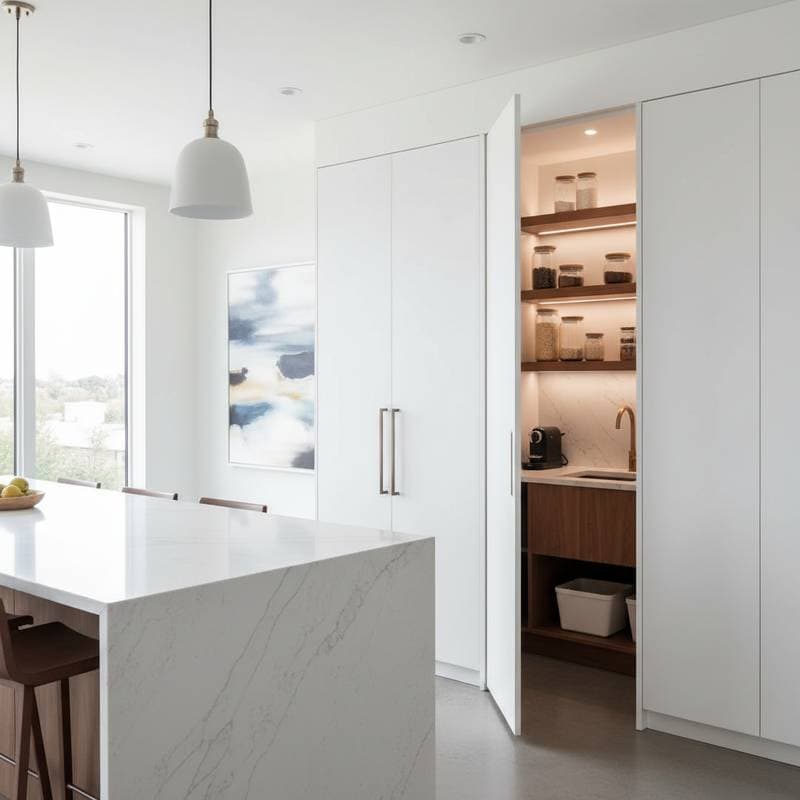
A concealed pantry, often referred to as a walk-in or butler's pantry, consists of a dedicated storage compartment integrated behind cabinetry, a sliding panel, or a camouflaged door. From the exterior, it blends indistinguishably with the surrounding kitchen wall. Internally, it serves as a compact preparation area or organizational center, providing ample space for pantry essentials without compromising the visual harmony of the main kitchen.
This design choice prioritizes both form and function, allowing homeowners to store bulk items, small appliances, and serving ware out of sight. The result is a streamlined kitchen that feels more expansive and sophisticated, aligning with modern preferences for minimalist interiors.
Enhancing Property Value Through Concealed Pantries
Homebuyers increasingly seek kitchens that exude cleanliness and efficiency. Concealed pantries achieve this by offering discreet storage solutions that eliminate visible disarray. Such kitchens appear larger, more serene, and inherently more valuable, often commanding premium offers in competitive markets.
Real estate professionals observe that properties featuring this element differentiate themselves in online listings and during in-person viewings. The element of surprise upon discovery adds an engaging narrative to the home tour, fostering emotional connections with potential purchasers. Studies in residential design trends indicate that functional upgrades like these can yield a return on investment exceeding 70 percent upon resale.
Steps to Incorporate a Concealed Pantry
-
Select an optimal location. Identify underutilized space adjacent to the kitchen, such as behind an existing wall, within a nearby closet, or along a hallway. Ensure the area measures at least four feet in depth to accommodate movement.
-
Engineer the access point. Customize the door to mirror adjacent cabinetry in material and finish, incorporating pocket slides or pivot hinges for fluid, unobtrusive operation. Consider touch-latch mechanisms to eliminate visible hardware.
-
Organize internal storage. Divide the space into dedicated zones: lower shelves for heavy dry goods, mid-level racks for canned items and appliances, and upper areas for lighter supplies. Integrate pull-out drawers for utensils and vertical dividers for baking sheets.
-
Incorporate essential utilities. Install adjustable LED lighting strips along the ceiling and walls for even illumination. Add a low-decibel exhaust fan to maintain air quality and prevent moisture buildup.
-
Complete the interior finishes. Apply moisture-resistant paint or easy-to-clean tiles to the walls, select durable vinyl or laminate flooring, and secure adjustable shelving systems rated for at least 100 pounds per shelf.
Professional contractors typically manage framing and integration, while experienced individuals may undertake shelving installation independently. Always consult local building codes to verify compliance with structural requirements.
Cost Breakdown
| Task | Typical Cost Range | Factors Influencing Price |
|---|---|---|
| Framing and Drywall | $800 - $2,000 | Dimensions and existing wall composition |
| Custom Door and Cabinetry | $1,500 - $4,000 | Wood species, surface treatment, and fittings |
| Shelving and Interior Fit-Out | $600 - $2,500 | Material durability and configuration intricacy |
| Electrical and Lighting Installation | $300 - $1,200 | Fixture quantity and wiring complexity |
The overall project cost generally falls between $3,000 and $9,000, depending on regional labor rates and material selections. Luxury installations incorporating bespoke millwork may exceed $15,000. To minimize expenses, opt for prefabricated cabinet fronts and modular shelving units from reputable suppliers.
Project Timeline
Most concealed pantry installations span one to three weeks from inception to completion.
-
Design and planning phase: 2 to 5 days, involving measurements, material sourcing, and layout sketches.
-
Construction period: 5 to 10 days, covering framing, drywall application, and door installation.
-
Finishing touches: 2 to 4 days, including painting, lighting setup, and final adjustments.
Projects proceed more swiftly with prefabricated components and straightforward access to framing. Delays arise from necessary relocations of plumbing or electrical conduits, which require specialized coordination.
Deciding Between DIY and Professional Installation
Pursue a DIY approach when:
-
The targeted wall proves non-load-bearing upon inspection.
-
You possess proficiency in fundamental carpentry, electrical basics, and surface finishing.
-
Ample time exists for meticulous planning and material procurement.
Engage a professional for:
-
Walls potentially housing hidden utilities like wiring or pipes.
-
Demands for tailored cabinetry or premium surface treatments.
-
Requirements for precise alignment with existing architectural elements.
Professionals ensure accuracy, efficiency, and adherence to safety standards. They also navigate permitting processes for any modifications affecting building integrity.
Essential Tools and Materials
-
Stud finder to locate structural supports and utilities.
-
Circular saw or multi-tool for precise cuts in framing and panels.
-
Level and tape measure for accurate alignments and dimensions.
-
Drywall saw, joint compound, and fastening hardware for wall repairs.
-
Matching paint, trim pieces, and cabinet-facing panels for seamless integration.
-
LED lighting kit with dimmer controls for customizable ambiance.
These items correspond directly to project phases: detection tools for initial assessment, cutting instruments for construction, and finishing supplies for the final polish.
Considerations for Regional Variations
-
In colder regions: Insulate shared walls to mitigate heat transfer and maintain kitchen warmth.
-
In humid environments: Integrate enhanced ventilation systems or a compact dehumidifier to safeguard stored provisions.
-
In areas prone to fire hazards: Select fire-resistant shelving materials and non-flammable wall linings.
-
For historic properties: Review preservation guidelines prior to altering interior walls or original millwork.
Verification of municipal permit requirements remains essential for all wall alterations or electrical enhancements.
Advantages of Concealed Pantries Over Open Shelving
Benefits of open shelving:
-
Immediate accessibility to stored items.
-
Reduced initial installation expenses.
Drawbacks of open shelving:
-
Rapid accumulation of dust and visual disorder.
-
Exposure of disorganized contents to guests.
Benefits of concealed pantries:
-
Preservation of clear counter surfaces.
-
Heightened marketability and perceived luxury.
-
Enhanced daily usability through organized concealment.
Drawbacks of concealed pantries:
-
Necessity for additional spatial allocation.
-
Higher upfront financial commitment.
The investment in a concealed pantry yields superior long-term benefits in convenience and resale potential, particularly in space-permissive kitchens.
Ensuring Safety and Ongoing Maintenance
Position electrical cords and appliances away from walkways to prevent tripping hazards. Rely exclusively on grounded outlets for all powered devices. Equip the space with motion-activated lighting to facilitate safe navigation.
Conduct annual inspections of shelving anchors to confirm load-bearing capacity. Regularly clean ventilation components and replace any filters to sustain optimal airflow. These practices preserve the pantry's functionality and extend its lifespan.
Expert Recommendations for Optimal Results
Test paint and cabinet finishes under varied lighting conditions to achieve color harmony. Incorporate soft-close hinges and slides for silent, effortless access. Include an internal countertop surface to support food preparation or beverage stations.
Implement labeling systems for storage zones to maintain organization over time. These details elevate the pantry from a mere storage solution to an intuitive extension of the kitchen workflow, a quality that resonates with prospective buyers during evaluations.
Frequently Asked Questions
What dimensions suit a concealed pantry? A minimum of 4 feet by 6 feet allows comfortable access and storage capacity.
Is ventilation necessary in a concealed pantry? Ventilation proves essential in humid or temperate climates to preserve food quality and prevent mold growth.
Can a concealed pantry fit in a compact kitchen? Compact versions, extending just 2 feet in depth behind cabinetry, effectively utilize limited space without overwhelming the layout.
Strategies for Successful Implementation
Begin by assessing your kitchen's layout and consulting a design professional to visualize integration. Budget for quality materials that withstand daily use, ensuring the feature enhances both immediate enjoyment and future market appeal. With thoughtful execution, a concealed pantry transforms routine storage into a compelling asset that distinguishes your home in 2026's competitive real estate landscape.