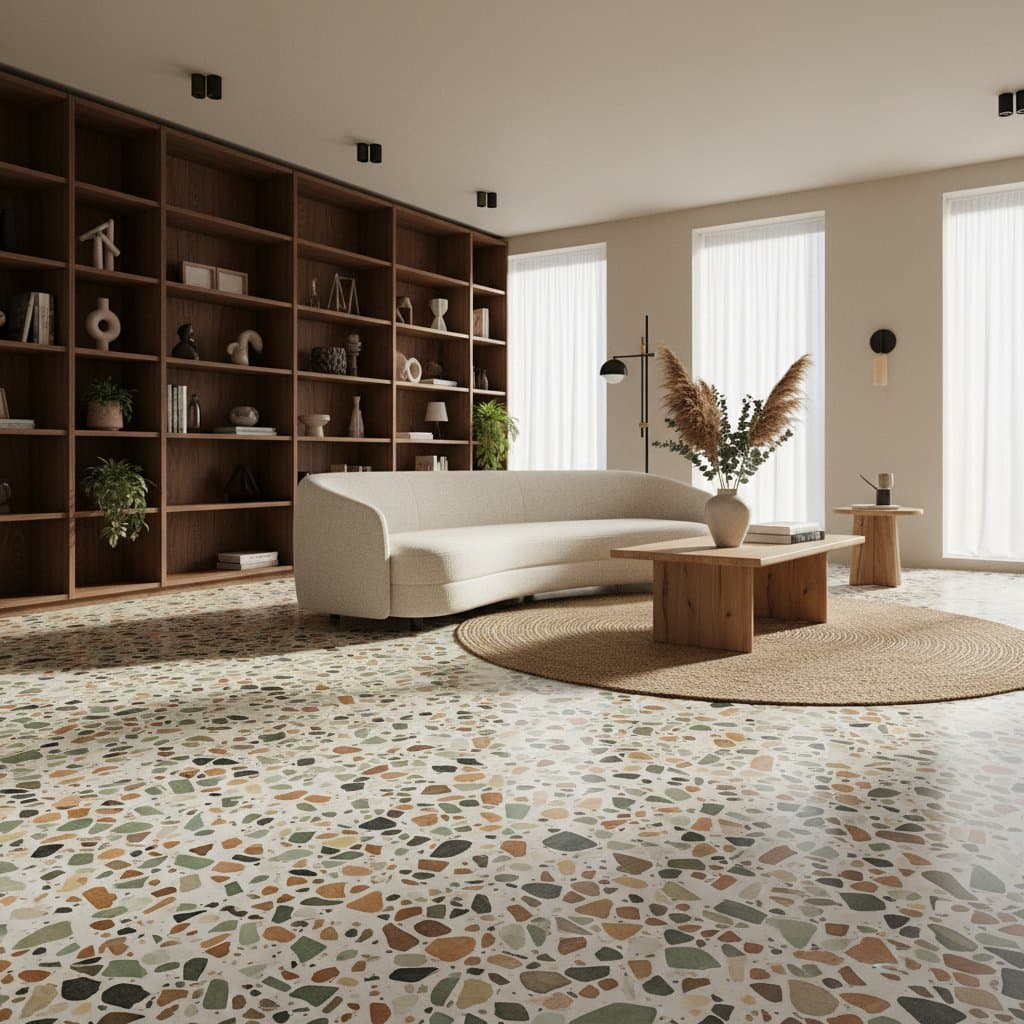
Terrazzo Revival: Boost Home Value with 2026 Trends
Terrazzo flooring experiences renewed popularity among homeowners. This material combines exceptional durability with vibrant colors and a nod to retro aesthetics. Composed of marble, quartz, glass, or granite chips embedded in concrete or resin, terrazzo delivers a unique appearance suitable for contemporary and traditional residences. Property owners seeking resilient, low-maintenance surfaces that command attention find terrazzo ideal.
Cost Snapshot
The national average for terrazzo flooring installation spans $25 to $90 per square foot. Typical expenditures for poured-in-place terrazzo fall between $35 and $60 per square foot. Options such as prefabricated tiles or porcelain alternatives resembling terrazzo start at $10 per square foot. Custom installations featuring rare stones or elaborate patterns surpass $120 per square foot.
Key factors influencing expenses include:
- Binder type, whether cement-based or epoxy resin
- Aggregate size and composition
- Pattern intricacy and installation demands
- Subfloor preparation and leveling requirements
- Regional labor costs and finish choices
Pros and Cons
Pros:
- Exceptional longevity, enduring decades with little degradation
- Strong resistance to moisture and stains when sealed appropriately
- Extensive customization through diverse color and aggregate selections
- Reduced upkeep relative to hardwood or carpet
- Enhanced visual appeal and resale potential in upscale properties
Cons:
- Substantial initial investment
- Necessity for expert craftsmanship to achieve flawless results
- Firm texture that may feel cool beneath the feet
- Potential slipperiness in wet conditions without texturing or treatment
- Challenging repairs, particularly for intricate designs
Options and Types
Cement Terrazzo:
This classic formulation incorporates marble or stone chips into cement. It suits expansive indoor and outdoor applications. Due to slight porosity, regular sealing remains essential.
Epoxy Terrazzo:
A resin foundation enables thinner applications and vivid hues. This variant excels in contemporary settings and renovations inspired by mid-century styles.
Tile Terrazzo:
Precast tiles replicate the poured terrazzo aesthetic. Installation proves simpler and more economical, making them appropriate for compact spaces or amateur projects.
Terrazzo-Look Porcelain:
Porcelain or ceramic tiles emulate terrazzo patterns through printing. They offer durability and affordability with minimal maintenance, although they lack authentic terrazzo qualities.
Recycled Glass Terrazzo:
Incorporating post-consumer glass appeals to environmentally aware households. It introduces shimmering effects and distinctive color variations.
DIY vs Professional Installation
Terrazzo demands precision in mixing, pouring, grinding, and sealing. Completion of a standard room requires three to seven days. Essential equipment encompasses floor grinders, trowels, and wet polishers. Errors prove expensive to correct.
Amateur efforts suit small-scale tile installations or prefabricated panels. Professional involvement becomes mandatory for poured systems. Certified installers guarantee uniform curing, consistent coloration, and accurate expansion joints, mitigating risks of cracks and irregularities.
Step-by-Step Installation Basics
- Subfloor Inspection and Preparation: Clear away existing coverings, ensure levelness, and eliminate debris.
- Divider Strip Placement: Position metal strips to define sections and guide patterns.
- Terrazzo Mixture Preparation: Blend binder with selected aggregates for even distribution.
- Pouring and Spreading: Apply the mixture uniformly within boundaries using trowels.
- Compaction: Roll the surface to remove air voids and achieve density.
- Curing Period: Maintain consistent temperatures to avoid structural weaknesses.
- Grinding and Polishing: Employ a grinder to reveal aggregates and refine the finish.
- Sealing Application: Coat with sealant to guard against stains and liquid penetration.
- Final Cleanup: Dust thoroughly, inspect for flaws, and handle waste responsibly.
Image idea: A polished terrazzo floor being ground to reveal chips of marble and glass.
Maintenance and Lifespan
Sealed terrazzo endures 40 to 75 years or longer. Weekly cleaning with a neutral pH solution suffices. Steer clear of acidic or abrasive substances. Reapplication of sealant occurs every three to five years, adjusted for usage intensity and finish variety.
Monitor joints and edges for fractures. Minor imperfections receive patches using compatible resin. Extensive repairs demand professional refinishing. Many epoxy formulations include warranties for material integrity and color retention spanning 20 years. Building regulations in certain areas mandate slip-resistant surfaces for moist environments such as bathrooms or entrances.
Alternatives
Polished Concrete:
This option costs less while providing a sleek, industrial vibe. Color options remain limited, yet installation simplifies. It aligns with minimalist or warehouse-inspired designs.
Luxury Vinyl Terrazzo-Look Tiles:
Budget-friendly and adaptable, these tiles install effortlessly. Durability falls short of genuine terrazzo, suiting temporary or rental scenarios.
Natural Stone Flooring:
Elegant and robust, stone varies in price. It demands sealing and greater ongoing care than terrazzo.
Engineered Quartz Slabs:
Offering superior sheen and hue consistency, quartz primarily serves countertops but adapts to floors. High costs and weight pose challenges.
Local Factors
Regional differences affect pricing and practicality. Epoxy variants outperform cement in humid coastal zones by resisting moisture. Colder climates benefit from expansion joints and insulated subfloors to counteract thermal expansion.
Urban locales with experienced contractors yield superior outcomes and quicker timelines, albeit at elevated labor fees. Permits prove necessary for major overhauls in multi-family structures. Compliance with codes on slip resistance and volatile organic compounds in resins remains critical; consult authorities prior to commencement.
ROI and Resale Impact
Terrazzo elevates property appeal, particularly in mid-century modern or contemporary dwellings. Prospective buyers link it to superior craftsmanship and enduring style. Recovery of 60 to 80 percent of costs occurs upon sale, contingent on upkeep and architectural harmony.
Strategic placement in high-traffic zones like foyers, kitchens, or baths maximizes returns. The material's longevity curtails future replacement expenses, attracting purchasers prioritizing ease of maintenance.
Safety Considerations
As a rigid surface, terrazzo heightens injury risk from falls. Incorporate rugs in communal areas for cushioning. Anti-slip coatings enhance safety in bath areas or poolside. During fabrication, respirators prevent dust inhalation, while ear protection guards against grinder noise. Epoxy work requires ventilation per safety guidelines. Secure permits if older adhesives or asbestos lurk beneath existing floors.
2026 Terrazzo Design Trends
Design professionals guide terrazzo toward innovative expressions emphasizing sustainability, hue, and versatility.
Warm Neutrals and Earthy Palettes:
Subdued beiges, clays, and taupes supplant bright whites, harmonizing with timber accents and sparse furnishings.
Chunky Aggregate Mixes:
Oversized marble or stone pieces impart striking texture, complementing expansive, fluid interiors.
Recycled and Local Materials:
Sustainable practices incorporate reclaimed glass, stone, and regional aggregates to minimize environmental impact.
Terrazzo Beyond Floors:
Applications extend to countertops, shower enclosures, and patios via molded panels for vertical use.
Matte and Satin Finishes:
Subtle sheens replace gloss, concealing dust while enhancing grip and coziness underfoot.
Pattern Integration:
Geometric or fluid motifs emerge through divider strips, reviving mid-century motifs with contemporary flair.
Image idea: Close-up of modern terrazzo countertop with warm beige matrix and recycled glass chips.
Regional Style Variations
Architectural and climatic influences shape terrazzo aesthetics. Coastal warmth inspires azure and verdant aggregates evoking seascapes. Arid landscapes favor terracotta and sable tones that integrate with adobe and rock elements. Metropolitan preferences tilt toward grayscale compositions, accented by sleek hardware.
Proximity to quarries lowers costs for premium chips in stone-rich districts. Green-certified regions prioritize non-toxic resins and upcycled components.
Choosing the Right Installer
Installer expertise determines project success. Seek certification from organizations like the National Terrazzo and Mosaic Association. Review portfolios and client testimonials. Ensure in-house capabilities for grinding and sealing. Detailed proposals must specify materials, finishes, and guarantees.
Insist on a sample panel to verify aesthetics prior to full commitment, especially for bespoke formulations.
Living with Terrazzo
Installed terrazzo provides steadfast support and understated elegance in daily routines. It withstands pets, children, and intensive use without marring. Neutral foundations spotlight decor and furnishings. Subtle wear over years contributes to a rich patina, enhancing character.
Those prioritizing enduring beauty and practicality discover terrazzo fulfills both artistic and utilitarian needs, merging heritage techniques with forward-thinking design.
Your Next Steps
To pursue terrazzo integration, tour nearby showrooms for tangible samples. Evaluate cement versus epoxy based on financial and care preferences. Inquire about eco-friendly or low-emission options if environmental concerns guide decisions. Obtain quotes from at least three vetted contractors, confirming credentials before agreements.
Executed properly, terrazzo transcends mere flooring; it represents a commitment to resilience, sophistication, and enduring worth across generations.
FAQ
How long does terrazzo installation take?
Residential installations typically span three to seven days, varying by scale and curing duration.