Terrazzo Revival: 2026's Premier Flooring Choice for Lasting Value
Direct Answer: Terrazzo flooring experiences a resurgence, combining vintage aesthetics with contemporary resilience. Costs range from $20 to $90 per square foot, influenced by material selections and installation methods. This flooring endures for decades, elevates property resale value, and adapts to diverse interior styles.
Composition of Terrazzo Flooring
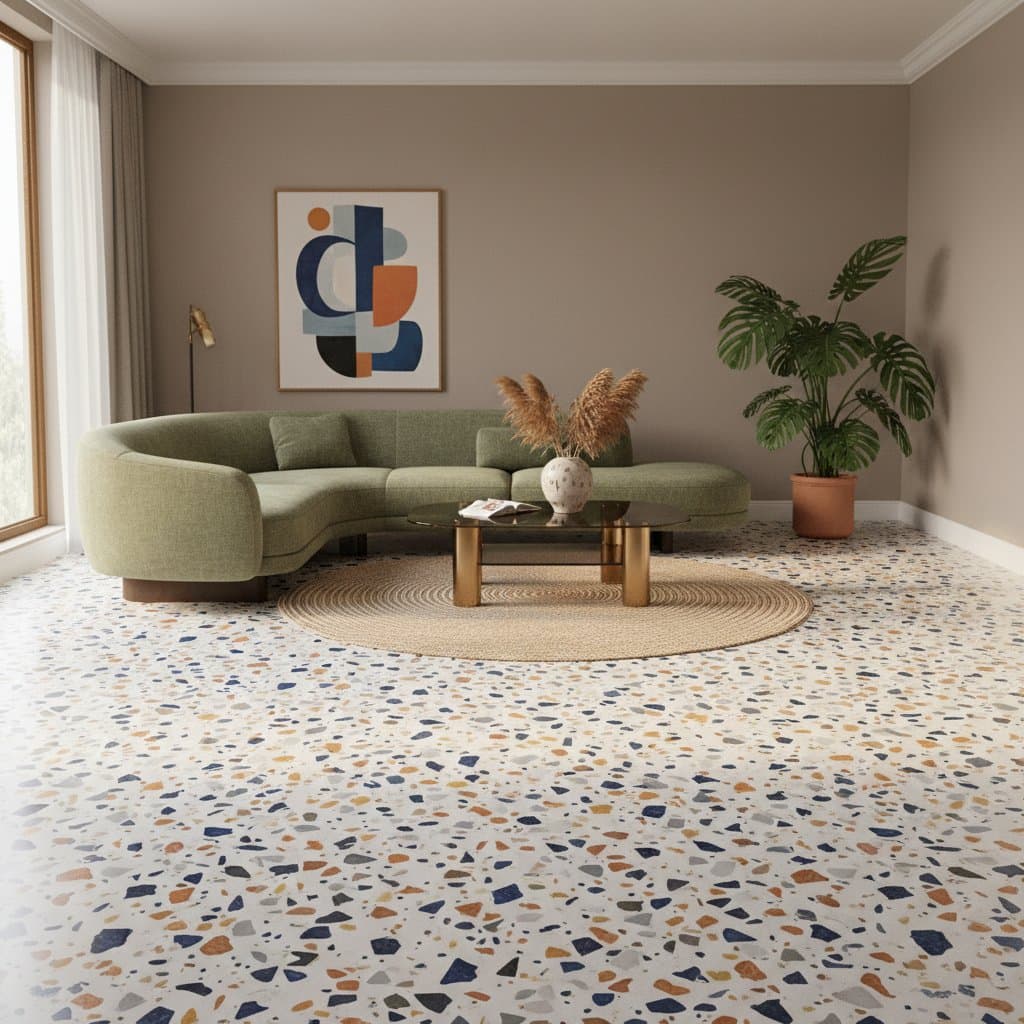
Terrazzo flooring integrates aggregates such as marble, quartz, granite, glass, or shell chips embedded within a cement or epoxy matrix. After the mixture sets, workers grind and polish the surface to expose a intricate mosaic pattern. The two primary variants include:
- Cement-based terrazzo: This traditional option features substantial thickness and exceptional longevity. It suits expansive floor areas, though its weight demands robust subfloors, and installation requires more time.
- Epoxy terrazzo: Lighter in composition and quicker to install, this type enables vibrant color options and minimizes expansion joints for seamless appearances.
Proper installation and upkeep allow both varieties to persist for 50 years or longer, resisting wear from daily foot traffic.
Detailed Cost Analysis
Terrazzo installation involves several components that determine the overall expense. The following table outlines typical pricing elements:
| Task | Typical Cost | Factors Influencing Price |
|---|---|---|
| Materials (chips, resin or cement) | $8 - $40 per sq. ft. | Aggregate variety, pigmentation, and blend proportions |
| Labor and installation | $12 - $50 per sq. ft. | Design intricacy, project scale, and local labor rates |
| Grinding and polishing | $2 - $10 per sq. ft. | Desired sheen intensity and sealant application |
The comprehensive cost spans $20 to $90 per square foot. Epoxy terrazzo averages approximately $45 per square foot nationwide. Regional differences, such as higher urban labor fees, and the expertise of certified installers further modulate these figures. For precise estimates, consult local specialists who assess site-specific conditions.
Essential Tools and Materials for Terrazzo Projects
For modest applications like countertops or entryway accents, gather these items:
- Mixing tools or trowels for blending aggregates and binders
- Divider strips to define patterns and control expansion
- Selected chips, including marble, glass, or quartz varieties
- Binding agents, either cementitious or epoxy formulations
- Grinding equipment with progressive polishing pads
- Protective sealers and cleaning implements
Large-scale floor installations necessitate professional crews equipped with heavy-duty grinders, vacuum systems for dust mitigation, and precision leveling tools. Homeowners should prioritize certified contractors to ensure compliance with industry standards.
Maintenance Strategies for Longevity
Sealed terrazzo surfaces require minimal effort to sustain their appeal. Remove debris through daily sweeping or vacuuming to prevent abrasive scratches. Perform weekly mopping with a pH-neutral detergent diluted in water, ensuring thorough rinsing to avoid residue buildup.
Reapply sealant every three to five years, depending on usage intensity, to preserve water resistance and gloss. In high-traffic zones such as kitchens or entryways, inspect annually for early signs of wear. Scratches yield to light buffing with fine abrasives, while comprehensive refinishing remains infrequent, typically deferred until after extensive service life.
Emerging Design Trends in Terrazzo
Contemporary terrazzo applications transcend conventional speckled patterns, embracing innovative aesthetics. Popular selections encompass:
- Muted neutral tones that complement minimalist interiors with understated elegance
- Oversized marble aggregates for opulent, statement-making expanses
- Soft pastel integrations that harmonize with Nordic-inspired furnishings
- Subtle metallic inclusions enhancing industrial or contemporary kitchens
- Uniform monochrome compositions where aggregates align with the base for refined tactility
Beyond floors, terrazzo extends to vertical surfaces like stair treads, bathroom enclosures, and workspace counters. This versatility fosters cohesive designs in open-plan layouts, where seamless transitions amplify spatial unity. Architects increasingly specify custom aggregates to align with sustainable palettes, drawing from recycled sources for eco-conscious projects.
Environmental Benefits and Investment Rationale
Terrazzo aligns with green building principles through its use of reclaimed materials, including post-consumer glass and stone remnants that divert waste from landfills. The material's extended service life reduces the frequency of renovations, conserving resources and minimizing environmental impact over time.
In real estate, terrazzo commands premium valuations akin to premium hardwoods or quarried stones. It appeals to discerning buyers seeking enduring quality, particularly in residences evoking mid-century modern or transitional motifs. The flooring's adaptability ensures it remains relevant across evolving decor trends, safeguarding long-term equity.
Indicators for Professional Intervention
Engage a qualified terrazzo specialist under these circumstances:
- Progressive cracking that suggests subfloor movement
- Persistent discoloration unresponsive to standard cleaning protocols
- Localized dullness that polishing fails to revitalize
- Subtle shifts or resonant voids indicating underlying instability
Experts employ targeted repairs, such as grinding affected areas, injecting fillers, and reapplying sealants, often averting complete overhauls. DIY repair kits from retail outlets rarely achieve color fidelity, risking aesthetic inconsistencies.
Practical Recommendations for Optimal Results
Establish design motifs during the planning phase, as divider strips solidify boundaries prior to pouring. Maintain ambient temperatures between 50 and 85 degrees Fahrenheit during curing to prevent defects. Apply sealant in two layers: immediately post-polishing and again following a curing period.
Incorporate anti-slip additives, such as fine silica infusions or textured finishes, for moisture-prone areas. Protect the surface by affixing felt protectors beneath furniture bases, mitigating micro-abrasions from relocation.
Integrating Terrazzo into Your Living Space
Terrazzo flooring represents a strategic enhancement for those prioritizing durability alongside aesthetic flexibility. Its capacity to evoke historical depth while supporting forward-thinking efficiency justifies the initial outlay. Through tailored configurations, from serene monochromes to expressive mosaics, it cultivates environments that evolve gracefully with personal tastes.
Frequently Asked Questions
How long does terrazzo flooring typically last? With routine maintenance, terrazzo endures 50 years or more, outpacing many alternative surfaces.
Is terrazzo suitable for outdoor use? Epoxy variants perform well in covered patios, but cement-based options excel in fully exposed exteriors due to superior weather resistance.
Can terrazzo be repaired if damaged? Yes, professionals restore chips or cracks through localized grinding and filling, maintaining the original pattern integrity.
Does terrazzo add value to a home? Absolutely; its premium status and low-maintenance profile attract buyers, often increasing resale prices by 5-10% in comparable markets.