Storm-Ready Permeable Driveways Enhance Curb Appeal for 2026 Compliance
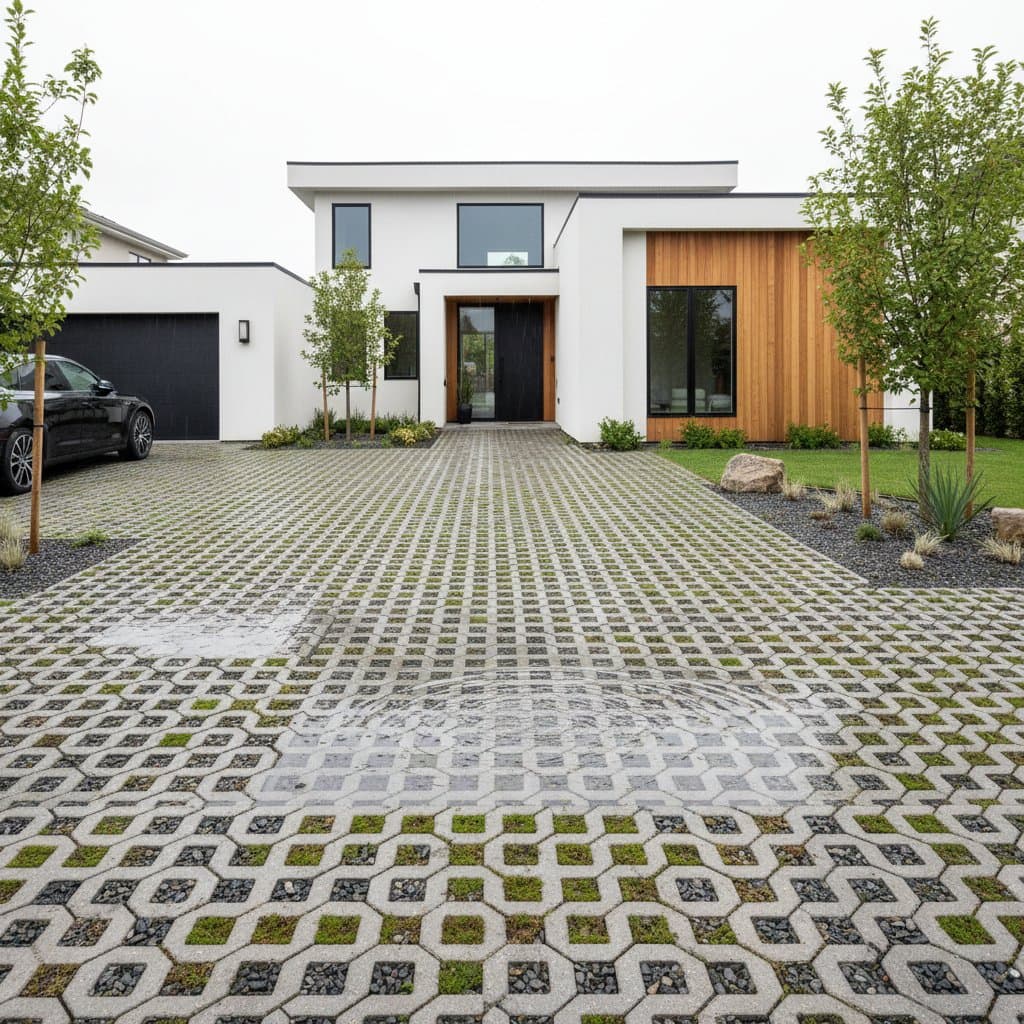
Permeable driveways capture rainwater directly on the surface, permitting it to percolate through rather than flow into streets or sewers. Homeowners in areas prone to intense rainfall, stringent drainage regulations, or water scarcity benefit from drier landscapes and diminished flood hazards. These driveways present a sleek, contemporary appearance that complements diverse architectural styles, thereby elevating the overall visual allure of a property.
This upgrade suits property owners seeking a robust paving solution that collaborates with natural water cycles instead of resisting them. Such systems prove effective in densely packed urban developments subject to rigorous runoff controls as well as established suburban neighborhoods grappling with outdated infrastructure.
Advantages and Disadvantages
Advantages
- Minimizes surface runoff and water accumulation adjacent to building foundations
- Aligns with regional stormwater management standards
- Elevates aesthetic value through tidy, textured finishes
- Promotes aquifer replenishment by directing water away from municipal systems
- Diminishes reliance on supplementary drainage infrastructure
Disadvantages
- Involves greater initial expenditure compared to conventional asphalt or concrete installations
- Demands meticulous sub-base preparation to prevent subsidence
- Necessitates regular sweeping or vacuuming to maintain permeability and avoid blockages
- Proves unsuitable for gradients exceeding moderate inclines or frequent passage of substantial loads
- Susceptible to degradation from repeated freezing and thawing without adequate construction
Installation: DIY Considerations Versus Professional Expertise
The complexity of installing a permeable driveway ranges from moderate to challenging, contingent upon the selected material. A complete project typically spans three to seven days, factoring in site preparation and curing periods.
DIY Fundamentals
- Feasible primarily for gravel-based grid configurations
- Involves procuring excavation equipment, a soil compactor, a precise leveling tool, and a screed board
- Carries the potential for ineffective water management should sub-base layering deviate from specifications
Scenarios Requiring Professional Installation
- Properties with noticeable inclines or suboptimal soil percolation rates
- Installations involving concrete slabs or interlocking pavers that demand specialized compaction and leveling
- Jurisdictions mandating hydrological assessments for runoff volume
Engaging certified installers guarantees appropriate sub-base thickness and gradient, ensuring optimal drainage performance over time.
Upkeep Strategies and Expected Durability
Everyday Maintenance Practices
- Perform annual sweeping or vacuuming to clear accumulated sediment.
- Flush the surface with a garden hose periodically during arid conditions to preserve void spaces.
- Replenish stabilizing gravel in joints as settlement occurs.
Indicators of Required Attention
- Accumulation of debris in joints or formation of standing water post-precipitation.
- Emergence of vegetation within permeable gaps.
- Displacement of paving units or formation of depressions under vehicular stress.
Under diligent maintenance, permeable paver systems endure 25 to 40 years, porous concrete variants persist 20 to 30 years, and reinforced gravel setups last 10 to 15 years. Numerous manufacturers extend limited warranties for installations completed by accredited professionals.
Viable Alternatives
Standard Concrete Driveway
Offers lower initial costs yet contributes to increased runoff, potentially necessitating auxiliary drainage solutions.
Asphalt Driveway
Provides economical pricing and straightforward repairs, though it remains impervious to water and vulnerable to thermal degradation.
Loose Gravel Driveway
Serves as an affordable choice with inherent drainage properties, but demands ongoing regrading and vegetation suppression.
Permeable Pathways or Courtyards
For budgets constraining a comprehensive driveway overhaul, initiate with localized permeable zones to address localized runoff issues.
Regional Influences on Design and Performance
Expenses and efficacy fluctuate based on geographic conditions.
- In humid environments, incorporate augmented sub-base layers to mitigate oversaturation.
- Temperate zones with winter freezes call for resilient aggregates and calibrated slopes to avert ice-induced harm.
- Littoral regions contend with saline degradation affecting metallic borders or stone elements.
- Metropolitan districts frequently stipulate minimum permeable coverage to fulfill stormwater compliance mandates.
Verify prevailing building codes prior to commencement. Certain municipalities provide incentives, such as rebates, for adopting permeable technologies in flood mitigation initiatives.
Investment Return and Market Implications
A meticulously constructed permeable driveway augments visual desirability and appeals to environmentally aware purchasers. Anticipate recovering 50 to 70 percent of the outlay upon sale, influenced by locale and execution finesse. Beyond financial recoupment, these installations avert expenses tied to water ingress repairs or regulatory upgrades, thereby preserving asset worth indefinitely.
Essential Safety Protocols
Locate and mark subsurface utilities prior to any excavation.
Equip personnel with safety apparel throughout digging and compaction phases.
Refrain from operating heavy machinery over newly placed materials.
For poured concrete or bituminous applications, permit complete hardening before vehicular use.
Adhere to municipal stormwater guidelines to validate the design's capacity for handling projected volumes.
Planning Your Permeable Driveway Project
- Assess your site's soil type, slope, and existing drainage patterns through a professional evaluation.
- Research local regulations and potential incentives via municipal planning offices.
- Obtain quotes from at least three certified contractors, specifying materials and warranties.
- Schedule installation during favorable weather to optimize curing and initial performance.
- Integrate the driveway with broader landscape features, such as rain gardens, for enhanced water management.
Frequently Asked Questions
What materials are best for permeable driveways?
Options include porous concrete, permeable pavers, and gravel grids. Select based on traffic needs, aesthetics, and budget; pavers offer versatility, while gravel suits lighter use.
How much does installation cost?
Expect $8 to $20 per square foot, varying by material and site complexity. Factor in excavation and base preparation, which comprise 40 to 60 percent of total expenses.
Can permeable driveways support heavy vehicles?
Most systems accommodate standard passenger cars and light trucks. For heavier loads, reinforce with deeper bases or consult engineers for custom designs.
Do permeable driveways require special cleaning products?
Standard sweeping suffices; avoid pressure washing, which may displace fines. Use eco-friendly rinses if needed to prevent chemical runoff.
Are there tax credits for installing permeable surfaces?
Eligibility depends on location; programs like federal energy efficiency rebates or state flood control grants may apply. Check with local authorities for current offerings.