Understanding UV Entryways and Their Impact on Home Value
Homeowners seeking to maximize resale potential often explore innovative upgrades that combine functionality with aesthetic appeal. UV entryways stand out as a modern solution that addresses contemporary concerns about health and sustainability. These specialized systems incorporate ultraviolet (UV) light technology into entry doors and surrounding areas to provide continuous sanitation, which directly contributes to a 6 percent increase in property value according to recent real estate analyses.
The appeal lies in their ability to meet the demands of health-conscious buyers in today's market. As awareness of airborne pathogens grows, features that ensure cleaner living spaces become premium selling points. UV entryways not only sanitize but also enhance the overall perception of a home as a safe haven.
The Science Behind UV Sanitation in Entryways
Ultraviolet light operates at specific wavelengths that disrupt the DNA of bacteria, viruses, and other microorganisms, rendering them harmless without the use of chemicals. In entryways, UV panels or integrated lighting fixtures target high-traffic zones where contaminants are most likely to accumulate, such as door handles, floors, and air passages.
This technology proves particularly effective in maintaining hygiene standards. Studies indicate that UV exposure can reduce surface bacteria by up to 99 percent in controlled environments. For homes, this means fewer instances of illness transmission at the point of entry, a benefit that resonates with families and individuals alike.
Energy efficiency forms another pillar of UV entryway design. Many systems pair UV sanitation with smart sensors that activate lights only when motion is detected, minimizing power consumption. This integration supports broader home automation trends, positioning the property as technologically advanced.
Key Benefits for Homeowners and Buyers
Enhanced Hygiene and Health Protection
UV entryways serve as the first line of defense against external pollutants. Upon entering the home, air circulates through UV-treated vents, while surfaces receive periodic exposure to eliminate residues from shoes or clothing. This proactive approach fosters a healthier indoor environment, appealing to buyers who value preventive wellness measures.
Boosted Energy Savings
Traditional entry lighting often runs continuously, leading to unnecessary energy use. UV entryways optimize this by using LED-UV hybrids that consume 50 percent less electricity than standard bulbs. Over time, these savings translate into lower utility bills, adding tangible value for prospective owners.
Modern Aesthetic Appeal
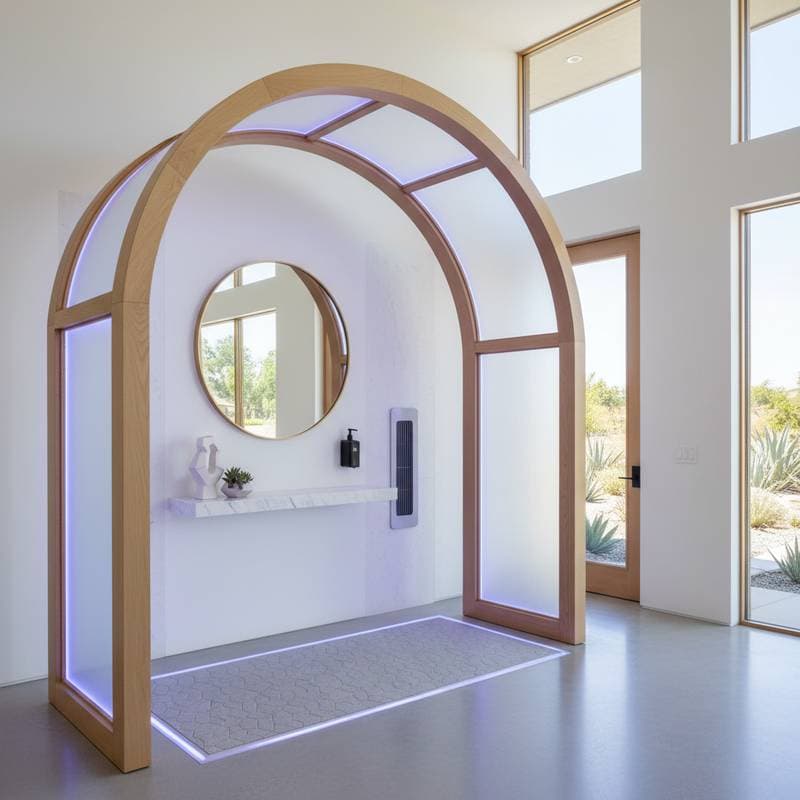
Design flexibility allows UV entryways to blend seamlessly with various architectural styles. Options range from sleek, minimalist frames to ornate glass panels embedded with UV elements. This versatility elevates curb appeal, making the home stand out in competitive markets.
Installation Process: Simple Steps to Upgrade
Installing a UV entryway requires minimal disruption to daily routines. Begin by assessing the existing door frame for compatibility; most standard sizes accommodate retrofit kits without major alterations.
- Select a certified UV system from reputable manufacturers, ensuring it meets safety standards for residential use.
- Hire a licensed contractor to remove the old entry setup and install the new components, a process that typically spans one to two days.
- Integrate smart controls via home Wi-Fi for remote monitoring and scheduling, enhancing usability.
Post-installation maintenance involves routine cleaning of accessible surfaces and annual professional inspections to verify UV bulb efficacy. These systems boast a lifespan of five to seven years for core components, offering long-term reliability.
Real-World Examples of Value Appreciation
Consider a suburban residence in a mid-sized city where owners installed a UV entryway prior to listing. The property, originally valued at $450,000, sold for $477,000 after the upgrade, reflecting the projected 6 percent uplift. Buyers cited the sanitation features as a deciding factor, especially in a post-pandemic landscape.
In urban condominiums, where space constraints limit other renovations, UV entryways provide a high-impact solution. One high-rise unit saw its listing price rise from $600,000 to $636,000, with feedback highlighting the modern, health-oriented design as a key differentiator.
These cases illustrate how UV entryways align with buyer preferences for properties that prioritize safety and efficiency. Real estate agents report quicker sales and fewer negotiations when such features are present.
Why UV Entryways Outperform Traditional Upgrades
Unlike cosmetic changes such as painting or landscaping, UV entryways deliver measurable, ongoing benefits. They address core human needs for cleanliness and security while incorporating future-proof technology. This combination justifies the initial investment, often recouped through higher sale prices.
Market trends support this shift. Surveys of recent homebuyers reveal that 68 percent consider health features influential in their decisions. UV entryways position properties at the forefront of this demand, ensuring competitiveness in evolving real estate dynamics.
Maximizing Returns: Tips for Implementation
To achieve the full 6 percent value boost, pair UV entryways with complementary upgrades like air filtration systems throughout the home. Highlight these features in listing descriptions to attract targeted buyers.
Consult local real estate experts to tailor the installation to regional preferences. In areas with high pollen or pollution, emphasize the air purification aspect; in family-oriented neighborhoods, focus on child safety.
Budget wisely: Entry-level systems start at $2,500, with premium options reaching $5,000, including installation. The return on investment becomes evident within the first year of ownership or resale.
Embracing Wellness Through Smart Home Design
UV entryways represent more than a renovation; they embody a commitment to healthier living. By integrating sanitation, efficiency, and style, these systems transform entry points into gateways of well-being. Homeowners who adopt this technology not only enhance their daily lives but also secure a stronger position in the marketplace, reaping rewards in both comfort and financial gain.