- Timeline: Three to seven days for foundational setups
- Essential Equipment: Circular saw, power drill, spirit level, framing nailer, and finishing supplies
- Potential Pitfalls: Moderate; miscalculations in spatial arrangement or water management may diminish overall effectiveness.
DIY approaches work best for skilled individuals focusing on basic enhancements, such as installing modular shelving or refreshing an underutilized alcove.
Engaging Experts
Opt for professional services when projects involve partitioning, electrical systems, or water lines. Interior designers refine spatial dynamics and material selections to align with market preferences. Contractors handle drainage solutions, thermal barriers, and compliance documentation, yielding superior outcomes and extended reliability.
Essential Installation Steps
- Evaluate the Area. Gauge dimensions of potential sites and observe movement patterns during high-traffic periods.
- Sketch the Configuration. Position benches, compartments, and retrieval points based on user needs.
- Select Robust Materials. Opt for resilient options like sealed composites for floors and moisture-repellent paints for walls.
- Clear the Workspace. Strip away outdated coverings, repair drywall imperfections, and outline construction boundaries.
- Lay the Base Layer. Install impervious options such as ceramic tiles or luxury vinyl tiles for durability.
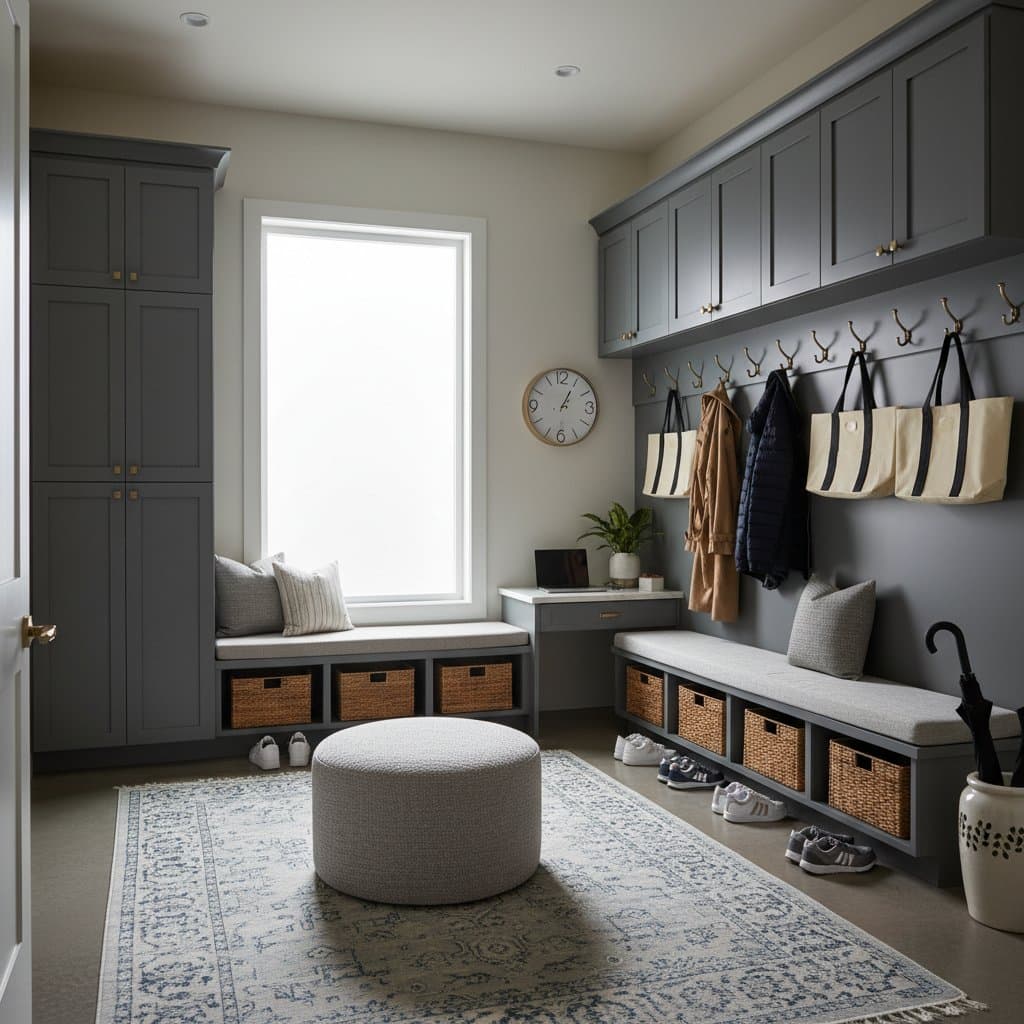
- Construct Organizational Elements. Assemble seating units, hanging fixtures, and storage tiers scaled to the environment.
- Apply Protective Coatings. Employ washable paints and sealants to facilitate routine care.
- Incorporate Illumination. Integrate LED panels or recessed lights for optimal visibility.
- Organize and Test. Arrange containers for categorized items and simulate daily use to refine adjustments.
Upkeep Strategies and Durability
With routine care, mudrooms endure for 20 years or longer. Sweep or vacuum floors each week to eliminate abrasive particles. Dust and disinfect horizontal surfaces on a monthly basis to curb residue accumulation. Refresh paint or reseal elements every five to ten years, inspecting for wear around entry points and adjacent utilities. Address grout deterioration or sealant failures promptly to maintain integrity. Custom fixtures typically include one-year installer guarantees, whereas built-in components offer extended manufacturer protections up to 25 years.
Viable Alternatives to Full Mudrooms
Revamping an Entry Closet
Transform a conventional wardrobe into a semi-open repository with added rods and bins. This budget-friendly method provides containment without major reconfiguration, though capacity remains constrained.
Enhancing Garage Perimeters
Install vertical storage systems adjacent to interior access points. Such setups manage external messes effectively but forgo the warmth of enclosed interiors.
Developing a Buffered Porch
Enclose an existing veranda with screens or panels, incorporating perimeter benches. This extension shields against elements at a premium price point.
Integrating with Utility Spaces
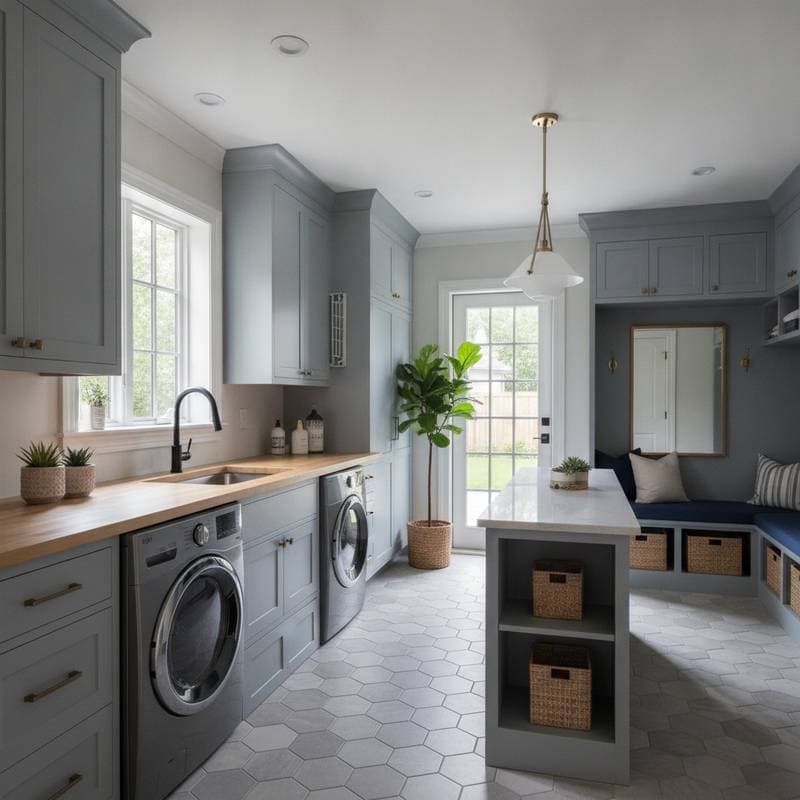
Merge organizational features into laundry or multipurpose rooms near rear entrances. Ideal for vintage properties with surplus areas, this consolidates functions efficiently.
Considering Regional Influences
Climate and location shape mudroom specifications and budgets. In frigid zones, incorporate radiant heating under tile surfaces and robust stoneware. Seaside environments call for anti-corrosive fittings and vapor barriers to combat humidity. Arid locales benefit from integrated doormats and smooth, dust-resistant panels.
Workforce expenses fluctuate geographically. Metropolitan regions command 15 to 25 percent premiums for specialized labor. Countryside settings offer reduced rates but fewer customization experts. Review municipal ordinances prior to utility modifications or facade alterations; many jurisdictions mandate reviews for any load-impacting or wiring-related endeavors.
Calculating Returns and Enhancing Resale
Strategic mudroom investments recover up to 92 percent of expenditures upon sale. Prospective owners value these additions for their role in simplifying lifestyles and upholding cleanliness. Properties featuring seamless entry solutions frequently close deals quicker and command elevated bids.
Maximize yields through quality execution and harmonious aesthetics. Basic wooden benches contribute incrementally, whereas comprehensive installations with integrated cabinetry, premium surfacing, and ambient lighting generate greater appreciation. Align selections with homewide motifs to avoid detracting from cohesion. Overly elaborate or discordant elements risk lowering perceived worth.
Valuation professionals regard enclosed mudrooms as added usable area, particularly with climate regulation and fixed installations. In saturated seller markets, they differentiate listings from comparable offerings.
Adhering to Safety Standards and Regulations
Spaces with electrical features, illumination, or thermal elements require compliance with national codes. Install ground-fault circuit interrupters near moisture-prone locations. For water integrations, insulate lines to avert freeze damage. Caulk seams between floors and partitions to block water penetration.
Before erecting barriers or extending footprints, confirm non-load-bearing status of targeted structures. Secure authorizations for all framing, circuitry, or piping alterations. Promote airflow via vents or fans to mitigate dampness and scents in confined zones.
Addressing Frequent Inquiries
Optimal Dimensions for Functionality
Begin with a minimum of 5 by 6 feet to accommodate basic needs. Expanding families prefer 8 by 10 feet or greater to include ample seating, storage, and circulation paths.
Recommended Surface Materials
Durable choices include porcelain tiles, natural stone, or resilient vinyl planks, all tolerant of spills and traffic. Steer clear of unsealed woods, which demand intensive preservation.
Incorporating Laundry or Utility Fixtures
Feasible with nearby access to lines; engage certified plumbers for secure drain, exhaust, and feed installations.
Managing Temperature Control
Enclosed environments profit from circulated air to ensure usability and humidity balance. Link to central systems or add dedicated ducts for seamless integration.
Sustaining Order
Employ tagged receptacles, accessible pegs, and concealed drawers. Cycle out off-season gear and perform weekly decluttering.
Implementing Your Mudroom Project
Mudrooms offer enduring practicality and financial upside by converting disorderly thresholds into efficient sanctuaries. They shield vulnerable areas and streamline household operations, making the investment worthwhile for diverse lifestyles.
Begin with precise measurements and a prioritized needs list. Solicit estimates from credentialed builders or outline a streamlined self-guided approach using hardy components. Verify zoning requirements early. A methodical execution ensures your addition functions as a vital asset and prudent enhancement.