Why Mudroom Conversions Deliver an 11% Resale Value Increase
A well-executed mudroom conversion stands out as a high-impact upgrade for limited spaces. This addition organizes entryway clutter, safeguards interior flooring, and establishes a professional first impression that potential buyers appreciate immediately. Homeowners gain both everyday utility and a tangible return on investment through this targeted improvement.
Key Cost Considerations
Multiple elements influence the overall expense of a mudroom project. Understanding these allows for precise budgeting and informed decisions.
Space and Layout Requirements
- Repurposing an existing area, such as a laundry alcove or screened porch, proves more economical than constructing a new extension.
- Interior conversions generally range from $60 to $120 per square foot, whereas expansions or standalone additions may cost up to twice as much.
Material Selections
- Features like integrated cabinetry, resilient tile flooring, and robust surface treatments increase initial outlay but ensure longevity.
- Basic vinyl options begin at about $3 per square foot, escalating to $10 per square foot for premium porcelain tiles.
Labor Expenses
- Professionals including carpenters, electricians, and painters typically represent 40% to 50% of the total budget.
- Regional differences affect rates, with metropolitan locations commanding higher fees due to demand and logistics.
Access and Structural Adjustments
- Incorporating plumbing lines, electrical receptacles, or exterior access points necessitates building code inspections and supplementary charges.
- Limited site access extends labor time, thereby raising costs.
Permits and Waste Management
- Basic storage modifications might bypass permitting requirements, but structural alterations demand official approval.
- Allocate $300 to $800 for fees related to permits and on-site debris disposal.
Design Levels and Layout Strategies
Mudroom projects vary across three tiers, each offering distinct features and price points.
Entry-Level Conversion ($6,000 to $8,000)
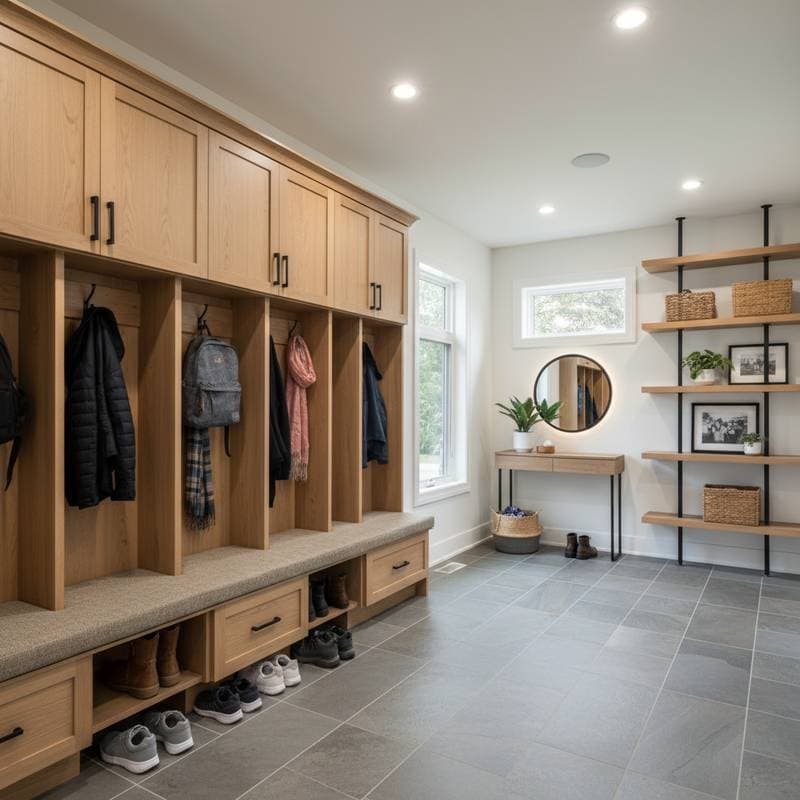
- Install a straightforward bench paired with hooks and open cubbies for essential storage.
- Opt for resilient sheet vinyl or laminate surfaces to handle foot traffic.
- Perform limited drywall repairs and fresh paint applications.
- Avoid additions of plumbing or new wiring to keep expenses low.
Intermediate Conversion ($9,000 to $13,000)
- Incorporate custom cabinetry featuring drawers and dedicated shoe compartments.
- Choose ceramic tiles or engineered wood for enhanced aesthetics and durability.
- Integrate supplemental lighting, improved wall insulation, and a weatherproof entry door.
- Apply protective finishes and detailed trim work throughout.
Advanced Conversion ($14,000 to $18,000+)
- Feature bespoke millwork, radiant-heated flooring, and seamless integration with laundry or pet cleaning stations.
- Select superior hardware and cabinets engineered for high-moisture environments.
- Add automated lighting controls or advanced ventilation for optimal comfort.
- Undertake a comprehensive redesign, potentially expanding the footprint.
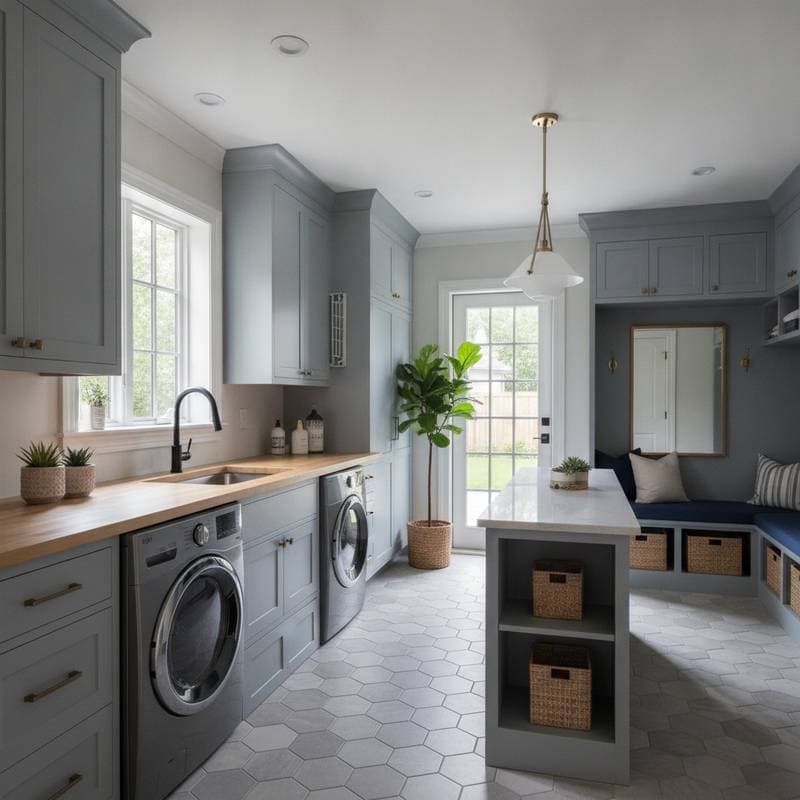
Strategic details elevate the space's effectiveness. Position a storage-integrated bench to streamline daily routines. Include a grated drain mat or dedicated boot tray to mitigate water intrusion. Consider a sliding pocket door for efficient use in compact areas.
Project Timeline and Cost-Saving Tactics
Effective planning directly impacts both duration and expenses. Anticipate two to five weeks for completion, accounting for procurement delays on custom elements like cabinetry and tiles. Procure materials in advance to circumvent supply chain disruptions. Time construction for drier seasons to protect unfinished surfaces from environmental damage. Combine the mudroom work with adjacent room updates, such as hallway flooring or kitchen lighting, to minimize repeated labor mobilization costs.
Seasonal Planning Advice:
- Material prices for tiles and cabinetry frequently decrease during off-peak building periods.
- Certain locales provide incentives for energy-efficient upgrades, including added insulation or airtight doors.
Reserve an additional 10% to 15% of the budget for unforeseen issues in established properties, particularly concealed electrical systems or irregular subfloors.
Mechanisms Behind the 11% Value Appreciation
This projected 11% uplift stems from several quantifiable advantages that appeal to prospective purchasers.
Enhanced Entry Experience
Organized and resilient entry areas convey meticulous maintenance and overall property quality. Buyers form positive opinions upon arrival, prior to touring interior spaces.
Expanded Storage Capacity
Ample cabinetry, wall-mounted hooks, and seating options provide tangible organization solutions. Such features enable smaller residences to rival the appeal of more spacious homes.
Interior Preservation
Barriers against soil, moisture, and corrosive elements protect primary living areas from premature wear. This foresight averts substantial future maintenance expenditures.
Real estate professionals frequently highlight mudrooms in property descriptions for their marketability. These spaces capture compelling images and diminish visual disarray during showings.
Steps to Launch Your Mudroom Project
Begin by assessing available areas within your home. Evaluate options like transforming a hallway, porch, or underutilized corner prior to pursuing expansions.
Immediate Actions to Pursue:
- Draft a preliminary layout incorporating a bench, wall hooks, and enclosed shoe storage.
- Obtain estimates from a specialized carpenter and a full-service general contractor.
- Inquire with each professional about their protocols for moisture management and regulatory compliance.
- Research individual costs for flooring materials and cabinet units to identify potential efficiencies.
- Align the project timeline with favorable weather conditions to maintain surface integrity.
Prioritize impermeable, cleanable flooring as the foundational element. This choice delivers superior longevity and cost efficiency over time.
Realizing Everyday and Long-Term Benefits
A thoughtfully designed mudroom merges aesthetics with practical endurance. Homeowners enjoy streamlined routines while securing a strong financial return at resale. Prospective buyers envision effortless upkeep in a property equipped with such forward-thinking features, justifying the invested 11% premium.