How Hidden Pantries Increase Home Resale Value
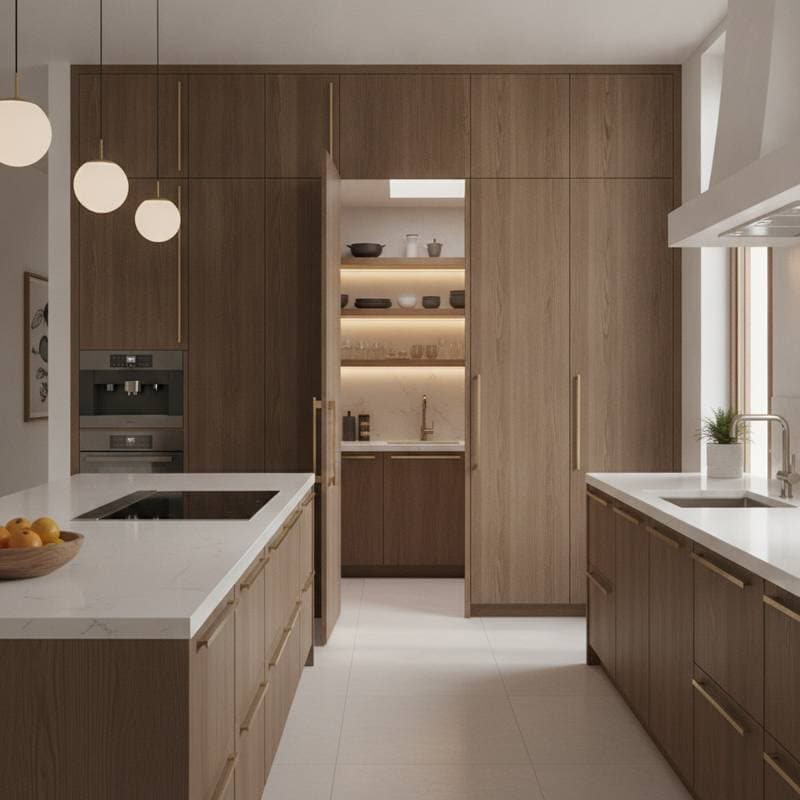
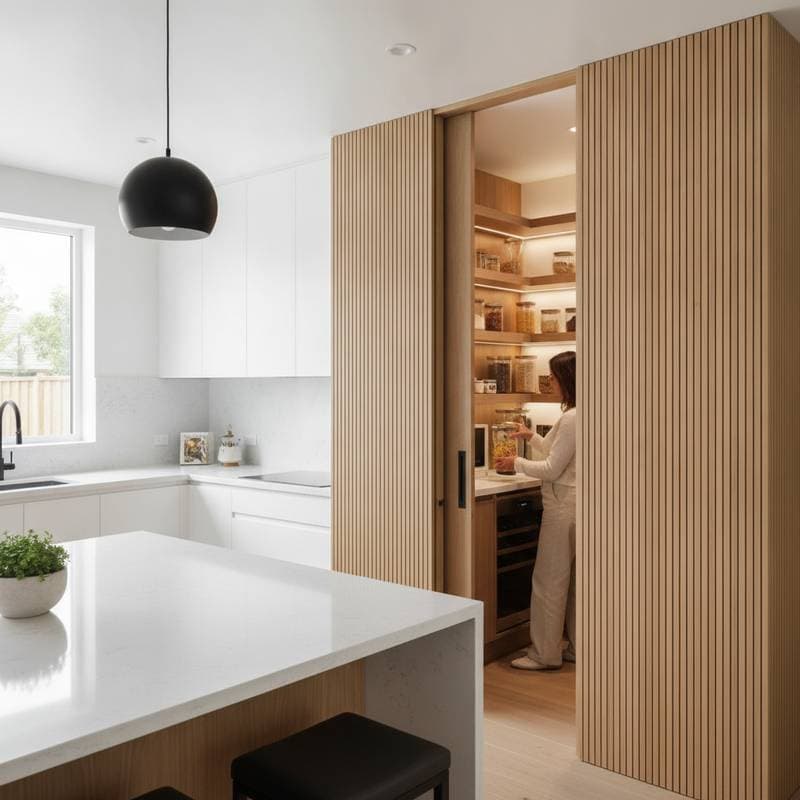
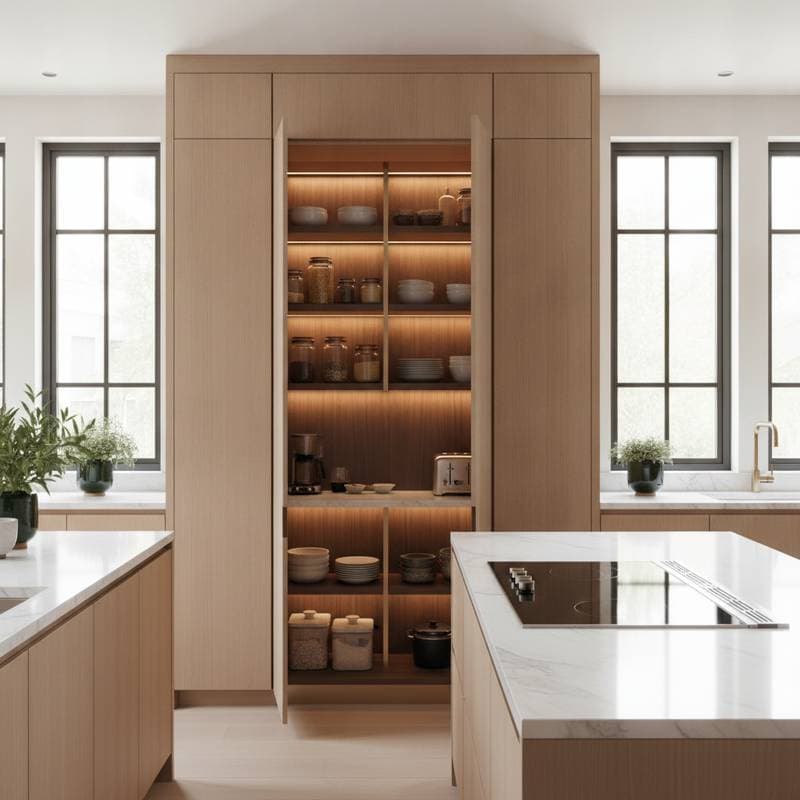
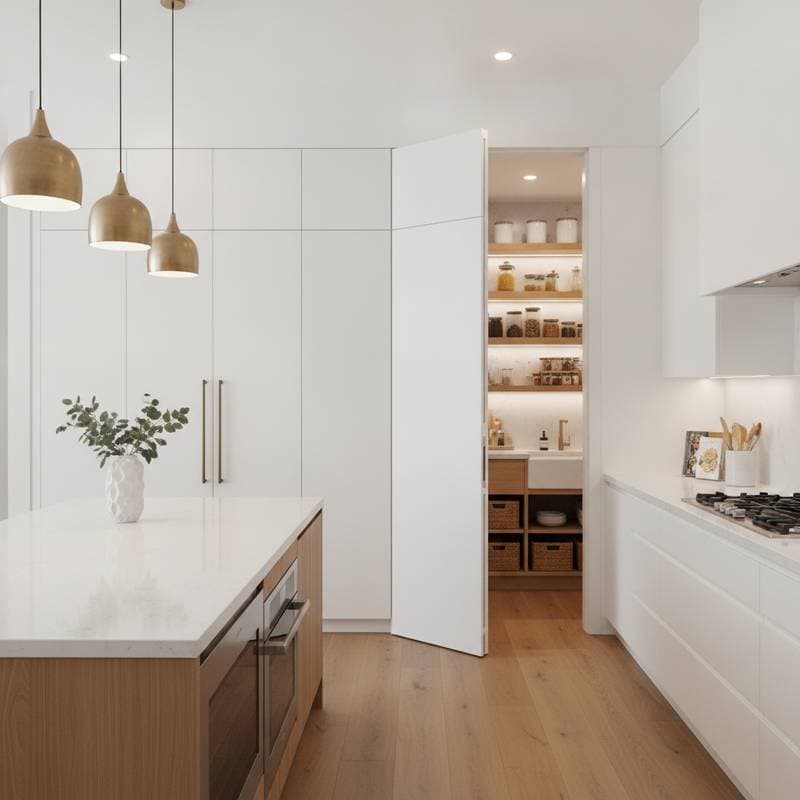
A hidden pantry integrates storage into kitchen cabinetry so that it remains invisible until opened. This design delivers clean surfaces along with organized space for dry goods and small appliances.
Cost Breakdown
National averages for installation range from 3500 dollars to 8000 dollars. Midrange projects typically fall between 5000 dollars and 6500 dollars. Larger custom versions reach 10000 dollars to 15000 dollars.
Key cost factors include pantry size, material quality, door hardware, and any added lighting or outlets. When the pantry matches surrounding cabinetry, it can raise resale value by about 6 percent.
Advantages and Limitations
Advantages include the following:
- Greater buyer appeal and resale value
- Clear countertops and improved organization
- Extra storage without additional visible cabinets
- Concealed appliances for a streamlined appearance
- Easy access to bulk items and prep areas
Limitations include higher upfront costs, the need for professional carpentry, reduced wall space for other uses, possible layout changes, and occasional clearance issues with the door.
Pantry Types
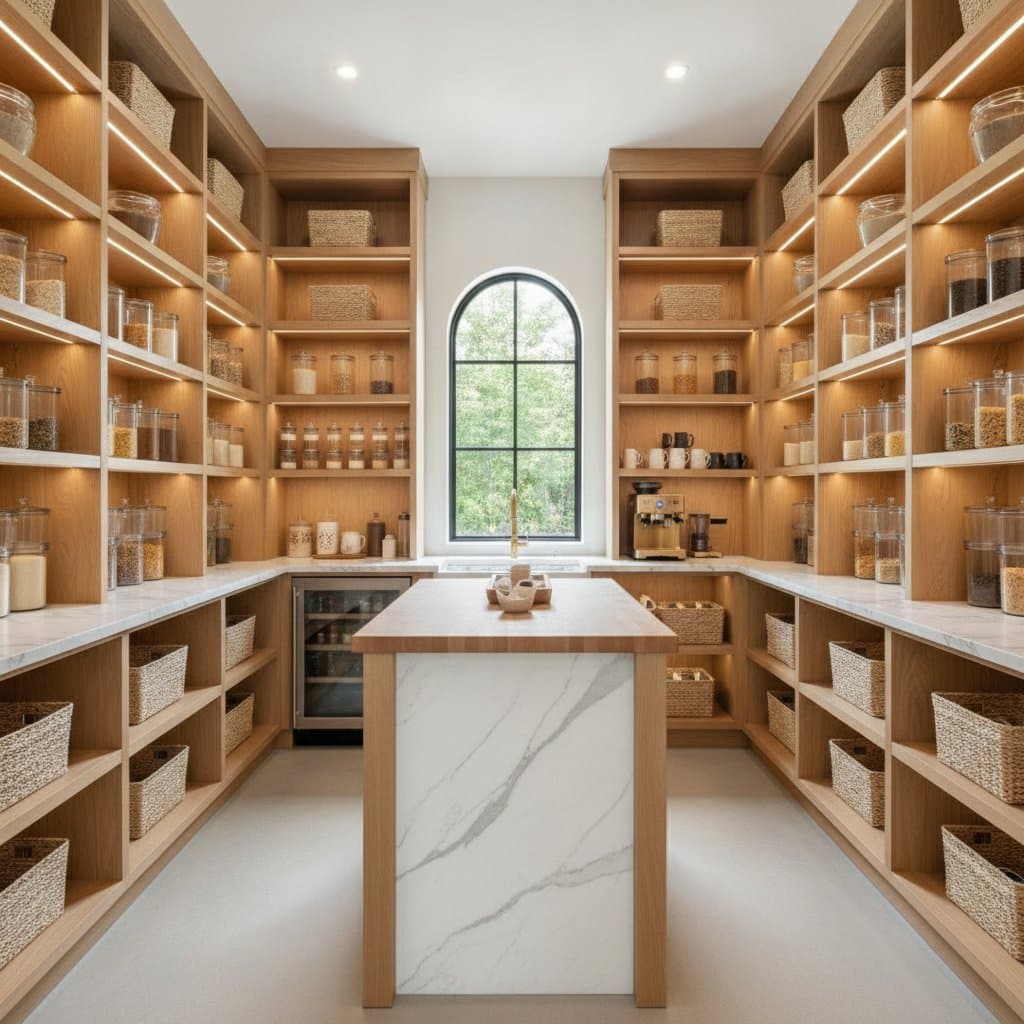
Cabinet depth units swing open like a tall cabinet and suit compact kitchens. Walk in versions hide full rooms behind matching panels and work best in larger spaces. Butler pantries sit between kitchen and dining areas for serving tasks. Pull out walls provide tall storage in tight footprints. Integrated appliance units combine shelving with hidden garages for countertop items.
Select the type that aligns with daily kitchen traffic and available wall space.
Professional Installation
Moderate to high difficulty applies to do it yourself projects, which require two to five days and tools such as saws, drills, levels, and clamps. Misaligned doors can destroy the concealed effect.
Hire professionals when structural changes, plumbing reroutes, integrated lighting, or code compliance are involved. A skilled carpenter ensures flush alignment with existing cabinetry.
Installation Steps
- Assess available walls or cabinet runs that can hide a door.
- Measure clearances for swing or sliding mechanisms.
- Design the door face to match adjacent cabinet style and hardware.
- Build framing to support shelves and door weight.
- Install adjustable or fixed shelving.
- Attach and align door panels for a flush finish.
- Add LED lighting for visibility.
- Apply matching paint or finish.
- Verify door operation and remove debris.
Maintenance and Durability
Quality builds last 20 to 30 years. Monthly shelf cleaning, twice yearly hinge checks, and occasional paint touch ups maintain performance. Many custom makers provide five to ten year warranties on hardware.
Alternatives
Open shelving offers lower cost but exposes items. Traditional walk in pantries provide capacity without concealment. Freestanding cabinets remain portable yet lack built in integration. Corner closets use awkward space but require extra framing.
Hidden pantries combine function with visual simplicity, which supports stronger resale performance.
Regional Considerations
Humid climates require moisture resistant materials such as sealed plywood. Local codes may mandate outlets or ventilation when appliances are stored inside. Labor rates range from 50 dollars to 150 dollars per hour depending on market size. Material lead times can extend in rural areas.
Return on Investment
Upgraded kitchens sell faster and at higher prices. A hidden pantry contributes an estimated 5 to 6 percent value increase in mid to high end markets. Recovery of costs depends on design integration, material durability, and local buyer expectations.
Safety Guidelines
Use licensed electricians for any wiring. Avoid cutting load bearing walls. Keep flammables away from outlets and lights. Add ventilation near heat generating appliances. Confirm permit requirements before starting work.
Common Questions
A cabinet depth pantry needs 12 to 18 inches of depth. A walk in design requires roughly 3 by 4 feet. Retrofit is possible when an unused wall or closet exists, though matching finishes remains the main challenge. Ventilation is needed only when appliances or lighting are present. Full height hinged doors provide the cleanest appearance, while sliding options suit tight spaces. Modified standard cabinets can work if finishes align perfectly.
Next Actions
Measure the space and sketch possible locations. Obtain three quotes from licensed remodelers and review samples of flush panels and hardware. A well planned hidden pantry improves daily kitchen function while supporting long term property value.