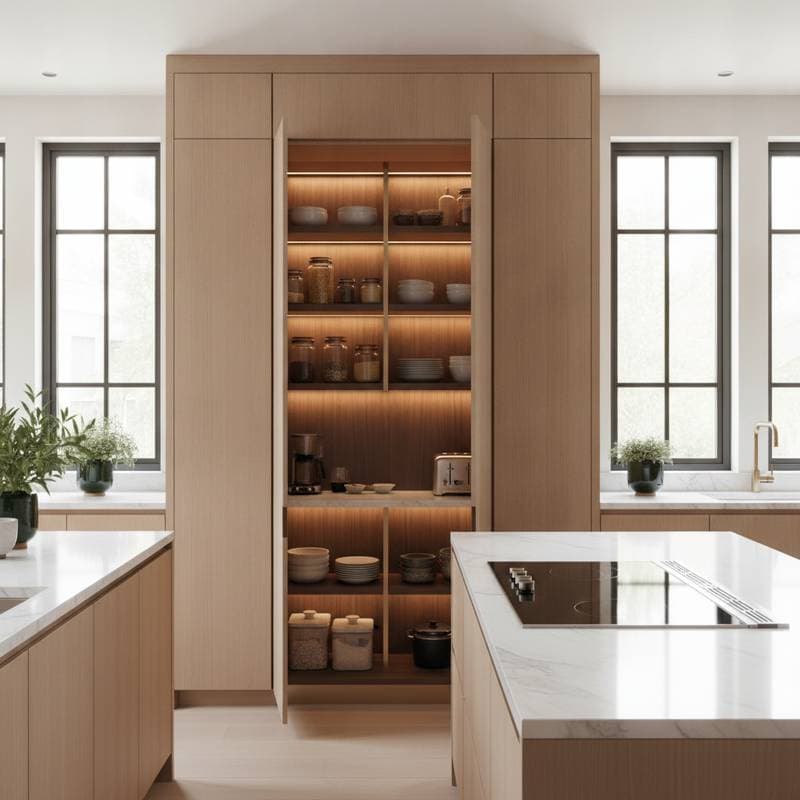
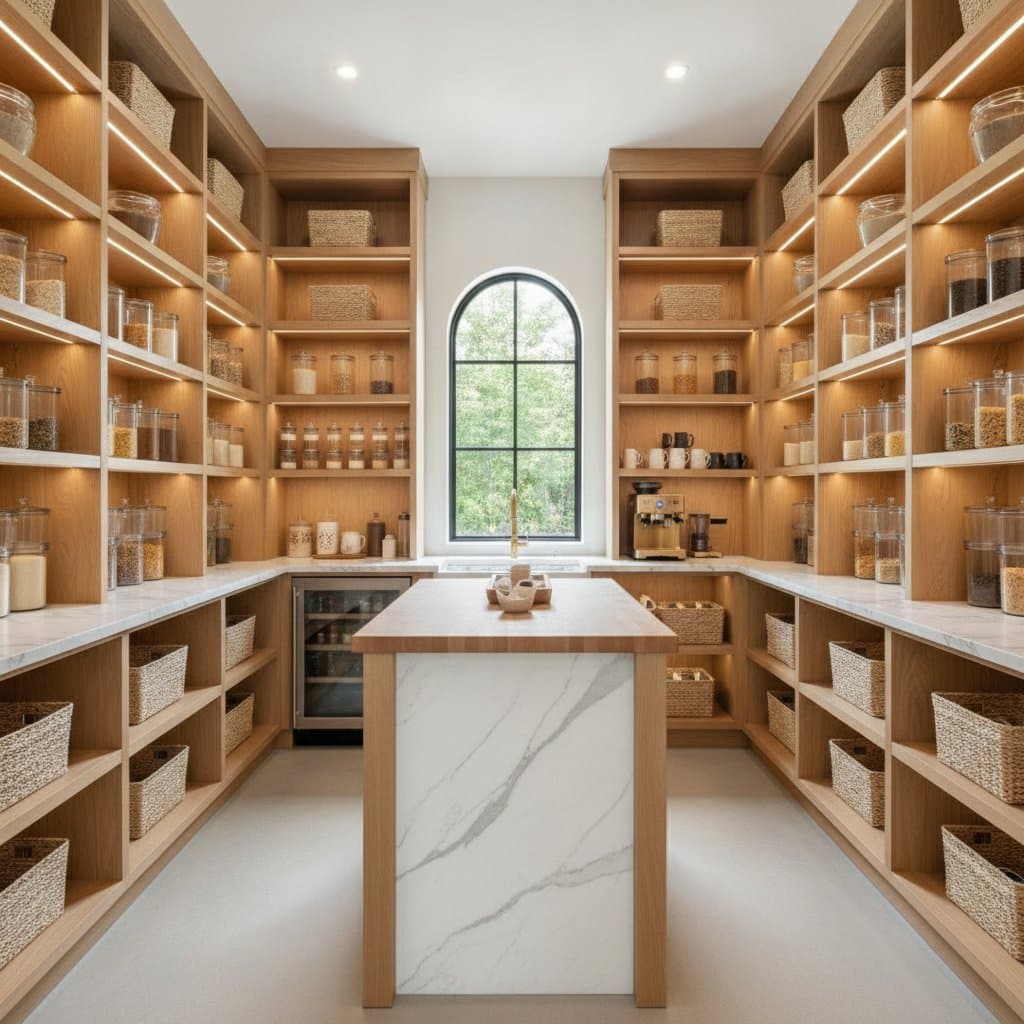
Walk-In Pantries Add Storage That Helps Homes Sell Faster
Typical cost: $3,800 to $9,500 installed, depending on size and finish.
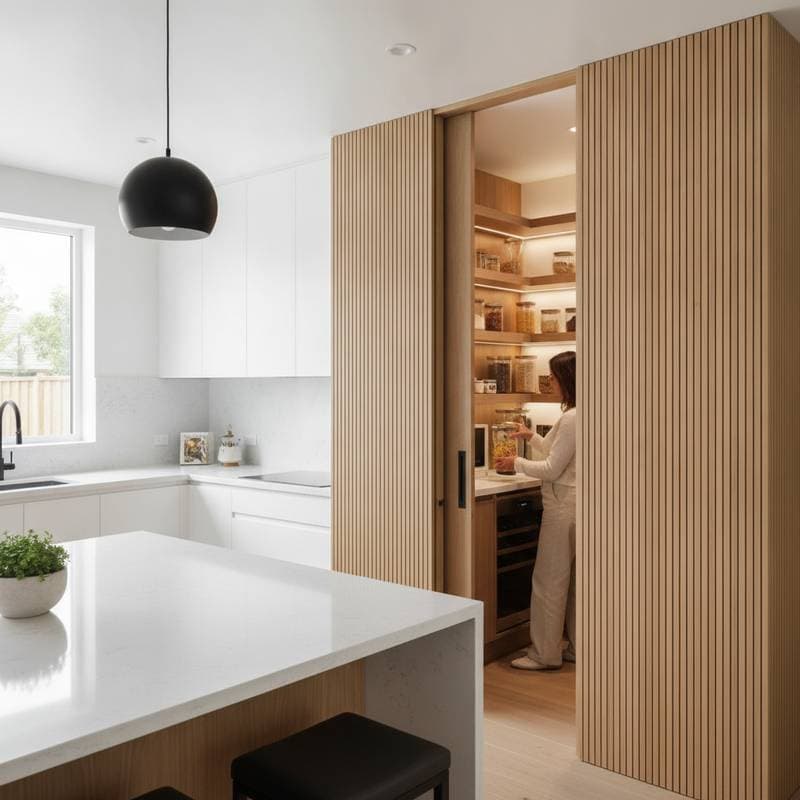
A walk-in pantry brings visible value to any kitchen. It often helps homes sell about 15 percent faster by signaling order, space, and smart use of square footage. Buyers view the feature as both functional and luxurious, which makes it one of the stronger kitchen storage upgrades for resale.
Cost Factors
Size and Layout
- A 4 by 6 foot walk-in pantry offers efficient shelving and room for small appliances.
- A 6 by 8 foot pantry with custom shelving, lighting, and flooring can double the cost.
- Corner pantries cost less to frame because they share walls with the existing kitchen structure.
Materials
- Wire shelving runs $10 to $15 per linear foot and suits basic storage needs.
- Wood shelving costs $25 to $40 per linear foot and adds warmth plus durability.
- Custom cabinetry ranges from $200 to $400 per linear foot, which boosts resale value yet raises the total price.
- Flooring upgrades such as tile or laminate add $3 to $8 per square foot installed.
Labor
Carpenters and finishers charge $45 to $90 per hour. Electricians complete basic lighting or outlet work for $150 to $300. Painters charge $300 to $600 depending on size and surface preparation.
Access and Disposal
Demolition of existing cabinetry or walls adds $300 to $800. Easy access to the kitchen area keeps labor costs lower. Disposal of old materials may cost $50 to $150, especially when cabinetry or drywall is involved.
Permits and Add-ons
Basic pantry conversions often skip permits, yet structural changes require one. Expect $150 to $400 for a permit depending on location. Add-ons such as motion lighting, pull-out drawers, or ventilation fans add $200 to $600.
DIY Versus Professional Installation
When to Consider DIY
Converting a closet or unused alcove with simple shelving works for many homeowners. Painting, assembling prefabricated shelves, or adding removable lighting also fits this route. Basic drywall patching or cleanup after framing stays within reach for those with intermediate skills.
Required tools include a drill, stud finder, level, measuring tape, saw, and safety gear. Risks involve poor ventilation, uneven shelves, or overloading wall studs.
When to Hire a Professional
Any load-bearing wall removal or framing demands a licensed contractor. Electrical wiring, plumbing, or ventilation work requires the same. Custom cabinetry or stone countertop installation falls into this category as well.
Building codes require licensed trades for structural or electrical work. Mistakes can lead to moisture damage, circuit overloads, or failed inspections.
Maintenance and Warranties
Routine Care
Wipe shelves monthly with mild detergent to prevent dust buildup. Inspect shelving fasteners annually and tighten them as needed. Check lighting and outlets for signs of moisture or flicker.
Material Life and Repairs
Wire shelving lasts about 15 years but can sag under heavy loads. Wood shelving endures 20 to 25 years when sealed and not overloaded. Cabinetry reaches 25 years or more with soft-close hardware and proper humidity control.
Extending Lifespan
Add a small vent or air gap in the door to prevent humidity buildup. Keep heavy items on lower shelves to reduce tipping or cracking risk. Use shelf liners to protect surfaces from oils or spills.
Warranty Pointers
Prefabricated shelving often includes 1 to 5 year limited warranties. Custom cabinetry may carry lifetime hardware coverage from the fabricator. Keep receipts and installation notes for resale or future claims.
Design Choices
Layout
A U-shape maximizes storage on three walls and suits spaces wider than 5 feet. An L-shape provides easy entry and clear sightlines, which works well for narrow rooms. A straight-wall layout fits retrofits or shallow closets.
Lighting
LED strips or recessed cans enhance visibility and safety. Motion sensors prevent wasted energy. Avoid exposed bulbs near shelving to reduce fire risk.
Finishes and Smart Additions
Light paint colors reflect light and keep small spaces bright. Durable flooring such as vinyl or tile resists spills and scuffs. Ventilated doors help manage temperature near cooking zones.
Pull-out baskets organize produce or snacks. Adjustable shelving accommodates changing storage needs. Charging outlets support small appliances or handheld vacuums. Glass jars and uniform containers improve visual appeal while aiding pest control.
Common Mistakes to Avoid
Skipping ventilation allows moisture from nearby cooking to warp wood or create odors. Overloading shelves leads to sagging or tipping. Poor lighting makes a pantry feel smaller and harder to use. Ignoring code requirements can affect outlets inside the pantry. Unsealed wood absorbs spills and shortens lifespan.
A short pre-inspection by a handyman or electrician can identify most of these issues before they become problems.
Planning Your Project
Measure the available space and identify unused corners or closets near the kitchen. Set a budget that reflects whether the goal is a quick resale boost or long-term luxury. Sketch a layout that marks shelving heights and door swing before framing begins. Obtain at least two quotes when structural or electrical work is involved. Order materials early because wood shelving and cabinetry often have long lead times. Keep the pantry clean, well-lit, and lightly stocked before showing the home.
A well-planned walk-in pantry delivers daily convenience along with measurable resale speed. Smart budgeting, safe construction, and proper timing allow completion in a few weeks while providing lasting value for years ahead.