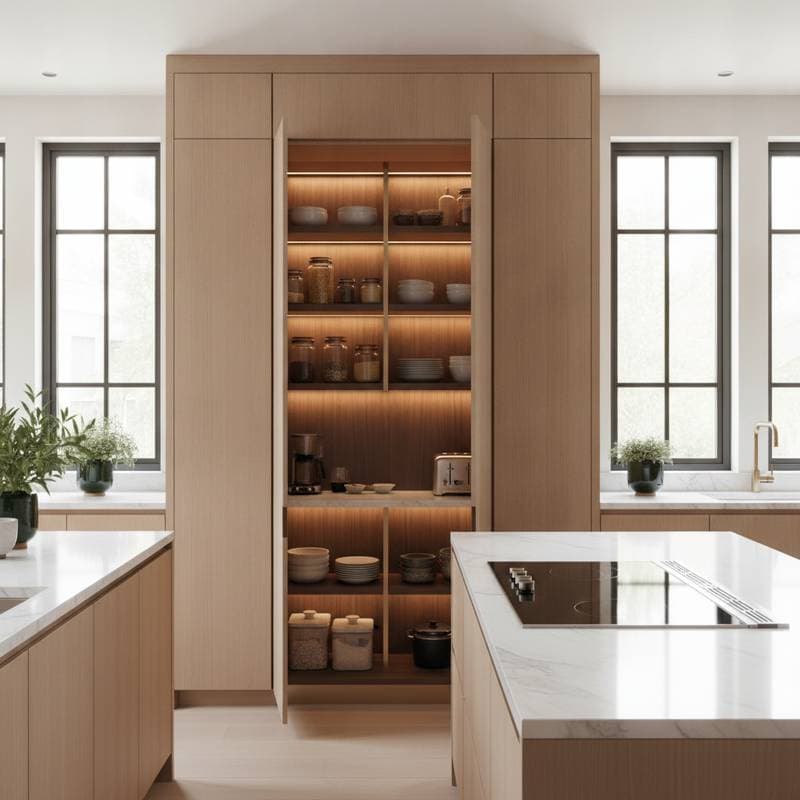
Buyers Pay 6 Percent More for Homes With Hidden Pantries
Typical cost to add a hidden pantry ranges from 3800 dollars to 7200 dollars depending on layout and finish.
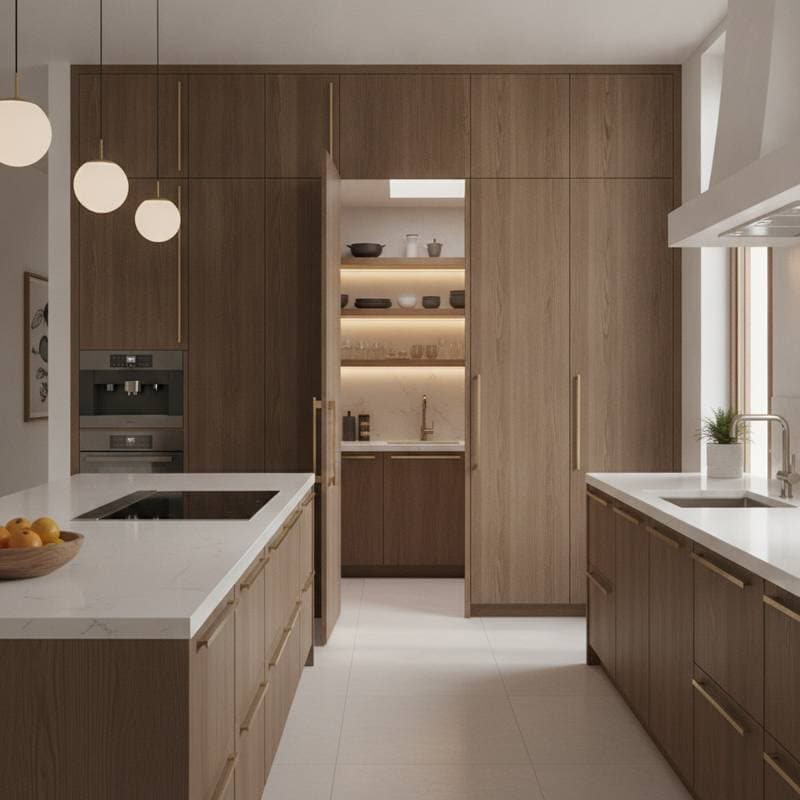
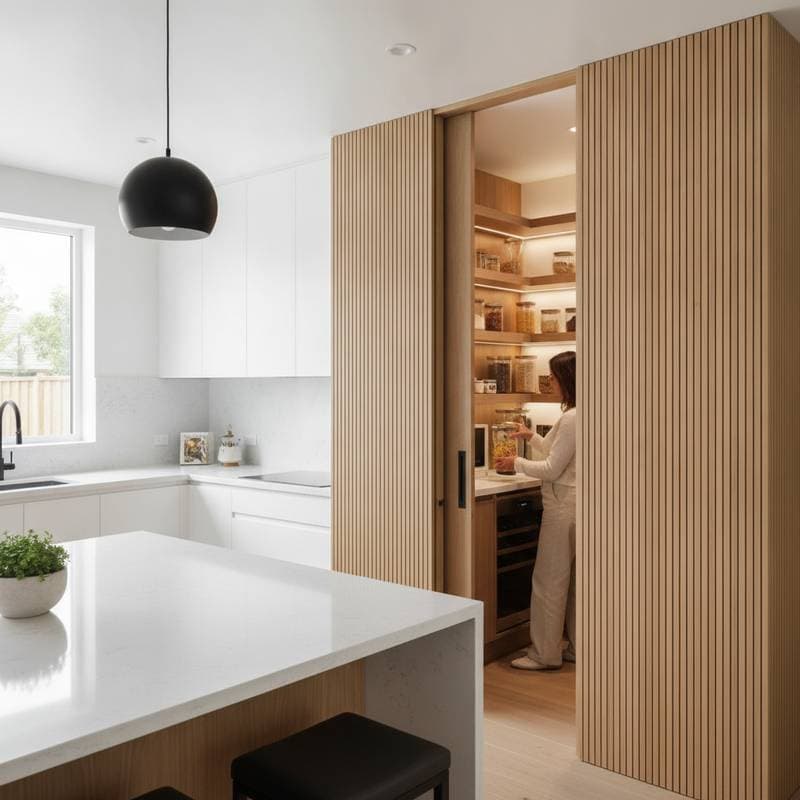
Hidden pantries serve as a quiet status symbol in new homes. Buyers pay about 6 percent more for kitchens that conceal a walk-in storage space behind seamless cabinetry or a disguised door. The appeal centers on clear countertops, organized food storage, and a clean visual line in an open-plan kitchen.
Cost Factors
Size and layout influence expenses. Larger pantries that double as prep areas require additional framing, drywall, and flooring. A small walk-in behind a cabinet wall can start near 2000 dollars, while a full butler's pantry with counters and outlets can exceed 10000 dollars.
Door type affects both price and appearance. A hinged cabinet-style door costs roughly 350 dollars to 600 dollars. Sliding panels or pivot doors run 800 dollars to 1500 dollars. A flush magnetic latch adds a clean finish but requires precise installation.
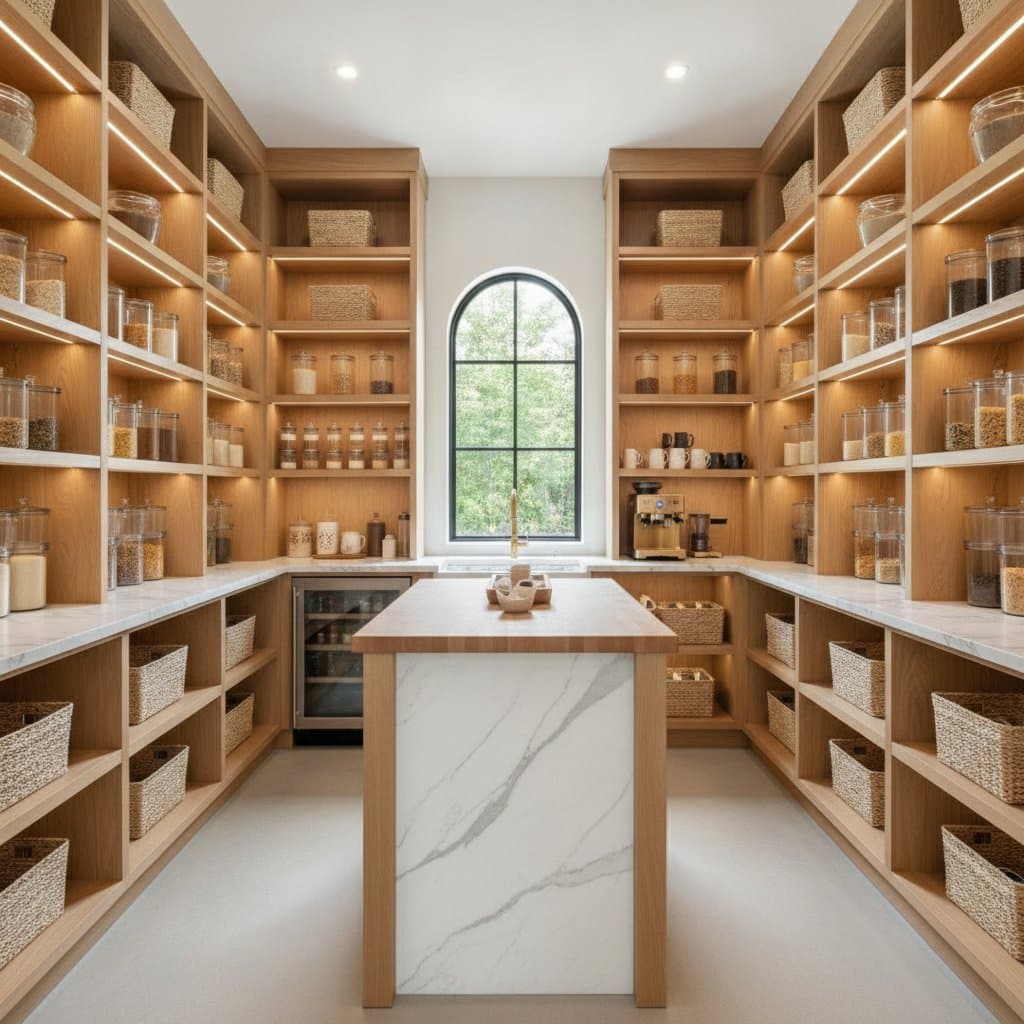
Finishes and shelving determine durability. Basic melamine shelving represents the budget choice. Plywood with adjustable metal brackets raises durability and cost by 500 dollars to 900 dollars. Solid wood shelving can add 1200 dollars or more.
Lighting and power add practical value. LED strip lighting is efficient and low-heat. Expect 150 dollars to 300 dollars for materials plus wiring labor. Adding outlets for small appliances costs another 300 dollars to 600 dollars depending on code access.
Ventilation and moisture control protect stored items. Pantries near cooking areas need airflow. A vented louver door or small duct fan keeps humidity low, costing 100 dollars to 400 dollars. Skipping this step can lead to odors and warped shelving.
Permits and structural changes require attention. If the project modifies load-bearing walls or adds electrical circuits, a permit is required. Permit fees vary by region but typically fall between 100 dollars and 500 dollars.
Disposal and cleanup complete the project. Demolition of existing cabinetry and drywall adds 200 dollars to 500 dollars. Always include disposal in the contractor written bid.
DIY Versus Professional Installation
DIY level ranges from moderate to advanced.
Consider DIY when a spare closet or alcove already exists behind the kitchen wall. The homeowner must handle framing, drywall, and trim work safely and must own or rent proper tools such as a stud finder, miter saw, and level.
Hire a professional whenever electrical wiring, plumbing, or load-bearing walls are involved. Professional help is also advisable if the kitchen uses custom cabinetry that must match seamlessly or when resale value is a priority. Buyers expect a polished, code-compliant result.
Risks of DIY include poor wall alignment or uneven door gaps that reveal the hidden feature. Inadequate airflow can cause food spoilage. Incorrect wiring may violate code.
Professional costs include carpenter labor that typically runs 60 dollars to 100 dollars per hour. A licensed electrician adds 70 dollars to 120 dollars per hour. Expect about 40 to 60 labor hours for a full retrofit.
Maintenance and Warranties
Care tips include wiping walls and shelves every few months with mild detergent to discourage pests. Maintain humidity between 40 and 50 percent to prevent warping. Check door alignment yearly and tighten hinges. Replace LED strips when brightness drops, usually after 30000 hours of use.
Warranties cover cabinet hardware for 5 to 10 years. Custom woodwork may include a limited lifetime policy from the installer if properly maintained. Keep copies of drawings and material specifications in case parts need replacement later.
Safety and Code Checks
Before starting, shut off power to circuits in any wall that will be opened. Wear eye protection, gloves, and a dust mask during demolition. Confirm wall type before cutting. Load-bearing walls require structural reinforcement.
Check local codes for egress and ventilation. Some regions require a light switch near the door, not just a motion sensor. Avoid storing flammable items near outlets or appliances inside the pantry.
Hire a licensed electrician for any new circuits or lighting. If adding a sink, plumbing must include an air gap and trap vent. Skipping permits can complicate resale and insurance claims.
Good, Better, Best Choices
The good option uses simple painted MDF shelves, a stock door, and LED strips while focusing on function.
The better option upgrades to plywood shelves with adjustable brackets and a soft-close hidden door.
The best option includes countertop space, hidden power outlets, and a matching wood finish.
Each step up increases both resale value and usability. If completing one upgrade, add lighting and adjustable shelves. These features prevent clutter and keep food visible, which reduces waste.
Implementation Steps
Measure the space and identify any unused zone behind kitchen walls or near a hallway. Set a budget and add 10 to 15 percent for surprises common in older homes. Obtain at least three bids and ask about lead times for cabinetry and doors.
Check codes early to confirm electrical and ventilation requirements before final design. Schedule work before peak summer or holiday seasons for faster turnaround. Plan lighting and outlet placement because changes become expensive once drywall is closed.
Keep materials consistent to match trim, paint, and hardware so the hidden element feels intentional. Inspect before final payment by testing door swing, lighting, and shelf stability. Record any issues in writing.
Long-Term Benefits
A hidden pantry delivers daily convenience and measurable resale value. With clear planning, careful budgeting, and attention to safety, the feature pays back in both function and appeal. Walk the kitchen to locate an interior wall that borders unused space. Decide whether the goal is extra storage or a true prep room. Gather estimates for basic, midrange, and premium options. Start small if needed because even a narrow hidden pantry behind tall cabinet doors can add value. Plan for resale by keeping finishes neutral and matching existing cabinetry.