Hidden Pantry Walls: Why Buyers Crave This 2026 Trend
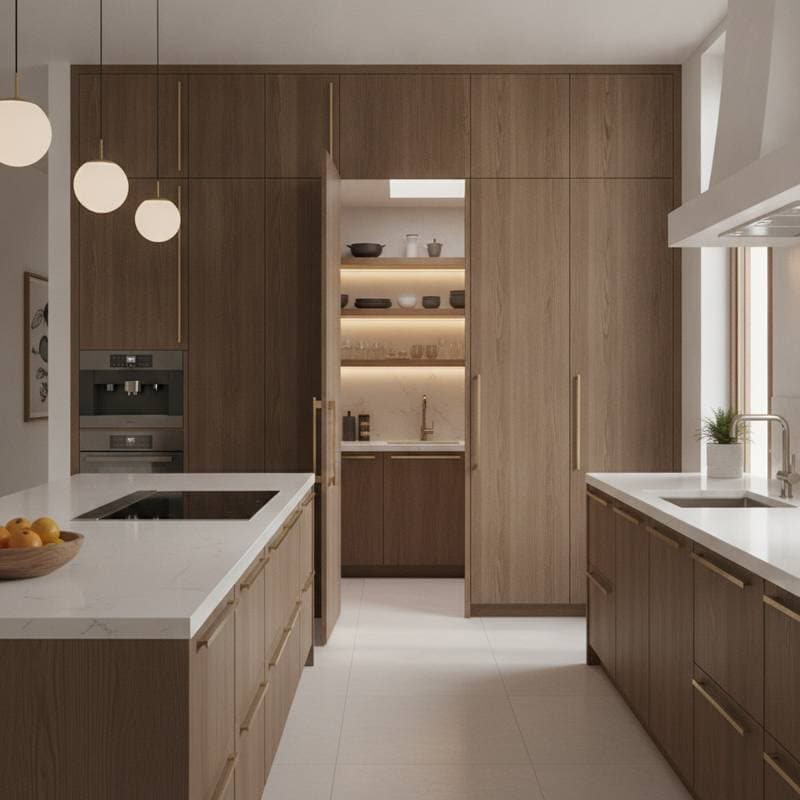
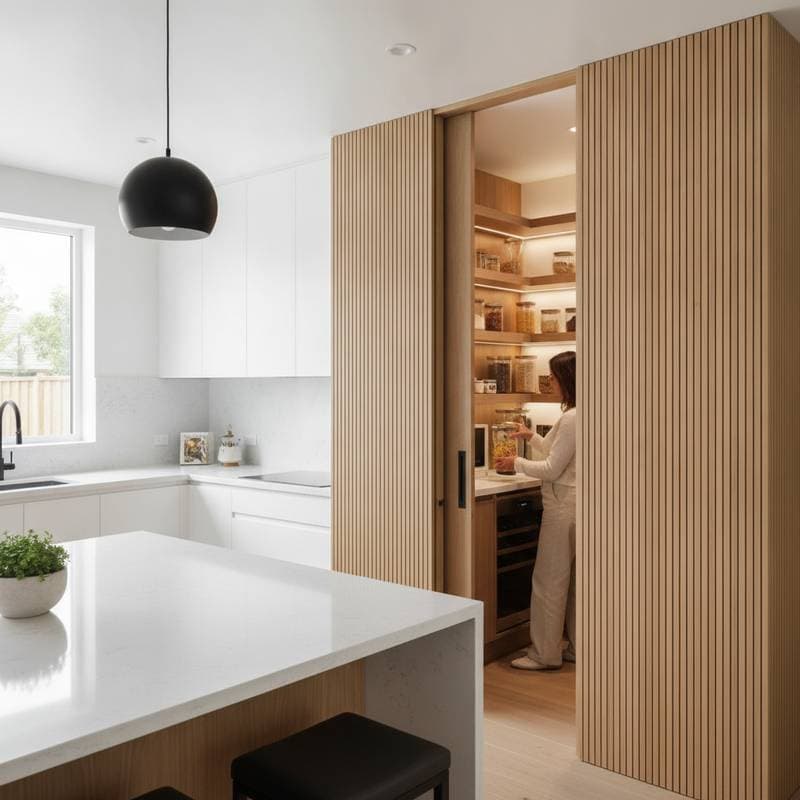
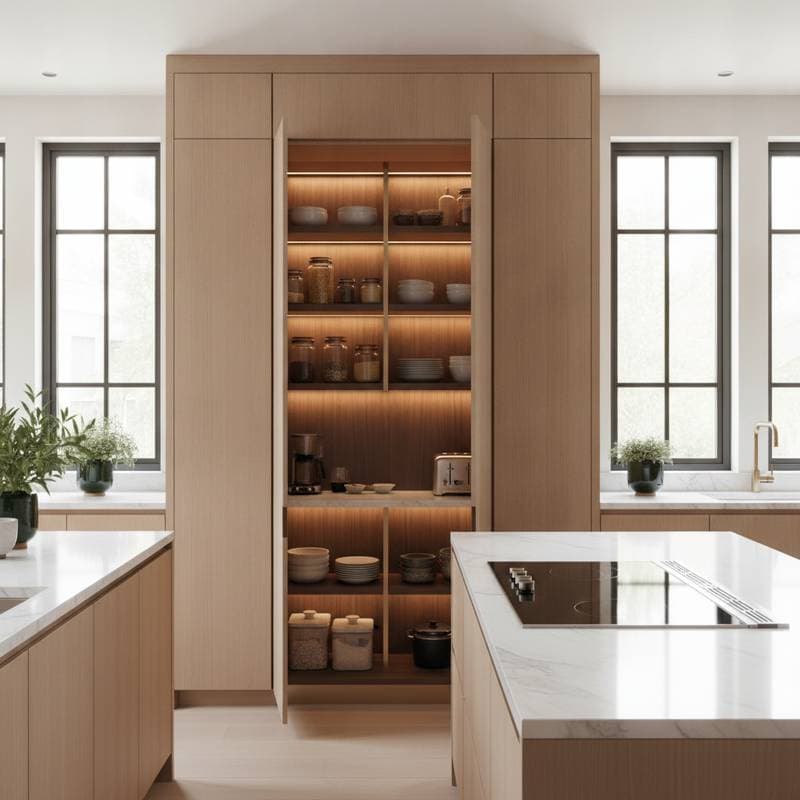
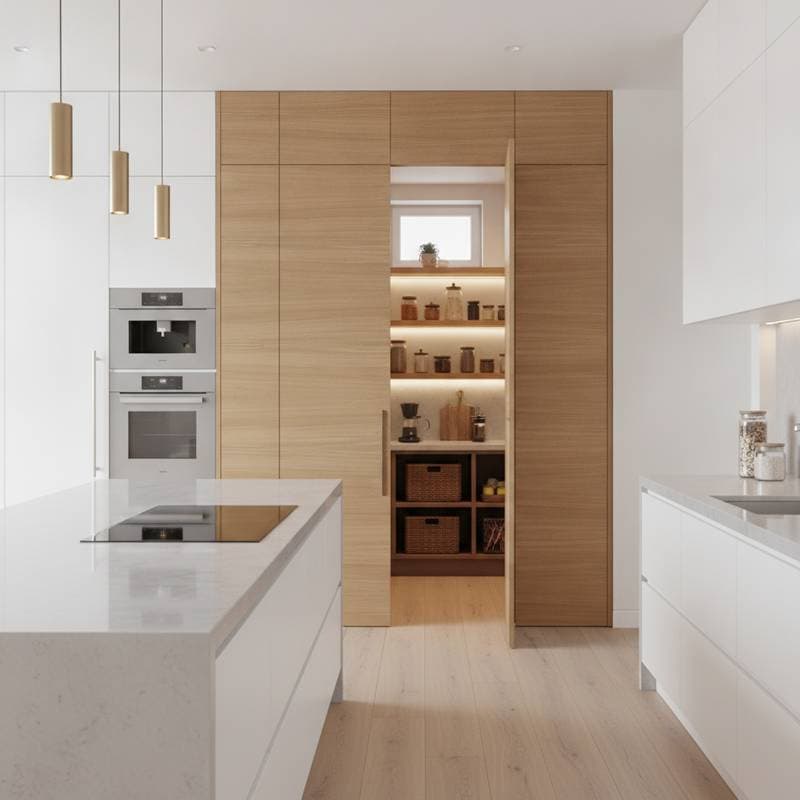
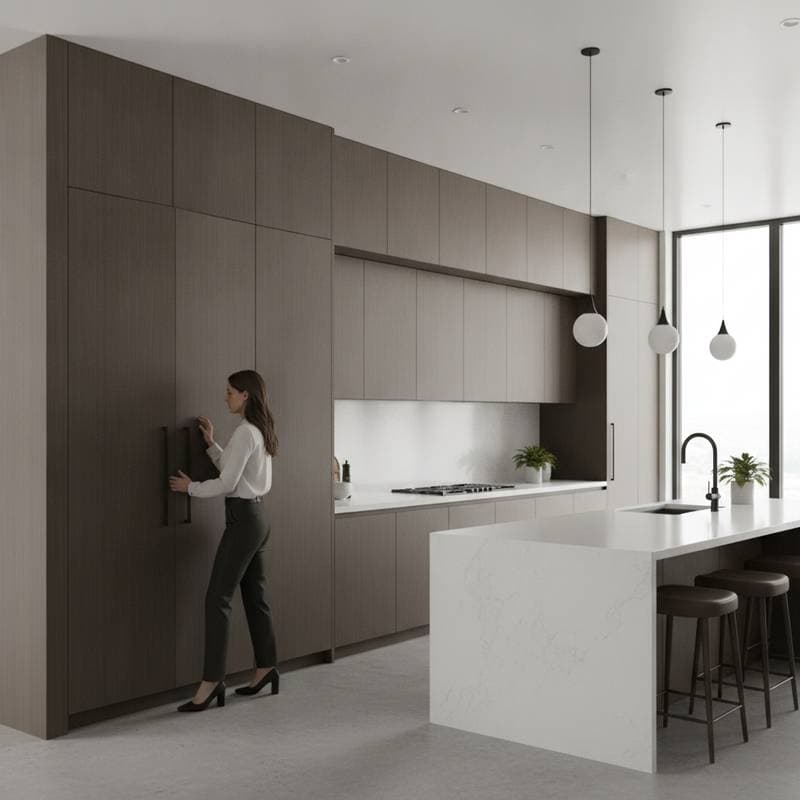
Hidden pantry walls conceal storage behind cabinetry or wall panels that match the surrounding kitchen surfaces. This approach delivers clean lines while preserving every inch of usable space. Homeowners select the feature to maintain visual calm in open layouts without sacrificing access to dry goods or small appliances.
The design suits modern and transitional kitchens where frequent cooking and entertaining require both efficiency and order. It appeals especially to those who want a high-end appearance free of visible bulk.
Advantages and Limitations
Advantages
- Maintains clear countertops and reduces daily visual clutter.
- Produces a seamless, custom appearance that elevates overall kitchen quality.
- Utilizes otherwise unused wall depth for additional storage capacity.
- Conceals small appliances or secondary prep areas when needed.
- Strengthens market appeal for contemporary and minimalist properties.
Limitations
- Requires greater investment than standard shelving or visible cabinets.
- Demands precise construction that complicates later modifications.
- Concealed hardware needs periodic inspection to maintain smooth function.
- Requires proper airflow to avoid moisture buildup inside the enclosure.
Professional Installation Considerations
Moderate to advanced carpentry skills are necessary for successful results. Professionals typically complete the work in two to five days. Required tools include a table saw, level, stud finder, clamps, drill, finish nailer, and painting equipment.
DIY efforts succeed only on non-load-bearing walls when measurements are exact and finishes match perfectly. Engage a licensed contractor whenever framing changes affect structural elements, electrical circuits, or HVAC components. Proper hinge placement and door alignment remain critical for long-term performance.
Installation Sequence
- Measure the available wall depth and height to determine storage capacity.
- Verify wall construction to protect plumbing and wiring.
- Frame the opening for the concealed door or panel section.
- Mount hinges or slides that support the selected door weight.
- Align panels so seams remain consistent with adjacent cabinetry.
- Install interior shelving and LED lighting for visibility.
- Apply finish materials and paint to achieve uniform appearance.
- Test door movement and adjust hardware as required.
- Remove dust and debris before stocking the space.
Expected Durability and Care
Quality installations last between 15 and 25 years. Monthly cleaning of surfaces and hardware prevents buildup. Inspect hinges and tracks twice yearly. Replace soft-close components at the first sign of sagging. Maintain moderate interior humidity to protect wood or laminate materials.
Systems that include lighting or outlets must comply with local electrical codes. Warranties on premium hardware often extend for the life of the home.
Comparable Storage Solutions
Pull-out pantry cabinets offer sliding shelves in a tall, narrow footprint that installs more easily yet remains visible. Corner pantry cabinets make efficient use of awkward spaces without concealment. Frosted glass doors provide partial screening at lower cost while still revealing contents. Freestanding pantry furniture supplies adjustable storage without construction but occupies floor area.
Regional and Regulatory Factors
Labor rates and material availability vary by market. Humid climates benefit from sealed surfaces that resist swelling. Dry regions favor engineered panels to limit shrinkage. Electrical additions inside the pantry usually require permits. Fire-rated materials become necessary near cooking zones. Confirm all local requirements before beginning work.
Market Value Impact
The feature signals custom construction and appeals to buyers seeking integrated design. While full cost recovery is uncommon, the detail can accelerate interest among modern-home purchasers. Traditional properties gain less advantage unless the cabinetry style aligns with existing architecture.
Safety Requirements
Confirm load-bearing status before any wall modification. Disconnect power prior to wiring. Select fire-rated panels near heat sources. Provide ventilation for food storage. Verify that hardware supports repeated daily use.
Common Questions
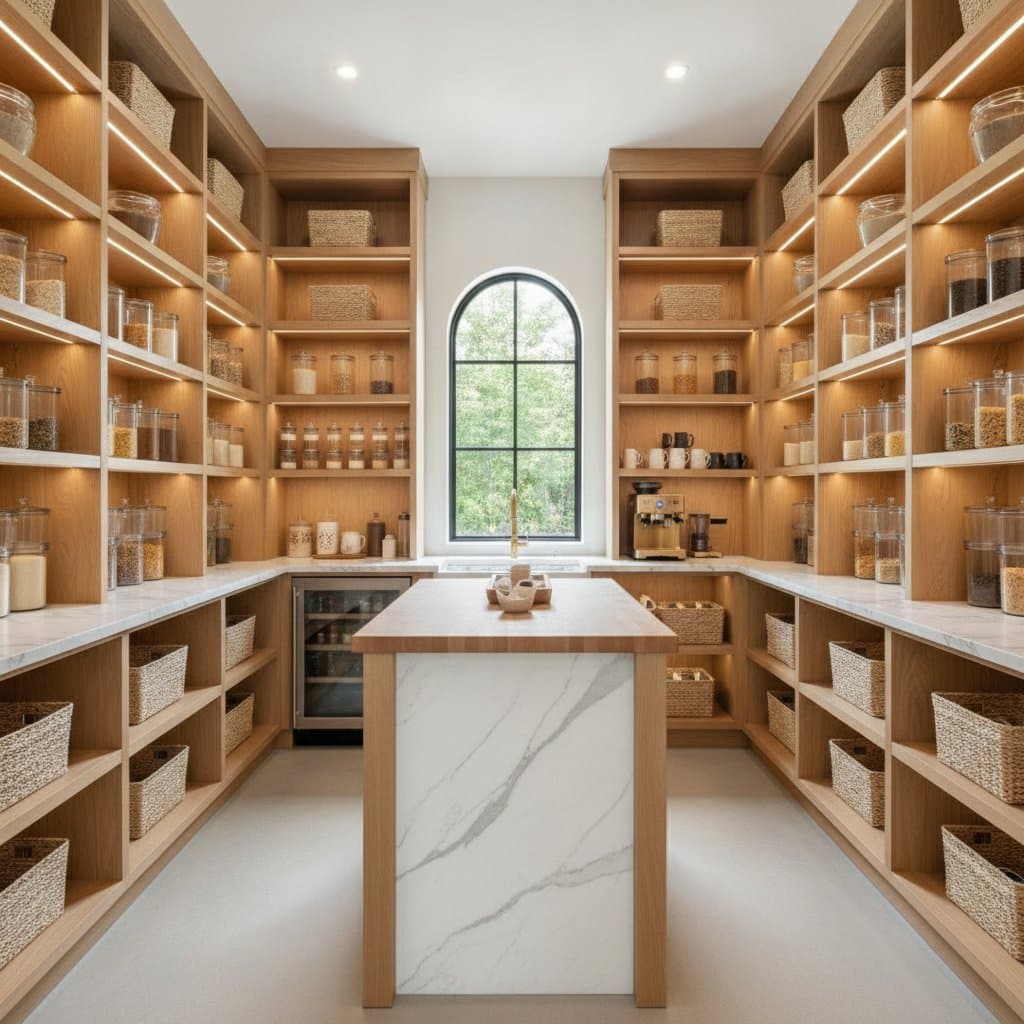
How deep should a hidden pantry wall be? Cabinet-depth versions need 12 to 24 inches. Walk-in versions require at least 36 inches of interior clearance.
Can an existing kitchen receive this addition? Unused wall sections or adjacent closets work best. Retrofitting finished cabinetry increases complexity and cost.
Do doors remain aligned over time? Quality hinges and accurate framing preserve alignment. Substandard installation leads to sagging or visible gaps.
Is interior lighting feasible? LED strips or recessed fixtures function well. An electrician should handle all connections.
Does the feature raise property value? It enhances appeal in modern and luxury segments where buyers value concealed storage.
Next Steps for Homeowners
Assess available wall space and budget before selecting materials. Consult a finish carpenter or kitchen designer to review structural and code considerations. Prioritize durable hardware and proper ventilation to protect the investment over time.