Hidden Pantries Add $18K to Kitchen Remodels in 2026
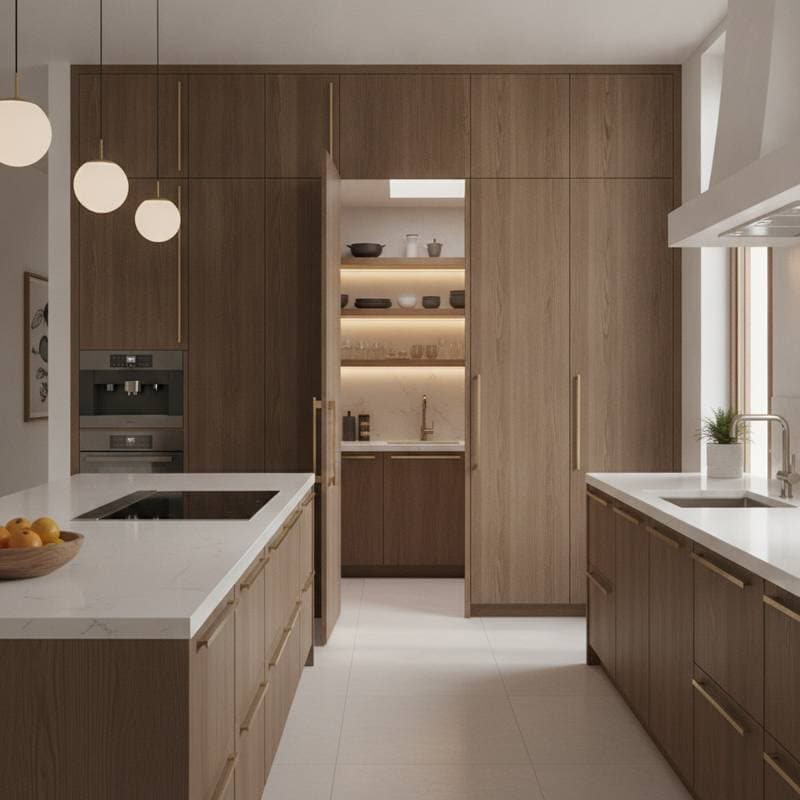
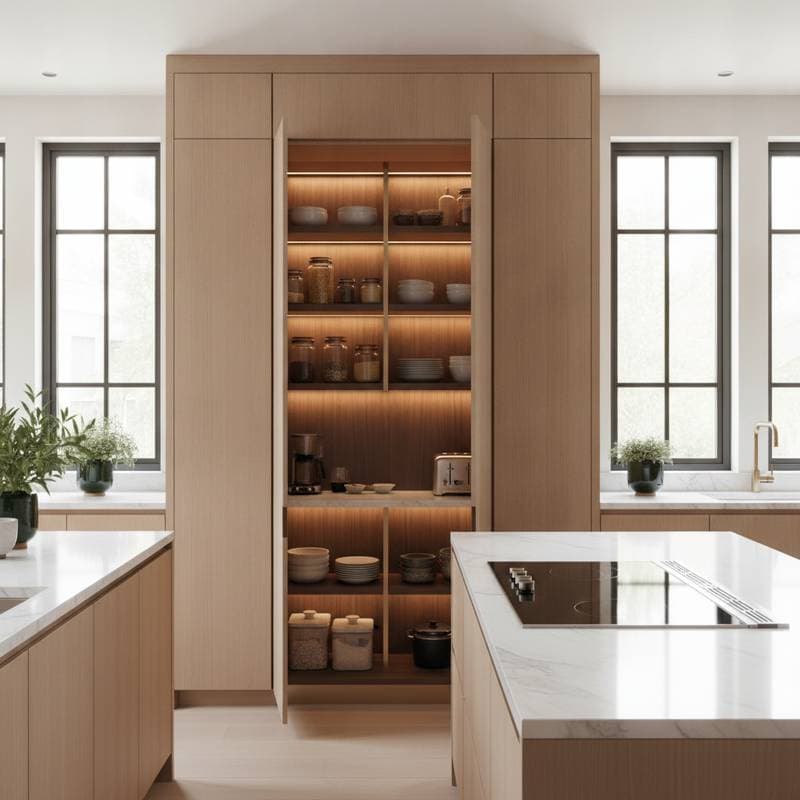
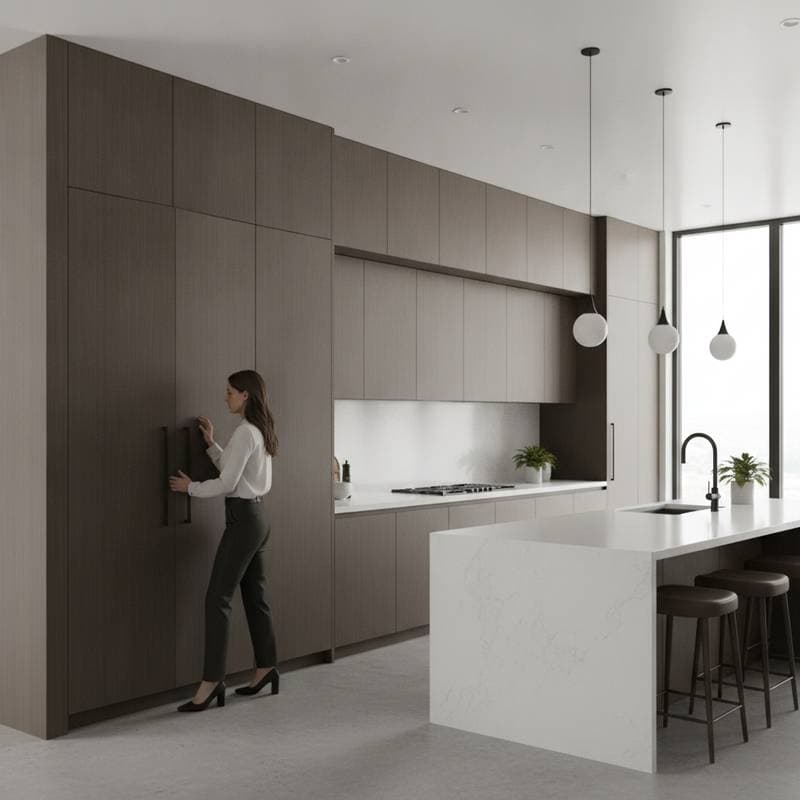
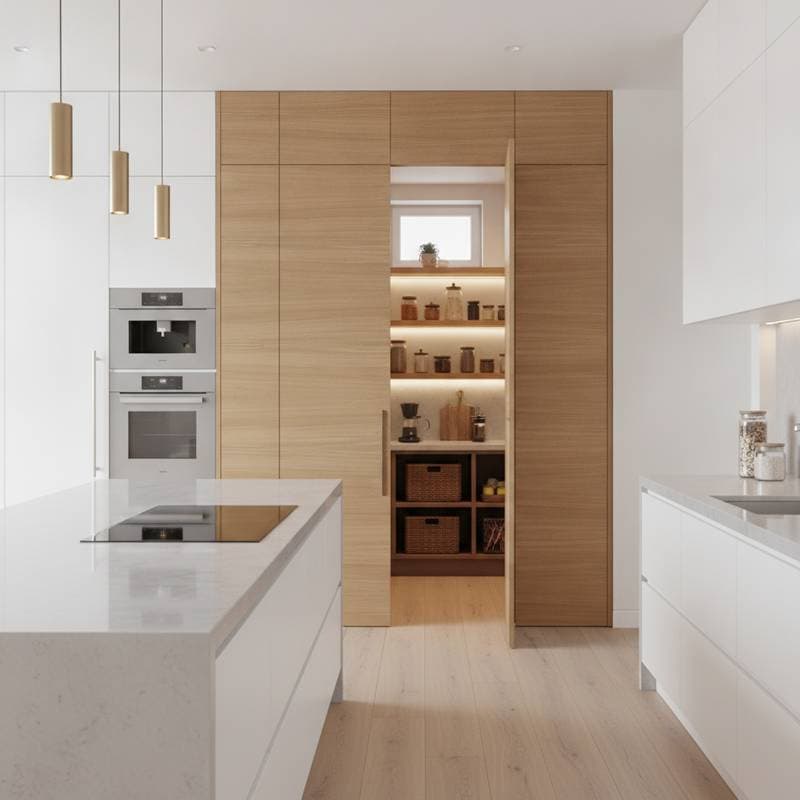
Hidden pantries integrate storage behind seamless cabinetry or disguised doors. This approach maintains clean sightlines while organizing bulk items and small appliances. Homeowners pursuing mid to high end remodels often select this feature to support both daily function and future resale.
Advantages and Limitations
Advantages
- Maintains clear countertops by relocating small appliances and dry goods
- Strengthens buyer interest in upscale markets through minimalist aesthetics
- Supplies substantial storage volume without expanding the kitchen footprint
- Supports secondary prep surfaces or beverage stations within the concealed space
Limitations
- Requires higher initial investment than standard cabinetry
- Demands adequate floor area and careful layout coordination
- Restricts access in compact or mobility focused kitchens
- Increases demands on electrical planning and HVAC distribution
Available Configurations
Single Door Units suit tight footprints and appear identical to surrounding cabinet fronts.
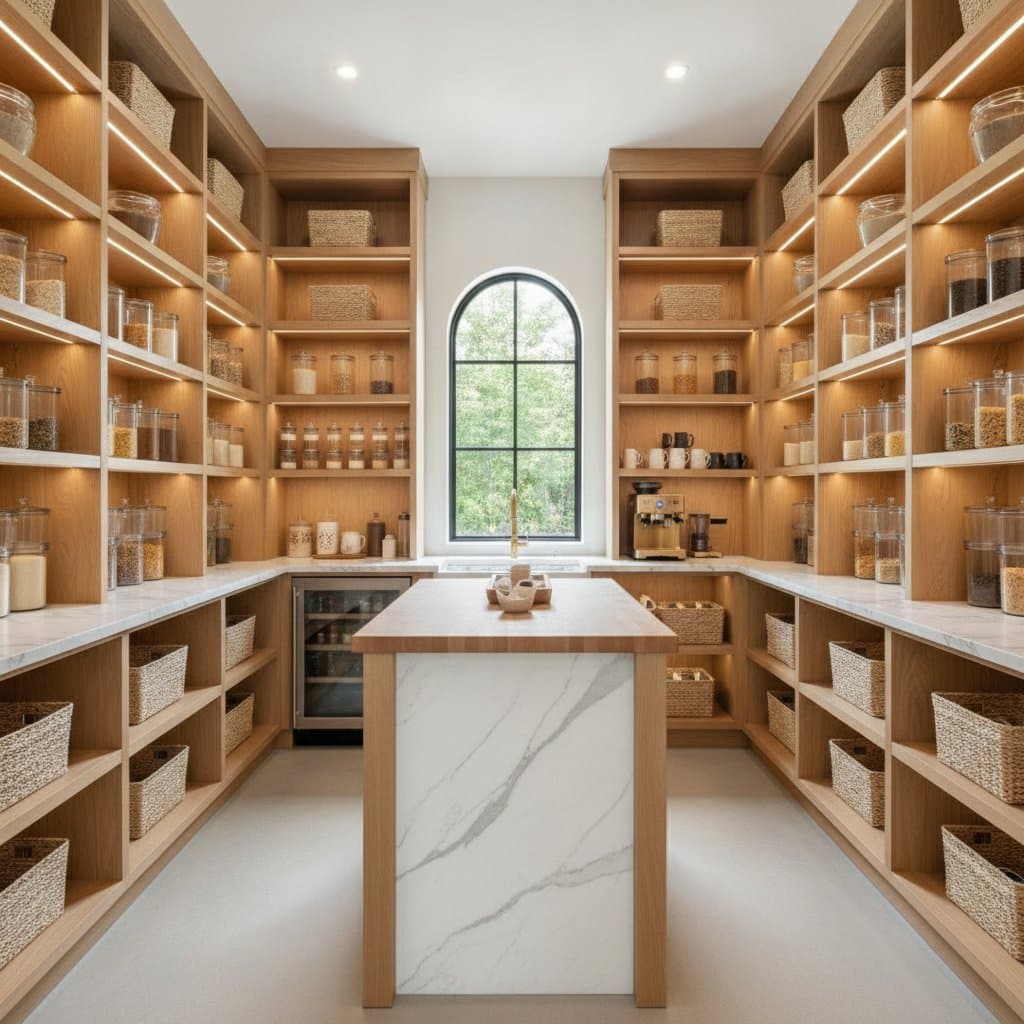
Walk In Designs provide full height entry through a camouflaged door and work best in spacious open plan kitchens.
Butler Style Pantries connect directly to the main kitchen and include counters plus a sink for entertaining households.
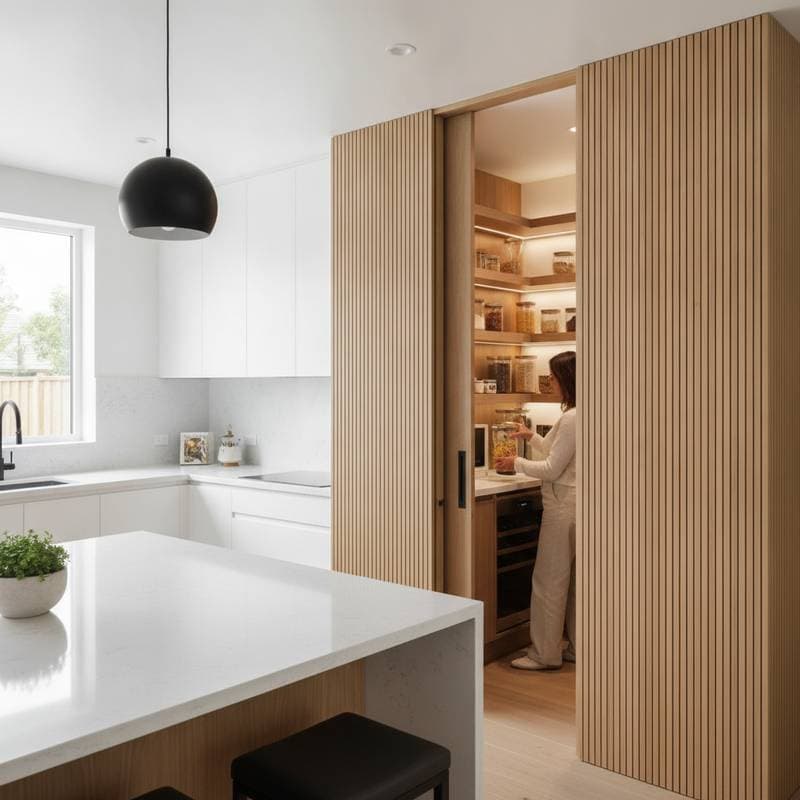
Pocket Door Systems slide into wall cavities when swing space is limited.
Integrated Appliance Zones conceal coffee makers, microwaves, or wine storage behind matching panels.
Professional Installation Requirements
Construction involves framing adjustments, custom cabinetry, and often electrical modifications. Licensed contractors complete most projects in two to three weeks while ensuring code compliance and seamless finishes. Owners may handle simple cabinet door retrofits themselves, yet any wall modification or wiring work requires professional oversight.
Installation Sequence
- Evaluate adjacent closets or unused corners for potential conversion.
- Select door style and entry placement based on traffic patterns.
- Adjust wall framing to accommodate the new opening.
- Route electrical lines and install lighting above shelves.
- Apply drywall and finishes that match existing kitchen trim.
- Mount adjustable shelving or cabinetry inside the space.
- Align the hidden door panels with surrounding cabinetry.
- Apply final paint and sealants for visual continuity.
Long Term Care
Quality construction yields a service life of twenty years or longer. Annual inspections of hinges and lighting prevent operational issues. Monthly surface cleaning reduces dust accumulation. Cabinet warranties typically range from five to fifteen years, while structural elements must satisfy local fire and load requirements.
Lower Cost Storage Alternatives
Tall cabinet pantries deliver organized storage for fifteen hundred to four thousand dollars without structural changes. Pull out systems retrofit existing cabinets with sliding racks for smaller kitchens. Open shelving walls provide immediate access yet expose contents visually. Freestanding units require no construction and serve secondary storage needs near dining areas.
Regional Cost Influences
Labor rates and finish standards vary by market. Coastal regions with exacting cabinet tolerances often incur higher expenses. Cold climates may require insulated walls or heated flooring on exterior exposures. Seismic areas add bracing costs, and strict ventilation codes can mandate mechanical systems when sinks or appliances are included.
Investment Return
Hidden pantries deliver solid returns within complete kitchen remodels by satisfying buyer demand for concealed storage. Premium markets frequently realize five to ten percent gains relative to total kitchen investment. Design forward neighborhoods reward the clean aesthetic most consistently.
Safety and Code Compliance
Enclosed pantries must satisfy fire separation and egress standards. Smoke detection is required when electrical equipment is present. Moisture rated fixtures protect areas near sinks, and grounded circuits with GFCI protection address any plumbing proximity.
Planning Considerations
Review existing layouts with a designer to identify viable conversion zones. Obtain itemized bids covering framing, cabinetry, and finishing work. Compare the feature against simpler storage upgrades to confirm alignment with budget and space constraints. Careful execution yields a kitchen that functions efficiently while presenting a refined appearance.