Boost Home Value by 11 Percent with Aging-in-Place Upgrades by 2026
Homes equipped with strategic aging-in-place upgrades stand to gain approximately 11 percent in value. These modifications simplify everyday activities and enhance security, while broadening appeal to potential purchasers. Individuals may initiate projects on a small scale and expand them according to evolving requirements or financial resources.
The Plan: How to Get Started
- Assess the space. Conduct a thorough walkthrough of the residence, focusing on aspects of safety and ease. Identify potential hazards such as slick surfaces, restricted passages, or inadequate illumination.
- Set priorities. Concentrate initial efforts on frequently utilized zones, including bathrooms, kitchens, and entrances.
- Engage a certified professional. Consult a specialist in universal design to recommend enhancements that optimize movement without compromising aesthetic appeal.
- Combine projects. Integrate accessibility improvements with aesthetic renovations to minimize labor expenses.
- Document upgrades. Maintain records, including photographs and invoices, to support appraisals and inform prospective buyers.
Costs
| Task | Typical Cost | What Affects Price |
|---|---|---|
| Widening doorways | $300 - $2,500 per door | Wall composition, electrical wiring, trim details |
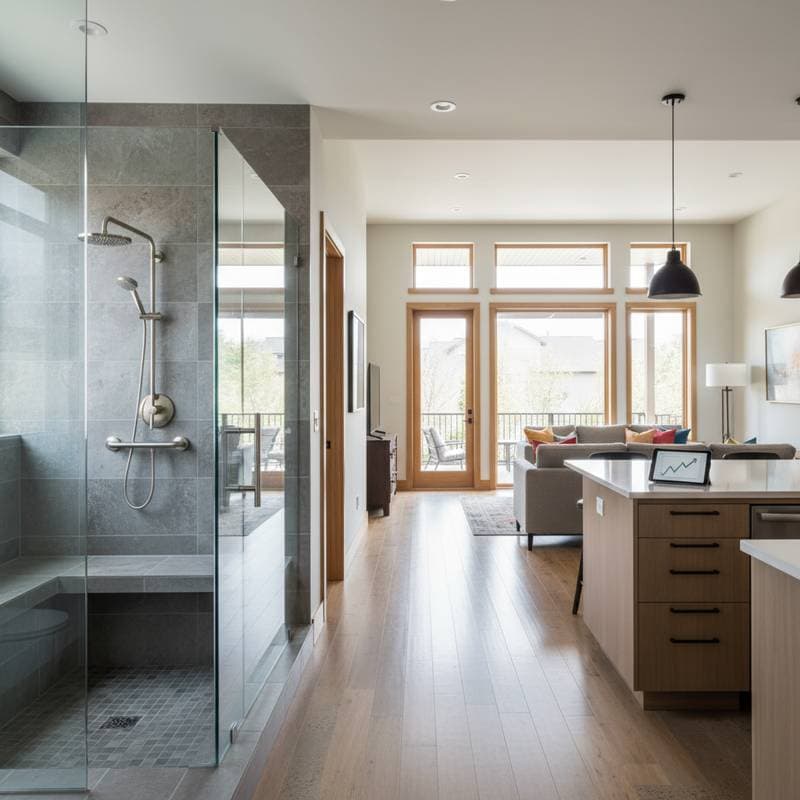
| Walk-in shower installation | $4,000 - $9,000 | Tile selections, plumbing modifications |
| Grab bar installation (set) | $150 - $500 each | Material quality, wall reinforcement |
| Zero-step entry | $2,000 - $6,000 | Foundation elevation, terrain slope |
| Kitchen accessibility remodel | $15,000 - $45,000 | Cabinet configurations, material choices |
Costs fluctuate based on geographic location. Labor rates and material expenses primarily influence variations. Savings arise from consolidating multiple projects or selecting mid-range options that adhere to accessibility guidelines.
DIY Versus Professional Installation
Pursue DIY for:
- Fixture replacements or additions of non-structural elements.
- Tasks requiring only fundamental carpentry or plumbing expertise.
Hire a professional for:
- Structural alterations or electrical modifications.
- Changes involving plumbing systems or load-bearing walls.
- Projects aiming to align with universal design or ADA-equivalent standards.
A licensed contractor guarantees adherence to building codes and secure execution. Certain modifications, such as ramps or doorway expansions, necessitate permits. Verify requirements with the local building authority prior to commencing work.
Regional Considerations
- Cold climates: Incorporate insulation in entry ramps to mitigate ice accumulation. Select textured materials to provide superior traction.
- Hot climates: Opt for light-colored flooring and lighting that minimizes glare to promote thermal comfort.
- Coastal or humid areas: Choose corrosion-resistant hardware and flooring resistant to moisture.
- Mountainous or rural settings: Evaluate terrain gradients and drainage patterns before implementing zero-step entries.
Local regulations often mandate permits for ramps, plumbing alterations, or electrical work. Confirm all stipulations before proceeding with any demolition or setup.
The Real Payoff
Aging-in-place upgrades extend beyond mere safety measures. They represent investments in long-term comfort, rendering a home functional across multiple decades. With an increasing number of buyers intending to remain in their properties as they age, accessibility emerges as a key marketing advantage rather than a secondary concern. Residences featuring expansive doorways, barrier-free access, and intentional lighting convey an inherent sense of hospitality.
For those preparing to sell in the near term, such enhancements accelerate purchase decisions and diminish disputes regarding outdated configurations. For individuals committed to long-term residency, these adjustments facilitate smoother daily routines and heightened security, all while preserving visual elegance.
Pro Tips for Success
- Integrate function with aesthetics. Select finishes that harmonize with the existing decor, ensuring modifications appear purposeful.
- Enhance lighting throughout. Install brighter, uniformly distributed fixtures to decrease fall risks and elevate overall ambiance.
- Anticipate future needs. Reinforce walls in bathrooms proactively, even if grab bar installation follows at a later date.
- Record compliance details. Retain certifications from contractors and permit documentation to substantiate value during resale.
- Design for both accessibility and marketability. Employ neutral palettes and versatile elements to attract a broader audience.
These deliberate choices maintain the home's sophistication while preparing it for diverse life circumstances.
FAQs
What does aging-in-place mean?
It refers to adaptations that enable comfortable and secure living within a home across varying ages and mobility levels.
Which upgrades yield the greatest value increase?
Enhancements to bathrooms and entry points generate the highest returns, as they address universal priorities of safety and usability.
Is a permit required for accessibility modifications?
Permits apply when relocating plumbing, electrical systems, or structural elements. Consult local codes for confirmation.
Are universal design elements costly?
Costs vary; straightforward changes like lever-style handles, improved illumination, and non-slip flooring prove both economical and impactful.
Can accessibility coexist with stylish design?
Yes, contemporary hardware and surfaces frequently combine form and utility. Safety need not compromise visual appeal.
Implementing the Changes
Commence with a single room and a defined objective. Emphasize elements of comfort, security, and enduring worth. Regardless of plans to sell or remain, these modifications transform the home into an accommodating environment for all occupants.