- Cost Variations by Location: Urban or coastal regions command premium labor rates due to demand and logistics. Rural settings may offer lower costs but limited access to specialized expertise.
- Site-Specific Challenges: Properties near high water tables or with raw basement spaces often require preliminary waterproofing to ensure stability.
Sourcing materials locally can streamline the process and reduce expenses. For instance, incorporating regional elements like reclaimed wood or natural stone adds authenticity but may increase transport fees if unavailable nearby.
Prioritizing Safety in Wine Cellar Construction
Safety forms the foundation of any successful wine cellar project, safeguarding occupants, the structure, and stored items.
- Electrical Standards: Engage a certified electrician for all wiring and integration of cooling systems to prevent hazards.
- Moisture Management: Apply comprehensive vapor barriers to inhibit mold proliferation and water damage.
- Structural Integrity: Bolster flooring and walls to support the weight of racks, bottles, and decorative finishes.
- Permitting Processes: Verify compliance with local codes for any mechanical or load-bearing modifications.
- Fire Prevention Measures: Select fire-resistant insulation materials and opt for low-heat LED lighting to minimize risks.
An improperly constructed cellar risks trapping dampness, leading to structural deterioration over time. Effective ventilation and humidity regulation not only protect wines but also preserve the surrounding home environment.
Planning Your Wine Cellar: Costs, Designs, and Features
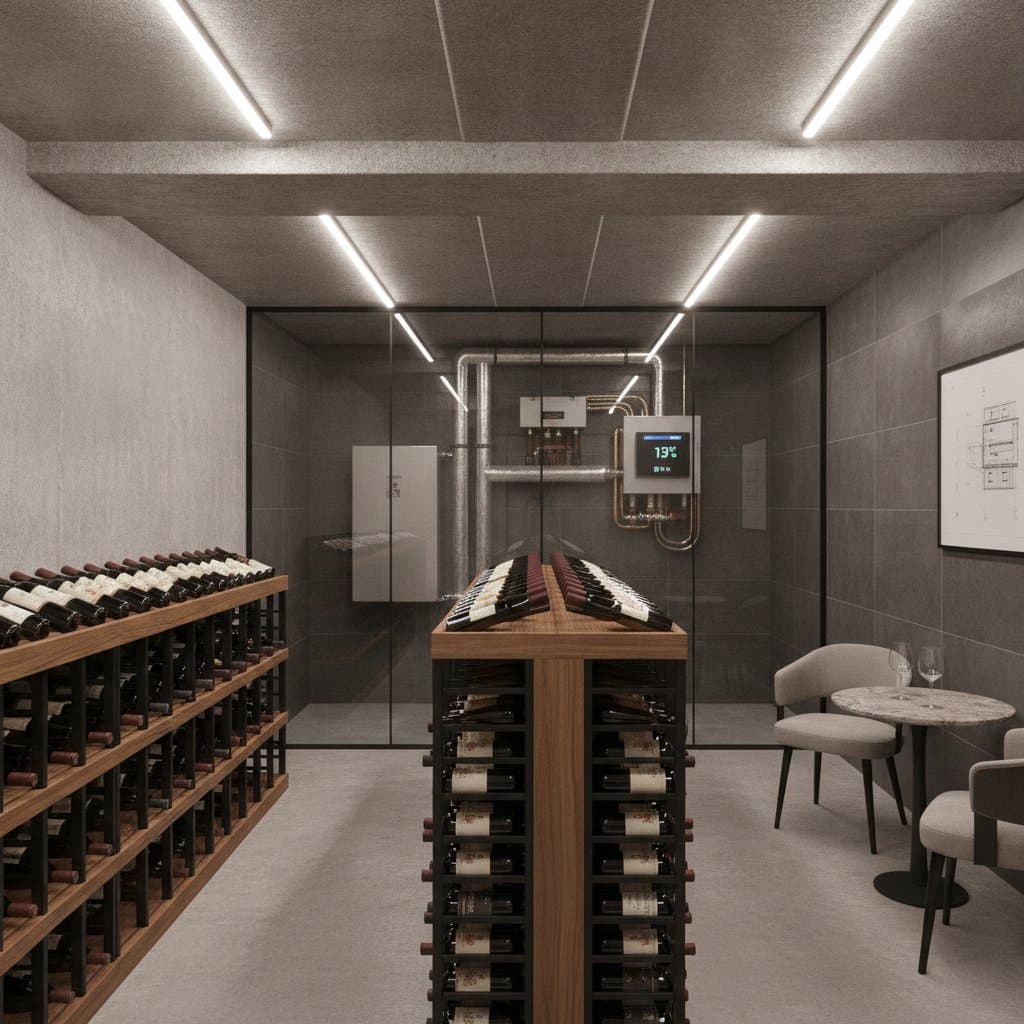
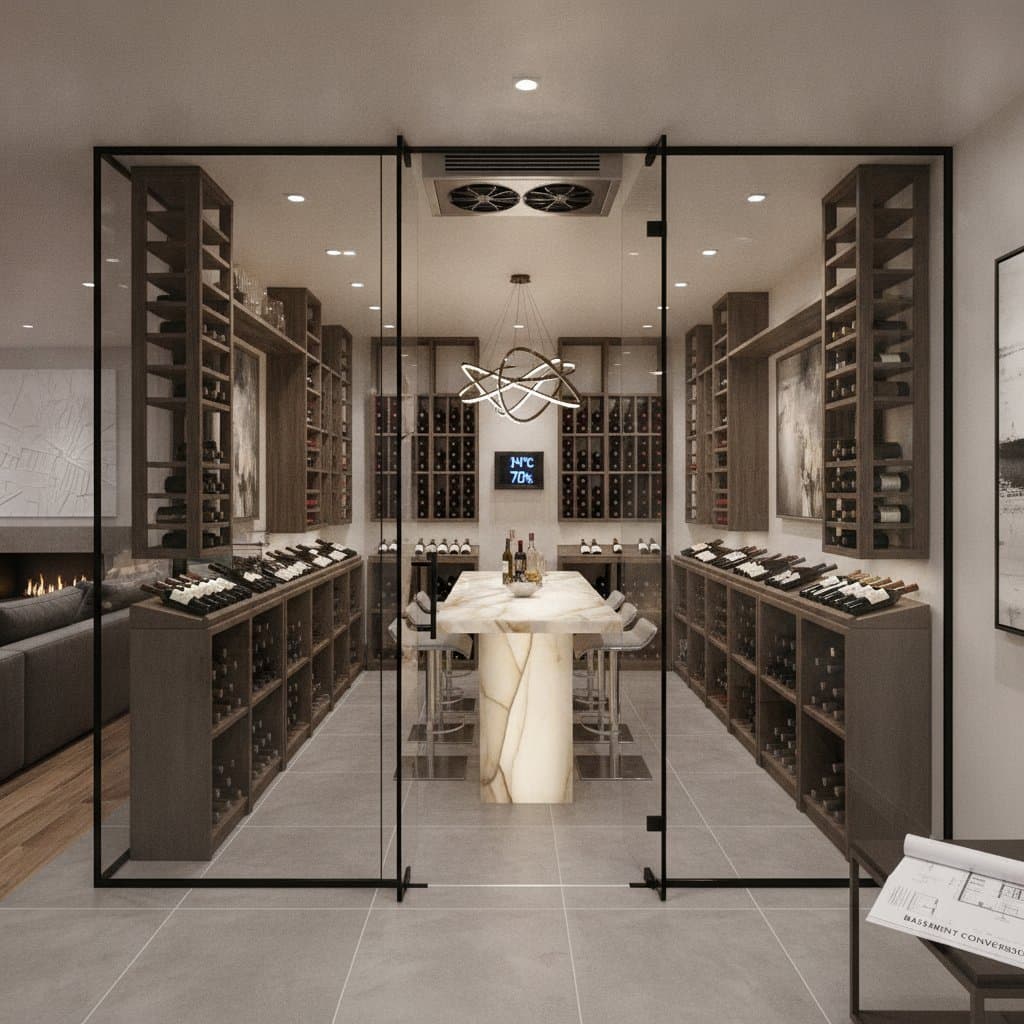
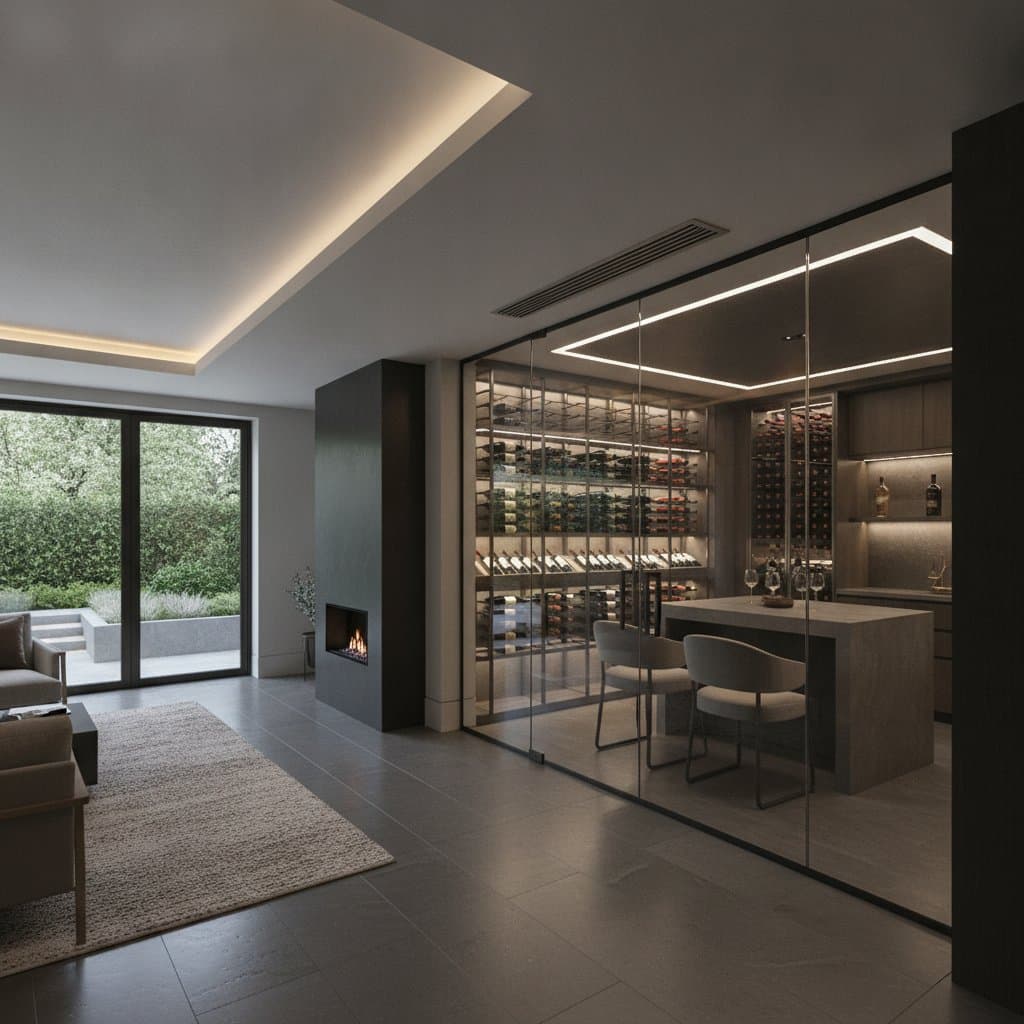
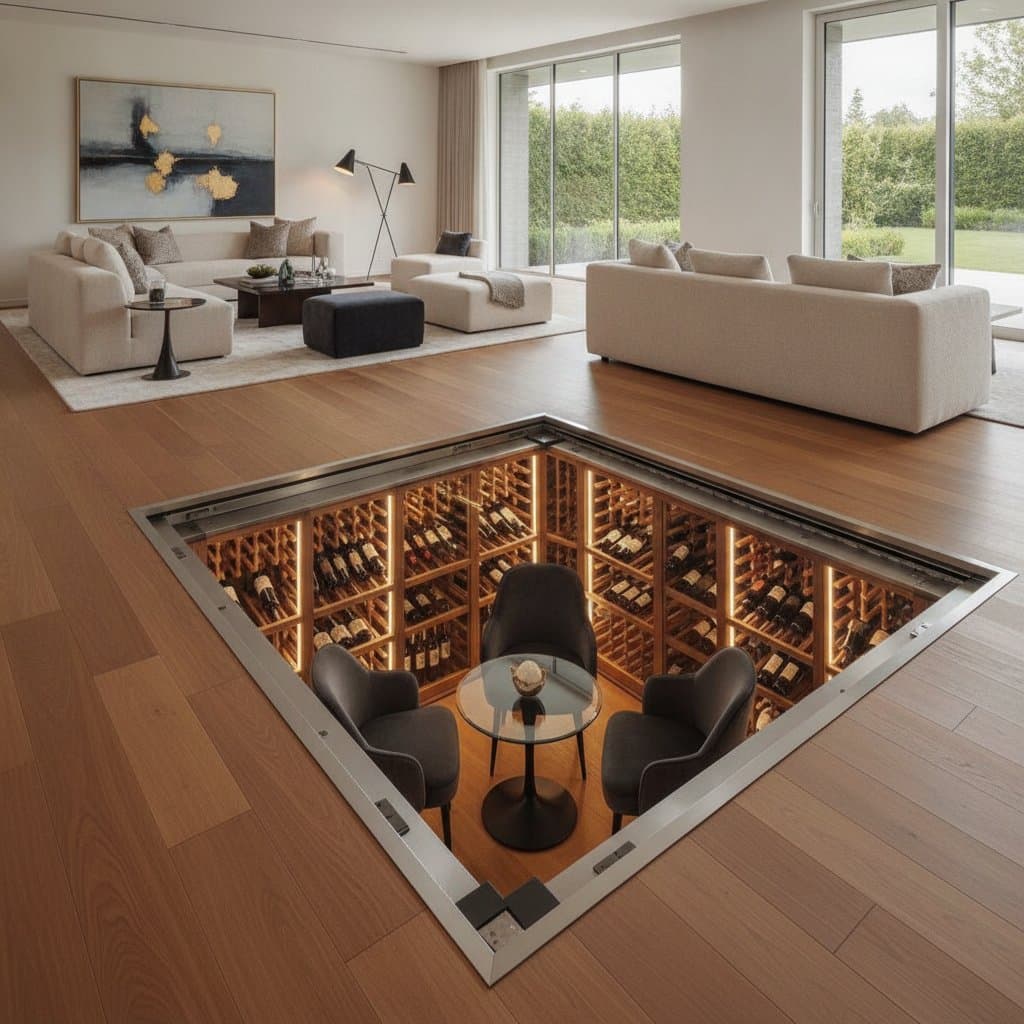
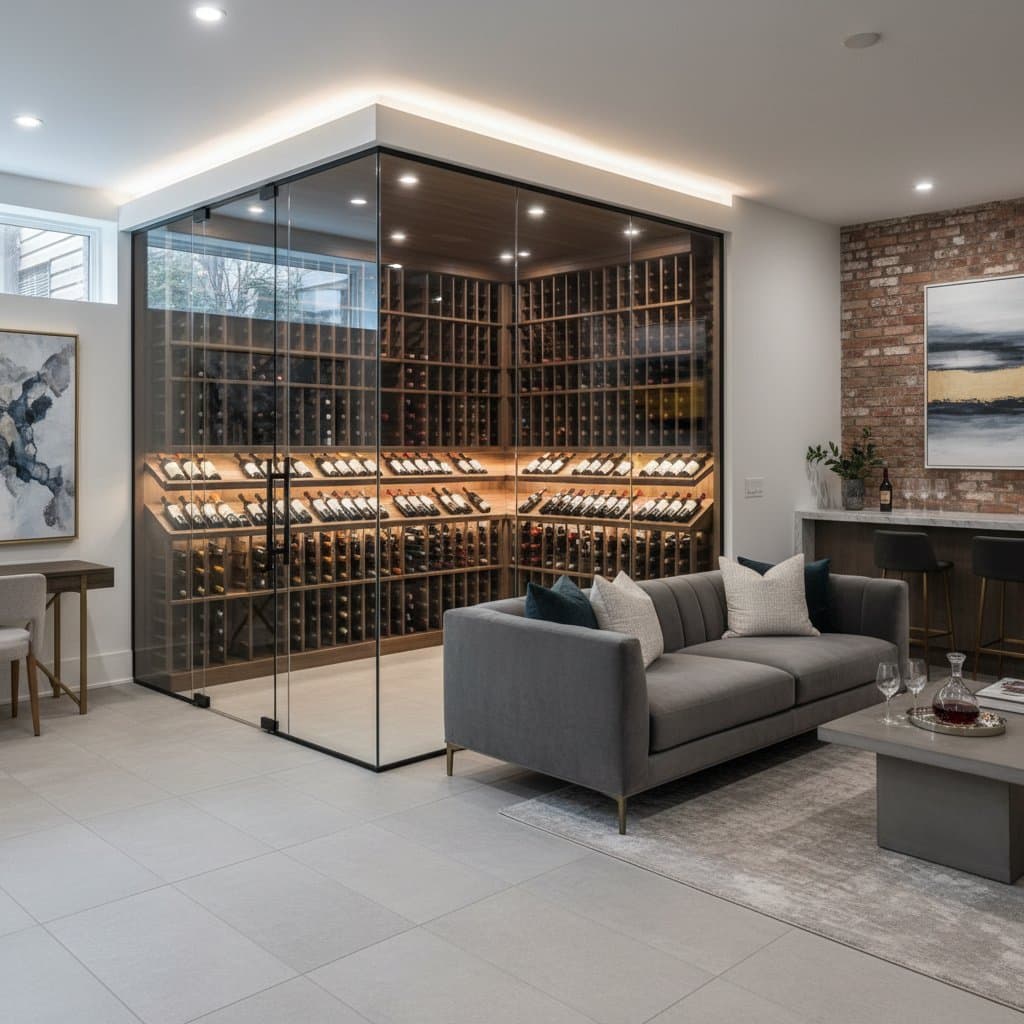
To realize the full potential of a wine cellar, begin with a thorough evaluation of your space and objectives. Average costs range from $25,000 to $100,000, depending on size and complexity; a basic 100-bottle under-stair conversion might start at $15,000, while a 500-bottle luxury setup with glass walls and tasting bar could reach $75,000 or more.
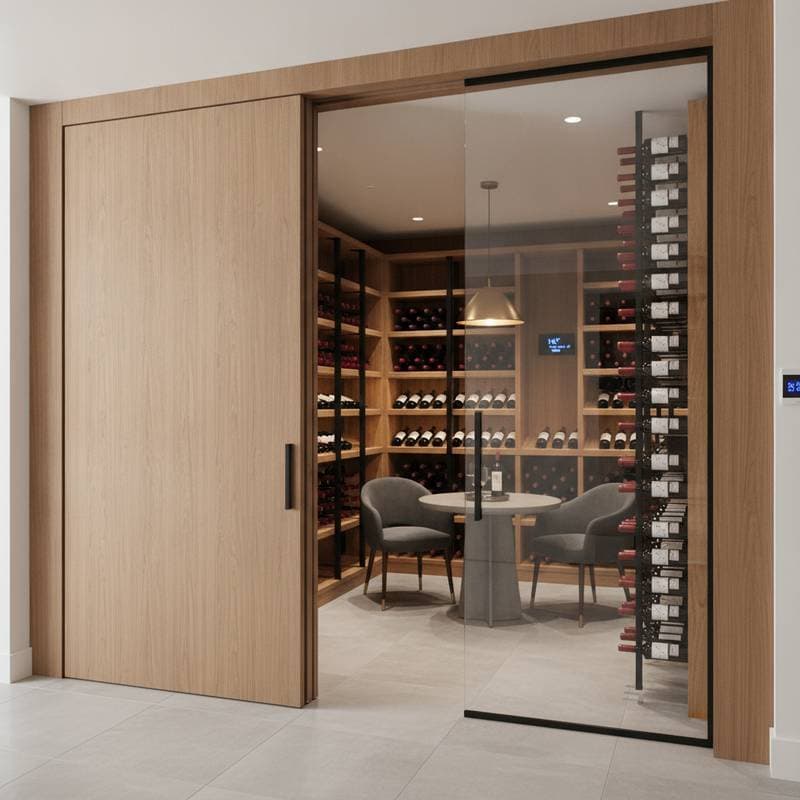
Design tips include selecting modular racking for flexibility and integrating smart sensors for remote monitoring. Buyers favor features like arched doorways, ambient lighting, and customizable shelving that accommodate various bottle sizes. Passive systems suit dry climates for cost savings, whereas active cooling excels in variable conditions.
Focus on high-quality materials such as cedar-lined interiors for natural aroma control and UV-resistant glass for display without degradation.
Frequently Asked Questions
What is the average cost of a custom wine cellar? Costs vary by size and features, but expect $150 to $500 per square foot. Basic setups begin around $20,000, with premium designs exceeding $100,000.
How does a wine cellar specifically increase home value? It appeals to luxury buyers by demonstrating investment in unique, high-end amenities. Appraisers often factor in the added appeal for entertaining and storage, contributing to the 15 percent uplift in premium markets.
Can I convert any space into a wine cellar? Most basements, closets, or under-stair areas work well, provided they allow for insulation and cooling. Avoid unconditioned attics or exterior walls without modifications.
What temperature and humidity levels are ideal? Maintain 55 to 59 degrees Fahrenheit and 50 to 70 percent humidity to preserve wine quality and prevent spoilage.
How long does installation take? DIY projects span one to three weeks; professional builds typically require four to eight weeks, including planning and permitting.
Is a wine cellar worth it if I do not collect wine? Yes, it adds versatile space for gatherings or storage, enhancing overall property allure even for non-enthusiasts.
Realizing Lasting Value Through Strategic Upgrades
A wine cellar project thrives on intentional planning, from site assessment to final touches. By emphasizing durable systems and aesthetic details, homeowners create a feature that enriches everyday life while securing financial returns.
This investment not only elevates the home's profile in the market but also fosters personal enjoyment. Whether opting for a discreet storage nook or an expansive entertainment hub, the result is a space that blends practicality with prestige, delivering benefits for years to come.