Wet Rooms Add 11 Percent Home Value in 2026
Wet rooms deliver an average 11 percent gain in home value when designed with accessibility, proper drainage, and strong resale appeal. These spaces have moved beyond luxury properties to become a practical upgrade that enhances daily comfort and simplifies upkeep. Homeowners planning a remodel can achieve returns in both livability and market performance.
Cost Factors
Several elements influence the final price of a wet room project. Addressing these areas early helps maintain control over budget and timeline.
Size and layout
Conversion of a standard bathroom typically ranges from 250 to 400 dollars per square foot. Compact areas under 50 square feet remain at the lower end of the scale. Larger or irregular layouts require additional waterproofing and careful slope work.
Waterproofing materials
Quality membranes, sealants, and drainage components cost between 1,000 and 3,000 dollars. Lower-grade products increase the risk of leaks that damage subfloors and finishes.
Tile and finishes
Porcelain or stone tile ranges from 6 to 20 dollars per square foot. Large-format tiles reduce grout lines yet demand precise cuts to maintain drainage slopes.
Drain and slope system
Linear drains run from 200 to 800 dollars. Center drains cost less but restrict tile layout options. Proper slope installation requires an experienced professional.
Plumbing and fixtures
Relocating plumbing adds 1,500 to 3,500 dollars. Keeping fixtures in their original positions reduces expense. Rainfall heads or handheld sprayers add 300 to 1,000 dollars depending on finish quality.
Permits and inspections
Expect 200 to 600 dollars for required permits. Local codes mandate inspection of waterproofing and drain connections before tile work begins.
Extras and accessibility upgrades
Grab bars, folding benches, and heated floors range from 300 to 2,000 dollars. These features improve both comfort and future resale value.
Safety and Compliance
Wet rooms require thorough waterproofing and slip-resistant surfaces. Overlooking any step can lead to leaks or safety concerns.
Use non-slip gloves, eye protection, and knee pads during installation. Waterproof boots protect against membrane application. Shut off power, gas, and water before any plumbing work. New drains, electric floor heating, or subfloor changes trigger permit requirements. Licensed plumbers and electricians should handle these tasks to avoid insurance issues.
Timing and Savings
Most projects take two to four weeks, depending on inspection schedules and material availability.
Week one covers demolition and subfloor inspection. Week two focuses on plumbing and waterproofing. Week three includes tile installation and curing. Week four completes fixtures, glass, and final sealing.
Common delays arise from tile backorders, inspection timing, and moisture testing. Savings come from retaining the existing plumbing layout, selecting midrange porcelain tile, and using a single glass panel. Order materials early to avoid premium pricing. Budget an additional 10 to 15 percent for surprises common in older homes, such as hidden water damage.
Energy-efficient floor heating or water-saving fixtures may qualify for rebates. Real estate professionals note that wet rooms with modern finishes and accessibility features contribute roughly 11 percent to resale value.
Design Moves That Add Value
Buyers respond to easy maintenance, accessibility, and visual continuity. The following choices maximize return.
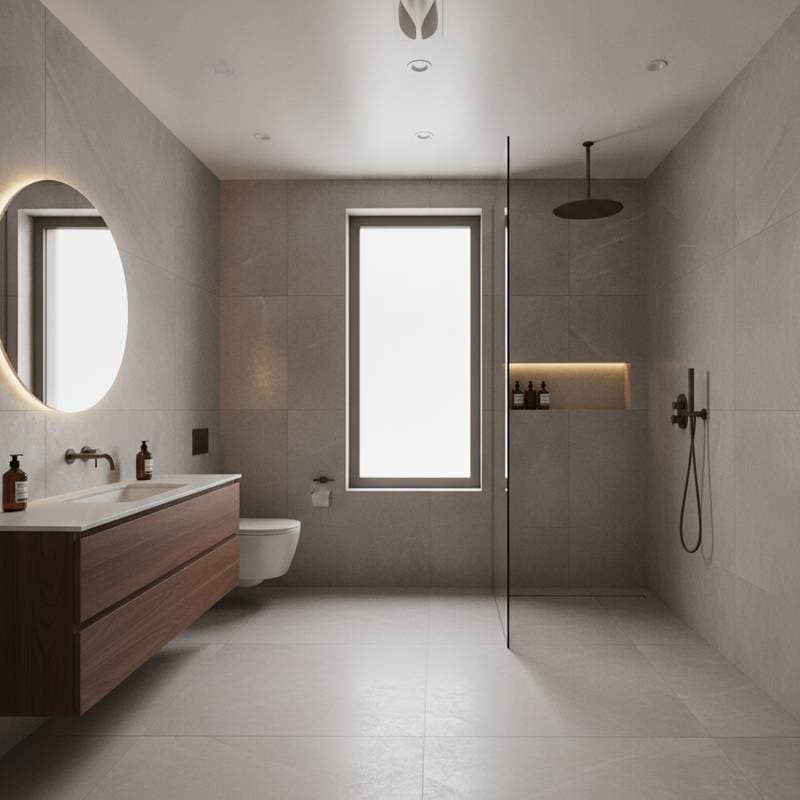
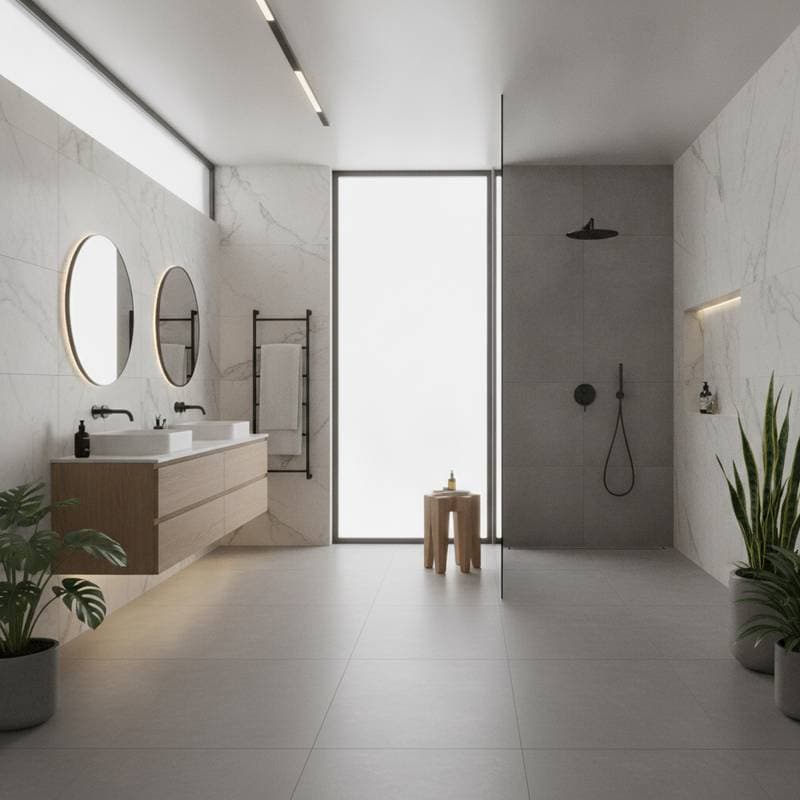
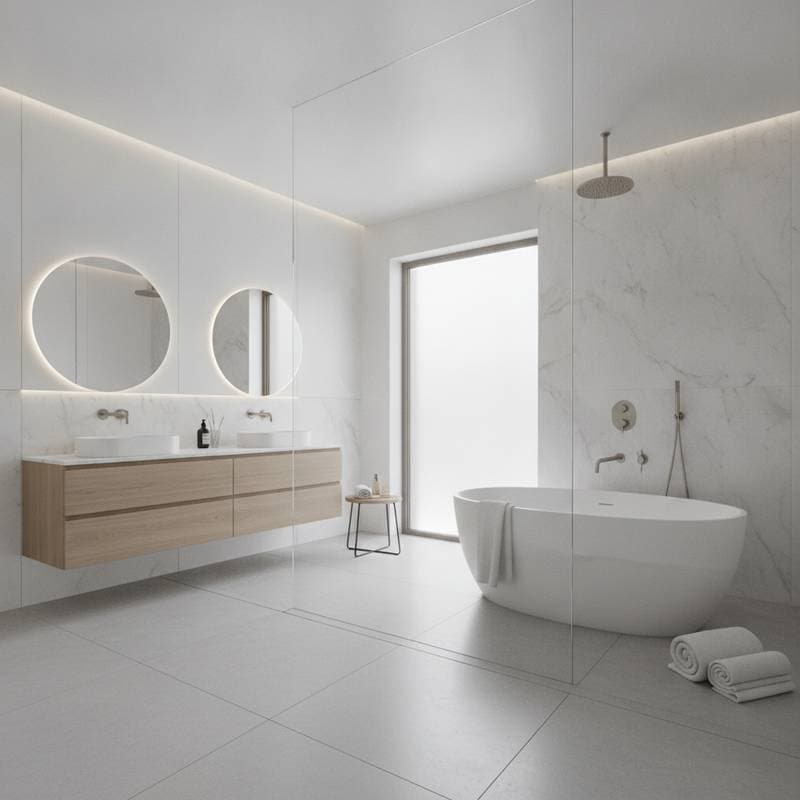
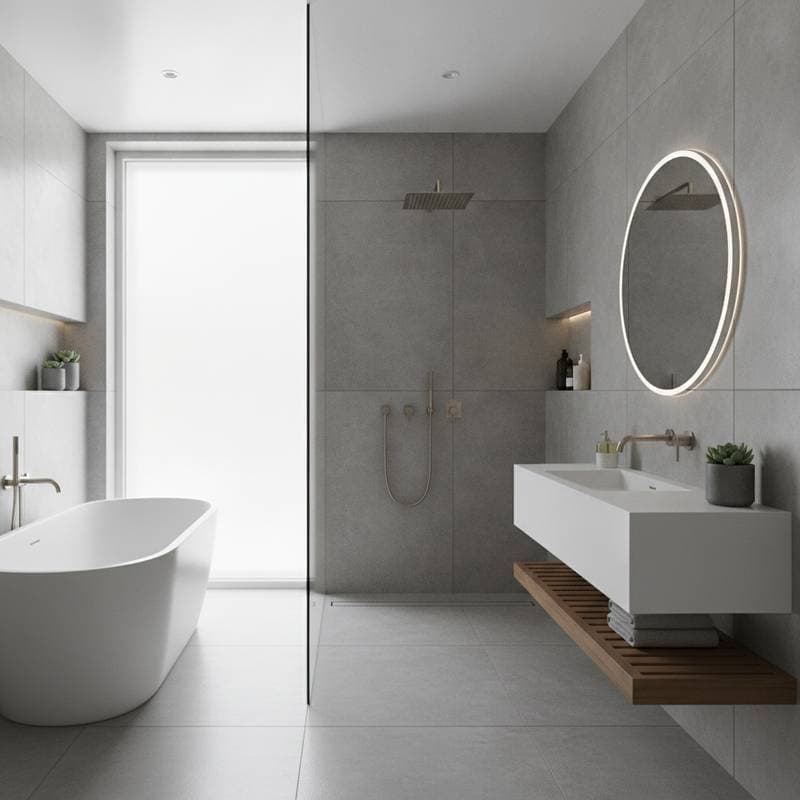
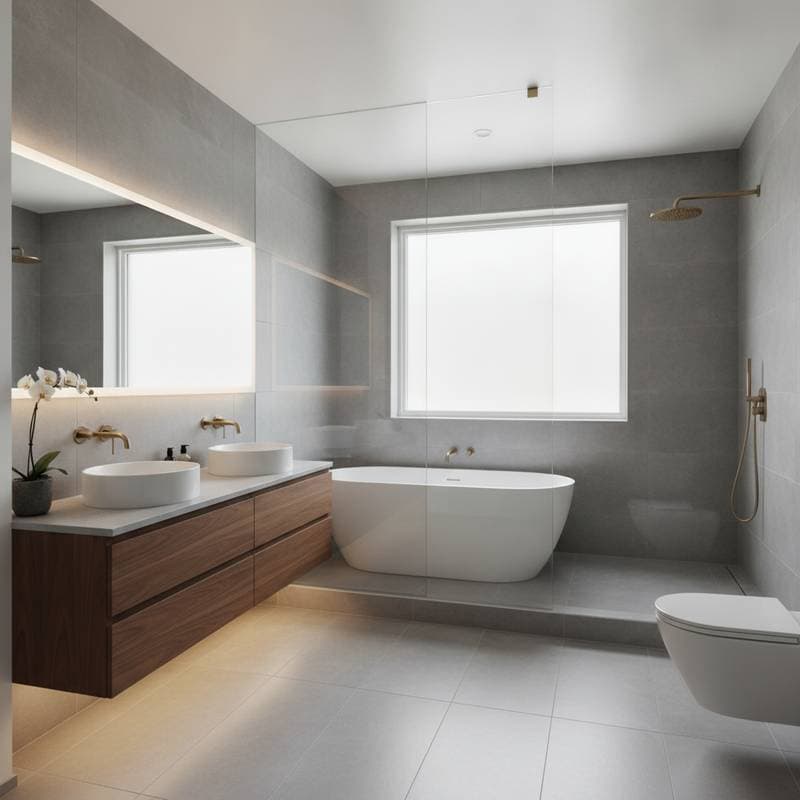
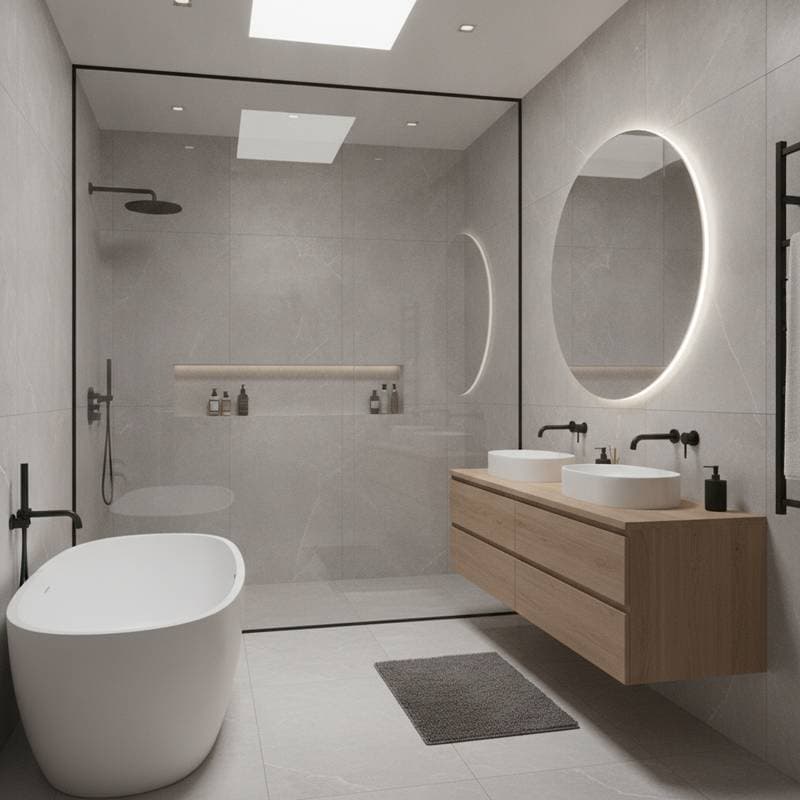
A curbless entry improves accessibility and reduces tripping risks. Linear drains along the wall support large-format tile and simplify cleaning. Natural light from a skylight or frosted window limits mildew growth and expands the sense of space. Heated flooring at 10 to 15 dollars per square foot adds comfort and appeal. Built-in niches at 150 to 300 dollars each provide storage without floor clutter. Matte tile finishes conceal water spots and lower slip risk. Neutral palettes in light gray, beige, or white keep the space timeless.
Avoid glossy tiles, undersized drains, low-quality membranes, and inadequate ventilation.
Good, Better, Best Upgrades
| Level | Features | Cost Range | Upkeep |
|---|---|---|---|
| Good | Waterproof floor, single drain, ceramic tile | 8,000 to 12,000 dollars | Low |
| Better | Full waterproofing, linear drain, heated floor | 13,000 to 18,000 dollars | Moderate |
| Best | Custom tile, frameless glass, smart controls | 19,000 to 22,000 dollars and up | Moderate to high |
Prioritize the waterproofing system on any project. It prevents future repairs and protects all finishes above it.
Common Pitfalls to Avoid
Incomplete waterproofing at corners or drain seams causes leaks. Always apply full-surface membranes and perform a flood test before tiling. Ensure a minimum slope of one quarter inch per foot so water reaches the drain completely. Porous stone requires regular sealing to avoid moisture absorption and staining. Install a properly sized vent fan to control mold. Uneven tile edges trap water. Use leveling clips or hire a professional installer. Corrections after tile installation can double overall costs.
Planning Your Wet Room Project
Measure the existing slope, drain location, and current waterproofing condition. Establish a target budget that includes a 10 to 15 percent contingency. Obtain detailed quotes from two or three licensed contractors, focusing on waterproofing specifications. Order long-lead items such as drains and heated mats well in advance. Confirm that plumbing and electrical work pass inspection before tile installation. Schedule work during drier months to support proper curing. Set reminders for ongoing maintenance such as grout sealing and vent cleaning.
A properly constructed wet room delivers daily convenience alongside lasting financial benefit. It raises property value, lowers routine upkeep, and satisfies modern expectations for style and safety.