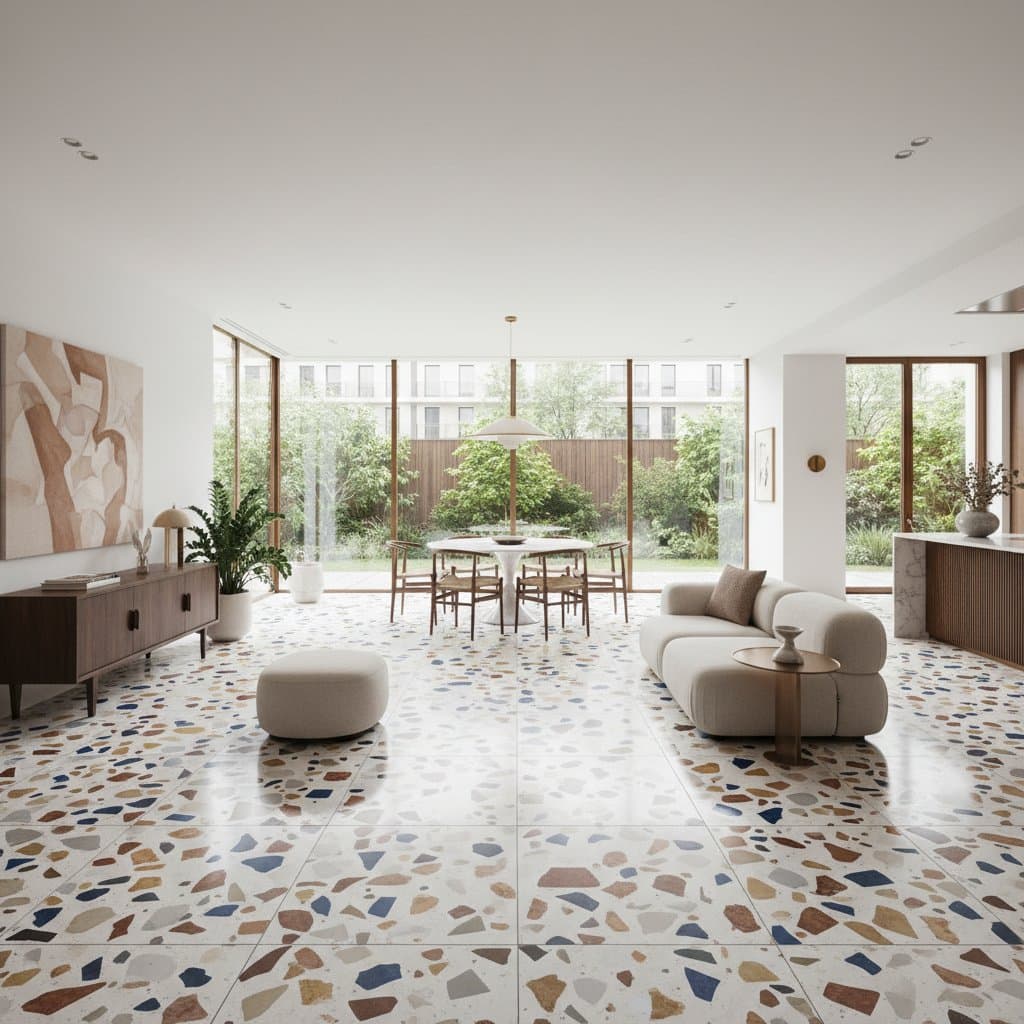
The 2025 Terrazzo Revival: Elevating Home Resale Speeds
Terrazzo floors command attention in the 2025 housing market, where properties featuring this material sell up to 40 percent faster than comparable homes with standard vinyl or engineered wood flooring. This resurgence stems from terrazzo's blend of classic aesthetics and robust performance, particularly in high-traffic zones like kitchens and entryways. Homeowners who incorporate terrazzo report not only quicker sales but also premium pricing, as buyers seek surfaces that combine visual elegance with practical longevity.
The average installation cost reaches approximately $18 per square foot, though this varies from $12 to $28 based on aggregate selection and surface treatment. Such investments pay dividends in resale scenarios, where the material's reputation for timeless appeal draws discerning purchasers. As market trends shift toward sustainable and durable features, terrazzo positions properties ahead of the competition.
Key Factors Influencing Terrazzo Costs
Understanding the elements that drive terrazzo expenses helps homeowners budget effectively and avoid surprises during renovation projects.
1. Aggregate and Material Choices
Terrazzo derives its distinctive look from embedded aggregates such as marble chips, glass fragments, or metal inlays suspended in a resin or cement binder. Marble aggregates prove more affordable, while glass or metallic options elevate costs due to their reflective qualities and sourcing challenges. Custom color blends or intricate patterns can increase expenses by 15 to 25 percent, allowing for personalized designs that align with contemporary or retro themes.
2. Installation Methods and Labor
Poured-in-place terrazzo, the traditional and most seamless option, ranges from $20 to $28 per square foot and demands skilled craftsmanship to ensure a flawless pour. In contrast, precast tiles or panels offer a quicker alternative at $12 to $18 per square foot, ideal for projects requiring minimal disruption. Labor accounts for a significant portion of the total, as professionals handle precise mixing, pouring, and curing to prevent imperfections.
3. Subfloor Preparation Requirements
A stable subfloor forms the foundation for successful terrazzo installation. Tasks such as leveling uneven concrete, removing existing flooring, or applying moisture barriers add $2 to $5 per square foot. Neglecting these steps invites future issues like cracks or delamination, which compromise both appearance and structural integrity.
4. Surface Finishes and Protective Sealants
Polished finishes demand higher initial investment but deliver a glossy, low-maintenance surface that resists wear. Matte alternatives cost less upfront yet require more frequent cleaning to conceal stains and scuffs. Selecting the appropriate sealant enhances longevity, protecting against spills and foot traffic in busy households.
5. Additional Expenses: Permits and Waste Management
Local regulations may require permits for structural modifications, particularly in older buildings. Disposal of removed materials, such as adhesive residues or outdated tiles, incurs fees of $200 to $400 for an average room. Factoring these into the project plan ensures compliance and smooth execution.
Weighing DIY Approaches Against Professional Installation
For limited scopes, such as small accent areas with precast tiles, a DIY installation presents a viable option. Essential tools include a wet saw for cutting, a grinder for edges, and a respirator to manage dust. However, achieving uniform color distribution and avoiding cracks demands experience; errors often lead to costly rework.
Professional installation becomes essential for poured terrazzo or expansive spaces. Experts calibrate mix ratios, oversee curing periods of several days, and operate specialized polishing machinery for a professional result. A flawed installation not only diminishes aesthetic value but may double repair expenses. Safety remains paramount: always equip with gloves, goggles, and dust masks when working with aggregates. If demolishing existing terrazzo, test for asbestos to safeguard health.
Project Timeline and Cost-Saving Strategies
Terrazzo projects span one to three weeks, accounting for pouring, curing, and final polishing stages. Sourcing unique aggregates may extend lead times, so early ordering proves wise. To optimize efficiency, schedule during off-peak seasons when contractor rates decrease by 10 to 15 percent.
Budget-conscious homeowners can repurpose existing divider strips between sections, reducing material needs. In vintage properties, allocate an additional 10 percent for subfloor repairs or vapor barriers to address common age-related issues. Certain locales provide incentives for eco-friendly installations using recycled glass aggregates; secure documentation to claim these rebates and underscore the project's sustainability.
Long-Term Care and Warranty Essentials
Terrazzo withstands decades of use with routine upkeep. Weekly sweeping removes debris, while mopping with a pH-neutral cleaner preserves the surface. Harsh acidic or abrasive substances etch the finish, so select products carefully to maintain clarity.
Professional resealing every decade, or more often in demanding environments, costs $2 to $3 per square foot and revives luster. Reputable installers extend workmanship warranties of five to ten years, contingent on adherence to specified care protocols. Promptly address cracks by applying color-matched epoxy fillers; delaying this invites expansion and extensive slab repairs, escalating long-term costs.
Practical Steps to Launch Your Terrazzo Project
- Obtain quotes from at least three specialists, evaluating poured versus tiled systems for your space.
- Inquire about subfloor assessments and moisture evaluations to preempt installation hurdles.
- Review physical samples incorporating your preferred colors and textures.
- Schedule during favorable weather to minimize drying complications, and prepare the area by relocating furnishings.
- Secure written details on warranty coverage and ongoing maintenance requirements.
Terrazzo merges artistic expression with resilient functionality, fortifying home values in a competitive market. By choosing this flooring, owners secure immediate enhancements and future-proof their investments against evolving buyer preferences.