Terrazzo Revival: Elevate Home Value by 11 Percent with Timeless Flooring
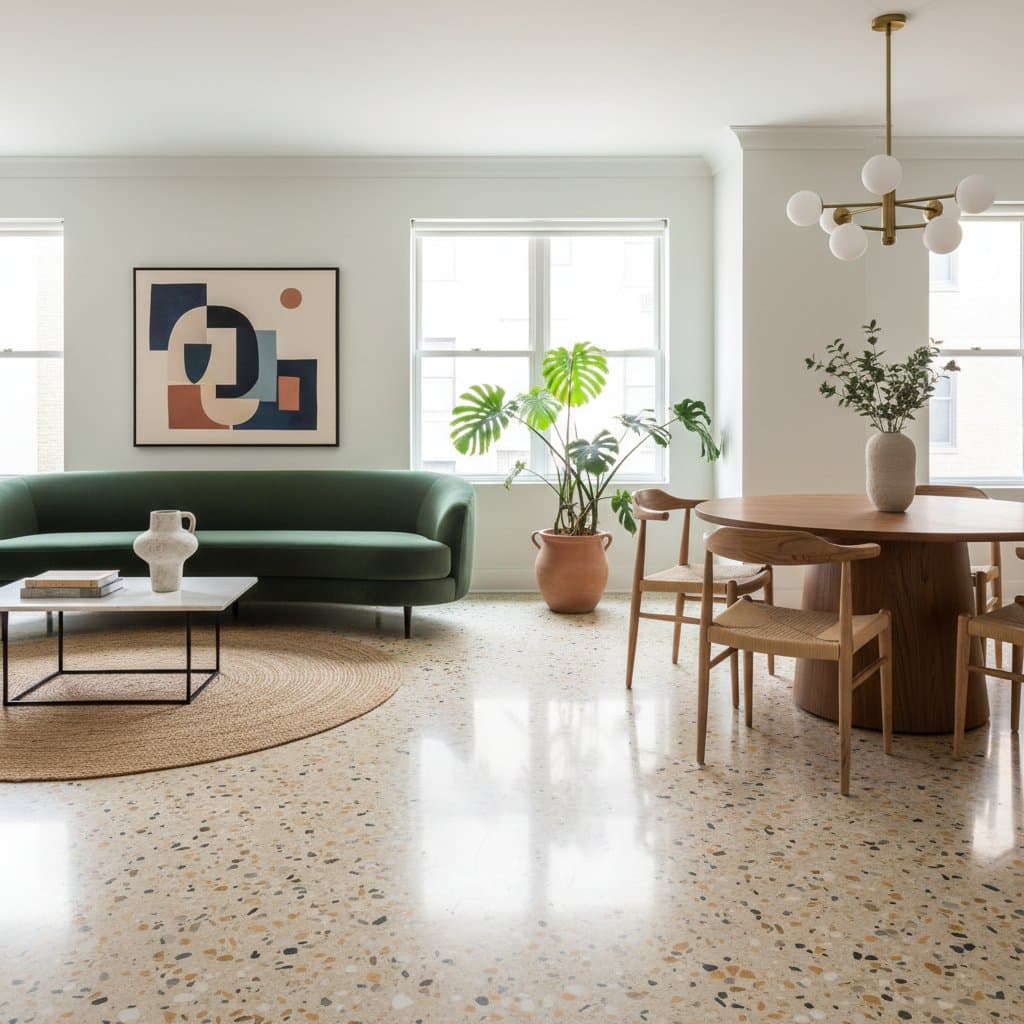
Terrazzo flooring experiences a resurgence in popularity, contributing up to an 11 percent increase in home value. This composite material, featuring marble chips embedded in resin or cement, delivers exceptional durability and minimal upkeep while complementing both contemporary and vintage aesthetics. Homeowners seeking a distinctive surface that draws admiration will find terrazzo an ideal choice.
Understanding Terrazzo Flooring
Terrazzo consists of aggregate chips such as marble, quartz, or glass, combined with a binder of cement or epoxy. The mixture pours onto the subfloor, then undergoes grinding and polishing to create a seamless, lustrous finish rich in texture. This versatile option withstands high-traffic environments like commercial buildings yet enhances residential interiors with elegance.
The Value Proposition of Terrazzo
Prospective buyers associate terrazzo with premium quality due to its bespoke appearance and longevity exceeding several decades. The material resists moisture and wear effectively, appealing to those prioritizing low-maintenance features. According to real estate analyses, properties equipped with such upscale, resilient flooring attract quicker sales and higher offers, fulfilling criteria for both aesthetics and practicality.
Installation Methods for Terrazzo
Installers offer two primary approaches: poured terrazzo for a monolithic surface or precast tiles for simpler application. Each method yields comparable visual results, though the execution varies in technical demands and timelines.
Process for Poured Terrazzo
- Prepare the subfloor thoroughly. Remove debris, ensure flatness, and apply primer. Incorporate moisture barriers over concrete bases to prevent issues.
- Install divider strips strategically. Position these metal or plastic elements to define patterns and mitigate potential cracks.
- Blend and apply the mixture. Integrate chips with the chosen binder, then spread uniformly using a trowel for consistent thickness.
- Allow proper curing. Permit the material to set for multiple days, avoiding disturbance during this phase.
- Perform grinding and polishing. Employ specialized equipment to reveal the aggregates, followed by sealing to enhance gloss and protect against stains.
Process for Terrazzo Tiles
- Verify subfloor evenness. Address any irregularities to guarantee a stable foundation.
- Spread thin-set mortar. Use a notched trowel to distribute the adhesive evenly across the surface.
- Position the tiles carefully. Press each piece into place, maintaining uniform narrow joints between them.
- Apply grout and sealant. Clean excess material, fill joints after drying, and seal the entire floor for durability.
Pricing Breakdown for Terrazzo Projects
| Component | Average Cost Range | Influencing Factors |
|---|---|---|
| Poured terrazzo installation | $25 to $80 per square foot | Extent of labor, aggregate selection, design intricacy |
| Terrazzo tile installation | $15 to $40 per square foot | Tile dimensions, pattern arrangement, subfloor preparation |
| Grinding, polishing, and sealing | $3 to $7 per square foot | Project scale, desired sheen level |
Costs fluctuate based on geographic location. Epoxy-based systems prove more economical than cement varieties, while incorporating recycled glass aggregates may elevate expenses modestly for distinctive effects. Urban or coastal areas often incur premium labor charges.
Project Timeline Expectations
Poured terrazzo installations span 7 to 10 days, accounting for extended curing periods. Tile-based projects conclude in 3 to 5 days, particularly in compact spaces. Primary bottlenecks involve drying intervals and finishing processes; refrain from foot traffic on fresh poured surfaces until professionals approve.
Deciding Between DIY and Professional Installation
Consider DIY for:
- Small-scale tile installations in confined areas.
- Projects where users possess proficiency with cutting tools and adhesives.
- Straightforward layouts without bespoke designs.
Opt for professionals when:
- Pursuing poured terrazzo applications.
- Handling expansive surfaces, curved edges, or detailed embeddings.
- Seeking formal warranties to safeguard resale potential.
Experienced contractors access industrial-grade grinders and understand precise curing protocols. Errors in pouring, such as uneven mixing, risk structural flaws that demand costly remediation.
Essential Tools and Materials
Gather the following for a successful project:
- Trowels, levels, and mixing containers.
- Divider strips and vapor barriers.
- Grinding machines and polishing pads.
- Binders in epoxy or cement form.
- Aggregates like marble or glass chips.
- Sealants along with safety equipment.
During grinding operations, don protective gloves and respirators to shield against airborne particles that may cause respiratory or ocular discomfort.
Selecting Designs and Colors
Terrazzo adapts seamlessly to diverse interior themes. Neutral bases with marble aggregates suit sleek, modern settings, while vibrant glass and metallic inclusions introduce dynamic flair. Coordinate chip selections with surrounding decor for harmony, or select contrasting elements to create striking focal points. Divider strips facilitate custom motifs, from precise geometrics to flowing organics, ensuring enduring appeal.
Considerations by Region
In areas prone to humidity, epoxy formulations outperform cement in moisture resistance. Colder regions require verification that subfloors and mixtures tolerate expansion from freezing conditions. Seismic-prone locations benefit from reinforced divider systems to absorb movement. Municipal regulations may mandate permits for poured installations in shared structures; consult local codes prior to commencement.
Upkeep and Durability
Terrazzo endures 40 years or longer under routine maintenance. Regular sweeping prevents grit accumulation, complemented by mopping with pH-neutral solutions. Steer clear of acidic or abrasive cleaners that compromise the sealant. Periodic resealing preserves vibrancy, and minor imperfections yield to targeted epoxy repairs or buffing.
Sustainability Advantages
This flooring incorporates recycled aggregates, reducing environmental impact through extended service life. Epoxy variants release minimal volatile organic compounds post-curing. Architects favor terrazzo for LEED certification compliance, as its patina develops gracefully over time, enhancing rather than detracting from appearance.
Steps to Implement Terrazzo in Your Home
To realize an 11 percent value uplift through this captivating flooring, begin by outlining desired patterns and binder preferences. Solicit estimates from certified local specialists, evaluating material samples in ambient lighting. Upon completion, terrazzo emerges as a central, enduring element that elevates your living space.
Frequently Asked Questions
Does terrazzo flooring present slip hazards? Proper sealing minimizes risks; opt for matte or satin finishes to improve grip.
Is installation possible over existing tiles? Affirmative, provided the base remains level and sound; a primer layer may enhance adhesion.
What is the expected lifespan of terrazzo? Proper maintenance supports 40 to 75 years of service, with many installations from prior eras still functional.
Are specialized cleaning methods required? Standard mild detergent and water suffice; harsh substances erode protective coatings.
Justifies the investment in terrazzo? Absolutely, given its value appreciation, longevity, and bespoke aesthetics that often recoup expenses upon sale.