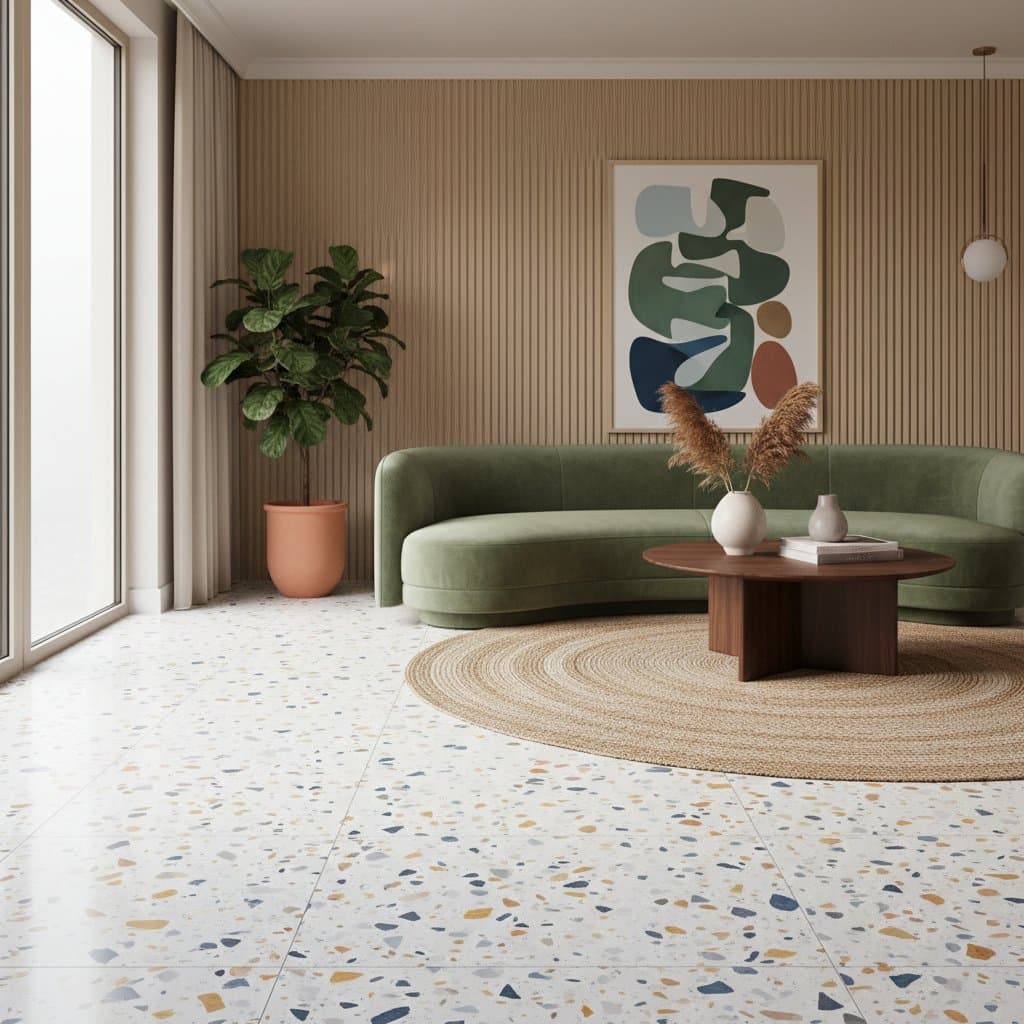
Terrazzo's Resurgence: A Key Trend for Elevating Home Value in 2025
Terrazzo flooring experiences renewed popularity in residential spaces. This composite material, formed from aggregates such as crushed stone, glass, or marble bound in cement or epoxy, provides exceptional resilience, creative versatility, and enduring economic benefits. Property owners select terrazzo for its pristine appearance, reduced upkeep demands, and capacity to attract higher offers upon sale. The material adapts seamlessly to contemporary, vintage, or understated interiors, establishing it as a strategic enhancement among flooring options.
Installation Cost Overview
Professional installation of terrazzo flooring typically ranges from $20 to $90 per square foot across the United States. The average expenditure falls between $35 and $70 per square foot, influenced by selected materials and project intricacies. Prefabricated terrazzo tiles present a more affordable alternative, beginning at approximately $15 per square foot, although they limit choices in hues and motifs.
Factors Influencing Expenses
- Base Material: Cement-based terrazzo remains economical, while epoxy variants command higher prices due to expanded design possibilities.
- Aggregate Selection and Scale: Standard marble aggregates prove cost-effective; inclusions of glass or metallic elements elevate the total.
- Design Intricacy: Elaborate patterns and diverse color palettes extend labor duration and costs.
- Subfloor Preparation: Requirements for leveling or addressing moisture issues contribute additional charges.
- Finishing Processes: Options for enhanced gloss levels or superior sealants increase the investment.
For a standard 300-square-foot installation, anticipate total costs between $10,000 and $20,000 when engaging certified professionals.
Varieties of Terrazzo Flooring
Cement-Based Terrazzo
This classic formulation incorporates marble aggregates into a cement binder. It delivers outstanding durability yet requires careful handling due to its weight and slight porosity. Such terrazzo suits ground-level applications or concrete slabs effectively.
Epoxy-Based Terrazzo
Resin replaces cement in this version, resulting in a lighter, slimmer profile with greater design adaptability. It proves suitable for upper stories and contemporary settings where weight concerns arise.
Rustic Terrazzo
This variant retains a textured finish rather than a high polish, enhancing traction. It performs well in exterior environments or high-traffic zones prone to moisture.
Terrazzo Tiles
Factory-produced tiles replicate the appearance of poured terrazzo. Installation proceeds more swiftly, and repairs occur with ease, though visible seams disrupt the continuous surface.
Polyacrylate Terrazzo
A hybrid composition offers superior resistance to ultraviolet exposure. It excels in sunlit areas such as patios or enclosed gardens.
These options vary in performance characteristics and pricing. Cement terrazzo prioritizes extended lifespan, epoxy emphasizes personalization, and tiles facilitate expedited renovations.
Essential Installation Process
- Evaluate the Subfloor: Identify any cracks, unevenness, or moisture presence to ensure a stable foundation.
- Prepare and Level the Base: Apply a bonding agent or vapor barrier as needed to create an even surface.
- Prepare the Terrazzo Mixture: Combine aggregates and binder in precise ratios suited to the chosen material.
- Pour and Distribute the Material: Spread the mixture uniformly to achieve the specified thickness, typically 1/2 to 3/4 inch.
- Compact the Surface: Use rollers to remove air voids and promote adhesion.
- Cure the Installation: Allow sufficient time, often 24 to 72 hours, before proceeding to finishing stages.
- Grind the Surface: Employ diamond-tipped tools to reveal the aggregates beneath.
- Address Imperfections: Fill minor voids with compatible grout or resin for a smooth result.
- Apply Sealant and Polish: Finalize with protective coatings and buffing to attain the preferred luster.
Post-installation maintenance includes routine vacuuming to remove debris and gentle cleaning with a pH-neutral solution. Steer clear of acidic cleaners, which may compromise the finish over time.
Comparable Flooring Choices
For those constrained by budget or preferring less committed solutions, several alternatives approximate terrazzo's appeal while reducing demands.
Polished Concrete
This option costs $5 to $15 per square foot and yields a comparable sleek aesthetic. Installation simplifies, but color options remain restricted, and cracking risks persist without reinforcement.
Porcelain Tiles
Tiles with imprinted terrazzo designs range from $4 to $12 per square foot. Individual pieces replace easily, yet the effect falls short of a monolithic expanse.
Vinyl Flooring Imitating Terrazzo
Luxury vinyl planks featuring terrazzo motifs cost $3 to $6 per square foot. They offer cushioning for comfort but sacrifice longevity and tolerance for high temperatures.
Resin or Microcement Overlays
These create fluid, modern floors at $8 to $20 per square foot. Scratch resistance proves moderate, making them ideal for straightforward updates.
Each substitute balances affordability and convenience against terrazzo's superior permanence and genuine texture.
Return on Investment and Market Impact
Terrazzo flooring contributes tangibly to property appreciation. Real estate professionals highlight it as a premium indicator of craftsmanship, often sparking greater buyer enthusiasm. In aesthetically driven regions, such installations correlate with resale premiums of 5 to 10 percent.
Remodeling projects incorporating terrazzo yield strong long-term gains. The elevated initial outlay offsets through decades of minimal repairs and replacements. In leased or business properties, reduced upkeep further enhances profitability.
Integrating Terrazzo with Emerging Design Trends
Interior specialists extend terrazzo applications beyond flooring to surfaces like countertops, wall accents, and custom furnishings. Trends favor finer aggregates, striking color pairings, and subdued sheens to align with current tastes.
Prevailing Aesthetic Approaches
- Subdued Foundations: Neutral tones accented by fine particles suit spare, minimalist environments.
- Vibrant Aggregates: Hues in rose, turquoise, or metallic tones evoke mid-century influences.
- Bold Aggregate Layouts: Oversized chips simulate organic stone formations.
- Unified Material Flows: Seamless transitions from floors to adjacent walls foster spatial cohesion.
Pairing terrazzo with elements like timber accents, metallic fixtures, or raw concrete introduces dynamic contrasts. Its versatility sustains appeal across traditional and forward-looking schemes.
Steps to Implement Terrazzo Successfully
Terrazzo represents a substantial commitment that promises resilience and stylistic innovation. It transforms diverse home configurations while enduring rigorous use for generations. Proceed with these measures:
- Analyze the Area: Inspect structural integrity and environmental factors like humidity.
- Establish Financial Parameters: Account for preparation, labor, materials, and finishing.
- Evaluate Material Suitability: Select cement, epoxy, or tile formats aligned with functional needs.
- Engage Qualified Specialists: Verify credentials, review portfolios of comparable installations, and secure references.
- Secure Assurances on Coverage and Upkeep: Clarify warranty scopes and establish a care regimen.
Obtain estimates from at least three vetted contractors. Request physical samples and view completed examples to inform your decision. Thoughtful execution ensures terrazzo delivers timeless sophistication.
Frequently Asked Questions
How durable is terrazzo flooring?
Properly maintained terrazzo endures for several decades, frequently surpassing alternative materials in lifespan.
Is installation possible over existing tile or concrete?
Affirmative, provided the base remains flat, free of defects, and dry. Certain epoxy formulations accommodate direct overlays.
Does terrazzo pose slip hazards?
High-polish versions may become slippery in wet conditions. Incorporate anti-slip additives or opt for matte treatments to mitigate risks.
What routine care does terrazzo require?
Sweep regularly, mop periodically with neutral solutions, and reseal every three to five years to preserve condition.
Opting for terrazzo equips homeowners with a fusion of visual allure and functional prowess. This resurgence underscores a preference for resilient resources that harmonize form, utility, and environmental responsibility.