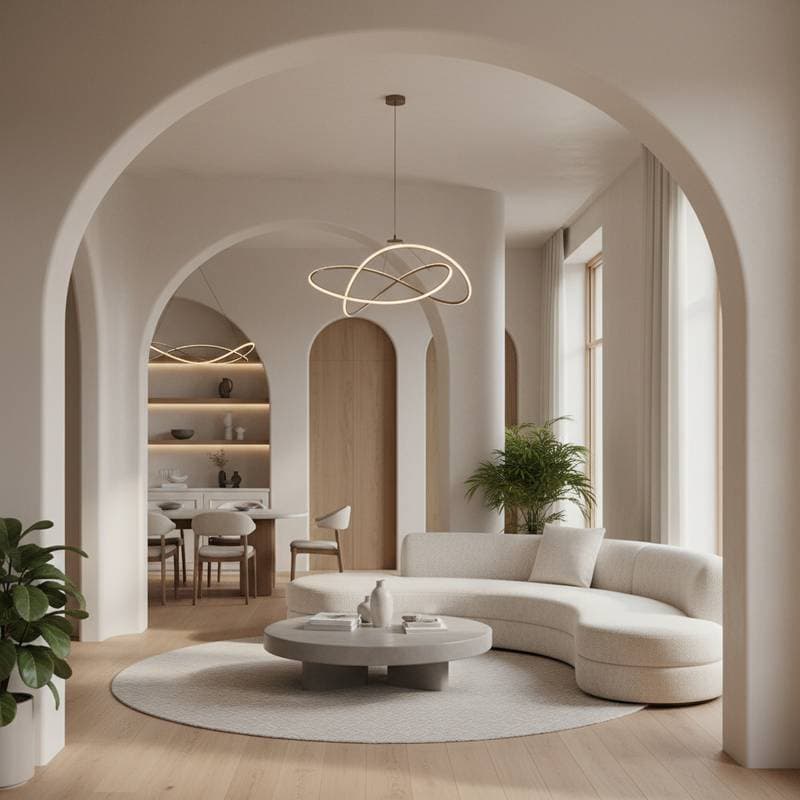
Curved Designs: The 2025 Trend Elevating Home Values
Curves have returned to interior design, and they elevate home values with remarkable speed. These rounded shapes soften spaces, enhance visual flow, and convey bespoke craftsmanship. Elements such as arched doorways and curved kitchen islands introduce comfort and personality that potential buyers recognize at once.
The Appeal of Curves in Contemporary Design
Straight lines promote efficiency, yet they often appear stark. Curves counteract this by introducing fluidity, directing attention, and fostering a sense of natural harmony. Designers refer to them as organic forms, inspired by natural growth patterns. Homebuyers describe them as welcoming.
Incorporating curves represents an efficient method to impart a customized appearance to a residence without undertaking extensive renovations. Modest additions, such as an arched passageway or a rounded countertop, transform a standard builder-grade home into one that exudes sophisticated design.
Strategic Locations for Curved Elements
Begin with subtle integrations or pursue more ambitious applications. Maintain consistency to achieve cohesion. Select a handful of rounded features to harmonize a room, while avoiding excess that might overwhelm the aesthetic. Prioritize areas with frequent use and prominent visibility.
Arched Doorways and Passageways
Arched doorways gently ease transitions between rooms and impart a timeless elegance to ordinary openings. They suit entryways, corridors, or connections between living and dining areas.
Cost: $800 to $2,500 per opening, influenced by framing and finishing.
Time: Two to five days per opening.
Difficulty: Moderate, involving framing and drywall installation.
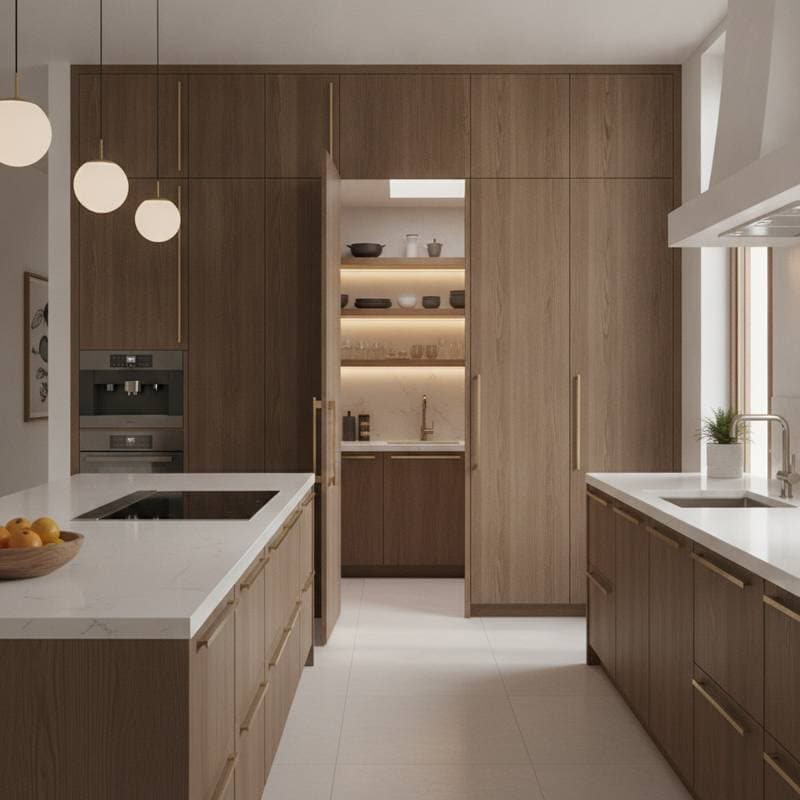
Curved Kitchen Islands
A curved island encourages social interaction and optimizes circulation in compact kitchens by mitigating sharp angles.
Cost: $3,000 to $9,000, based on dimensions and surface materials.
Time: One to two weeks for fabrication and setup.
Difficulty: High, necessitating custom cabinetry and shaped countertops.
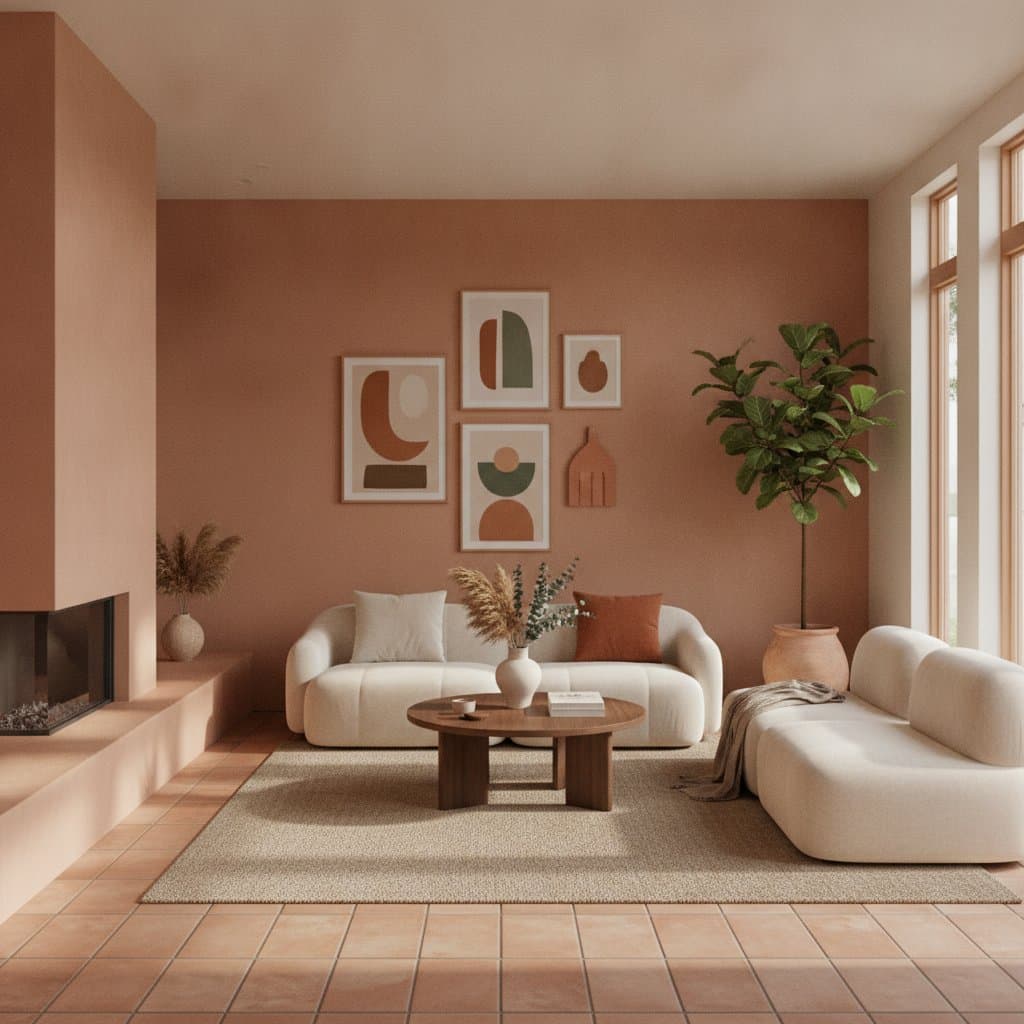
Rounded Furniture and Accessories
For renters or those hesitant about structural changes, rounded furniture achieves a comparable ambiance. Options include sofas with soft edges, oval dining tables, and circular mirrors.
Cost: $200 to $3,000, depending on craftsmanship and fabrics.
Time: Immediate upon acquisition and arrangement.
Difficulty: Low; select items that reinforce the curved motif without dominating the space.
Curved Staircases and Balustrades
A sweeping staircase or balustrade serves as a focal point in upscale interiors. These features add artistic depth, particularly in expansive entry halls.
Cost: $10,000 to $30,000, determined by materials and intricacy.
Time: Three to six weeks, encompassing fabrication.
Difficulty: High, demanding precise structural engineering and expert assembly.
Arched Windows and Integrated Storage
Windows with curved tops diffuse light softly and evoke architectural heritage. Rounded shelving units or wall recesses create depth and purposeful detailing.
Cost: $1,500 to $6,000 per element.
Time: One to three weeks.
Difficulty: Moderate to high, often requiring bespoke woodworking and glazing.
Cost Overview
| Element | Cost Range | Key Price Factors |
|---|---|---|
| Arched doorway | $800–$2,500 | Wall composition, finish level |
| Curved island | $3,000–$9,000 | Scale, material selection |
| Rounded furniture | $200–$3,000 | Maker, fabric type |
| Curved staircase or railing | $10,000–$30,000 | Elevation, compliance requirements |
| Arched window or recess | $1,500–$6,000 | Specialized glazing, ornamental trim |
Costs fluctuate by location. Labor expenses, supply availability, and regulatory standards influence outcomes. Areas with historical significance or environmental challenges, such as coastal or seismic regions, demand enhanced reinforcements.
Timeline and Process
Decorative modifications require mere days, whereas comprehensive alterations span weeks. Follow this sequence:
- Obtain design confirmation. Draft the curve's profile and secure approval from designers or builders.
- Conduct structural evaluation. Inspect load-bearing elements for stairs or walls.
- Prepare components. Off-site production handles bent woodwork, drywall molds, or tailored surfaces.
- Execute installation. Teams construct, refine, and coat the features.
- Perform final review. Verify adherence to building regulations.
Anticipate one to two weeks for basic arched drywall, and four to eight weeks for extensive staircases or islands. External factors like weather or supply issues may extend durations.
DIY Options Versus Professional Services
Pursue DIY for:
- Placement of curved furniture or accents.
- Basic drywall repairs or surface treatments.
- Non-structural, aesthetic enhancements.
Engage professionals for:
- Modifications to weight-bearing walls.
- Projects involving stone, glass, or metalwork.
- Situations requiring official blueprints for approvals.
Experts provide specialized tools like curving templates and finishing techniques beyond typical equipment. Many guarantees for joinery or glazing mandate licensed installation.
Essential Tools and Supplies
For minor DIY arches:
- Drywall cutting tool.
- Arch-forming kit in metal or flexible material.
- Seam-filling compound.
- Abrasive smoothing tool.
- Coating and base layers.
For furniture arrangements:
- Measuring tape.
- Alignment device.
- Protective pads for leg bases.
- Securement hardware for wall-mounted items.
For advanced constructions:
- Precision leveling instrument.
- Adaptable framing guides.
- Bespoke curving patterns.
- Formed bending substrates.
These implements align with specific phases. Cutting and kits define shapes, while compounds and abrasives ensure seamless integration. Levels maintain uniformity in placements.
Safety Considerations and Regulations
Curves enhance aesthetics, yet their construction demands vigilance for security.
- Framing: Support headers are essential for arches in structural walls.
- Wiring: Relocate electrical points prior to wall alterations.
- Stairways: Ensure treads and grips comply with depth and elevation standards.
- Glazing: Use safety-rated glass suited to regional conditions.
Consult local authorities for permitting. Zones prone to storms, tremors, or snowfall enforce rigorous guidelines.
Impact on Property Value
Prospective owners connect intuitively with spatial rhythm. Curves facilitate navigation and equilibrium. Agents observe that properties featuring arches or rounded accents stage more effectively and perceive as more expansive.
Value increases differ, but experts project uplifts of 2 to 7 percent for integrated curved designs. Outcomes hinge on implementation finesse, local preferences, and alignment with the property's era and configuration.
Adapting Curves to Regional Contexts
Local environments and styles dictate optimal curve applications.
In warm, bright areas: Curved plaster surfaces and arched frames minimize harsh light and infuse regional flair.
In cooler climates: Rounded interiors temper robust materials like masonry.
Along shorelines: Arched portals withstand gusts superior to angular designs when properly reinforced.
In city conversions: Curved pieces warm raw elements such as metal and aggregate.
Align curves with prevailing aesthetics. Gentle arches complement revivalist structures, whereas streamlined bends fit modernist frameworks.
Curves Versus Linear Designs
| Context | Curved Approach | Linear Approach |
|---|---|---|
| Aesthetic Impact | Fluid, natural, dynamic | Sharp, ordered, methodical |
| Spatial Sensation | Approachable, vibrant | Accurate, streamlined |
| Upkeep Demands | Moderately elevated, specialized care | Simpler, off-the-shelf solutions |
| Expense Tier | Medium to premium | Budget to medium |
| Market Draw | Strong in style-conscious areas | Universal, enduring |
Curves excel through deliberate placement. Linear forms prevail in storage and surfaces, but blended accents sustain equilibrium.
Implementation Strategies
- Integrate curves across multiple zones. Isolated instances appear incidental; multiples foster unity among rooms.
- Pair with subdued palettes. This accentuates form amid simplicity.
- Evaluate illumination. Curves interact uniquely with light; sample setups prior to finalizing.
- Employ digital visualizations for scale assessment. Sketches may understate real-world presence.
- Prioritize utility. Ensure curves enhance pathways or views without impeding utility.
Indicators for Professional Involvement
Seek expert assistance when:
- Altering skeletal or supportive structures.
- Fabricating tailored wood or stone elements.
- Preparing documentation for regulatory review.
- Doubting measurements for bends or elevations.
Specialists simulate load dynamics and guarantee fluid integrations. Permitted modifications also safeguard future marketability, as purchasers favor documented enhancements.
Enduring Advantages
Curved features mature elegantly, resisting obsolescence through their organic essence. Softened edges endure handling in busy zones, extending durability for surfaces and fixtures. For households with children, reduced angular risks enhance security alongside refinement.
Care involves adaptable sealants for joints and mild solutions for contours. Regulate moisture to avert material shifts in curved sections.