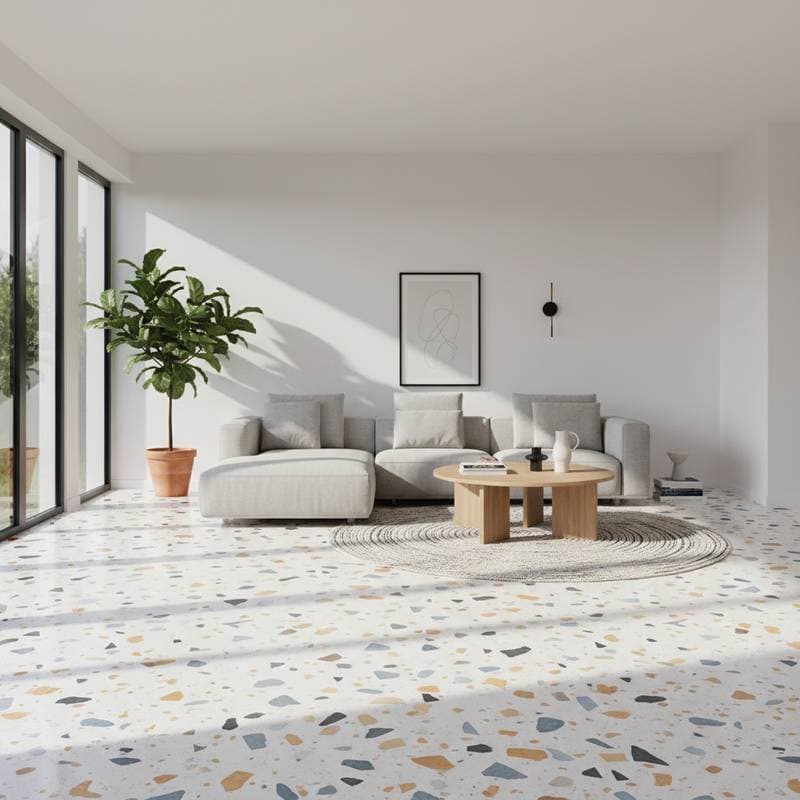
The Resurgence of Terrazzo: A Smart Investment for 2025 Flooring Projects
Terrazzo flooring experiences a notable revival in contemporary design circles. This material combines exceptional resilience with refined visual appeal, proving economical in the long term. Homeowners seeking optimal returns on remodeling investments find terrazzo particularly advantageous.
This comprehensive guide examines the factors that justify the investment in terrazzo, outlines planning and installation strategies, provides cost analyses, details timelines, and identifies scenarios requiring professional expertise. By understanding these elements, readers gain practical insights to inform their decisions.
Understanding Terrazzo: Types and Benefits
Terrazzo consists of aggregate chips, such as marble, quartz, or glass, embedded in a binder of either cement or epoxy. Cement-based terrazzo suits traditional applications, while epoxy variants offer faster curing and greater color flexibility. Both types deliver a seamless, customizable surface ideal for residential and commercial spaces.
The primary benefits include extraordinary longevity, often exceeding 50 years with proper care, which minimizes replacement needs. Terrazzo resists wear from foot traffic, spills, and impacts better than many alternatives like vinyl or hardwood. Additionally, its low maintenance requirements and recyclable components align with sustainable building practices, appealing to environmentally aware buyers.
From an investment perspective, terrazzo enhances property appeal. Real estate experts note that homes featuring this flooring command premium prices, with potential value increases of 5 to 10 percent in upscale markets. Its versatility allows integration into various styles, from minimalist modern to ornate classic designs.
Step-by-Step Terrazzo Installation Process
The installation of terrazzo demands meticulous attention to detail for optimal results. Professionals follow a structured sequence to ensure adhesion, evenness, and finish quality.
-
Subfloor Preparation. Begin by thoroughly cleaning the subfloor to remove debris, adhesives, or contaminants. Verify levelness using a straightedge and repair any imperfections, such as cracks wider than 1/16 inch, with a leveling compound. Stability testing confirms the substrate can support the terrazzo weight, typically 15 to 20 pounds per square foot.
-
Application of Primer or Bonding Agent. Apply a compatible primer to enhance adhesion between the subfloor and terrazzo matrix. For cement terrazzo, use a latex-modified bonding agent; epoxy systems require specific resin primers. Allow the primer to dry according to manufacturer specifications, usually 24 hours.
-
Mixing and Pouring the Terrazzo. Combine the binder with selected aggregates in precise ratios, often 1:4 by volume. Divide the mixture into sections for large areas to maintain consistency. Pour the slurry onto the primed surface and spread it to a uniform thickness of 1/2 to 3/4 inch using a trowel or screed.
-
Curing Phase. Permit the poured terrazzo to cure undisturbed. Cement-based mixes require 24 to 48 hours initial set, followed by moist curing for seven days to prevent cracking. Epoxy terrazzo hardens in 24 to 36 hours, accelerating the overall timeline.
-
Grinding and Polishing. Initiate grinding with coarse diamond pads (30 to 50 grit) to level the surface and expose aggregates. Progress through finer grits (up to 3000) for smoothness. Wet grinding minimizes dust, while dry methods suit smaller spaces. Polishing imparts the desired sheen, from matte to high gloss.
-
Sealing the Finished Surface. Apply a penetrating sealer to safeguard against moisture and stains. Choose penetrating siliconate sealers for cement terrazzo or acrylic-based options for epoxy. Buff the sealer after drying to enhance luster and ease cleaning.
-
Final Cleaning and Maintenance Setup. Vacuum residual dust and perform a neutral pH wash to reveal the true colors. Establish a maintenance routine involving daily sweeping and weekly damp mopping with mild detergent.
While DIY kits facilitate small-scale applications, such as tabletops or accents, complete floor installations necessitate certified installers. The process involves specialized machinery, like planetary grinders, and adherence to industry standards from bodies like the National Terrazzo & Mosaic Association.
Installation Timelines and Factors Influencing Duration
Terrazzo projects require careful scheduling to accommodate curing and finishing stages.
-
Compact Spaces (Under 100 Square Feet): Expect 2 to 4 days, including preparation and basic polishing.
-
Standard Rooms (100 to 500 Square Feet): Typically 5 to 7 days, with additional time for pattern divisions or intricate designs.
-
Extensive Areas (Over 500 Square Feet): Plan for 10 to 14 days, factoring in multiple pours and extended grinding sessions.
Curing and polishing add 3 to 5 days post-pour. Epoxy terrazzo shortens overall time compared to cement, making it preferable for renovations with deadlines. Environmental variables, such as temperatures below 50 degrees Fahrenheit or humidity above 70 percent, extend curing by 20 to 50 percent. Coordinate with installers to mitigate delays through climate-controlled workspaces.
Cost Breakdown for Terrazzo Flooring
Initial costs for terrazzo range from $15 to $70 per square foot, varying by material, design complexity, and location. Cement terrazzo averages $15 to $30 per square foot installed, while epoxy versions cost $20 to $50 due to faster application and customization options.
Breakdown includes:
-
Materials: $5 to $20 per square foot for aggregates and binders. Premium chips like mother-of-pearl elevate expenses.
-
Labor: $10 to $40 per square foot, higher in urban areas with skilled labor shortages.
-
Preparation and Finishing: $2 to $10 per square foot for subfloor work, grinding, and sealing.
For a 200-square-foot kitchen, total outlay might reach $6,000 to $14,000. Long-term savings accrue through durability; terrazzo outlasts carpet or laminate by factors of 5 to 10, reducing lifecycle costs by up to 40 percent. Financing options, such as home improvement loans, often apply, with ROI realized in 5 to 7 years via energy efficiency and value appreciation.
Essential Tools and Materials for Terrazzo Projects
For maintenance or minor repairs, assemble these items to handle tasks effectively.
Tools:
- Precision trowel and darby float for application and leveling.
- Industrial wet grinder with diamond segments for resurfacing.
- Industrial vacuum and microfiber mop for dust control.
- Protective gear, including safety goggles, respirators, and nitrile gloves.
- Digital level and concrete moisture meter for diagnostics.
Materials:
- Pre-mixed terrazzo epoxy or cement with aggregate blends.
- Acrylic primer and latex bonding agents.
- Penetrating sealer compatible with the terrazzo type.
- Epoxy-based patching compound for crack repairs.
Prioritize ventilation during mixing and grinding to disperse silica dust, which poses respiratory risks. Source materials from reputable suppliers to ensure quality and warranty coverage.
Adapting Terrazzo to Regional Climates and Regulations
Terrazzo adapts well across diverse environments, yet site-specific adjustments optimize performance.
In humid zones, like coastal regions, select epoxy terrazzo for its impermeable qualities, reducing mold risks. Cold climates demand underlayment vapor barriers to shield against moisture migration during freeze-thaw cycles, preventing subsurface cracks.
Arid, hot areas require extended moist curing for cement mixes to avert shrinkage cracks from rapid evaporation. Conduct pre-installation moisture tests using calcium chloride kits; levels exceeding 3 pounds per 1,000 square feet warrant remediation.
Compliance with local building codes is essential. Wet areas may need textured finishes for slip resistance, rated at 0.5 coefficient of friction. Rental properties often require low-VOC materials to meet indoor air quality standards. Consult municipal inspectors early to avoid rework.
Indicators for Professional Terrazzo Intervention
Certain conditions signal the need for expert assistance to preserve or restore terrazzo.
-
Structural cracks exceeding 1/8 inch in width, indicating subfloor movement.
-
Widespread dullness or etching from improper cleaning agents.
-
Challenges in matching existing terrazzo during expansions, requiring color analysis.
-
Suspected moisture issues or alkalinity problems affecting adhesion.
Specialists employ diamond grinding to refurbish surfaces, applying color hardeners for revitalization. Resealing restores protection without full replacement, costing $3 to $8 per square foot versus $20 to $50 for new installs. Annual inspections by certified technicians extend terrazzo life indefinitely.
Expert Recommendations for Optimal Terrazzo Outcomes
-
Design Patterns in Advance. Finalize divider strips and chip layouts during planning; alterations post-pour prove costly and disruptive.
-
Conduct Thorough Moisture Assessments. Use non-destructive meters to baseline conditions, ensuring subfloor dryness below 75 percent relative humidity.
-
Safeguard During Adjacent Construction. Employ heavy-duty plywood coverings to prevent scratches from tools or debris.
-
Select Appropriate Sealers. Opt for fluoropolymer sealers in high-traffic zones for enhanced stain resistance and UV protection.
These practices yield a flawless, durable finish comparable to architectural showcases.
Frequently Asked Questions About Terrazzo Flooring
Does terrazzo become slippery when wet?
Epoxy formulations incorporate textured aggregates or additives to achieve non-slip properties, typically meeting ADA standards with coefficients above 0.6.
Can terrazzo accommodate underfloor heating?
Yes, both cement and epoxy terrazzo conduct heat efficiently. Install radiant systems beneath the subfloor, ensuring expansion joints to handle thermal shifts.
How does terrazzo compare to porcelain tile in durability?
Terrazzo surpasses porcelain in seamlessness and impact resistance, though porcelain edges out in initial affordability. Terrazzo's monolithic nature prevents grout failures common in tiled floors.
Is terrazzo suitable for outdoor applications?
Cement terrazzo excels outdoors with proper sealing against weathering. Epoxy variants limit to covered patios due to UV degradation.
Realizing the Full Potential of Terrazzo Investment
Terrazzo flooring integrates robustness, sophistication, and financial prudence into a single, versatile material. Although upfront expenditures exceed those of conventional options, the dividends manifest in sustained beauty, reduced upkeep, and elevated market value. For remodelers prioritizing enduring quality, terrazzo represents a strategic choice that appreciates over time.