The 2026 Terrazzo Renaissance: Increase Home Value by 6%
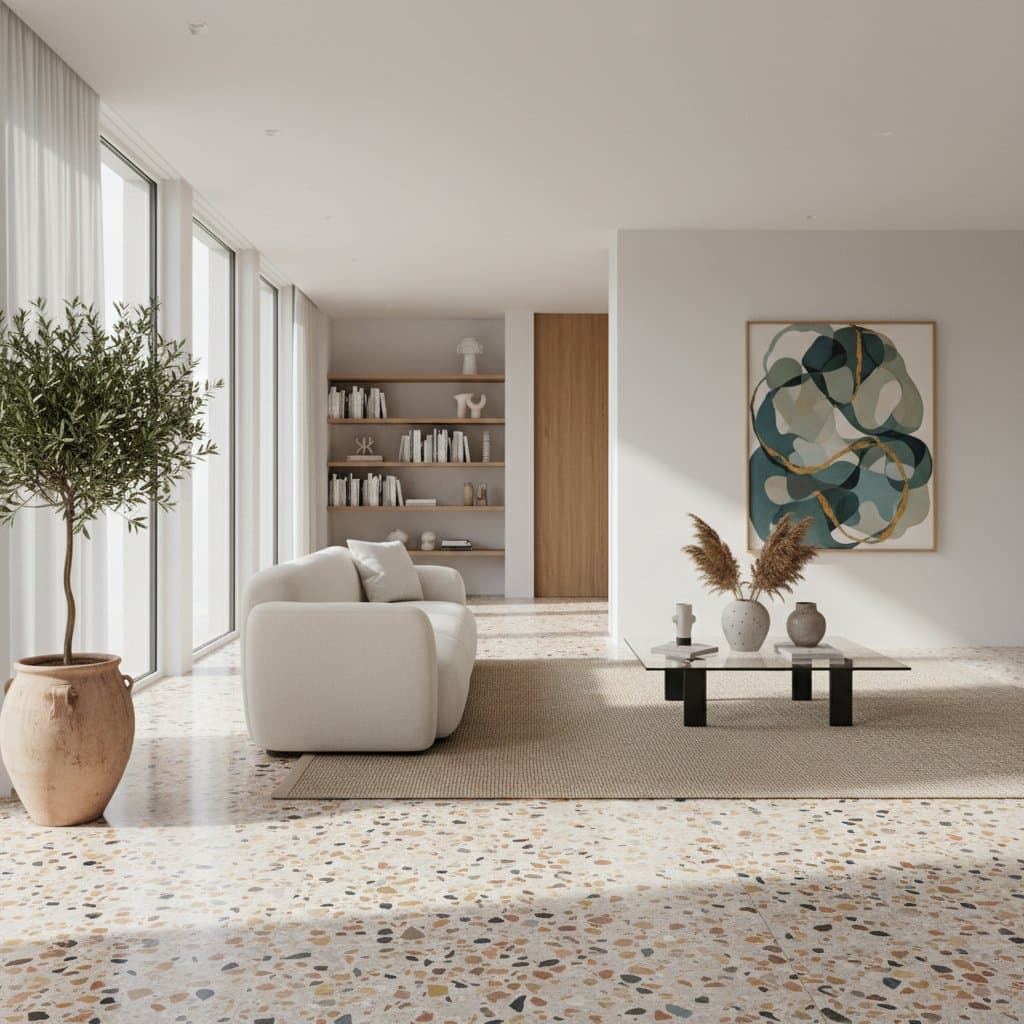
Terrazzo flooring transitions from nostalgic revival to essential modern feature. Homeowners who install or refurbish terrazzo floors experience an approximate 6 percent uplift in property value. This appeal stems from its distinctive appearance, decades-long durability, and compatibility with traditional and contemporary interior schemes.
Understanding Terrazzo Flooring
Terrazzo consists of a composite material formed by embedding fragments of marble, quartz, glass, or granite within a cement or resin matrix. Once the mixture sets, workers grind and polish it to create a sleek, continuous surface. Finishes range from vibrant and striking to muted and refined, with each installation offering bespoke customization.
Reasons for Terrazzo's Renewed Popularity
Design professionals favor terrazzo for its fusion of creative expression and robustness. Although rooted in mid-century aesthetics, it integrates seamlessly into sleek, eco-conscious environments. Demand grows for long-lasting materials, and terrazzo surpasses many alternatives when proper care is applied.
Key factors driving its resurgence include:
- Minimal waste generation. Numerous terrazzo formulations incorporate recycled stone and glass aggregates.
- Exceptional resilience. The material withstands intense foot traffic and humidity exposure.
- Broad personalization options. Infinite variations exist in hues and aggregate selections.
- Thermal comfort. It remains cool to the touch, suiting tropical regions or underfloor heating setups.
In essence, terrazzo delivers visual elegance, practical strength, and alignment with environmentally responsible practices.
Mechanisms Behind Terrazzo's Value Enhancement
Prospective buyers perceive terrazzo as a premium element that conveys superior workmanship without ostentation. It imparts a sense of enduring elegance to vintage properties and bespoke sophistication to new constructions.
Real estate specialists note that residences featuring terrazzo floors or countertops typically sell more quickly and command premiums over comparable properties. This 6 percent valuation boost proves most pronounced in upscale or retro-inspired dwellings. The advantage arises from both aesthetic allure and extended service life, as terrazzo seldom requires complete renewal unlike wood flooring.
Guidelines for Terrazzo Installation or Refurbishment
New Installation Process
- Design the configuration. Select target areas such as foyers, kitchens, or bathrooms for application.
- Select the substrate. Opt for cement-based terrazzo on concrete foundations; choose epoxy variants for elevated levels due to reduced weight.
- Determine aggregates and pigments. Marble fragments yield traditional elegance, while glass infusions provide luminous effects.
- Engage certified installers. Professionals handle pouring, smoothing, curing, and final polishing.
- Apply protective coating. Employ a high-quality sealer to guard against discoloration and dampness.
Refurbishment Procedures
- Prepare the surface. Remove accumulated wax, grime, and deteriorated sealants.
- Address imperfections. Fill fissures or voids with matching tinted resin.
- Refine the finish. Utilize specialized machinery to grind and restore luster.
- Reapply sealant. Contemporary formulas enhance resistance to stains.
These processes demand expertise, industrial equipment, and meticulous timing. Basic cleaning or sealing suits amateur efforts, yet comprehensive grinding or pouring necessitates professional intervention.
Terrazzo Flooring Expenses
| Procedure | Standard Range | Influencing Factors |
|---|---|---|
| Fresh terrazzo installation | $25 to $80 per square foot | Aggregate dimensions, pigment complexity, project scale, underlying surface quality |
| Refurbishment of terrazzo | $4 to $15 per square foot | Extent of wear, desired sheen, required fixes |
| Sealing and routine care | $1 to $3 per square foot | Application intervals, sealant variety |
Regional differences impact rates, with labor premiums in areas lacking abundant skilled labor. Epoxy formulations generally exceed cement options due to advanced resins and colorants.
Project Timelines
Fresh installations span one to two weeks for standard spaces, accounting for curing prior to refinement and protection. Refurbishments conclude more swiftly, typically in two to three days.
Environmental humidity, curing durations, and design intricacy may extend schedules. Allocate buffer periods before reinstalling furnishings.
Amateur Versus Expert Approaches
Suitable for amateurs when:
- Limited to surface cleaning or sealant renewal on established floors.
- Equipped with protective attire and leased polishing devices.
Require experts when:
- Involving initial pours or extensive refurbishments.
- Incorporating divider strips or tailored shade mixtures.
Certified contractors guarantee even planes, secure seams, and optimal setting. Substandard applications risk fracturing or separation. Certain guarantees activate only under licensed supervision.
Essential Tools and Supplies
- Spreading implements like trowels and floats
- Grinding and polishing apparatus
- Diamond-impregnated abrasive discs
- Binding agents in epoxy or cement forms
- Aggregate selections including marble, glass, or quartz
- Protective sealants and cleansing solutions
- Personal safeguards such as goggles, hand coverings, and breathing apparatus
Leasing equipment curbs expenses but introduces preparation delays. Comply with municipal regulations on particulate management and refuse handling.
Considerations for Regions and Weather
Epoxy terrazzo excels in moist locales by repelling water effectively. Cement versions in cooler areas accommodate thermal fluctuations through integrated expansion joints. In balmy zones, the material's inherent chill provides barefoot comfort. Seismic-prone regions benefit from epoxy's pliability to avert fissures.
Municipal approvals may apply to substantial floor modifications, particularly those altering load-bearing elements. Consult local authorities in advance. Preservation zones often mandate adherence to authentic material profiles during renewals.
Upkeep Strategies for Lasting Brilliance
- Perform weekly sweeping or vacuuming to eliminate abrasive particles.
- Clean with pH-neutral solutions, avoiding acidic agents.
- Renew sealant every three to five years.
- Apply periodic buffing to enhance reflectivity.
Steer clear of waxy buildup that impedes clarity and fosters residue. Terrazzo thrives on its inherent polished state rather than overlaid films.
Terrazzo Versus Alternative Surfaces
| Material | Expected Durability | Care Intensity | Aesthetic Adaptability |
|---|---|---|---|
| Terrazzo | 40 to 100 years | Low | High |
| Hardwood | 20 to 40 years | Medium | High |
| Ceramic Tile | 20 to 50 years | Medium | Moderate |
| Vinyl | 10 to 25 years | Low | Moderate |
While terrazzo demands higher initial outlay, its superior longevity positions it as a cost-effective selection over time, minimizing replacement needs.
Eco-Friendly Aspects and Sourcing
Contemporary terrazzo frequently employs reclaimed fillers, processing industrial byproducts like surplus marble or glass. Its protracted usability curtails landfill contributions relative to transient options. Integration with low-emission sealants promotes healthful indoor atmospheres.
For eco-priorities, request supplier documentation on environmental impacts or sustainability certifications. Certain jurisdictions provide rebates for recycled-content installations.
Health and Regulatory Considerations
Refinement processes generate respirable particles; equip with masks and shields. Exclude vulnerable individuals from work zones. Employ wet methods to suppress dust and achieve finer textures.
Avoid overlaying terrazzo on compromised bases prone to shifting, which could compromise integrity. Resolve foundational concerns beforehand. In inundation-risk areas, prioritize epoxy for superior moisture barriers.
Indicators for Professional Assistance
Seek specialists if:
- Fissures widen or fragments dislodge.
- Patches resist restoration to original vibrancy.
- Unevenness or water pooling emerges.
- Complex motifs or embedded designs are planned.
Experts deploy heavy-duty refiners and precision abrasives to avoid surface damage. They replicate nuanced tones beyond amateur capabilities.
Expert Recommendations for Optimal Results
- Trial sealants on inconspicuous sections initially.
- Maintain consistent ambient conditions throughout setup.
- Restrict access to newly laid terrazzo for a minimum of 48 hours.
- Affix protective glides to furniture bases to avert marks.
- Obtain a care manual from contractors prior to settlement.
Such practices preserve the surface's pristine condition across generations.
Advancing Your Terrazzo Project
To embrace this resurgence, initiate with expert consultations. Review aggregate samples and simulated layouts. Evaluate cement versus epoxy suitability against your structure and local conditions.
For existing installations, arrange pre-sale refinishing to amplify allure and support elevated pricing. Even targeted renewals often yield returns exceeding expenditures via improved marketability.
Terrazzo transcends fleeting trends, embodying resilient artistry and ecological wisdom. Ideal for renovations or enduring homes, it crafts narratives through every step taken upon its enduring canvas.