The Resurgence of Terrazzo: Achieving a 6% Increase in Home Value for 2025
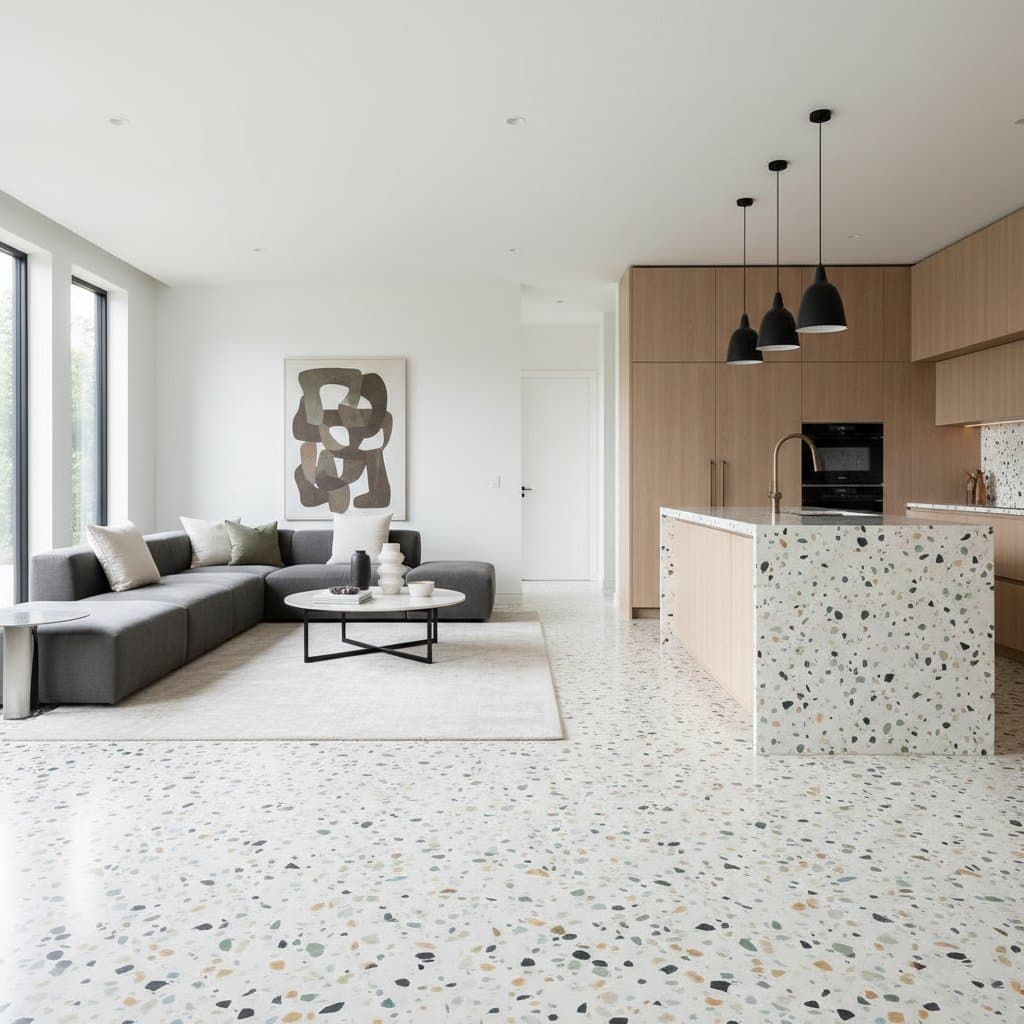
Terrazzo flooring gains renewed popularity in contemporary residences. Property owners select this resilient composite material for its endurance, reduced maintenance needs, and enduring aesthetic. According to real estate analyses, incorporating terrazzo in primary living spaces or kitchens may enhance resale value by approximately six percent. This versatility accommodates both modern and heritage styles, contributing to its expanding attractiveness.
Understanding Terrazzo
Terrazzo consists of a composite material formed by embedding chips of marble, quartz, granite, glass, or metal within a binder of cement or epoxy. After pouring, the mixture undergoes grinding and polishing to create a smooth, uniform surface. This process yields a continuous floor that withstands moisture and daily abrasion. Individuals seeking a resilient yet ornamental flooring solution that endures for generations with limited intervention find terrazzo particularly suitable.
Installation Cost Overview
Across the United States, installed terrazzo flooring typically ranges from $25 to $90 per square foot. Many property owners allocate between $35 and $55 per square foot for standard epoxy terrazzo installations. Elaborate configurations featuring bespoke aggregates or metallic dividers may exceed $100 per square foot.
Factors influencing expenses include:
- The binder type, whether cement or epoxy
- Selection of aggregate materials and color blends
- Expertise of the labor force and degree of polishing
- Condition of the existing subfloor and necessary preparations
- Variations in regional labor and material availability
For a 200-square-foot kitchen area, anticipate expenditures of $7,000 to $11,000 for expert installation.
Advantages and Disadvantages
Advantages
- Extended Durability: Surfaces endure beyond 50 years with infrequent repairs.
- Minimal Upkeep: Involves occasional sealing alongside routine cleaning.
- Bespoke Aesthetics: Permits endless variations in colors and aggregate selections.
- Sustainable Choice: Frequently incorporates recycled glass or stone elements.
- Enhanced Marketability: Provides a high-end finish that elevates property desirability.
Disadvantages
- Substantial Initial Investment: Exceeds expenses for alternatives like tile or vinyl.
- Cool Surface Temperature: Pairs effectively with radiant heating systems in colder areas.
- Potential Slip Hazard: Demands appropriate texturing for secure footing when damp.
- Intricate Placement Process: Necessitates experienced workers and extended curing periods.
- Rigid Composition: Offers less cushioning against impacts or prolonged standing.
Varieties of Terrazzo
Cement-Based Terrazzo
This conventional formulation blends marble aggregates with cement. It excels in expansive floor coverings or preservation projects for older structures. Although thicker and weightier than epoxy counterparts, it presents greater porosity.
Epoxy-Based Terrazzo
A resin-infused option that adheres directly to concrete substrates. Its reduced weight facilitates quicker application, and it supports a broader spectrum of hues. This type proves ideal for updated dwellings and installations on elevated levels.
Polyacrylate Terrazzo
This adaptable variant accommodates outdoor settings or moisture-prone locations. It demonstrates superior resistance to cracking, though with constrained design possibilities.
Precast Terrazzo
Produced in controlled factory environments as panels or tiles for on-site assembly. This method minimizes on-site labor but introduces noticeable seams. Applications often include countertops, staircases, or bathroom surfaces.
| Type | Ideal Application | Primary Benefit | Average Cost per Sq. Ft. |
|---|---|---|---|
| Cement | Expansive floors, restorations | Authentic appearance | $30–$60 |
| Epoxy | Contemporary residences, upper stories | Lightweight, vibrant | $35–$90 |
| Polyacrylate | Exterior spaces, damp areas | Fracture tolerance | $40–$80 |
| Precast | Surfaces like counters, stairs | Expedited setup | $25–$55 |
Professional Installation Versus DIY Efforts
Terrazzo demands precision that exceeds typical do-it-yourself capabilities. The process requires dedicated machinery for mixing, pouring, grinding, and sealing. While seasoned individuals might manage small-scale precast tile placements, monolithic poured installations necessitate certified specialists.
- Complexity Level for DIY: Elevated
- Duration: Professionals complete tasks in 3 to 7 days; larger areas extend timelines
- Essential Equipment: Industrial grinders, mixing apparatus, trowels, sealants, and safety attire
- Potential Pitfalls: Structural fissures, irregular textures, or mismatched pigmentation
Engage qualified experts for flawless results, particularly on areas surpassing 100 square feet. These professionals guarantee secure adhesion, precise leveling, and optimal polishing.
Essential Installation Procedures
- Evaluate and Prepare the Subfloor: Confirm cleanliness, flatness, and structural integrity.
- Position Divider Strips: Establish boundaries for sections and expansion joints.
- Blend the Terrazzo Mixture: Integrate binder and aggregates according to specified proportions.
- Apply and Level the Pour: Distribute the material uniformly to achieve desired thickness.
- Facilitate Curing: Permit complete solidification prior to any abrasion.
- Grind the Surface: Employ a planetary grinder to reveal the embedded aggregates.
- Refine with Polishing: Progress through progressively finer abrasives for a glossy effect.
- Apply Protective Sealer: Use a penetrating agent to guard against discoloration.
- Final Cleanup: Eliminate residues and polish to a uniform sheen.

Upkeep Strategies and Longevity
With consistent attention, terrazzo endures for more than 50 years. Employ cleaners with neutral pH levels and steer clear of acidic or abrasive substances. Reapply sealant annually or biennially to preserve resistance to stains. Monitor for fractures along edges or seams, which could indicate underlying shifts.
Epoxy installations typically include warranties spanning 10 to 15 years for the surface finish. Cement variants align with broader structural guarantees. Review warranty details with installers prior to commencement.
Comparable Flooring Choices
For those constrained by budget or installation demands, several alternatives replicate terrazzo's visual or functional attributes.
- Polished Concrete: Delivers comparable luster and strength at reduced expense, albeit with limited coloration.
- Premium Vinyl Planks: Replicates terrazzo patterns affordably, though susceptible to quicker degradation.
- Porcelain Slabs: Simplifies placement and maintenance, yet features grout seams.
- Composite Stone Products: Fits countertops and modest floors, with restrained patterning options.
These selections balance affordability or ease against diminished customization.
Regional Considerations
Environmental conditions and local economics influence terrazzo viability. In high-humidity environments, epoxy formulations outperform cement in moisture management. Colder climates pair terrazzo with underfloor heating to mitigate chill. Those in saline coastal regions must select corrosion-resistant aggregates and binders.
Municipal regulations may mandate approvals for floor alterations. Consult building authorities regarding existing floor removal or added structural loads on upper stories. Installation fees vary from $8 to $25 per square foot, reflecting geographic and proficiency differences.
Investment Return and Market Impact
Expertly placed terrazzo elevates property worth by about six percent. Prospective buyers regard it as a superior, enduring enhancement. The uninterrupted pattern aligns with current design preferences, while its legacy attracts enthusiasts of mid-century or art deco architectures. Properties featuring terrazzo in kitchens, foyers, or lavatories frequently transact more rapidly than equivalents with synthetic or textile coverings.
Ensuring Safety Standards
Dampened terrazzo poses slip risks, particularly in bathing areas or thresholds. Opt for subdued or anti-skid finishes in such locations. During grinding operations, utilize protective goggles and breathing apparatus. Avoid direct application over yielding wooden bases without adequate reinforcement. For integrations involving wiring or heating elements, adhere to jurisdictional codes and manufacturer directives.
Expert Recommendations for Optimal Results
- Solicit physical samples incorporating your preferred aggregates prior to pouring.
- Verify that the installer performs successive grinding stages for uniform aggregate visibility.
- Place protective rugs in zones of heavy foot traffic to minimize fine abrasions.
- Address spills immediately to avert damage from corrosive substances like citrus.
- Obtain estimates from at least three credentialed terrazzo specialists before proceeding.
Realizing Lasting Benefits Through Terrazzo
The revival of terrazzo reflects more than fleeting fashion. Its robustness, aesthetic diversity, and demonstrated economic uplift position it as a prudent choice for enduring home improvements. Proper execution integrates it seamlessly into the property, delivering both visual appeal and tangible appreciation in value. Homeowners contemplating renovations in the coming year should evaluate terrazzo as a cornerstone investment.