
Mud Rooms: An 11% Value Boost for Coastal Homes
A well-designed mud room elevates a coastal home's market value by up to 11 percent. This dedicated space manages sand, salt, and moisture effectively, safeguards interior flooring, and conveys a sense of organization to potential buyers. Through strategic layout choices, the mud room converts a chaotic entryway into a compelling asset that enhances appeal.
The Importance of Mud Rooms in Coastal Settings
Coastal properties endure relentless exposure to grit, high humidity, and damp equipment. A mud room serves as an essential buffer, capturing debris at the threshold to prevent it from infiltrating living areas. It provides storage for seasonal gear and can incorporate laundry facilities or pet washing stations. For prospective buyers, this feature demonstrates practical adaptation to seaside conditions.
In beachfront communities, purchasers prioritize low-maintenance designs. A mud room communicates effortless coastal living and reflects thoughtful architectural consideration, thereby increasing the property's perceived worth. This compact area delivers substantial returns on investment.
Cost Breakdown and Influencing Factors
Implementing a mud room involves various expenses, depending on scope and specifications. The following table outlines typical costs and key variables:
| Task | Typical Cost | Influencing Factors |
|---|---|---|
| Basic mud room conversion | $4,000 to $8,000 | Room dimensions, flooring selection, and storage configurations |
| Custom built-in cabinetry | $2,000 to $6,000 | Material choices, finishing options, and regional labor rates |
| Plumbing installation for sink or shower | $1,500 to $4,500 | Proximity to existing water lines and fixture complexity |
| Flooring enhancements | $1,200 to $3,000 | Options such as porcelain tile or waterproof vinyl |
| Ventilation or climate control systems | $500 to $1,000 | Access to electrical sources and equipment specifications |
Costs fluctuate based on location. In coastal regions, elevated labor charges arise from specialized handling of moisture-resistant materials. Properties in areas prone to hurricanes or flooding often necessitate premium, resilient components, further increasing expenses.
Deciding Between DIY and Professional Installation
Opt for DIY When
- The project involves a straightforward layout without plumbing requirements.
- You possess skills in flooring installation and basic woodworking.
- Existing electrical and airflow systems are already in place.
Engage Professionals When
- Plumbing or electrical modifications are necessary.
- Built-in storage or custom cabinetry forms part of the plan.
- The mud room integrates into a broader structural renovation.
Professionals guarantee proper moisture management and adherence to building codes. They specialize in waterproofing techniques vital for coastal environments. Neglecting these elements risks invalidating product warranties for floors and cabinets.
Considerations for Regional Climates
Adaptations vary by local conditions to ensure longevity:
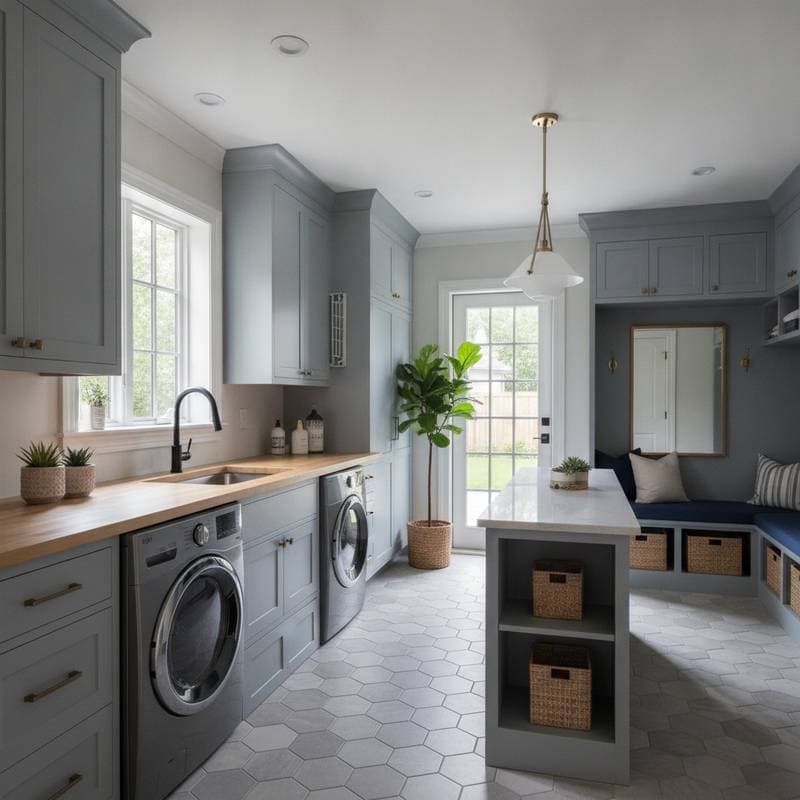
- In humid coastal areas, select sealed porcelain tiles, composite moldings, and stainless steel fixtures to resist corrosion.
- For hurricane-vulnerable zones, incorporate impact-rated doors, elevated flooring, and flood-proof materials.
- In cooler coastal regions, install radiant heating in floors to accelerate drying of wet items.
- For arid coastal spots, emphasize dust filtration and enhanced airflow over humidity controls.
Consult local regulations, particularly in flood-prone districts. Requirements may include elevated electrical outlets or impermeable materials up to specified heights.
Essential Maintenance Practices
Preserve the mud room's functionality through routine care:
- Vacuum or sweep away sand accumulation each week.
- Apply sealant to tile or stone surfaces biennially.
- Clean metal hooks and hinges using a vinegar solution to avert rust.
- Inspect and repair caulking around sinks and drains regularly.
- Operate a dehumidifier during peak humidity periods.
Consistent maintenance sustains a fresh environment and pristine appearance.
Indicators Requiring Professional Intervention
Summon a contractor upon observing:
- Ongoing moisture or mold growth.
- Water intrusion from adjacent spaces.
- Unstable electrical performance or corroded outlets.
- Softened flooring adjacent to entry points.
These symptoms suggest deficiencies in waterproofing or wiring. A certified expert can address issues promptly to prevent escalation.
Pitfalls to Sidestep
Avoid these frequent errors to maximize durability:
- Omitting adequate ventilation, which allows humidity to foster odors.
- Installing wooden trim at floor level, as even treated wood expands with exposure to dampness.
- Relying solely on open shelving, which accumulates debris despite visual appeal in images.
- Overlooking floor drainage, an investment that justifies plumbing expenses.
- Neglecting illumination, especially in dimly lit side entrances where daylight diminishes rapidly.
Thorough upfront planning averts costly corrections.
Expert Recommendations for Optimal Design
Enhance usability with these strategies:
- Design pathways at least 36 inches wide to accommodate beach equipment and strollers.
- Incorporate light-colored, reflective surfaces to illuminate compact areas.
- Position a full-length mirror for quick pre-exit inspections.
- Label storage compartments to organize items for family members or visitors.
- Integrate a charging hub for devices like smartphones and audio equipment.
Such details underscore meticulous craftsmanship, which discerning buyers appreciate.
Frequently Asked Questions
What minimum dimensions suit a basic mud room?
A space measuring at least 5 feet by 6 feet accommodates essentials. Expand to 10 feet by 6 feet for benches and ample storage.
Is garage conversion viable for a mud room?
Yes, provided the area receives insulation, along with suitable flooring and ventilation upgrades.
Are windows essential in mud rooms?
They promote natural light and circulation, though an exhaust fan suffices in constrained designs.
Which flooring endures best in coastal conditions?
Porcelain tiles and sealed natural stone excel against salt and moisture.
Do mud rooms benefit compact homes?
Absolutely. A narrow 4-foot corridor equipped with hooks and mats introduces utility and elevates resale potential.
Realizing Your Mud Room Vision
Integrating a mud room fortifies your coastal property against environmental challenges while amplifying its market allure. This upgrade not only streamlines daily routines but also positions the home as a resilient, desirable retreat. Consult local specialists to tailor the design to your site's unique demands and unlock that valuable 11 percent appreciation.