Why Hidden Wine Cellars Increase Home Value by 15 Percent by 2026
Hidden wine cellars deliver a unique combination of luxury, functionality, and unexpected delight. Prospective buyers view these spaces as personal sanctuaries that demonstrate superior construction quality. Projects range from simple installations to elaborate designs, yet all convey meticulous attention to detail and enduring craftsmanship.
Typical value appreciation reaches approximately 15 percent in resale price, with installation expenses varying from $9,000 to $45,000 based on dimensions and material selections.
Factors Influencing Installation Costs
Multiple elements determine the overall expense of a hidden wine cellar. Understanding these components enables homeowners to customize the project according to financial constraints and desired outcomes.
Size and Placement
- Compact installations in under-stair areas or pantries begin at $9,000 to $12,000.
- Conversions of existing basement spaces typically cost $18,000 to $30,000.
- Custom excavated chambers may exceed $45,000, accounting for concrete reinforcement and advanced waterproofing measures.
Materials and Surface Treatments
- Standard wooden racking systems cost $40 to $60 per square foot.
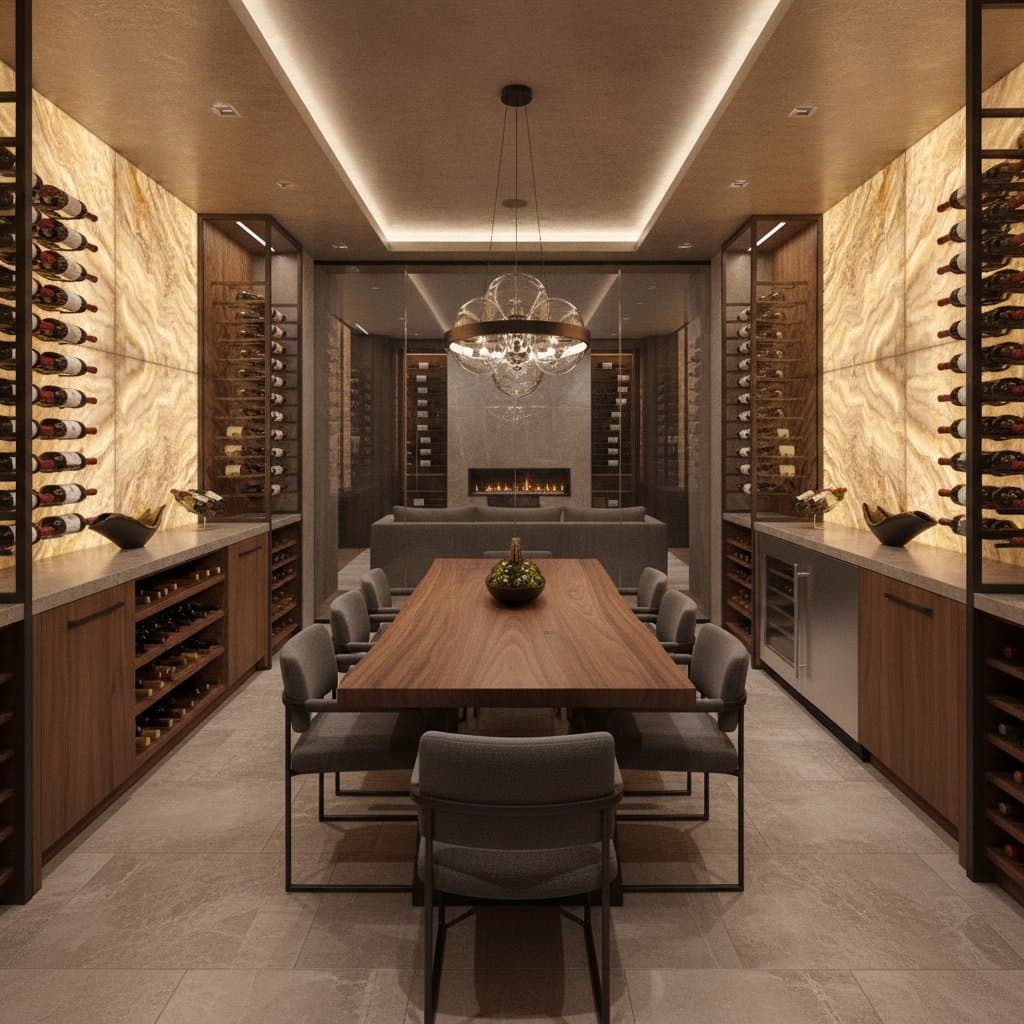
- Walls finished with stone or tile range from $80 to $120 per square foot.
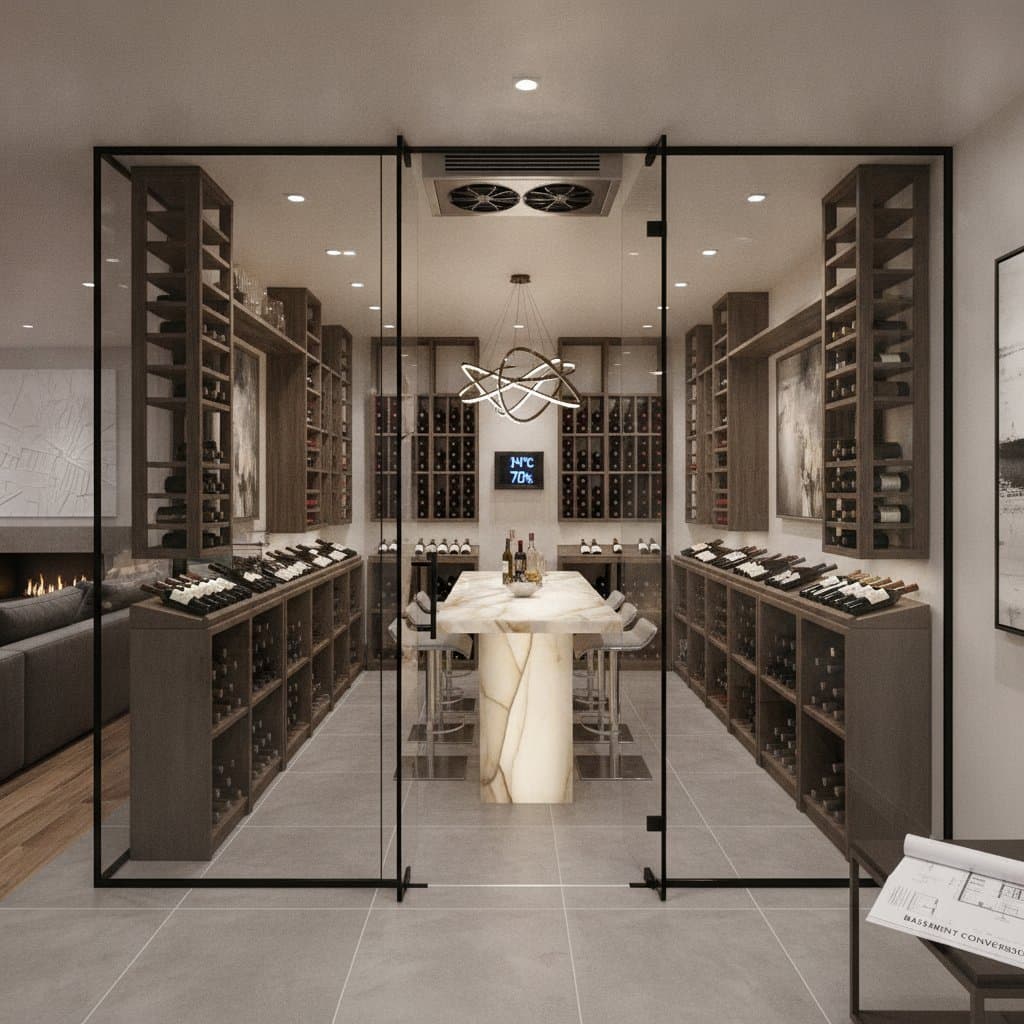
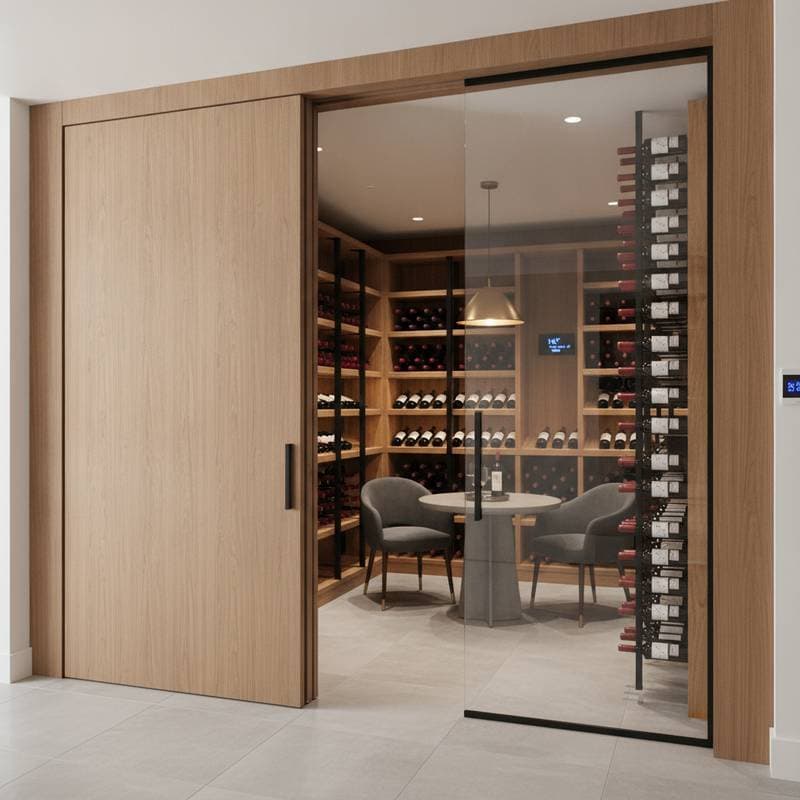
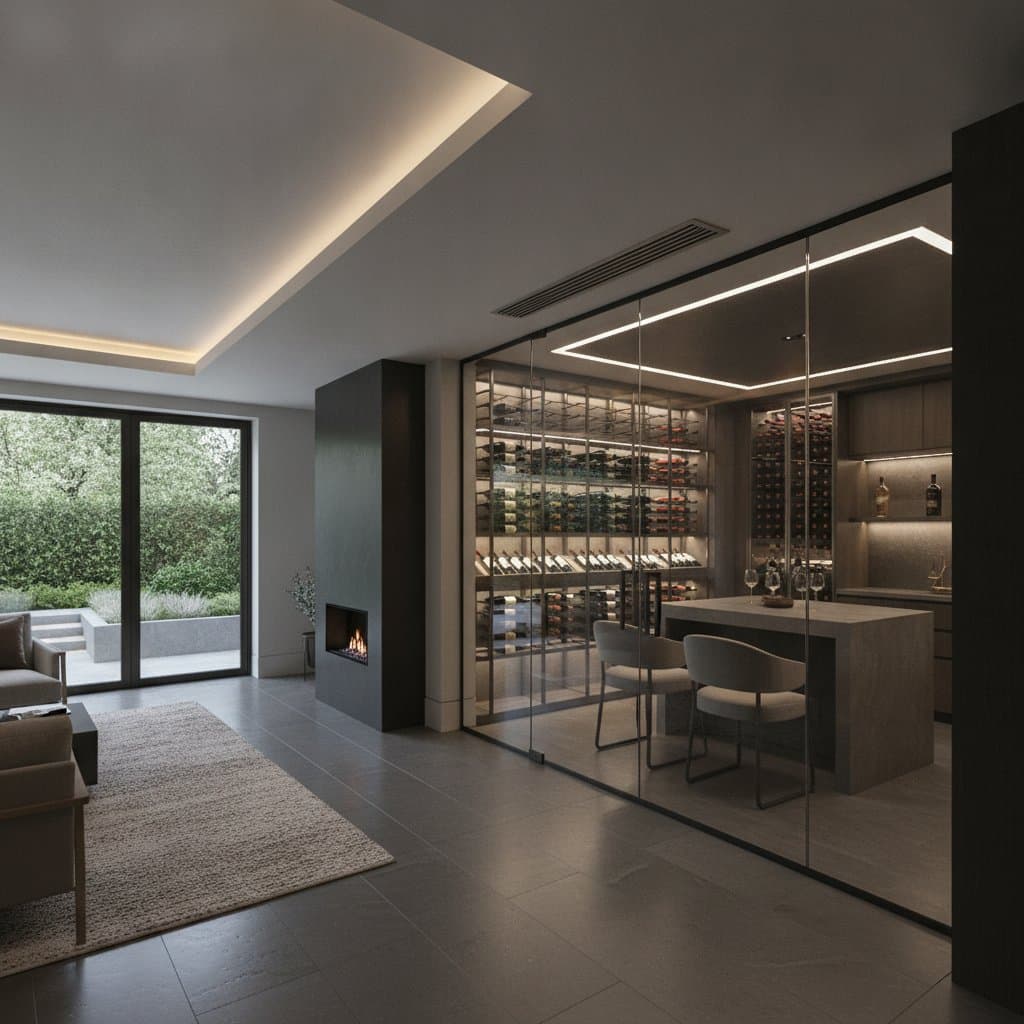
- Enclosures featuring glass panels or concealed doors contribute an additional $2,000 to $6,000, influenced by customization levels.
Climate Regulation Systems
- Dedicated cooling units range from $1,000 to $5,000, scaled to storage capacity.
- Essential insulation and vapor barriers add $2 to $4 per square foot, ensuring preservation integrity over time.
- Integrated smart sensors for temperature monitoring cost $100 to $300 and optimize energy consumption.
Labor Requirements and Site Accessibility
- Confined work areas extend labor duration, often incurring a 10 to 20 percent surcharge.
- Integration of electrical outlets or plumbing connections adds $1,000 to $2,500.
Regulatory Compliance and Permits
- Municipalities mandate permits for modifications involving partitions, electrical systems, or airflow mechanisms, with fees of $200 to $600.
- Projects requiring structural alterations or ground excavation necessitate professional engineering assessments, potentially adding $1,000 or more.
Homeowners should allocate an additional 10 to 15 percent of the budget to address unforeseen issues, such as concealed moisture damage in established properties.
DIY Approaches Versus Professional Installation
Suitable DIY Projects
- Superficial enhancements, including wall-mounted racks or prefabricated cooling units, suit independent efforts.
- Transformations of under-stair voids prove feasible for individuals proficient in fundamental framing and insulation techniques.
- Potential labor savings amount to $2,000 to $5,000.
Scenarios Requiring Professional Expertise
- All forms of excavation or modifications to load-bearing elements demand certified contractors.
- Electrical installations and heating, ventilation, and air conditioning integrations must adhere to local codes.
- Sophisticated moisture management setups require expert handling to prevent mold development and preserve manufacturer warranties.
Engage professionals under these conditions:
- Evidence of foundation fissures or water infiltration.
- Intricate electrical configurations.
- Designs incorporating substantial digging or bespoke entry mechanisms.
Independent efforts excel in rack assembly and decorative finishing, while experts manage foundational systems safeguarding both the structure and collection.
Ongoing Maintenance and Warranty Considerations
Essential Upkeep Procedures
- Conduct monthly evaluations of humidity levels, maintaining 50 to 70 percent, and temperatures between 50 and 60 degrees Fahrenheit.
- Perform quarterly examinations of seals, filter cleaning for cooling apparatus, and verification of illumination systems.
- Annually reseal flooring or wall surfaces constructed from natural substances.
Warranty Essentials
- Climate control equipment features coverage for 3 to 5 years.
- Select rack providers extend lifetime guarantees on structural components when installations follow specified protocols.
- Retain documentation including receipts and product specifications to facilitate future claims.
Strategies for Longevity
- Incorporate intelligent humidity monitors that notify owners of deviations.
- Apply door sweeps and sealing gaskets to sustain environmental consistency.
- Integrate a compact dehumidifier in persistently humid basement environments.
Options for Repair or Full Replacement
For existing wine storage areas, evaluate the following comparisons:
| Condition | Repair Cost | Replacement Cost | Recommended Approach |
|---|---|---|---|
| Minor dampness or deteriorated racking | $2,000 to $4,000 | $15,000+ | Repair and apply fresh sealants |
| Isolated cooling system malfunction | $1,000 to $3,000 | $18,000+ | Replace the unit alone |
| Pronounced structural fissures or persistent leaks | $5,000 to $10,000 | $20,000+ | Consider complete reconstruction |
| Obsolete aesthetics or inadequate insulation | $4,000 to $8,000 | $25,000+ | Reconstruct for improved efficiency |
Replacement yields superior returns when core elements like foundations or insulation exhibit significant degradation.
Step-by-Step Construction Guide
Step 1: Assess Available Space
- Calculate precise square footage.
- Test for ambient moisture and verify sufficient overhead clearance.
- Locate any load-bearing partitions.
Step 2: Establish Budget Parameters
- Select between basic, intermediate, or high-end configurations.
- Incorporate a 10 to 15 percent buffer for unanticipated expenses.
- Include allocations for permitting and compliance inspections.
Step 3: Select Concealment Methods
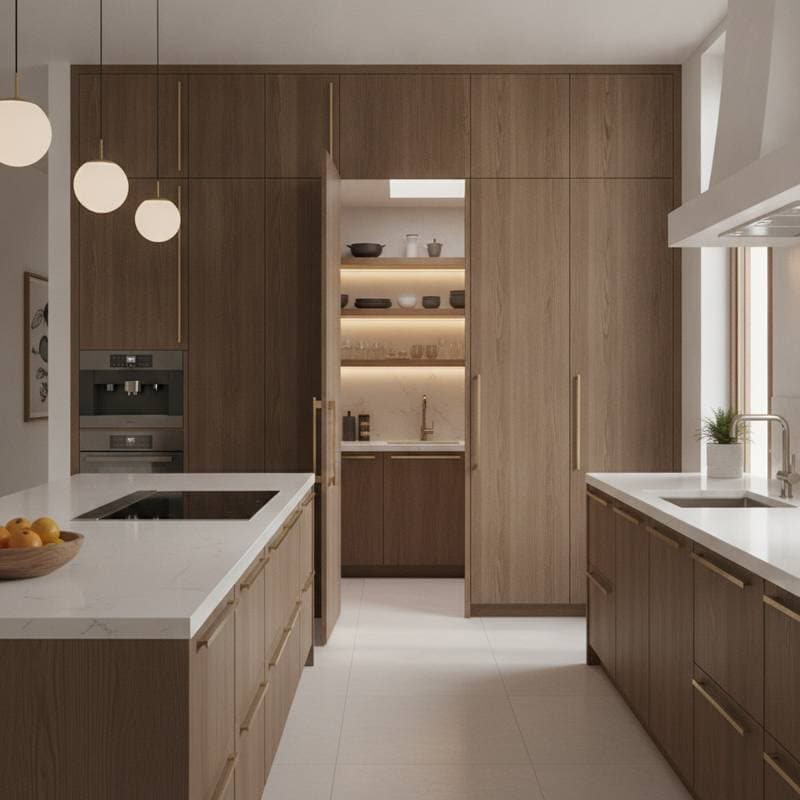
- Cabinet-integrated doors blend seamlessly with adjacent cabinetry.
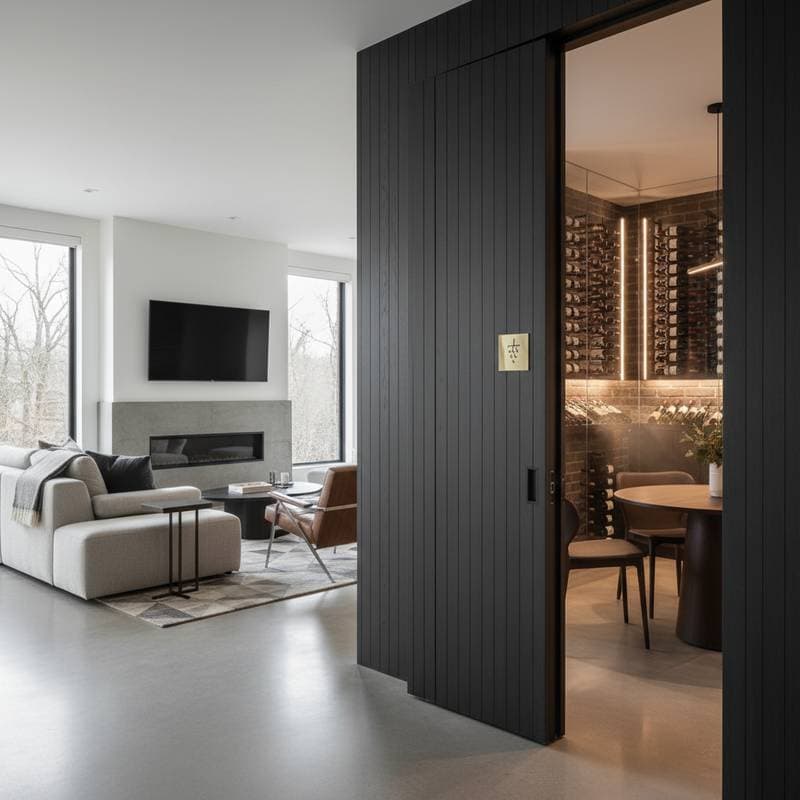
- Sliding panels integrate effectively within corridor layouts.
- Pivoting bookcase entrances introduce theatrical elements.
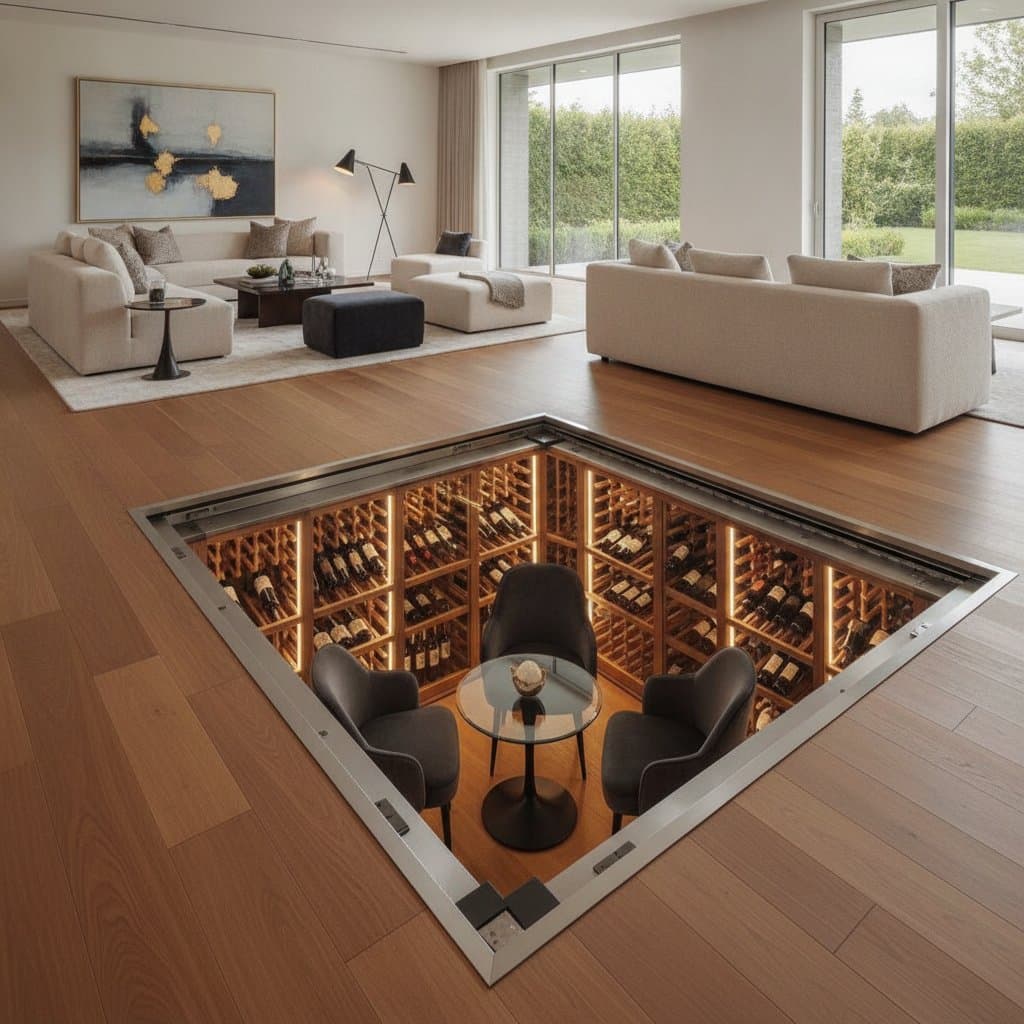
- Subfloor trapdoors optimize utility in compact residences.
Step 4: Design Climate and Airflow Solutions
- Procure equipment calibrated to the intended volume.
- Strategically place vents to minimize direct exposure to stored items.
- Secure all connections and apply insulation prior to final surfacing.
Step 5: Install Storage and Illumination
- Employ humidity-resistant timbers such as redwood or mahogany.
- Fit adjustable LED fixtures to safeguard label integrity.
- Position racks at least 2 inches from walls to facilitate circulation.
Step 6: Finalize Sealing and Validation
- Operate the climate system continuously for 24 hours prior to use.
- Monitor humidity and temperature for consistency.
- Conduct weekly inspections for moisture accumulation during the initial month.
Safeguarding Your Wine Cellar Investment
Routine Preventive Measures
- Examine quarterly for dampness near baseboard areas.
- Renew filters and conduct annual servicing of climate units.
- Verify door seals biannually.
- Refresh sealants on stone or grout surfaces every 3 to 5 years.
Preventing Typical Issues
- Inadequate insulation leads to elevated energy expenditures over time.
- Refrain from mounting racks against unbarriered exterior walls.
- Direct cooling exhaust away from enclosed utility spaces.
Documentation for Protection
- Maintain photographic records of the installation process, along with permits and warranty documents. Certain insurance policies address climate systems distinctly, requiring notation of serial numbers and maintenance timelines.
Practical Actions to Advance Your Project
- Survey potential sites, including underutilized stairwells, pantry zones, or alcoves.
- Define storage goals, such as capacity for 500 bottles to accommodate typical collections.
- Solicit estimates from no fewer than three qualified contractors.
- Request demonstrations of humidity regulation planning to avert subsequent corrective work.
- Time construction during drier periods for projects involving soil disturbance.
- Align design choices with the property's overall aesthetic to enhance marketability.
A well-executed hidden wine cellar transcends mere storage, embodying thoughtful design, technical precision, and refined living. Constructed in compliance with standards and equipped with reliable environmental controls, it delivers tangible appreciation in property worth alongside everyday enjoyment.