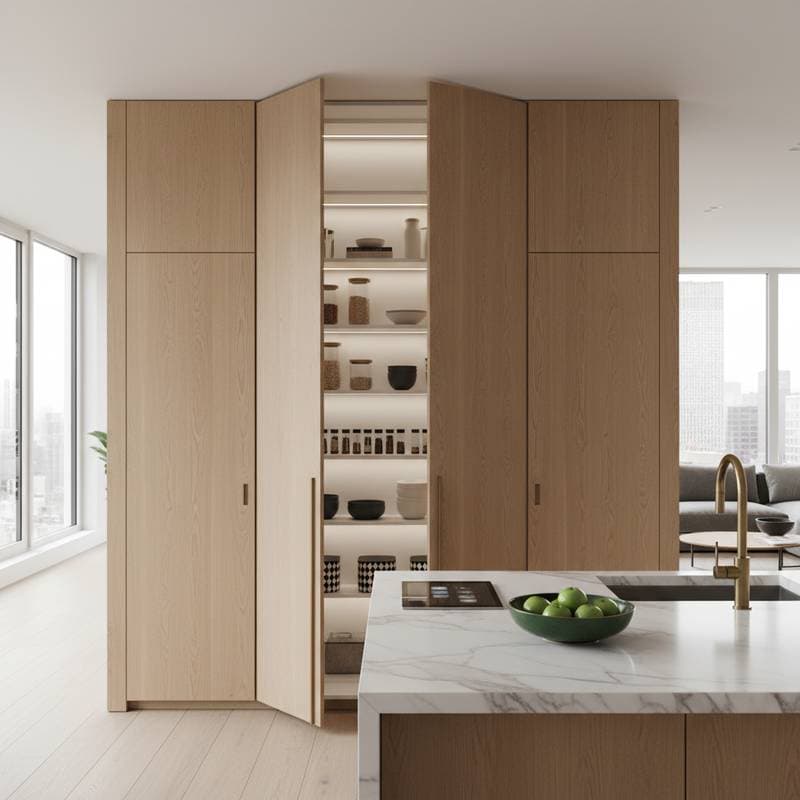
Hidden Pantry Walls: Achieve 11% ROI by 2026
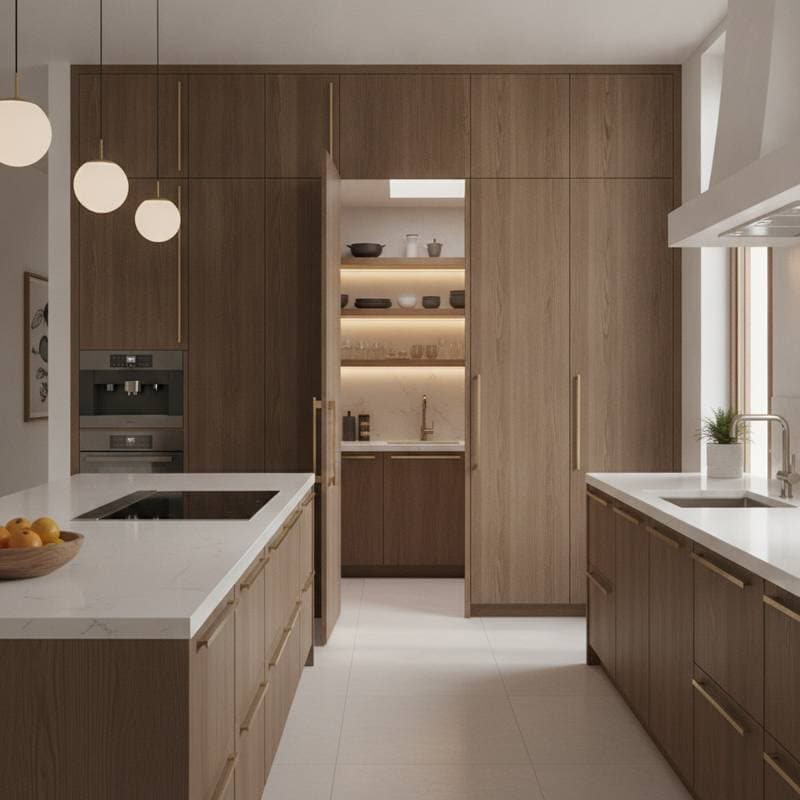
Hidden pantry walls represent a strategic enhancement for contemporary kitchens. These installations merge practical storage solutions with a refined aesthetic. Homeowners undertaking renovations find that such features deliver both utility and financial returns. Industry analyses indicate an anticipated 11% return on investment by the middle of the decade, fueled by the growing preference for tidy, minimalist environments among purchasers.
These walls prove ideal for individuals desiring expanded storage capacity without altering the overall kitchen dimensions. They adapt seamlessly to compact areas as well as expansive, open-plan configurations. By concealing disarray, they streamline daily tasks and foster a cohesive, integrated appearance that attracts potential buyers.
Advantages and Drawbacks
Advantages
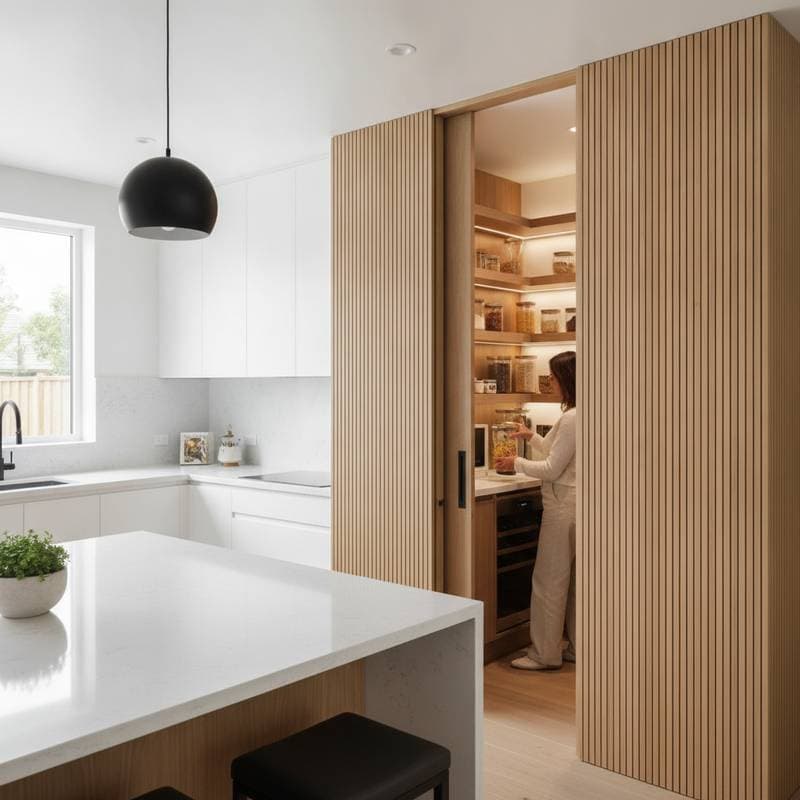
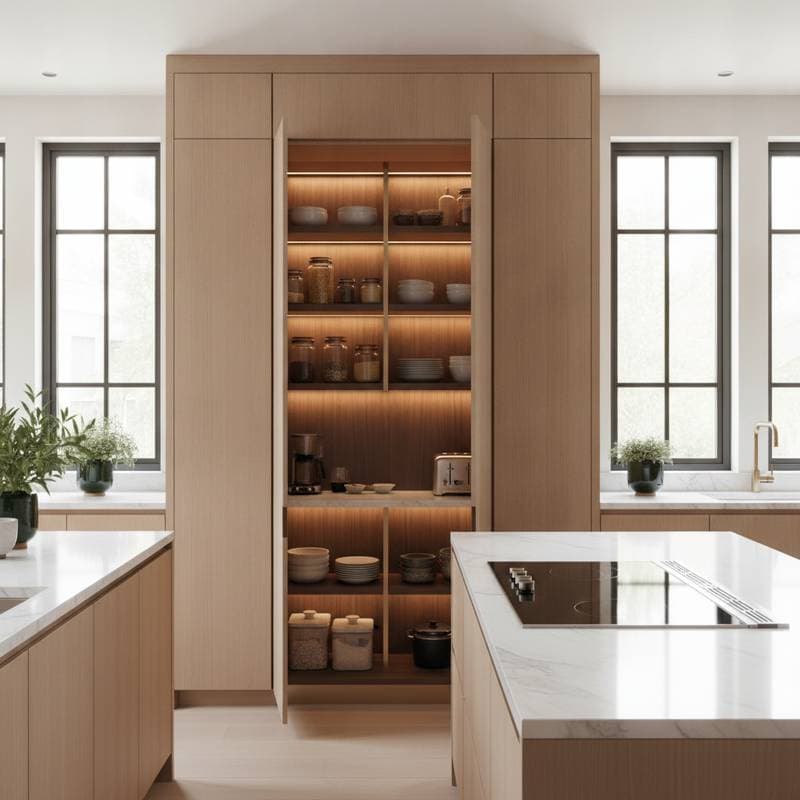
- Streamlined Appearance. These walls conceal appliances and provisions behind a uniform surface, creating an uninterrupted kitchen facade.
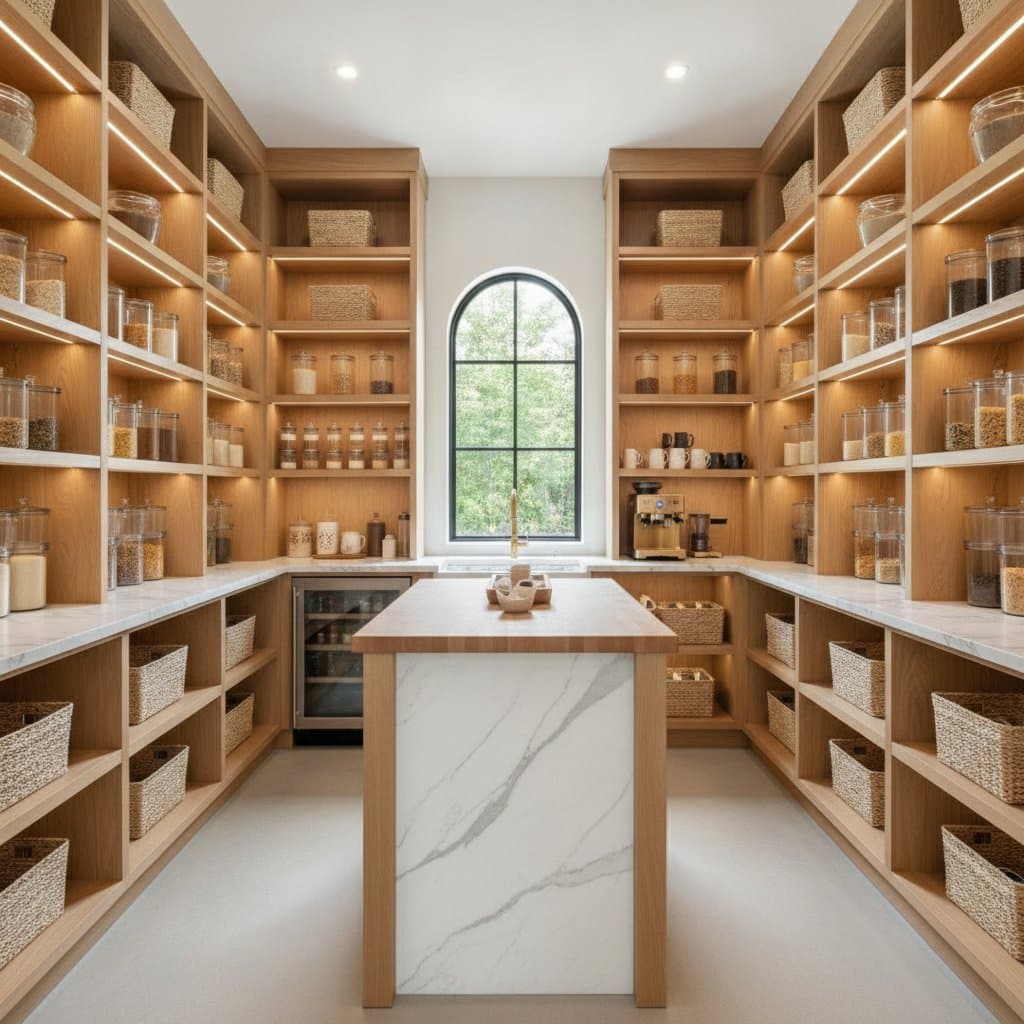
- Expanded Capacity. They utilize the complete depth of the wall to accommodate dry ingredients, compact devices, and utensils.
- Elevated Market Attractiveness. Prospective owners value systematic, discreet storage options.
- Enhanced Efficiency. Frequently used items remain accessible without encroaching on preparation surfaces.
- Sound Mitigation. Enclosed panels dampen noises from stored equipment.
Drawbacks
- Elevated Expenses. Bespoke woodworking and fittings elevate the overall expenditure.
- Retrofit Challenges. Confined spaces might necessitate significant reconfiguration to accommodate the design.
- Upkeep Requirements. Mechanisms such as hinges and rails demand periodic tuning.
- Accessibility Constraints. Broad sliding or rotating panels may obstruct pathways during use.
DIY Approach Versus Professional Installation
Constructing hidden pantry walls demands exacting woodworking skills. The complexity level qualifies as high for typical homeowners.
DIY Considerations
- Duration: Expect two to five days for experienced enthusiasts.
- Required Equipment: Employ a circular saw, spirit level, stud detector, cabinet fasteners, and alignment tools.
- Potential Hazards: Improper panel alignment or irregular spacing may expose joints or lead to operational snags.
Scenarios for Professional Engagement
Opt for experts when structural alterations or electrical adjustments prove necessary. They excel in crafting custom elements that harmonize with current cabinetry. Compliance with regional regulations for weight-bearing modifications also falls under their purview.
Engaging a certified woodworker or kitchen specialist guarantees precise alignment and seamless integration. Such professionals handle necessary approvals and ensure finishes align with the existing decor.
Upkeep and Durability
With consistent attention, hidden pantry walls endure for 20 to 30 years. Inspect operational components biannually.
Recommended Upkeep Routine
- Clean hinges and guides every six months.
- Apply lubricant to gliding elements annually.
- Refresh paint or varnish on exterior surfaces periodically.
- Substitute LED illuminants after multiple years of operation.
Bespoke fittings typically include a limited lifetime guarantee from producers. Confirm specifics prior to acquisition.
Regional Influences
Variations across locations affect pricing and practicality.
- Environmental Conditions: Areas with high humidity necessitate treatments resistant to dampness to avoid deformation.
- Regulatory Standards: Certain municipalities mandate approvals for alterations to walls or electrical systems.
- Workforce Costs: Metropolitan zones frequently impose 20 to 40 percent premiums on woodworking services.
- Resource Availability: Isolated locales encounter delays in sourcing tailored components.
Residents in seaside regions benefit from selecting robust options like treated plywood or protected fiberboard to resist moisture expansion. Consult applicable bylaws before modifying supportive structures.
Safety Protocols
Projects involving hidden pantry walls often entail framework and wiring tasks. Adhere to these precautions.
- Framework Integrity: Avoid eliminating supportive beams absent expert evaluation.
- Power Management: Disconnect electricity at the main panel prior to adding lights or receptacles.
- Equipment Use: Don protective eyewear and hearing guards during sawing or boring activities.
- Flame Resistance: Select materials impervious to fire adjacent to powered installations.
- Authorizations: Obtain clearances for any skeletal or conductive modifications.
Neglecting these measures risks structural compromise or regulatory infractions. Validate blueprints and conduit paths in advance.
Frequently Asked Questions
What dimensions are required for a hidden pantry wall?
Standard configurations demand 12 to 24 inches in depth and a minimum of five feet across. Recessed door mechanisms need additional recess space laterally.
Is retrofitting possible in an established kitchen?
Affirmative, though it could involve framework adjustments or removal of present cabinetry. Prefabricated sections ease the adaptation process.
Which materials suit hidden pantry panels best?
Opt for coated medium-density fiberboard, layered wood sheets, or solid timber faces. Align the treatment with adjacent units for visual continuity.
Does ventilation prove essential for hidden pantry walls?
Include air passages or subtle fans if housing powered items. Purely dry provisions require no specialized airflow.
Can these walls complement diverse kitchen aesthetics?
Indeed. Sleek profiles suit contemporary settings, whereas ornate or textured fronts enhance classic interiors. Consistency in hue and edging ensures cohesion.
Steps to Implement Your Hidden Pantry Wall
This installation redefines storage efficiency while preserving the kitchen's spatial integrity. It conceals disorder, amplifies utility, and elevates property worth. Although initial outlays surpass those of conventional shelving, the polished outcome and extended utility justify the commitment.
Commence with precise measurements and a feasible financial plan. Solicit estimates from three qualified woodworkers or renovation firms. Examine prototypes and fixture selections prior to finalizing. A meticulously executed hidden pantry wall endures across generations, contributing tangibly to your home's desirability.