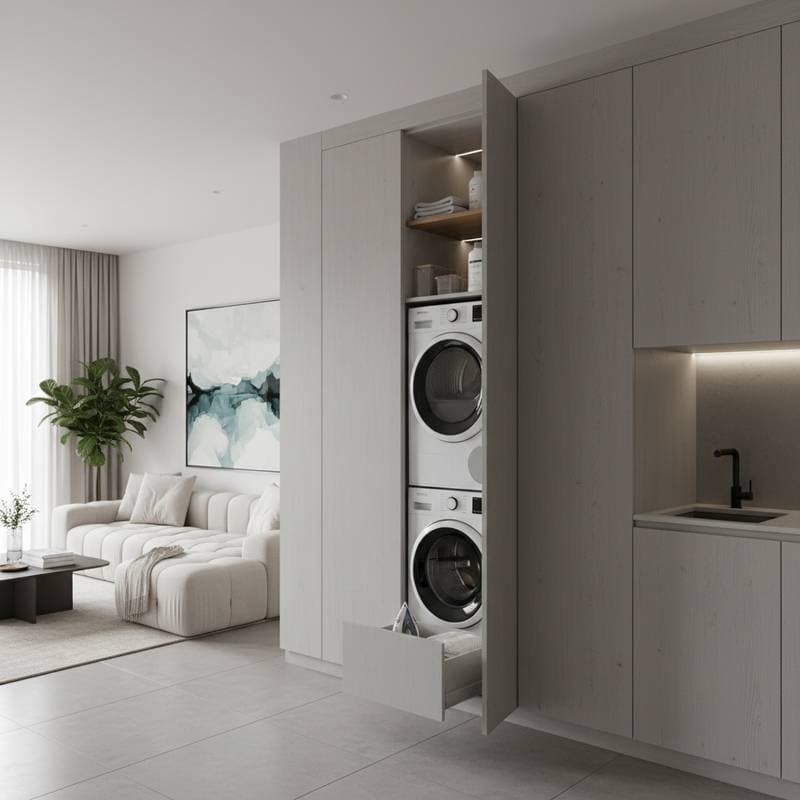
Hidden Laundry Rooms Add Value Without Expansion
Hidden Laundry Rooms: 2025's Smart Value Booster
Typical cost: $3,800 to $9,500 for a compact hidden laundry setup.
A hidden laundry room adds usable space and a cleaner aesthetic while quietly lifting resale value. This approach stands out as one of the few midrange projects that improves both function and appearance without expanding the home’s footprint. Homeowners gain a practical solution that enhances daily living and appeals to future buyers.
Why Homeowners Choose Hidden Laundry Rooms
Hidden laundry rooms transform awkward corners, hallway nooks, or closet spaces into efficient work zones. Enclosing the machines behind cabinetry, pocket doors, or wall panels makes them vanish from view. The result creates a sense of larger, cleaner, and more flexible spaces suitable for resale staging or everyday use.
This project suits urban and suburban homes that require multiuse areas. It also benefits households upgrading from garage or basement laundry spaces to a more central, temperature-controlled location. Such upgrades promote organization and convenience without major structural changes.
Design Options and Layout Choices
Begin by determining the desired level of visibility when the machines remain closed. Then, select a concealment method that aligns with the room’s overall flow.
Basic: Closet Conversion
- Install bi-fold or pocket doors for access.
- Position machines side-by-side or use stackable models.
- Incorporate a countertop for folding clothes if space permits.
- Position near bathrooms or kitchens for easy plumbing access.
Typical cost: $3,800 to $6,000
Timeline: 1 week
This option provides a straightforward way to conceal equipment in existing closets, minimizing disruption during installation.
Midrange: Built-In Laundry Wall
- Construct a framed alcove with cabinets, lighting, and soundproof panels.
- Opt for a ventless dryer in confined areas.
- Integrate pull-out hampers and slide-in ironing boards for added utility.
Typical cost: $6,500 to $8,500
Timeline: 2 weeks
This setup offers enhanced functionality and integrates seamlessly into walls, providing a polished look with practical storage.
Premium: Hidden Multiuse Room
- Use floor-to-ceiling doors that match surrounding kitchen or hallway millwork.
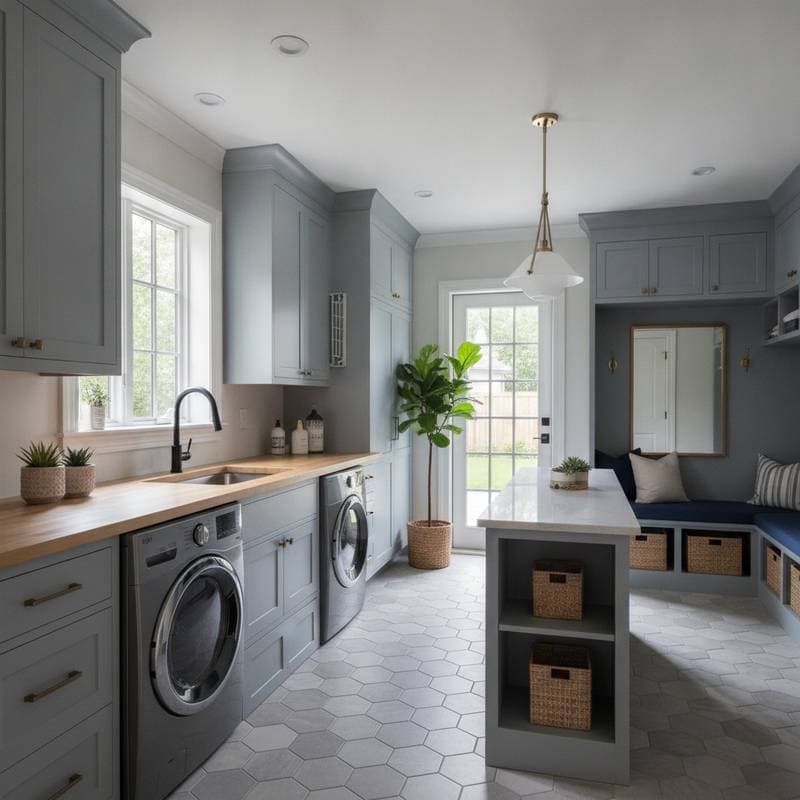
- Include an integrated sink, folding counter, and storage towers.
- Add motion-activated lighting and soft-close hardware for convenience.
Typical cost: $9,000 to $12,000
Timeline: 2 to 3 weeks
Premium designs elevate the space into a versatile area that blends laundry tasks with other household functions, maximizing aesthetic appeal.
Safety and Compliance Checks
Before starting any work, prioritize safety measures to prevent accidents and ensure long-term reliability.
- Shut off power circuits before handling outlets or wiring.
- Close water supply valves prior to moving or connecting hoses.
- Verify proper ventilation to prevent lint buildup and moisture damage.
- Install drip trays under washers and connect to floor drains when feasible.
- Obtain permits for any new plumbing or electrical modifications, as these often require inspection.
Neglecting these steps risks leaks, mold growth, or electrical issues that could compromise the home.
Maintenance and Longevity
A hidden laundry room endures when humidity and vibration receive proper control. Moisture poses the primary risk for failure, particularly in enclosed areas.
Routine Care
- Clean lint filters after each load to maintain efficiency.
- Leave doors open for 30 minutes post-use to allow humidity to dissipate.
- Inspect supply hoses biannually; replace rubber hoses with braided stainless steel models costing $30 to $50 to avert leaks.
- Vacuum vent ducts every six months to uphold safety standards.
Upkeep Costs
Annual expenses range from $50 to $150 for filters, seal replacements, and cleaning supplies. Cabinet hinges or sliders might require tightening in the initial months as components settle.
Warranties
Appliance warranties typically span 1 to 3 years, with extended options adding $100 to $200. Cabinet and countertop warranties extend from 5 to 10 years, varying by material quality.
Regular maintenance extends the lifespan of the installation and preserves its value.
Material and Product Choices That Pay Off
Selecting durable materials ensures the space withstands daily demands while supporting home value.
Surface and Flooring
- Choose vinyl plank or porcelain tile for resistance to moisture and vibration.
- Steer clear of real hardwood near laundry equipment due to humidity risks.
- Place a thin sound-absorbing mat under machines, priced at $40 to $60, to dampen noise.
These choices protect surrounding areas and enhance user comfort.
Cabinet Materials
- Select MDF with melamine coating for a cost-effective yet durable option.
- Consider plywood boxes, which resist moisture better but cost 15% to 25% more.
- Use laminate panels for easy cleaning and scuff resistance.
Appliances
- Employ stackable front-load sets to conserve space, paired with vibration controls.
- Install ventless dryers for condos or interior walls, noting longer cycle times.
- Integrate smart washers with leak detection to potentially lower insurance claims.
Thoughtful selections balance performance, space efficiency, and longevity.
Common Mistakes to Avoid
Anticipate pitfalls to ensure a smooth project and avoid costly repairs.
- Omit drain pans at your peril; water damage fixes can surpass $5,000. Always include a pan with a shutoff sensor.
- Overlook airflow in enclosures, as trapped heat shortens dryer lifespan. Incorporate vent gaps or grills.
- Disregard clearances: Machines require at least 1 inch on sides and 4 inches behind for hoses.
- Fail to level machines, leading to unbalanced loads that loosen cabinets over time.
- Select incorrect door swings: Confirm washer and dryer door directions before framing or installing hinges.
Addressing these issues upfront saves time and resources.
Your Next Steps
- Measure the available space. Stacked units demand about 34 inches in width and 80 inches in height.
- Identify the nearest water, drain, and power connections. Proximity reduces installation costs.
- Sketch the preferred concealment style, such as pocket doors, folding panels, or sliding fronts.
- Obtain two quotes: one from a general contractor and another from a cabinet installer to compare approaches and prices.
- Order appliances ahead of time. Verify delivery schedules before beginning demolition.
- Secure permits for any plumbing or electrical alterations. These represent the primary risk for delays.
- Allocate a 15% contingency fund to handle unforeseen elements like wall repairs, vent reroutes, or inspection fees.
Implementing these steps positions the project for success, delivering a hidden laundry room that enhances functionality and boosts property appeal.