Mudrooms Provide 15% ROI: Essential Upgrade for 2026
Key Insight: A thoughtfully designed mudroom enhances everyday functionality and yields approximately 15% return on investment, with project costs typically ranging from $6,000 to $18,000 based on scale and materials.
Mudrooms serve as practical buffers between outdoor elements and indoor living spaces. They organize gear, contain dirt, and create seamless transitions that appeal to modern homeowners. In 2026, these additions stand out for their blend of utility and value appreciation.
Factors Influencing Costs
Materials Selection
Materials form the foundation of any mudroom project, accounting for $2,000 to $6,000 in expenses for cabinetry, benches, flooring, and surface treatments.
- Flooring Options: Select durable materials such as ceramic tile or luxury vinyl plank, which cost $4 to $8 per square foot including installation. These choices withstand heavy traffic and moisture.
- Built-in Storage: Custom cabinetry or shelving units range from $1,500 to $5,000, varying by wood species, dimensions, and craftsmanship level.
- Finishing Touches: Allocate $300 to $1,000 for trim work, painting, and hardware, elements that elevate the overall aesthetic and durability.
Prioritize water-resistant materials to minimize long-term maintenance.
Labor Considerations
Labor charges span $50 to $120 per hour, influenced by local rates and project complexity. Tasks like framing, electrical updates, and plumbing integrations contribute significantly to the total.
Specialized work, such as intricate tile laying or custom woodworking, often extends labor time and costs. Engage experienced professionals to ensure compliance and quality.
Space and Accessibility
The scope of renovation affects pricing substantially. Transforming an existing entryway proves more economical than constructing a new extension.
- Existing Space Conversion: Budget $6,000 to $10,000 for modifications that maximize current square footage.
- New Room Addition: Expect $15,000 to $25,000 or higher, factoring in foundational work, roofing extensions, and exterior matching.
Assess your home layout early to determine the most cost-effective approach.
Permits and Regulatory Compliance
Structural alterations or utility modifications require permits costing $250 to $800. Hire a licensed contractor for any electrical, plumbing, or HVAC adjustments to meet building codes.
Verify local requirements before starting to prevent delays or fines.
Site Preparation and Disposal
Initial demolition and waste removal add $300 to $700 to the budget. Account for these steps upfront to manage hauling and cleanup efficiently.
Clear debris promptly to maintain workflow on the project.
Optional Enhancements
Consider add-ons that tailor the space to your needs:
- Radiant Floor Heating: Installation runs $10 to $15 per square foot, ideal for regions with harsh winters.
- Utility Sink Integration: Costs range from $500 to $1,200, providing convenient cleaning access.
- Pet Washing Area: Plumbing and fixtures total $800 to $2,500, depending on distance from existing lines.
Reserve an additional 10 to 15 percent of the budget for potential discoveries like framing repairs or moisture barriers in older structures.
Midrange Project Example: Targeted Build-Out
Total Cost: $10,000 to $15,000
Included Features:
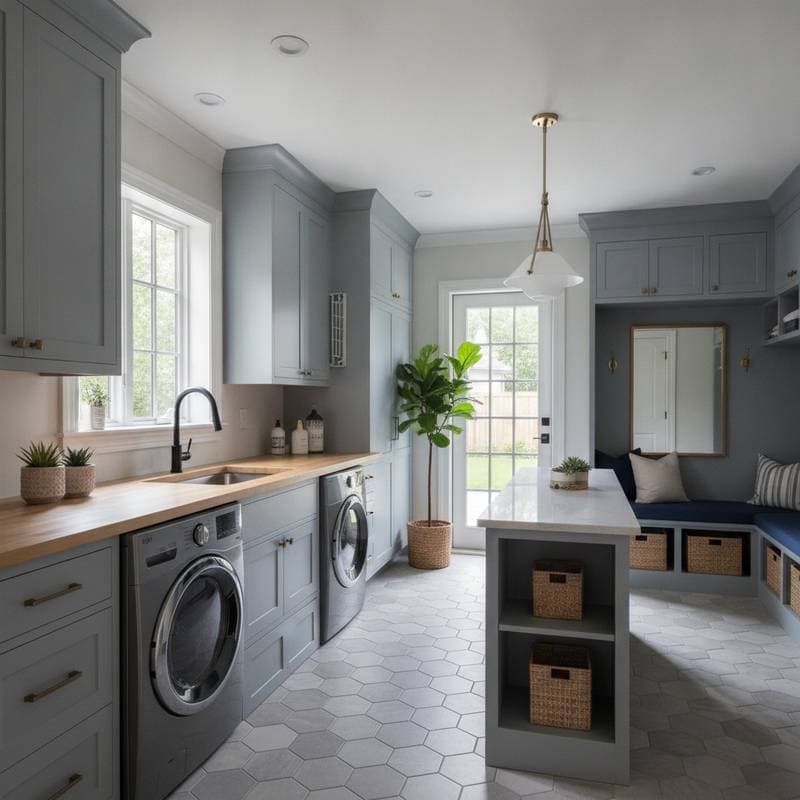
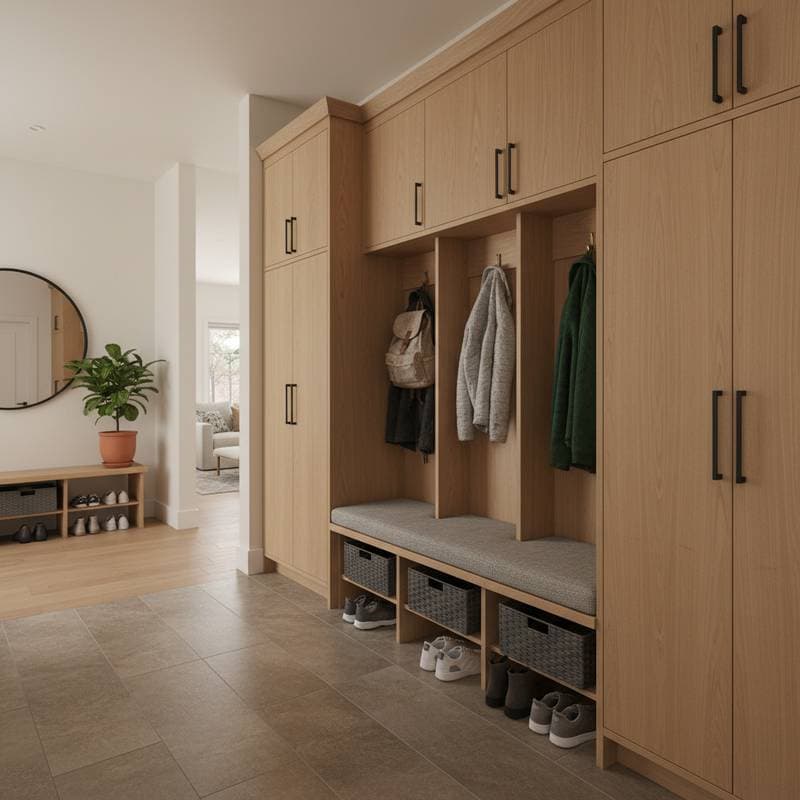
- Integrated bench with storage cubbies
- Tailored cabinetry for gear organization
- Resilient flooring paired with updated lighting
- Compact utility sink for practical use
Implementation Sequence:
- Construct shallow walls or cubbies for storage.
- Install necessary plumbing and electrical components for added utilities.
- Lay tile or vinyl flooring for a seamless surface.
- Apply paint, caulk, and trim for polished edges.
- Assemble and secure built-in elements or millwork.
This configuration suits families seeking enhanced organization without excessive expenditure.
DIY Options Versus Professional Services
Suitable DIY Tasks
Homeowners with moderate skills can handle certain phases independently.
- Painting, trim installation, and basic shelving assembly pose low risk.
- Assembling prefabricated benches or cabinets demands only standard tools.
- Replacing flooring works well on stable, level subfloors.
Essential Tools: Power drill, spirit level, stud finder, tile cutting tool, and safety equipment.
Start with smaller elements to build confidence.
Scenarios Requiring Professionals
Delegate complex work to experts for safety and longevity.
- Structural modifications or new plumbing demand licensed oversight.
- Electrical installations and fixture wiring require certified electricians.
- Precision-built storage ensures structural integrity and enhances resale potential.
Potential Pitfalls: Improper execution may lead to water infiltration, surface irregularities, or regulatory issues. Consult professionals upon encountering utilities, ducts, or structural walls.
Project Timeline and Cost-Saving Strategies
Scheduling Essentials
Anticipate 2 to 6 weeks from initial planning to final walkthrough.
- Cabinetry Procurement: Stock items arrive in 2 to 4 weeks; custom orders may take up to 8 weeks.
- Flooring Materials: Most selections have a 1-week lead time.
- Utility Scheduling: Electricians and plumbers book 1 to 2 weeks in advance in busy markets.
Coordinate trades to minimize overlaps and idle time.
Optimal Seasons
Schedule exterior-involved additions from late spring to early autumn for favorable weather conditions. Interior-only projects benefit from off-peak periods, when labor availability increases and rates may decrease.
Monitor weather forecasts to avoid disruptions.
Strategies for Efficiency
- Opt for stock cabinetry and preassembled benches to reduce expenses by 20 to 30 percent.
- Source tile remnants or discounted flooring from local suppliers.
- Integrate mudroom updates with broader home improvements to consolidate labor charges.
- Inquire about incentives for energy-efficient features like low-flow fixtures or insulated heating systems.
These approaches maintain quality while optimizing the budget.
Value Enhancement Through Mudrooms
Prospective buyers prioritize smooth indoor-outdoor flow. A dedicated mudroom demonstrates thoughtful design and upkeep, often translating to 15 percent resale value gains, particularly with features like heating, illumination, and connections to adjacent utility spaces.
Primary Benefits:
- Flooring Preservation: Limits wear, potentially extending lifespan by 30 percent.
- Organizational Efficiency: Maintains clutter-free living areas, amplifying perceived spaciousness.
- Climate Regulation: Functions as an airlock, curbing energy loss at entry points.
- Competitive Edge: Storage-focused designs accelerate sales in saturated markets.
Real estate professionals note faster closings for homes with these practical upgrades.
Steps to Launch Your Mudroom Project
- Evaluate Available Space: Determine whether to repurpose an area or expand outward, measuring precisely for planning.
- Solicit Quotes: Obtain estimates from three licensed contractors experienced in carpentry and plumbing.
- Establish Budget: Include a 10 to 15 percent buffer for unexpected structural findings.
- Secure Materials: Place orders ahead to sidestep supply chain interruptions.
- Finalize Design Choices: Select finishes that harmonize with surrounding interiors for cohesive appeal.
Investing in a mudroom fosters a more orderly home environment and supports enduring property appreciation. This upgrade streamlines routines and positions your residence favorably for future opportunities.