Why Pocket Doors Serve as a Leading Small Space Solution
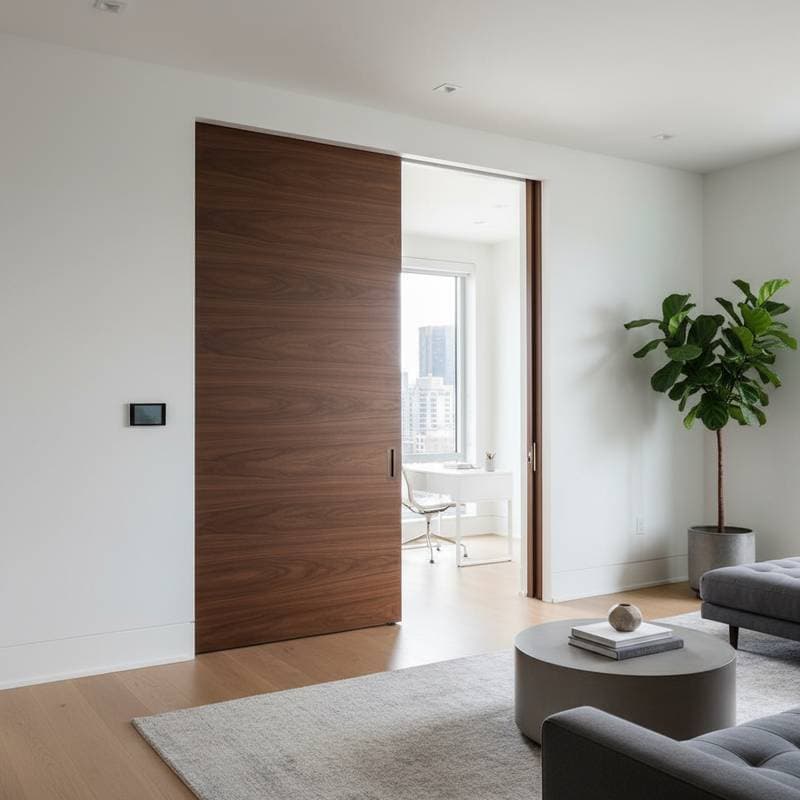
Pocket doors slide into a wall cavity instead of swinging outward. They free floor space and produce a streamlined appearance. Homeowners select them for compact rooms, hallways, or locations where a swinging door disrupts movement. A pocket door delivers extra usable area without any change to the existing floor plan.
Advantages and Limitations
Advantages
- Saves floor area by removing the door swing zone
- Improves movement through narrow rooms and hallways
- Supports accessibility for wheelchairs and walkers
- Produces a clean appearance with concealed hardware
- Adapts to styles that range from modern to traditional
Limitations
- Requires more complex installation than a hinged door
- Restricts use of the wall space that holds the door
- Creates difficult repairs after the wall is finished
- Provides weaker sound blocking than a solid hinged door
- Performs poorly under heavy daily use when hardware quality is low
Professional Installation versus DIY
A pocket door project demands greater skill than hanging a standard door. The process involves opening a wall, adjusting framing, and confirming precise alignment.
Difficulty ranges from intermediate to advanced. Professionals complete one door in six to ten hours, while DIY efforts take longer. Required tools include a level, drill, saw, framing square, and drywall equipment. Risk rises sharply if the wall carries structural loads or contains wiring and plumbing.
Hire a professional when the wall bears weight, when electrical or plumbing lines must move, or when a guaranteed smooth operation is essential. A handyman can manage a kit installation in a non-load-bearing wall. Structural work belongs to a licensed contractor.
Routine Care and Expected Lifespan
Quality pocket doors last between ten and thirty years. Regular maintenance preserves smooth and quiet movement.
Follow this schedule. Clean the track and apply silicone lubricant to rollers once each year. Inspect alignment and tighten hardware every few years. Touch up finishes and replace pulls or soft-close components as needed. Avoid forcing the door or leaning against it. Replace rollers or tracks at the first sign of rough motion. Hardware warranties often cover defects for life, though labor and finishes remain separate.
Regional Installation Factors
Feasibility depends on wall construction and local requirements. Older homes with plaster may need complete reframing. Humid climates call for composite or metal-clad doors to prevent swelling. Coastal locations require aluminum or stainless tracks to resist corrosion. Seismic areas benefit from added framing reinforcement. Permits may apply for structural changes or fire-rated openings.
Labor rates differ by location. Urban markets increase costs while remote areas sometimes offer lower rates with fewer available installers. Request itemized quotes for accurate comparisons.
Safety Requirements
Correct installation keeps pocket doors safe. Never cut load-bearing studs without proper reinforcement. Relocate outlets, switches, and wiring away from the pocket area. Reroute plumbing lines to avoid damage during cutting. Use approved fire-rated materials near garages or utility rooms. Add soft-close hardware to reduce finger pinch risks. Wear protective gear during cutting and verify wall contents with a stud finder before major work.
Comfort and Energy Performance
Pocket doors offer moderate insulation. They do not seal as tightly as hinged doors, yet weatherstripping improves draft control. Solid-core models increase thermal separation. Perimeter brush seals aid privacy and sound reduction. Soft-close hardware limits vibration. These doors help zone heating and cooling in efficient homes without blocking natural light.
Common Installation Issues and Fixes
Pocket doors require a wall cavity twice the door width. Plumbing or ductwork may need rerouting. Metal studs require frames suited to light-gauge construction. Level the track with a laser tool and follow manufacturer spacing to prevent rubbing. Flexible joint compound and corner bead reduce cracks near the opening. Ball-bearing rollers and felt guides minimize noise from low-cost tracks.
Accessibility Benefits
Pocket doors support mobility needs by eliminating swing clearance in tight passages. Flush pulls and low-effort rollers simplify use. Reinforced frames accept grab bars or privacy locks in aging-in-place projects. Confirm required clearances during design.
Planning a Successful Project
Pocket doors reclaim space and improve daily flow. Inspect every wall for structure and utilities first. Select durable hardware for reliable performance. Engage a licensed contractor for load-bearing or complex walls. These choices produce lasting function and modern style.