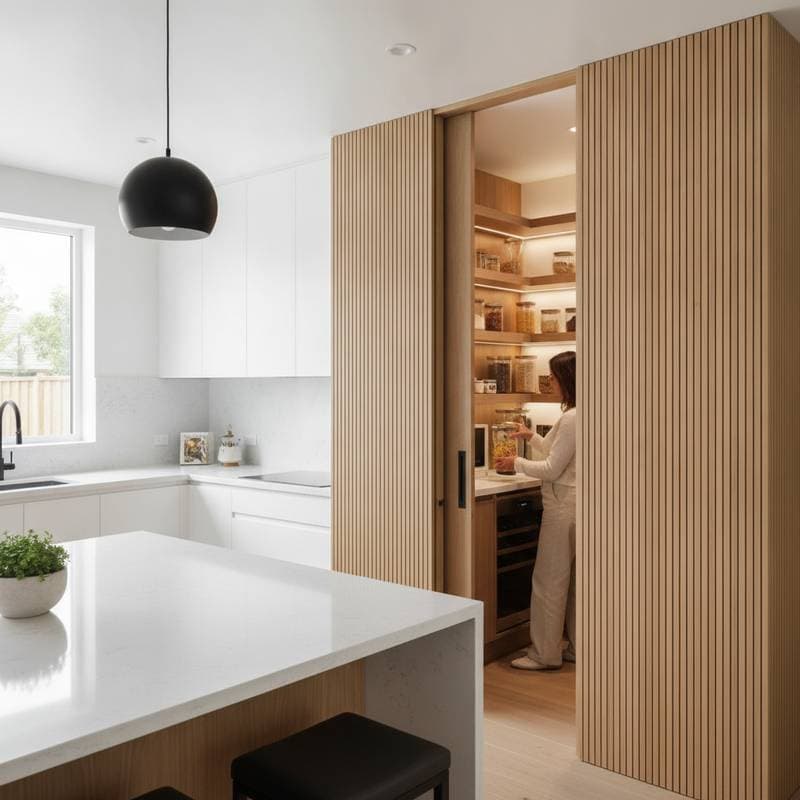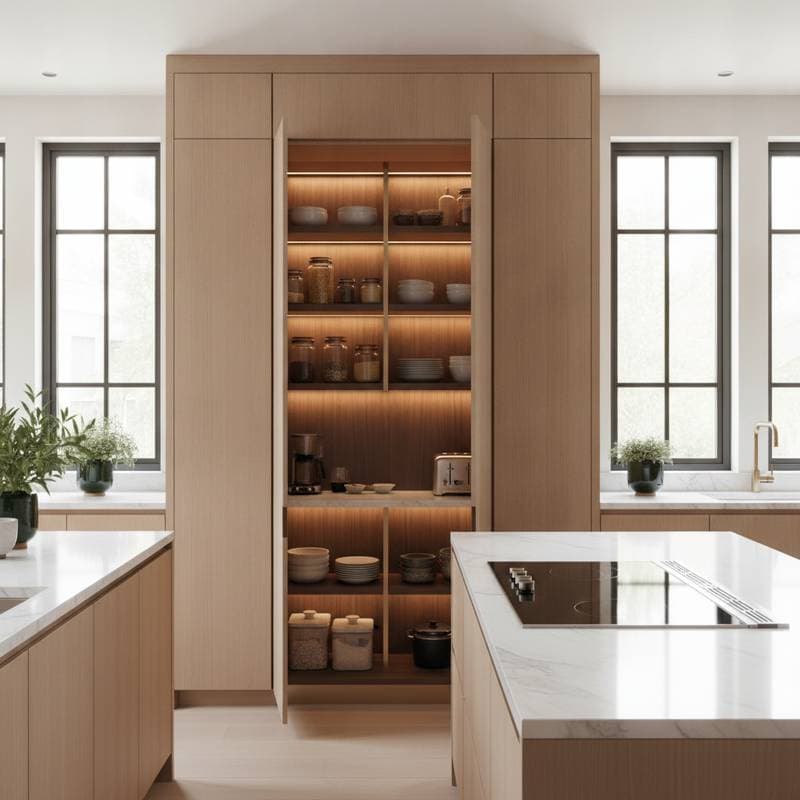
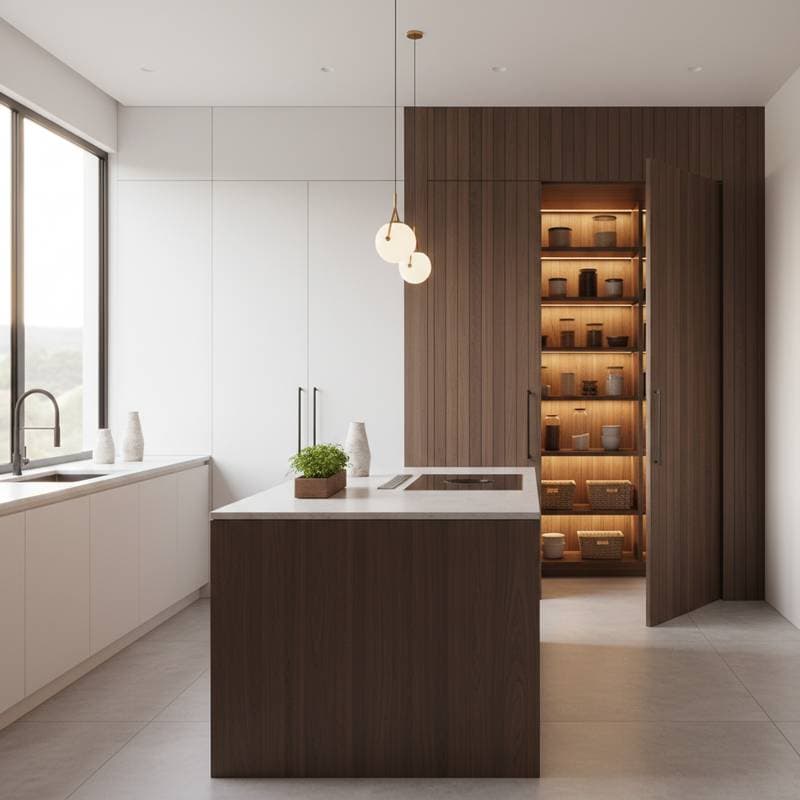
Hidden Pantry Walls Transform Kitchen Storage in 2026
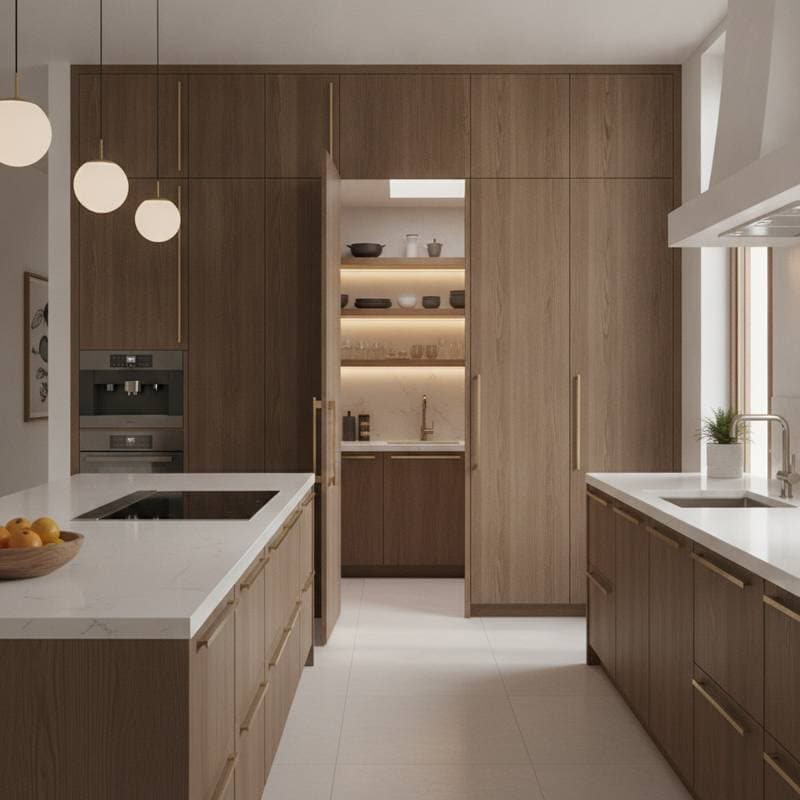
A concealed pantry wall system typically costs between 9000 and 18000 dollars. This addition conceals everyday items, increases available storage, and maintains a calm visual environment in the kitchen. It also supports higher resale value for the home.
Cost Factors
Multiple elements determine the final price of a hidden pantry wall. Each choice influences both daily use and overall appearance.
- Cabinetry materials such as wood veneer or painted MDF cost 150 to 300 dollars per linear foot. Solid wood or fully custom panels exceed 400 dollars per foot.
- Hidden door mechanisms with pivot or touch-latch hardware add 800 to 2000 dollars per door. Magnetic and motorized options increase expense yet produce a seamless surface.
- Interior fit-out items including shelving, lighting, and small appliances add 2000 to 6000 dollars.
- Matching finishes and paint work require 1000 to 2500 dollars when color consistency with existing cabinetry is necessary.
- Permits and structural adjustments for plumbing, ductwork, or electrical changes range from 500 to 3000 dollars.
- Disposal of old materials and delivery of new panels cost 300 to 800 dollars.
Budget an additional 10 to 15 percent for unexpected adjustments common in older homes. Framing irregularities or uneven floors frequently require extra carpentry time.
Safety and Compliance
Complete these checks before any demolition begins. Shut off power and water lines if wiring or plumbing passes through the target wall. Confirm that the wall is not load-bearing by consulting a structural engineer. Obtain required permits whenever outlets, wiring, or wall modifications are involved.
Maintain proper ventilation when food or appliances will be stored inside the space. Install LED lighting rated for enclosed areas. Avoid blocking smoke detectors or range hood ducts. Wear gloves, safety glasses, and a dust mask throughout demolition. Probe the wall carefully to locate any hidden electrical or gas lines.
Timing and Savings
Expect the full project to require 3 to 8 weeks. Design lead times and custom fabrication create the longest delays.
Design and layout approvals take 1 to 2 weeks. Cabinetry production requires 2 to 4 weeks. Framing, electrical work, and final finishes occupy about 1 week.
Schedule fabrication during late spring when shops often provide discounts ahead of peak season. Reuse existing cabinet boxes or shelves to reduce costs by 1000 to 3000 dollars. Choose hand-operated doors instead of motorized panels when simpler operation meets daily needs. Combine the pantry installation with a countertop or backsplash update to share labor expenses.
Functional Benefits
A concealed pantry wall improves kitchen use beyond basic storage. Closed panels hide cereal boxes and small appliances, creating an open and organized appearance even in compact spaces.
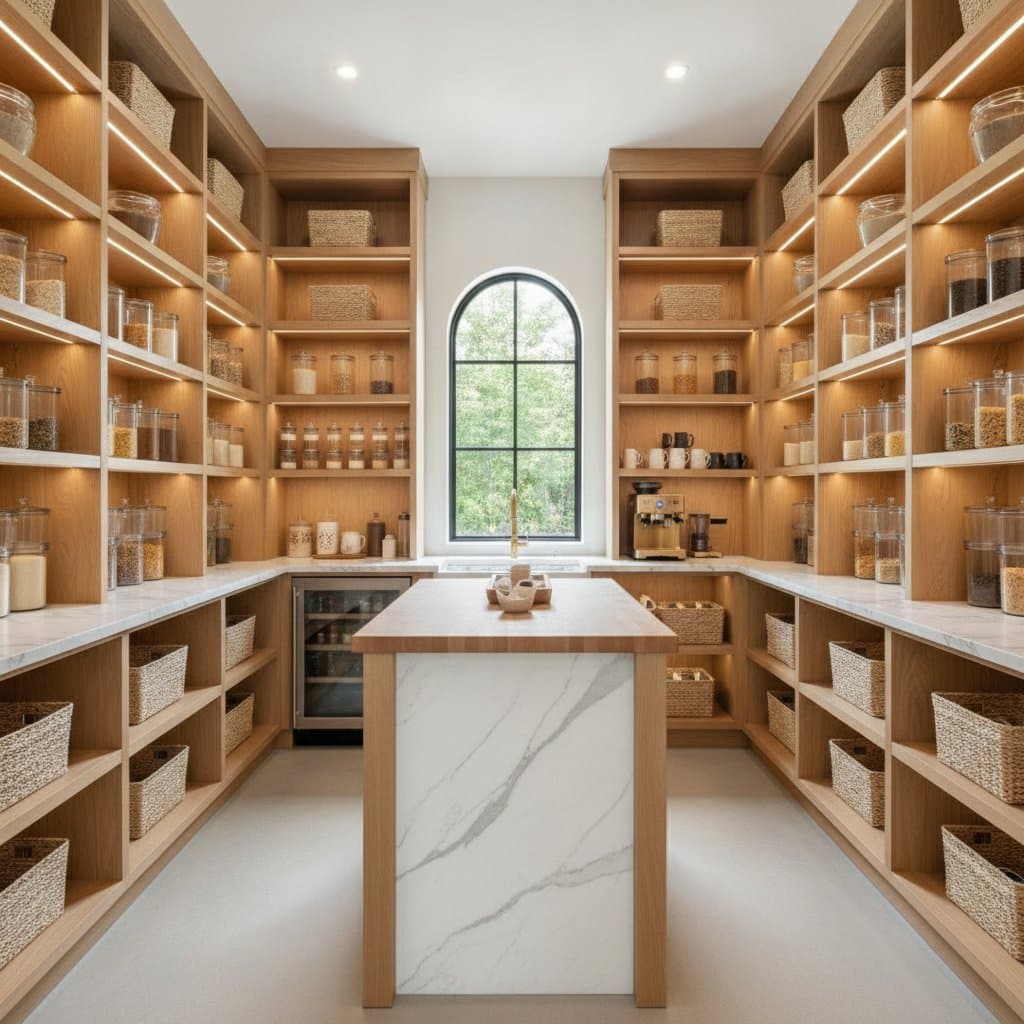
Walk-through designs locate bulk items directly behind the main cooking area. This arrangement supports efficient prep and cleanup without crowding visible counters. A side pantry can serve as a dedicated coffee or baking station.
Buyers appreciate added storage paired with clean aesthetics. The feature proves especially valuable in open floor plans where kitchen views extend into living areas.
Soft-close doors reduce the risk of pinched fingers. Adjustable shelves keep heavy items at comfortable heights. LED lighting improves visibility inside the pantry.
Regional Cost Variations
Demand for hidden pantry walls continues to grow in both modern and transitional kitchens. Coastal and urban homeowners prefer smooth finishes and concealed storage over open shelving.
Urban labor and design rates add 15 to 25 percent to total project costs. Suburban and rural areas offer lower labor rates yet longer delivery times for custom components. Humid climates benefit from engineered wood or laminate to limit warping.
Material prices remain stable, though high-end hardware costs can shift with supply changes. Early ordering protects both pricing and availability.
Practical Tradeoffs
Every hidden pantry wall requires balanced decisions. Deep walk-through layouts provide greater capacity yet consume more floor space. Tighter visual integration demands higher fabrication precision and raises overall expense.
Self-installed systems may reduce initial costs by 3000 to 5000 dollars, but professional installation extends long-term durability. Prefabricated panels install more quickly, while custom cabinetry achieves superior finish matching.
Consider personal cooking habits when making these choices. Daily meal preparation or bulk purchasing favors easy access and ventilation over minimal visual lines.
Steps to Begin
Measure the chosen wall to confirm it is at least 4 feet wide and free of major plumbing or HVAC runs. Sketch shelf depths, door swing direction, and lighting locations. Obtain quotes from at least two cabinetry shops and one general contractor.
Verify that any planned electrical or plumbing work complies with local codes. Order concealed hinges and latches early because lead times are often extended. Clear the work area, protect flooring, and confirm structural integrity before installation starts.
Allow time for paint curing and hardware adjustments before stocking shelves. Test door operation repeatedly to ensure smooth movement and tight seams. Record hardware specifications and paint codes for future maintenance.