The Value of Hidden Pantries in Modern Kitchens
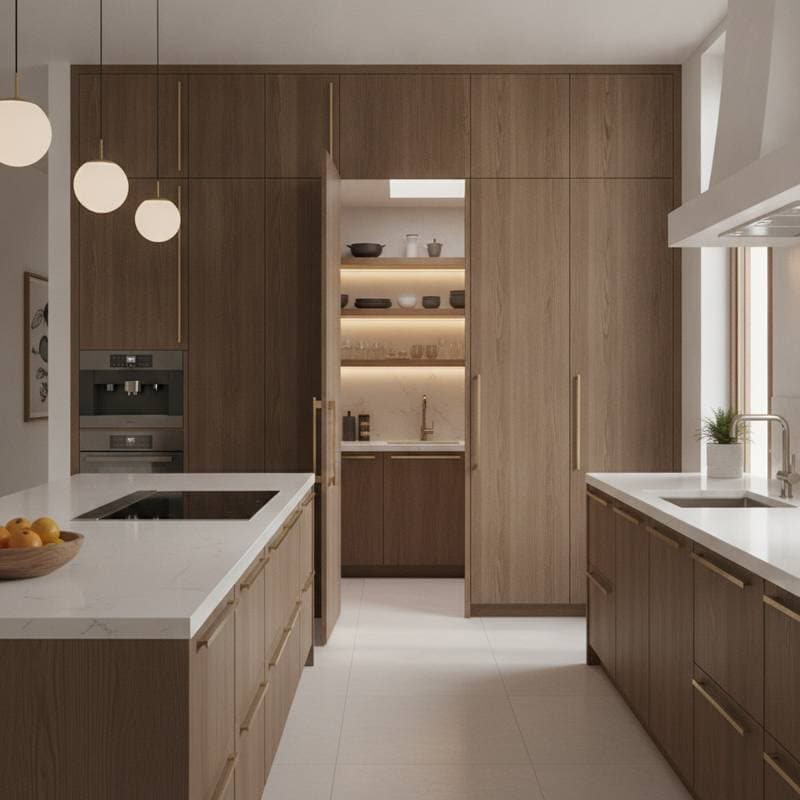
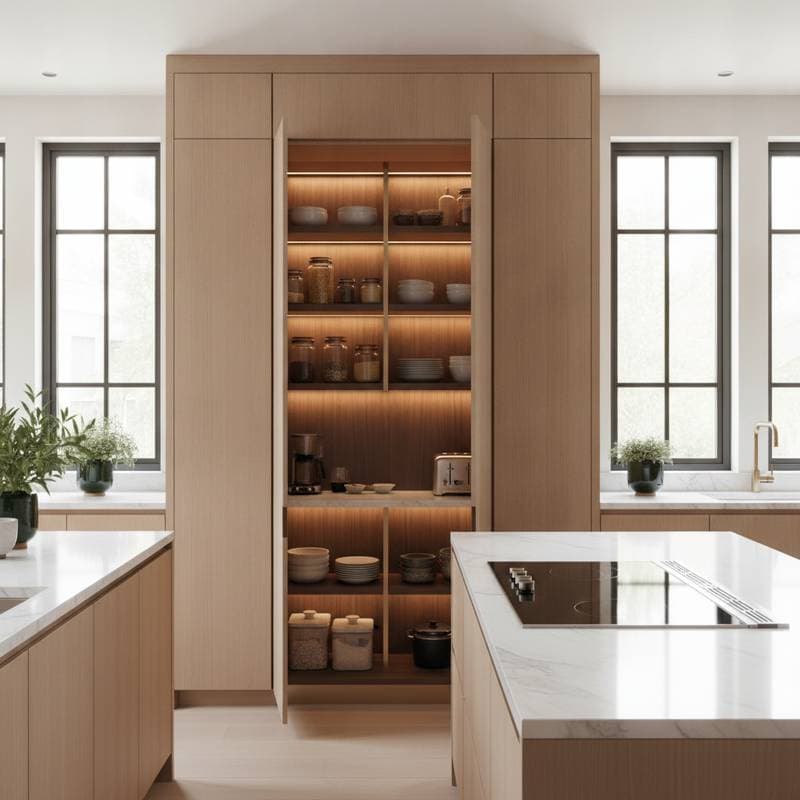
Hidden pantries provide full height storage concealed behind cabinetry or wall panels. They keep food, small appliances, and clutter out of sight while preserving a clean aesthetic. Homeowners planning kitchen remodels gain high function without visual disruption, especially in open plan layouts where simplicity matters.
Understanding the Costs
A hidden pantry typically costs between 3000 and 9000 dollars. Most homeowners invest 4500 to 6500 dollars for a mid range setup that integrates with custom cabinetry. High end versions with built in lighting, pull out shelving, and appliance garages can exceed 10000 dollars.
Several factors influence the final price. Size and layout complexity play a major role. Custom cabinet design, door systems such as swing or pivot styles, interior shelving, and electrical additions also affect expenses. Local labor rates and code requirements add further variation.
Weighing the Advantages and Limitations
Hidden pantries deliver several practical benefits. They conceal clutter and small appliances to maintain a streamlined kitchen appearance. Storage expands without extra visible cabinetry. Outlets can support appliances like toasters or coffee makers. The feature often appeals to buyers seeking modern efficiency and contributes to resale value.
Some drawbacks require consideration. These installations cost more than basic pantry cabinets or open shelving. Custom doors may complicate future repairs. Adequate ventilation becomes necessary when appliances are stored inside. Structural or electrical modifications may also arise during construction.
Exploring Design Options
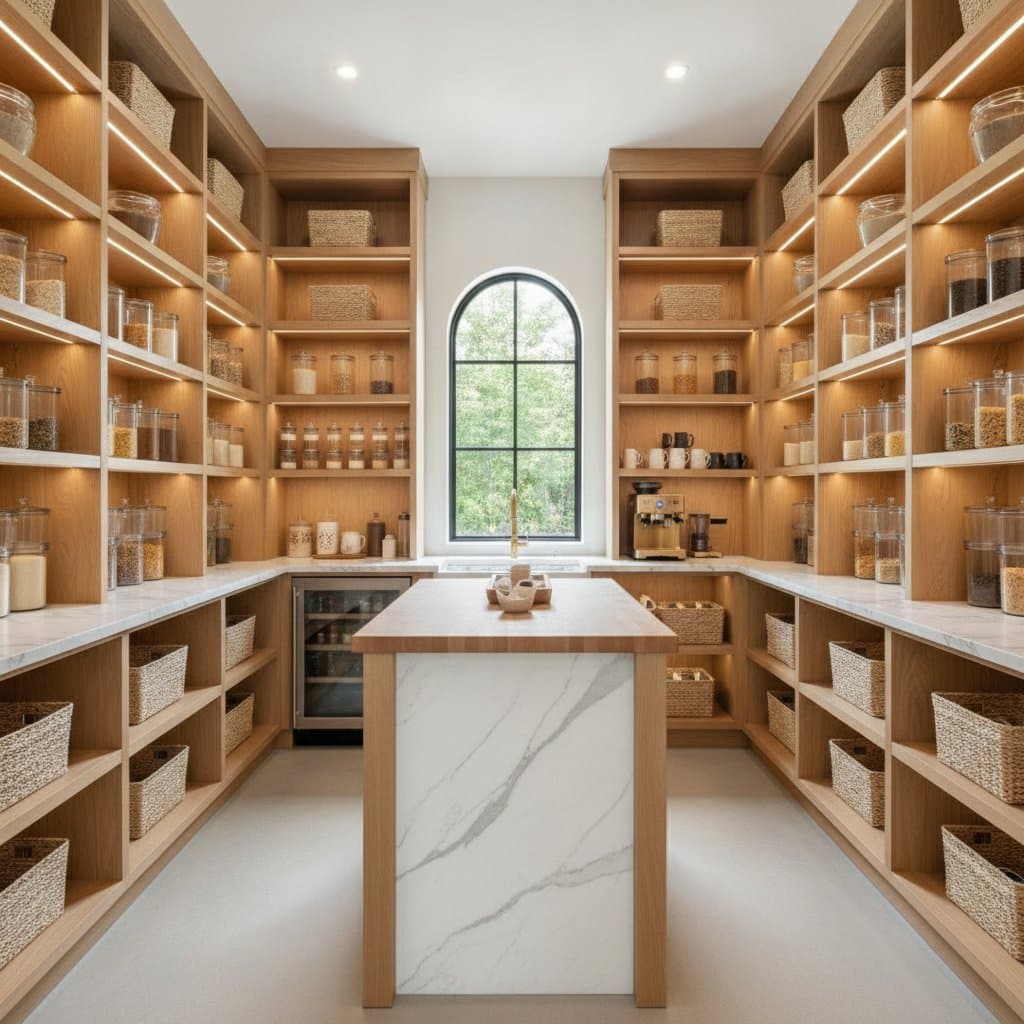
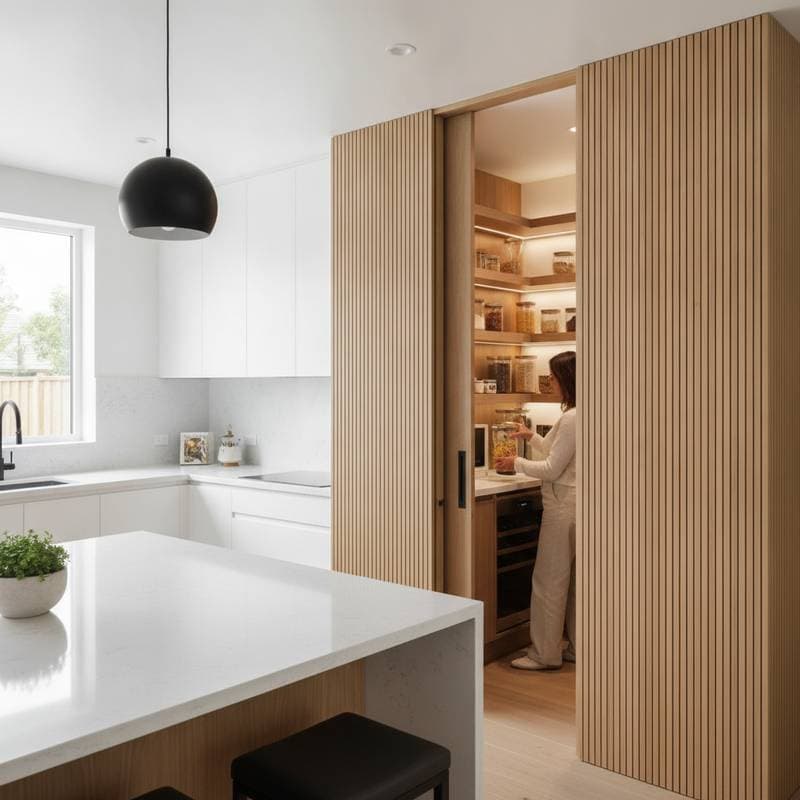
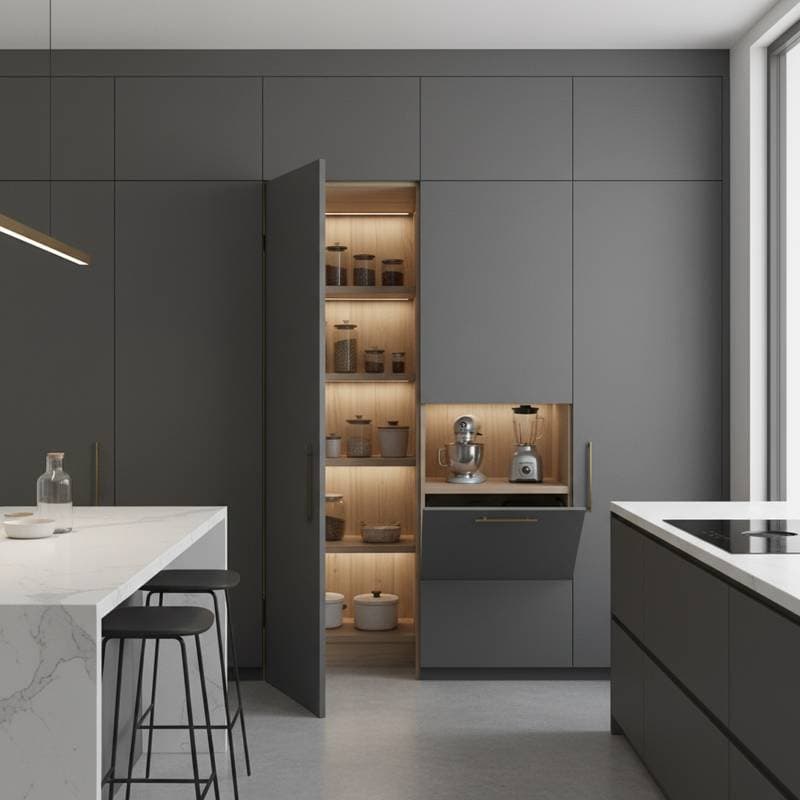
Cabinet style hidden pantries mimic standard cabinetry and suit small or galley kitchens. Walk in versions create a full room concealed by matching panels, which works well for larger spaces and frequent cooking households. Appliance garage designs combine storage with counter space for baking or coffee stations. Pull out units slide behind narrow panels and fit tight areas such as condos.
Choosing Between DIY and Professional Help
Construction involves moderate to advanced skill levels. Framing, cabinetry work, and electrical setup usually require two to five days. Experienced carpenters may handle basic systems themselves. Professional installation is advisable for custom cabinetry, lighting, or outlets to ensure proper alignment and code compliance.
Basic Installation Steps
- Measure the available wall or cabinet space accurately.
- Select the door type and confirm swing clearance.
- Frame or adjust the wall opening as needed.
- Install and test door hardware for smooth operation.
- Add interior shelving or modular storage units.
- Run electrical wiring for lights or outlets if included.
- Finish door panels to match surrounding cabinetry.
- Seal gaps and adjust hinges for a precise fit.
- Remove debris and verify all components function correctly.
Ongoing Care and Durability
Inspect hinges and slides twice each year. Wipe shelves monthly and maintain clear vents around any appliances. Hardware typically lasts 10 to 20 years with routine attention. Cabinet finishes may need periodic touch ups. Many custom systems include warranties on hardware components.
Considering Alternative Storage Solutions
Standard pantry cabinets offer lower cost and simpler installation yet remain visible. Open shelving provides an inexpensive option but exposes items. A butler pantry adds prep space at the expense of greater square footage. Pull out racks fit narrow areas though they lack full integration.
Accounting for Local Conditions
Urban markets with elevated labor rates can increase costs by 15 to 25 percent. Humid or coastal environments benefit from moisture resistant finishes. Cold climates may require insulated panels on exterior walls. Local codes should always guide electrical and ventilation decisions.
Realizing Return on Investment
Hidden pantries recover 65 to 80 percent of their cost at resale. Buyers appreciate the efficient layout and uncluttered appearance. The feature frequently appears on wish lists for updated kitchens in mid to upper tier homes.
Safety Considerations During Use
Provide proper ventilation for any powered appliances. Install GFCI outlets near water sources. Confirm electrical work with a licensed professional. Avoid obstructing air vents or insulation layers.
Integrating a Hidden Pantry into Your Remodel
Homeowners seeking daily convenience and lasting value find hidden pantries well suited to their goals. Begin by aligning the design with existing cabinetry. Obtain multiple quotes from licensed contractors before finalizing custom elements. A carefully executed pantry enhances both routine use and future market appeal.