2026 Basement Wet Bars: Unlock $28,000 in Home Value
A finished basement featuring a wet bar can increase resale value by up to $28,000. This addition provides buyers with an immediate entertainment area while enhancing daily life for homeowners through improved hosting and relaxation options. The return on investment manifests in enhanced lifestyle benefits and strengthened home equity.
Effective planning of size, layout, and finishes ensures the wet bar integrates seamlessly with the rest of the home. When executed properly, it transforms an underutilized area into a cohesive extension of living spaces. The following sections detail strategies for designing, budgeting, and constructing a basement wet bar that maximizes financial returns.
The Value Proposition of a Basement Wet Bar
Prospective buyers view a completed basement as additional functional square footage. Incorporating a wet bar elevates this space from mere storage to a versatile entertainment venue. Homeowners can accommodate movie nights, sports viewings, or intimate gatherings without relying on the primary kitchen.
Real estate professionals note that basements equipped with wet bars often command premium offers. The combination of emotional appeal—envisioning personal use—and practical utility drives this response. Value additions typically range from $20,000 to $28,000, influenced by local market conditions and the quality of materials and workmanship.
To quantify potential gains, consider regional data: in suburban markets with high demand for family homes, finished basements yield an average 70% return on renovation costs. A wet bar contributes by signaling modern convenience, appealing to millennials and empty-nesters alike who prioritize in-home amenities.
Project Timeline Considerations
For a compact wet bar installation, completion requires two to four weeks, assuming proximity to existing plumbing. More elaborate, custom designs extend to six to eight weeks. Factor in additional time for obtaining permits or accommodating design modifications.
Strategies to Accelerate Completion
- Select readily available stock cabinets to avoid production delays.
- Procure plumbing fixtures in advance to align with installation schedules.
- Position the bar near current water and electrical infrastructure to minimize rerouting.
These approaches reduce downtime and help maintain project momentum. Early coordination with suppliers ensures materials arrive on time, preventing costly pauses.
Essential Tools and Materials
Assembling a basement wet bar demands precise tools for accurate installation. Basic items include a tape measure for dimensions, a level for alignment, and a stud finder to locate framing. A drill and driver set facilitate secure fastening, while a pipe wrench and adjustable pliers handle plumbing connections.
Key components encompass a bar sink with accompanying faucet and drain assembly, along with cabinets and a countertop surface. Integrate a mini fridge or beverage cooler for functionality. Apply waterproof caulk and sealant to protect against moisture ingress.
For projects involving concrete penetration, such as new plumbing lines, incorporate a hammer drill equipped with a masonry blade. Prior to any cutting, scan for structural beams, electrical conduits, or utility pipes using appropriate detection tools to avoid damage.
Safety Protocols and Building Codes
Basement wet bars introduce elements of water, electricity, and potentially gas, each presenting distinct risks. Proper safeguards mitigate these concerns and ensure compliance with regulations.
Critical Precautions
- Leak Prevention: Install adequate traps and accessible shutoff valves to control water flow.
- Electrical Integrity: Position GFCI-protected outlets adjacent to wet areas to prevent shocks.
- Moisture Control: Incorporate exhaust fans or dehumidifiers to maintain air quality and inhibit mold growth.
- Regulatory Adherence: Secure plumbing permits, as most municipalities mandate them for sink installations.
In below-grade basements, a backflow preventer valve guards against sewage reversal during heavy rains. Consult local building authorities prior to altering foundation walls, as violations can lead to fines or required rework.
High-Impact Design Elements
Efficiency in space utilization and strategic lighting create a wet bar that punches above its size. Focus on features that enhance usability without overwhelming the area.
Features That Maximize Appeal
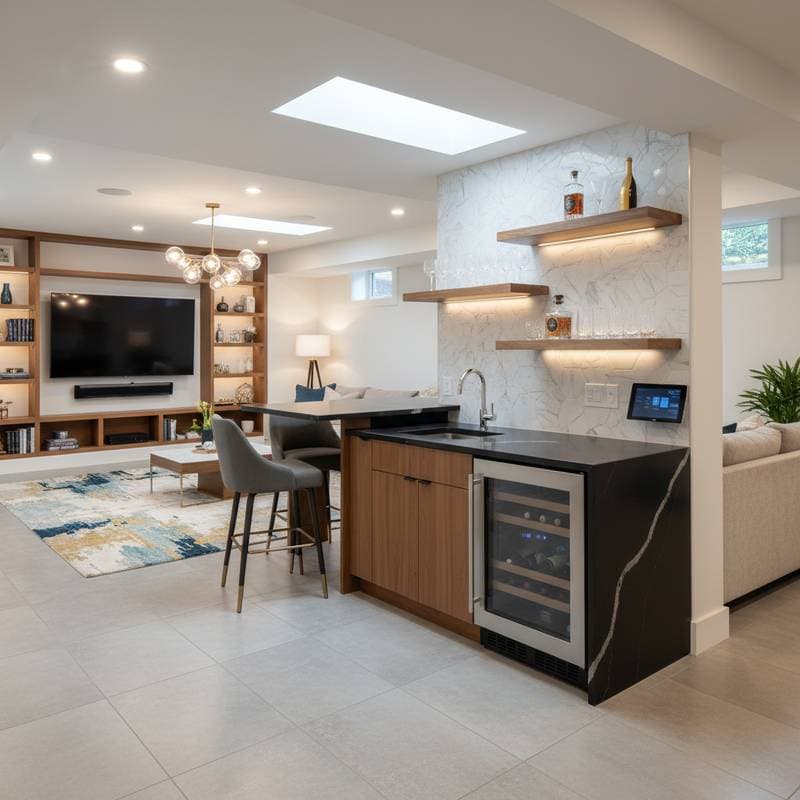
- Durable Countertops: Opt for quartz or solid-surface materials, which resist stains and require minimal upkeep.
- Open Shelving Systems: These promote an airy feel and simplify display of glassware or decor.
- Illuminated Cabinetry: Under-cabinet lights provide task illumination and a welcoming ambiance.
- Integrated Cooling: A built-in beverage refrigerator completes the setup, eliminating the need for frequent trips upstairs.
- Subtle Aesthetics: Employ neutral tones to broaden buyer interest and ensure timeless elegance.
Steer clear of trendy motifs that may deter future purchasers. Prioritize sleek profiles and enduring surfaces to sustain long-term value.
For layout inspiration, consider an L-shaped configuration along a wall, measuring 6 to 8 feet, which accommodates seating for four while preserving circulation space. Integrate bar stools with footrests for comfort during extended use.
Realizing Returns on Investment
The wet bar delivers optimal benefits within a comprehensive finished basement framework. It expands effective living area and interconnects features like game rooms, home theaters, or guest quarters.
Appraisal experts assign elevated valuations to basements operating as independent zones. Beyond resale, the addition encourages frequent use of the lower level, fostering family interaction and reducing wear on upper floors.
In quantitative terms, a $10,000 wet bar investment in a $400,000 home can yield a 2.5% overall value increase, based on national remodeling cost-versus-value reports. This edge proves particularly advantageous in competitive selling seasons.
Preservation Strategies for Longevity
Routine care sustains the wet bar's performance and appearance. Clean the sink thoroughly after use, dry countertops promptly to avert water spots, and inspect beneath cabinets for early leak signs.
Service the mini fridge by draining and sanitizing coils quarterly. For stone surfaces, apply sealant annually to preserve water resistance. Renew caulk applications around fixtures as cracks appear to block humidity.
Wood elements, such as counters or shelves, benefit from yearly coatings of water-repellent finishes. These practices deter structural degradation and mold proliferation, extending the feature's lifespan.
Actionable Steps to Launch Your Project
- Assess Available Space: Measure the basement and delineate a 5- to 8-foot linear section for the bar footprint.
- Evaluate Infrastructure: Determine distances to nearest plumbing and electrical sources to gauge feasibility and costs.
- Establish Budget Parameters: Allocate $8,000 to $15,000 for a standard installation, adjusting for custom elements.
- Choose Execution Path: Solicit quotes from at least two licensed contractors to compare expertise and pricing.
- Select Resilient Components: Emphasize materials with inherent moisture barriers and straightforward maintenance.
By following these steps, homeowners position the project for success, blending practicality with aesthetic appeal. The resulting space not only elevates property worth but also enriches everyday living.