Understanding Basement Home Gyms
A basement home gym converts underutilized below-grade space into a dedicated fitness zone. Homeowners benefit from privacy, immediate access, and elimination of gym membership fees. This setup proves ideal when the basement features stable flooring, sufficient ceiling height of at least seven feet, and reliable electrical access.
Professionals estimate that a thoughtfully designed basement gym recoups approximately 92 percent of its investment upon home sale. Success depends on professional finishing and selection of versatile equipment that appeals to diverse buyers.
Cost Breakdown
Expect to invest between $5,000 and $25,000 for a standard basement gym conversion. Most projects fall in the $10,000 to $18,000 range for a complete, moderately equipped space. Luxury versions, incorporating custom lighting, premium flooring, and advanced ventilation, may exceed $40,000.
Several factors influence the total expense:
- The basement's square footage and degree of required finishing
- Choices in flooring, such as interlocking rubber tiles for shock absorption, resilient vinyl planks, or cushioned foam mats
- Necessary electrical enhancements for ample lighting and power outlets
- Systems for ventilation and humidity management
- The caliber and volume of fitness equipment selected
Advantages and Drawbacks
Advantages
- Elevates overall home value and attracts wellness-oriented buyers during resale
- Eliminates commute time, promoting consistent exercise habits
- Fosters regular use through personalized environment control
- Provides complete oversight of hygiene and equipment availability
- Serves dual purposes, such as a multipurpose recreation or yoga area
Drawbacks
- Demands significant initial outlay for construction and gear
- Necessitates effective airflow to combat potential dampness
- Potentially diminishes available storage capacity
- Certain heavy apparatus may impose structural loads, requiring engineering assessment
Gym Configuration Options
Complete Basement Transformation
This approach dedicates the full basement to fitness, with distinct areas for cardiovascular activities, strength training, and flexibility exercises. It suits expansive basements and households committed to intensive routines.
Zoned Partial Setup
Reserve a portion for gym use while preserving space for utilities like storage or laundry. This configuration accommodates compact basements or households with varied needs.
Flexible Modular Design
Incorporate portable mats and collapsible gear for easy reconfiguration. Renters or those prioritizing adaptability find this option practical.
Elite Performance Space
Integrate full-length mirrors, integrated audio systems, and precise climate regulation. Serious athletes or dedicated enthusiasts benefit most from these enhancements.
DIY Approach Versus Professional Installation
Homeowners with a finished, moisture-free basement can manage a DIY project in two to five days. Tasks include installing flooring, applying fresh paint, and assembling basic equipment using tools like a utility knife, power drill, and digital moisture meter. Proceed only if no electrical or structural modifications are involved to minimize risks.
Engage professionals for complex elements such as wiring new circuits, adjusting heating and ventilation systems, or evaluating load-bearing capacity. Contractors optimize lighting layouts, verify ceiling clearances, and ensure adherence to building codes, thereby preserving the space's appraised worth.
Essential Installation Steps
- Conduct a thorough inspection for moisture intrusion, leaks, or structural cracks; remediate issues prior to proceeding.
- Measure ceiling height meticulously and account for additional clearance above taller machines, aiming for at least eight feet total.
- Install or upgrade electrical outlets and lighting fixtures as required, consulting a licensed electrician.
- Apply a vapor barrier and add insulation layers to maintain comfortable temperatures year-round.
- Select and lay non-slip, impact-resistant flooring that cushions joints during workouts.
- Apply light-colored paint to walls, enhancing brightness and creating an inviting atmosphere.
- Secure wall-mounted mirrors and storage racks firmly to avoid hazards.
- Position equipment to allow at least three feet of clearance for safe movement and access.
- Verify ventilation functionality and perform a deep clean post-installation.
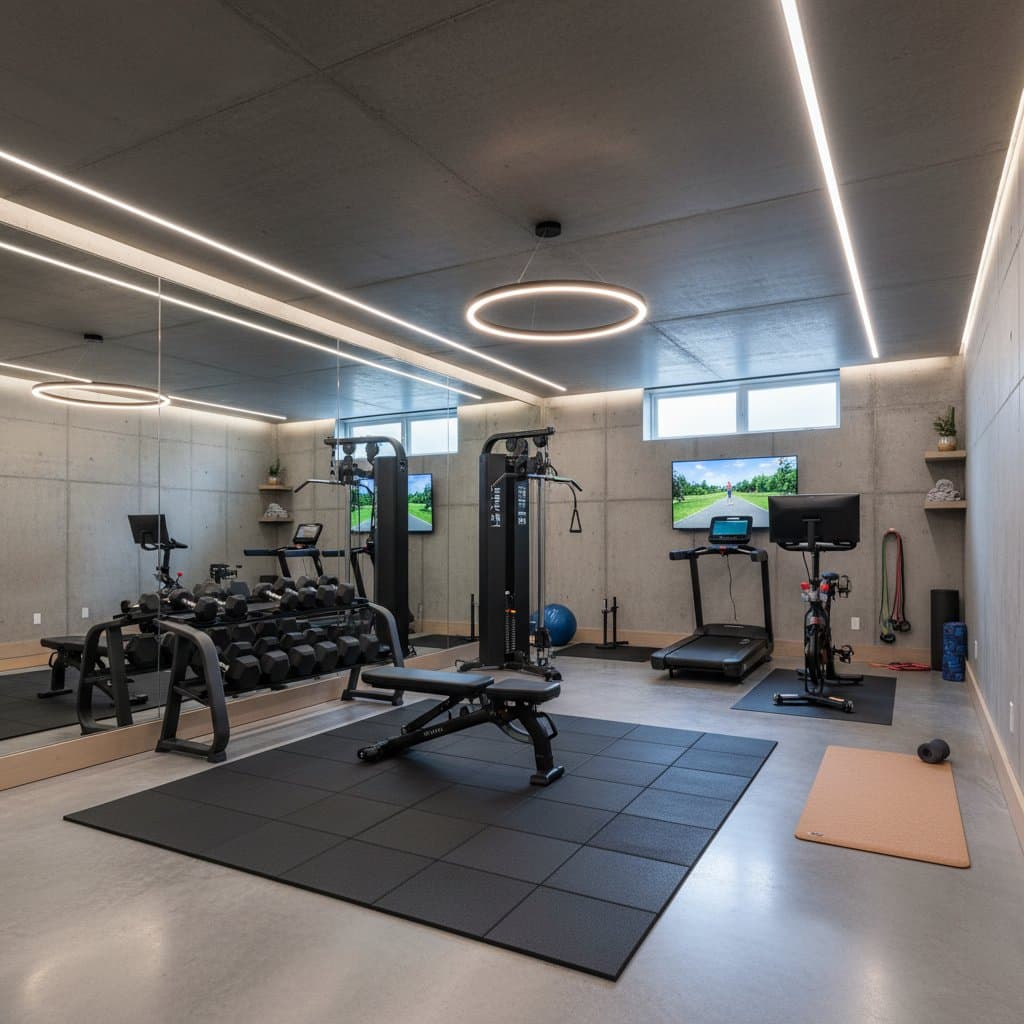
Image suggestion: A spacious basement gym featuring rubberized flooring, organized equipment zones, and natural light accents.
Upkeep and Durability
Maintain equipment by wiping surfaces weekly and vacuuming floors regularly to control dust accumulation. Examine weights, cables, and cushions quarterly for signs of deterioration, replacing components promptly. Operate dehumidifiers or fans to sustain humidity levels under 60 percent, preventing mold growth.
Durable flooring endures 10 to 15 years under normal use, often backed by manufacturer warranties. Address any moisture-related damage to drywall or flooring immediately by improving exterior drainage or reinforcing vapor barriers.
Viable Alternatives
Garage-Based Gym
Offers straightforward entry but lacks consistent temperature regulation. This works best in temperate regions with minimal weather exposure.
Converted Spare Room
Requires minimal setup effort yet constrains space for bulky items. Suitable for lighter fitness pursuits.
Insulated Outdoor Shed
Provides seclusion but demands robust weatherproofing and heating elements.
Community Gym Subscription
Avoids setup hassles and maintenance, though it incurs recurring fees and schedule limitations.
Regional Considerations
In colder regions, prioritize enhanced insulation and vapor barriers to avert condensation on surfaces. Humid or coastal areas benefit from industrial-grade dehumidifiers and sealed, impermeable flooring. Properties in radon-prone zones must incorporate mitigation systems before enclosing the space.
Local regulations often mandate permits for electrical alterations or structural adjustments. Contact your municipal building authority early to confirm requirements and avoid delays.
Maximizing Return on Investment and Resale Potential
Real estate experts note that polished basement gyms draw buyers prioritizing health and lifestyle amenities. Such spaces typically recover 92 percent of costs through increased property value. Opt for understated, neutral aesthetics to broaden appeal; steer clear of niche customizations tied to specific disciplines.
Prioritizing Safety Measures
Employ grounded outlets for every piece of electrical equipment. Route cords away from high-traffic paths to prevent tripping. Avoid placing substantial weights over unsupported joists or fragile subfloors; consult a structural engineer if needed.
Ensure robust ventilation to maintain fresh air circulation and inhibit mold development. For additions like adjacent bathrooms or utility sinks, retain a certified plumber. Adhere rigorously to prevailing electrical and construction standards.
Bringing Your Vision to Life
Tailor the basement gym to align with personal workout preferences and existing space constraints for optimal results. Initiate with foundational elements like resilient flooring and essential machines, then incorporate mirrors and illumination. Design an open layout to facilitate future adjustments.
Solicit bids from at least three qualified contractors, emphasizing moisture management, electrical integrity, and regulatory compliance. This strategic investment yields everyday fitness accessibility alongside enduring enhancement to your home's market position.