Custom Wine Cellars Offer Strong Returns for Luxury Homes
A professionally installed wine cellar typically delivers a 15 percent return on investment. Costs range from 25000 dollars to 75000 dollars based on size and features.
Homeowners seeking a single upgrade that combines daily enjoyment with long term value often turn to climate controlled wine storage. This addition creates functional space while appealing to sophisticated buyers who appreciate thoughtful home design.
Understanding the Main Cost Components
Materials and finishes form the foundation of any project. Framing and insulation run between 4 and 8 dollars per square foot when vapor barriers are included to control moisture. Flooring options start at 6 dollars per square foot for tile or sealed stone. Reclaimed wood or cork provides a warmer feel at 10 to 18 dollars per square foot.
Racking systems vary widely. Metal modular units cost about 40 dollars per bottle of capacity. Custom hardwood racks reach 150 dollars per bottle for premium aesthetics.
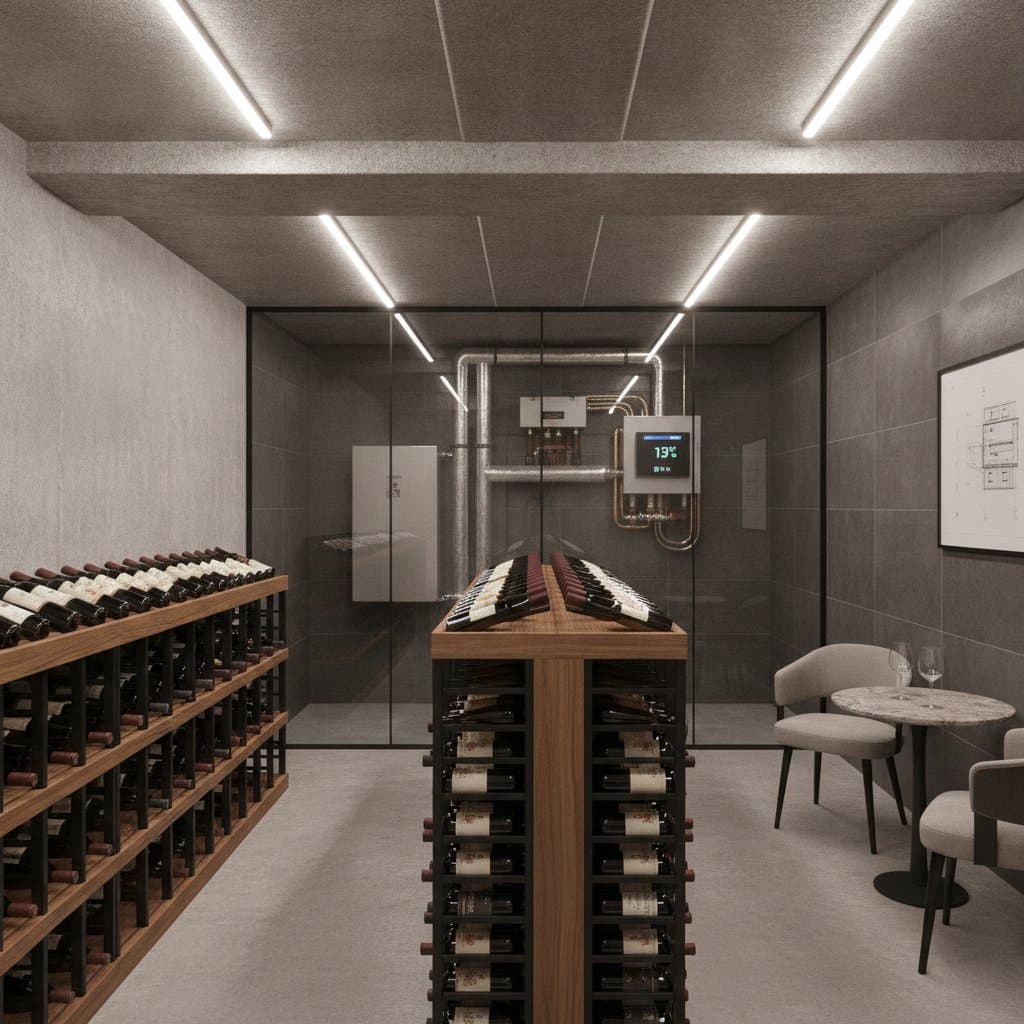
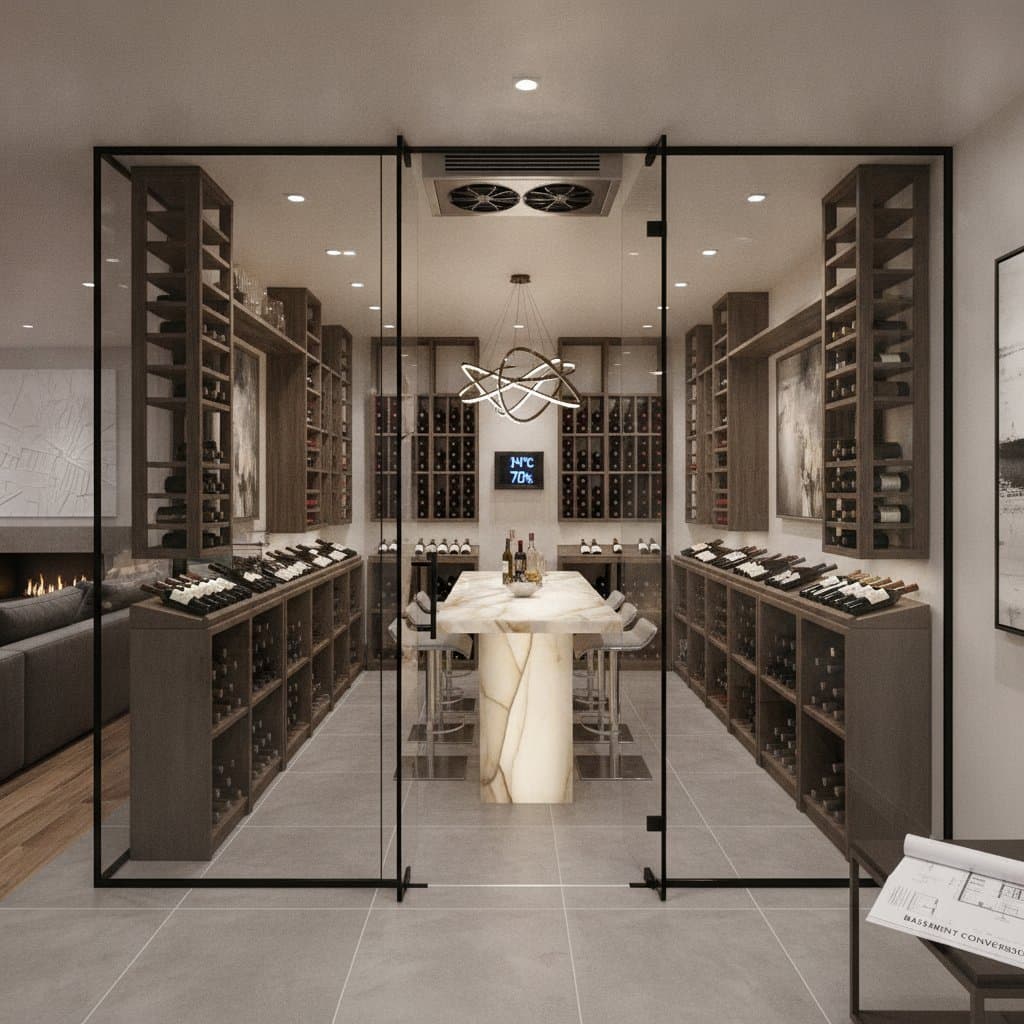
The cooling system requires careful selection. Self contained units range from 2000 to 4000 dollars and suit smaller spaces despite higher noise levels. Split systems priced between 5000 and 9000 dollars deliver quieter performance. Ducted systems from 8000 to 15000 dollars hide equipment for seamless luxury integration.
Professional design services add 2000 to 6000 dollars for detailed plans covering airflow and lighting. Labor costs average 75 to 125 dollars per hour. Permits and electrical work contribute another 500 to 1500 dollars.
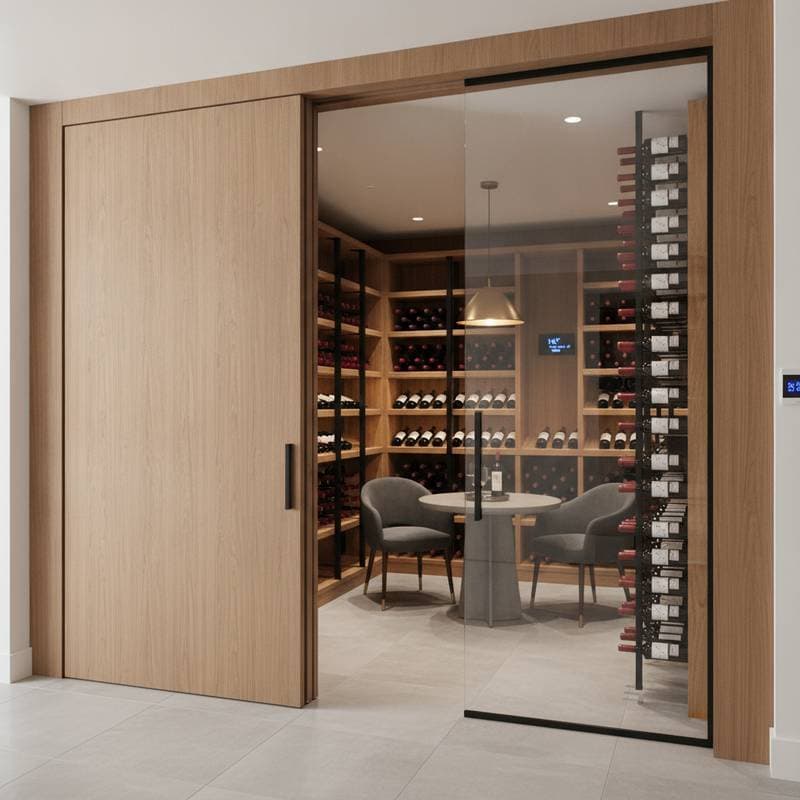
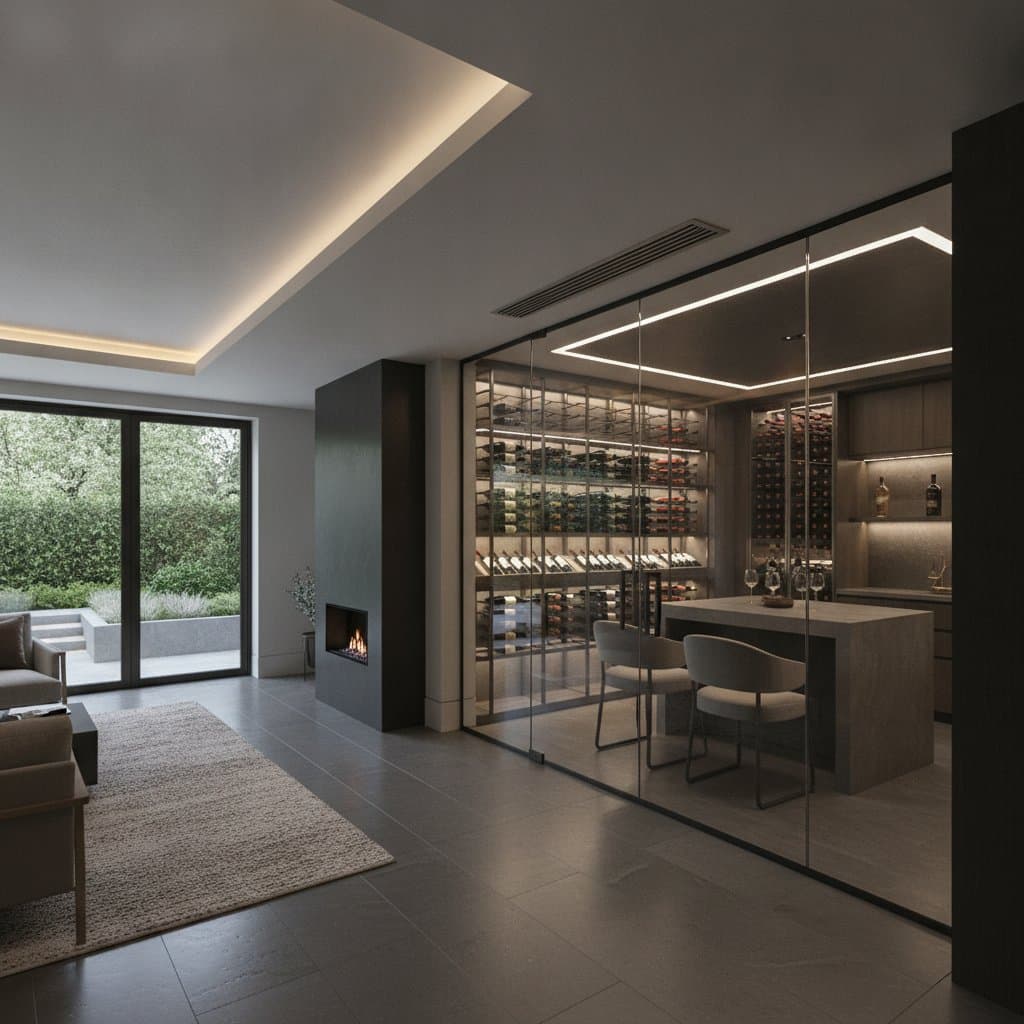
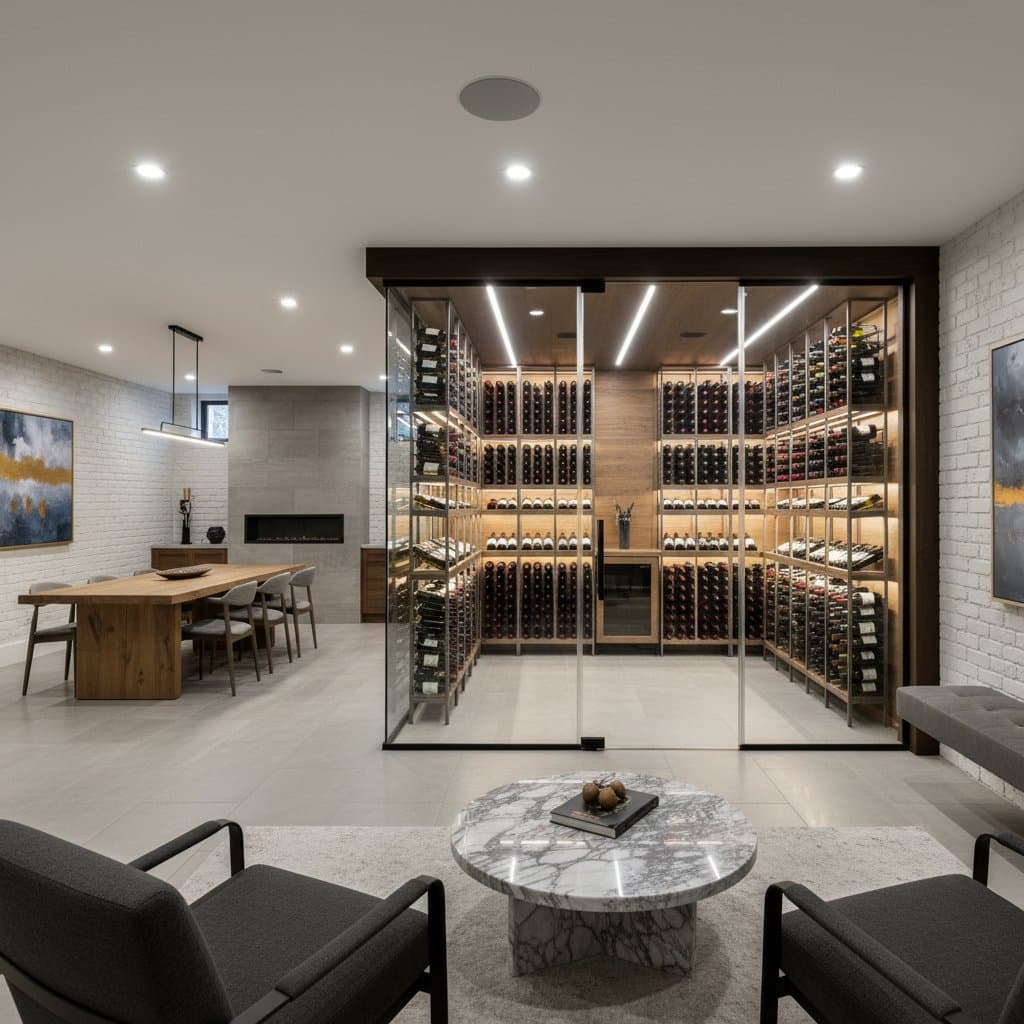
Additional features such as glass walls cost 8000 to 15000 dollars. Specialized lighting runs 800 to 2000 dollars. A dedicated tasting area begins at 5000 dollars.
Deciding Between DIY and Professional Installation
Certain tasks allow for homeowner involvement. Framing, insulation, and rack installation become feasible with solid moisture control knowledge. Intermediate carpentry skills and tools like a moisture meter prove essential. Risks remain high because inadequate sealing invites mold that damages both wine and structure.
Complex elements demand expert attention. Airflow design, electrical circuits, and glass or stone work benefit from professional execution. Proper calibration prevents costly temperature fluctuations that ruin collections and ensures compliance with building codes.
Ongoing Care and Coverage
Monthly humidity checks maintain levels between 55 and 70 percent. Quarterly filter cleaning and annual thermostat calibration keep systems reliable. Warranties typically cover cooling units for 2 to 5 years, racking for a lifetime, and installation workmanship for one year.
Sealing the space during other home maintenance prevents external air interference.
The Value Proposition for Homeowners
Finished cellars accelerate sales by 10 to 15 percent in high end markets. They often support up to 15 percent higher resale prices. Stable humidity also protects surrounding wood elements. The space serves as an impressive visual element in property listings.
Rental properties gain from elevated nightly rates of 10 to 20 percent in suitable locations.
Planning Your Cellar Project
Inspect the chosen space for existing moisture issues first. Establish a firm budget using mid range figures for accuracy. Engage a specialist experienced in climate controlled environments. Obtain necessary permits ahead of construction. Select and order the cooling unit early to guide overall dimensions. Design racking with 10 percent extra capacity for expansion. Arrange professional system calibration after one week of operation.
This investment creates a refined space that enhances both lifestyle and property appeal.